Charles Moore

Charles Moore

Charles Moore is The Spectator’s chairman.

He is a former editor of the magazine, as well as the Sunday Telegraph and the Daily Telegraph. He became a non-affiliated peer in July 2020.

The thinning of the Spanish monarchy

From our US edition

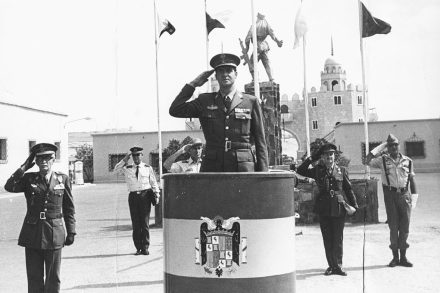
Juan Carlos, ex-King of Spain, behaved foolishly in relation to money and sex, and so his decision to leave Spain is sad, but justified. That seems to be the view of most moderate people outside Spain who are not ill-disposed to the monarchy. But is it right? Certainly Juan Carlos’s foolishness was real, but his imposed exile (it is not really voluntary) to the Dominican Republic is not a punishment for a crime: there has never been any legal process. It is a partisan political act which is bad for the unity of Spain. Juan Carlos’s exile was forced on the current King, his son Felipe VI, by a weak prime minister, the Socialist Pedro Sanchez.

spanish monarchy

There is nothing inherently wrong with selling up to pay for care

I recently heard on the radio that last year an average of 14 pensioners a day had to sell their house to pay for their care. This was supposed to shock us. Actually, the figure seems remarkably low (a little over 5,000 a year) and, in principle, reasonable.  Rather like home ownership itself, care in old age is a likely, though not certain, cost in an average British life. Many people with enough money to buy a house are also in a position to make some provision for that care. By the time they need care, significant numbers find themselves in houses too big and expensive for their needs.  It is not automatically wrong for such people to downsize or even to sell up to cover care costs.

Jesus College’s China problem

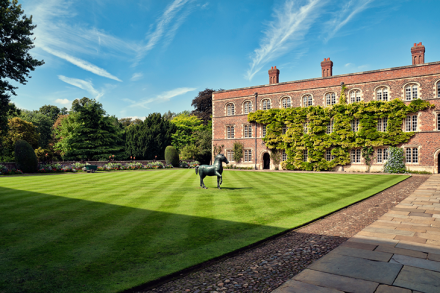
Although Stephen Toope, vice-chancellor of Cambridge University, is committed to openness, it is a struggle to get information out of him about his university’s dealings with the Chinese Communist party. He has declined an interview, and when I raised questions about Jesus College’s China Centre and other China links, which he has publicly backed, he replied that ‘You cited one very specific initiative, organised by one of our 31 colleges, with a very narrow thematic focus’. I wrote back with further questions, but he says he is ‘not able to add anything to my earlier remark about Jesus College’.

Do ‘Somewheres’ and ‘Anywheres’ have to fall out?

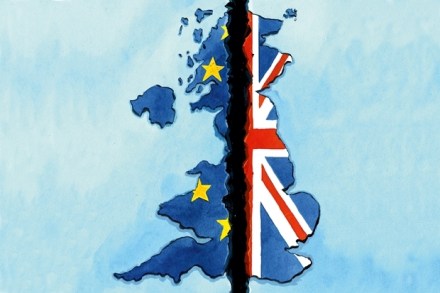
I think Anne Applebaum is a friend of mine. I certainly hope so, since I have always admired her writing, her dignified charm and her un-English readiness to be serious. Her new book Twilight of Democracy is subtitled ‘The Failure of Politics and the Parting of Friends’. Quite a large number of friends, several associated (as was she) with this paper, she now names as ex-friends, so I feel relieved not to have been so identified.  As a matter of historical fact, Anne is right: lots of friends have fallen out about issues relating to globalisation, identity, ‘Somewheres’ and ‘Anywheres’, Brexit, Trump etc. Anne seems to see this as inevitable, once people understand how much they differ. But is it?

The politics of email sign-offs

I think Anne Applebaum is a friend of mine. I certainly hope so, since I have always admired her writing, her dignified charm and her un-English readiness to be serious. Her new book Twilight of Democracy is subtitled ‘The Failure of Politics and the Parting of Friends’. Quite a large number of friends, several associated (as was she) with this paper, she now names as ex-friends, so I feel relieved not to have been so identified. As a matter of historical fact, Anne is right: lots of friends have fallen out about issues relating to globalisation, identity, ‘Somewheres’ and ‘Anywheres’, Brexit, Trump etc. Anne seems to see this as inevitable, once people understand how much they differ. But is it?

Why our statues need protecting

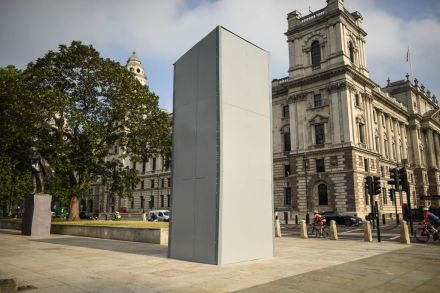
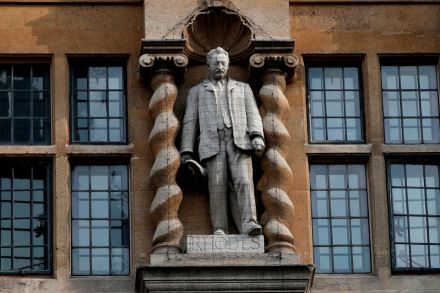
The Black Lives Matter frenzy against statues may have passed its peak. The issue has been co-opted by the bureaucracies in government, Church, universities, etc. As their various committees study lists of allegedly offensive monuments, they should remember something which has hardly been mentioned: localism.  Most statues are erected not because of a general national sentiment, but because of the wishes of a particular community — a borough, parish, college, profession, business or regiment. They were not put up, like those colossal statues of Lenin in the former Eastern Bloc, by order of a remote tyranny. The reason that Edward Colston’s statue stayed up so long in Bristol was that many Bristolians admired his munificent legacy to the city.

The ruthlessness of Huawei

Huawei’s 5G path is blocked. In a few months’ time, Huawei may no longer see the point of paying six-figure sums to Lord B and his attendant knights,’ I wrote in this space on 20 June. I underrated its ruthlessness. It took only a few weeks. Lord Browne, its UK chairman, is out. Sir Ken Olisa has followed.  How much longer for the arch-Remainers Sir Andrew Cahn, who thinks Huawei is ‘the John Lewis of China’, and the ex-CBI Sir Mike Rake, who joined as recently as April? All this could have been avoided if, before taking the six-figure salary, these gentlemen had asked: ‘Who ultimately controls this company’s destiny?’ The answer is the Chinese Communist party.

Why did we not ban Huawei earlier?

‘Just rejoice’, as Mrs Thatcher once said about something else. The government’s decision to debug our national security by getting rid of Huawei is the right one (although seven years is much too long). The puzzle is why it did not happen earlier. At the end of January, I interviewed the US Secretary of State, Mike Pompeo, when he came over here. We knew by then everything we needed to know about the Chinese government’s control of Huawei and the lack of trust this must engender. The British government also heard clearly from Mr Pompeo — and from Australia — that its preference for Huawei 5G threatened the deep trust of the Five Eyes intelligence partnership. Yet it sent him away empty-handed.

Will Cambridge stand up for free speech in China?

Last month, Dr Priyamvada Gopal, of Churchill College, Cambridge University, tweeted ‘White Lives Don’t Matter’. She was abused online and received threats of violence. Cambridge issued a statement: ‘The university defends the right of its academics to express their own lawful opinions, which others might find controversial… [It] deplores in the strongest terms abuse and personal attacks.’ Dr Gopal was promptly promoted to a professorship. Perhaps professorial chairs should not be handed out as prizes because the person promoted has expressed apparently racist sentiments, but the university was surely correct to defend Dr Gopal’s free-speech rights.

Are Hong Kong students safe in British universities?

There are far more Chinese students in British universities than there are from the entire Commonwealth. Many universities have been accused of indulging the Chinese regime in return for the students and the money. Now that Beijing has imposed its draconian security law upon Hong Kong, will Hong Kong students in British universities be safe to return in October? Beijing now seeks to control them. What assurances can British universities give Hong Kong students that it will protect them from intimidation from fellow students acting on the orders of the Chinese embassy in London? The new law claims the right to punish Hong Kong people for offences committed anywhere in the world. Will our universities protect such students?

The problem with Burnley’s ‘White Lives Matter’ banner

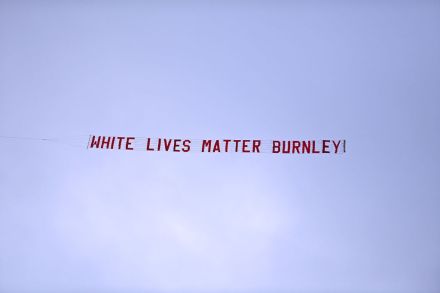
‘White Lives Matter Burnley’ said the plane’s banner as it circled the club’s stadium just after the teams had ‘taken the knee’ in support of Black Lives Matter. I must admit that my very first reaction on hearing the news was pleasure at the idea that the self-righteousness of Black Lives Matter was being guyed.  My second, more considered response is that the banner was bad — and for precisely the same reason that BLM is bad. It takes a statement which any decent person would consider true and turns it into a weapon of race war. Of course black lives matter. Of course white lives matter. The question is: ‘Why are you saying it now?’ The answer, in both cases, is discreditable. It is to make one lot hate the other lot more.

Michelangelo’s David must fall

‘White Lives Matter Burnley’ said the plane’s banner as it circled the club’s stadium just after the teams had ‘taken the knee’ in support of Black Lives Matter. I must admit that my very first reaction on hearing the news was pleasure at the idea that the self-righteousness of Black Lives Matter was being guyed. My second, more considered response is that the banner was bad — and for precisely the same reason that BLM is bad. It takes a statement which any decent person would consider true and turns it into a weapon of race war. Of course black lives matter. Of course white lives matter. The question is: ‘Why are you saying it now?’ The answer, in both cases, is discreditable. It is to make one lot hate the other lot more.

Oxbridge colleges are terrified of paying reparations

Behind the cowardice and hypocrisy which many institutions are showing as they give obeisance to Black Lives Matter about any connection with the slave trade lies a dread word — reparations. Activists seek to claim actual financial liabilities payable to existing human beings for alleged, centuries-old wrongs. The institutions — Oxbridge colleges, for example — are terrified. They hope to deflect attention by babbling about ‘decolonising’ the curriculum and by ‘taking the knee’. Glasgow University promised last year to pay £20 million. It won’t work. Those who grovel will be made to grovel much, much more. Jesus College, Cambridge, has tried to handle these matters quietly.

The grand names on Huawei’s payroll

Why is it wrong, some ask, for senior British businessmen, former civil servants etc to work for Huawei UK? After all, it is a major company which needs business experience and advice here. Even now, despite the government’s apparent U-turn, it is not certain it will be excluded from our 5G contracts. Surely the answer is that if a director were to explain frankly to the public how Huawei works, he would have to admit that — whatever its formal ownership structure — it is controlled by and furthers the aims of the Chinese Communist party regime. He would also have to concede that these aims have now become hostile to British and western interests. Ren Zhengfei, the boss, expresses himself in belligerent terms.

Do Chinese lives matter to Jesus College?

Sonita Alleyne, the Master of Jesus College, Cambridge, issued a passionate ‘personal message’ about the killing of George Floyd on her college’s website: ‘The message posted on the College Twitter account “If one man can’t breathe, we all can’t breathe” were my words,’ she revealed. ‘Be angry at this moment.’  Ms Alleyne’s message was published on 5 June — the day, in 1989, when the world watched the famous pictures of a young man confronting a line of tanks in Tiananmen Square. Soon 10,000 Chinese could not breathe, being dead.

What is Dominic Raab not telling us about Hong Kong?

The government’s promised ‘pathway to citizenship’ to Hong Kong people is wonderful, but has the Foreign Office arranged a get-out clause? Last week, Dominic Raab told parliament that ‘if China enacts the [proposed new security] law, we will change the arrangements for British National (Overseas) passport holders in Hong Kong’. He added, however, that ‘We do not oppose Hong Kong passing its own national security law’. Behind this lies the fact that the Basic Law of Hong Kong, arising from the Sino-British Agreement of 1984, prescribes that Hong Kong ‘shall enact its own laws to prohibit any act of treason, secession, sedition or subversion against the Central People’s Government’. So far, it has not done so.

What is it about Chinese totalitarianism that makes clever people so silly?

There is something about Chinese totalitarianism which brings out the silliness of many clever people. I suspect it is to do with the fact that Chinese civilisation, being old and arcane, makes a certain type of person prize uncritically whatever privileged access he gains to the country.  A fortnight ago, I mentioned the fellow-travelling influence of Joseph Needham, Cambridge’s indisputably scholarly historian of Chinese science. Here he is writing to the Cambridge Review in 1976, the last year of Chairman Mao’s reign.

The Spectator’s proud history of standing up for Hong Kong

This week in 1989, the Chinese authorities massacred protestors in Tiananmen Square, Beijing. I was editing this paper. It struck me that the people of Hong Kong would suffer huge collateral damage. The Spectator should campaign for them, I thought, and draw attention to the dangers of trusting China to honour the 1984 Sino-British Agreement which Mrs Thatcher and Deng Xiaoping had made to provide for the handover to China in 1997. So we turned the leading article into a two-page affair (a thing unheard-of) and devoted the whole cover to a drawing by Nick Garland of Britannia and the British lion, both kowtowing. The headline was ‘Our Betrayal of Hong Kong’.

Will Lady Hale stand against China’s dictatorship?

If China imposes its proposed new draconian security law for Hong Kong on the territory, where would that leave the independent judiciary? So far, genuine independence has been maintained, and Geoffrey Ma, the Chief Justice of the Court of Final Appeal (CFA), has spoken up for proper legal values. But he retires soon, and Beijing, which has not previously interfered, has the power of appointment.  The CFA has on it, at any one time, one ‘nonpermanent’ overseas judge out of an active body of ten, on a monthly annual rotation. These judges are mainly British, and always include the President of our Supreme Court (currently Lord Reed), as well as several retired Supreme Court judges. The most famous is Lady Hale, of the spider brooch.

The ferocious bias against Dominic Cummings

At Dominic Cummings’s press conference on Monday, reporters tried two lines of attack. One was to behave like local detectives, fixating on exact details of the Cummings family journey to Barnard Castle, such as why the car had stopped en route (answer: so that the Cummingses’ son, aged four, could have a pee). The other was to invoke viewers, readers, members of the public blind with fury that there was ‘one law’ for government bigwigs, and ‘another’ for everyone else. Yet Mr Cummings’s statement and answers made a good case that there had not been ‘one law’ for him, but that he had the ‘reasonable excuse’ that the law permits for everyone, given the needs of his son.