Catriona Olding

People who say it’s no good throwing money at a problem have never been poor

From our UK edition

It started during the bus journey from Glasgow to Edinburgh airport on the way home to Provence. Saying goodbye is always sad but there were other worries; earnings have been minimal for the past ten months and the new hot water tank was costing more than the balance of my bank account. People who assert that it’s no good throwing money at a problem have either never been poor or had an unhappy teenage daughter. In the old days when I had a bit of cash and one of the girls was especially miserable, a chat in the car and a wee spin round Topshop or Urban Outfitters generally did wonders. Those days are gone. I’ve been a financial basket case for years now.


Why gingers have more fun (genetically at least)

Contrary to what we redheads have been led to believe, we are not disappearing. Our numbers have increased in the past 10,000 years, according to a recent Harvard study. What’s more, researchers found, being ginger may actually be desirable as far as natural selection is concerned because ‘having red hair was beneficial 4,000 years ago’. The reason why has yet to be discovered. But it’s good news for the class bully, producers of sunscreen and those – like me – who’ve had a love-hate relationship with the variants in their MC1R gene which leads to red hair and pale skin. I was an extreme redhead as a child; not one of the beautiful ones with long, auburn curls and green eyes.

Lisa Haseldine, Matthew Parris, Damian Thompson, Peter Pomerantsev, Chas Newkey-Burden & Catriona Olding 

From our UK edition

41 min listen

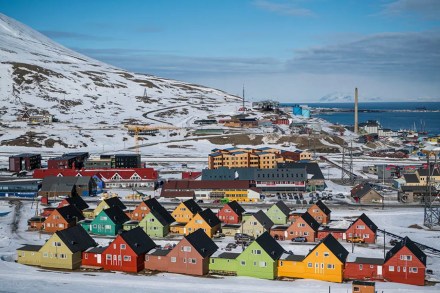
On this week’s Spectator Out Loud: Lisa Haseldine reports from Svalbard; Matthew Parris reflects on the Iran crisis during Holy Week; Damian Thompson assesses how Pope Leo XIV is quietly reshaping the Vatican; Peter Pomerantsev reviews Jack Watling’s Statecraft; Chas Newkey-Burden provides his notes on marathons; and finally, from Provence, Catriona Olding reflects on comfort and companionship. Produced and presented by Patrick Gibbons.

The joy of meeting ‘randomers’

From our UK edition

Provence Life was complicated when I fled to Provence in November 2014 with no job and very little money. At first a comedian friend and his wife lent me their second home. The intention was to stay for six months, recover from a traumatic marriage break-up and write a book about my father, who was a giant (7ft 4in) and had for a spell in 1938 toured Nazi Germany and England as part of a world-famous revue. I was also planning to learn copy-editing in the hope that when I got back, I could get a job as the oldest-ever publishing intern. But in those days I didn’t even have a laptop and since money was running out, I had to abandon both ideas and find work.

Few illnesses are as terrifying as meningitis

From our UK edition

Bacterial meningitis has left two young people dead and another fifteen seriously ill following an outbreak linked to a night club in Canterbury. Whenever there’s a photo of a pretty non-celeb teenager in the paper the heart sinks. So rarely is it good news. This time it was Juliette, 18, a sixth form pupil, smiling out at us with a pink flower in her hair. She died from the illness on Sunday. Her father said the family had 'no words to express their loss'. Her father said the family had 'no words to express their loss' By the time our children reach adolescence, meningitis – which we were all terrified of when they were babies – has slipped down our worry lists; it's way below drugs, alcohol, pregnancy, rape, accidents and murder.

Tales from the Jeremy Clarke Memoir Club

From our UK edition

Provence The other Monday I hosted the third annual meeting of the Jeremy Clarke Memoir Club on what would’ve been his 69th birthday. At the far end of the dining table, deep in the bare rock of the cliff, there’s a 27-inch high plaster cast of a bust by my ex of our youngest daughter as a youthful Baucis from Ovid’s Metamorphoses. The sculpture is bedecked with necklaces, a small bunch of faux anemones and part of the headdress I wore as a 21-year-old bride. In front of the bust I placed my grandmother’s black basalt Wedgwood urn which contains the remainder of Jeremy’s ashes. André began the meeting with the five-day odyssey his Italian father took alone on foot across the Alps in 1936, to escape conscription into Mussolini’s Blackshirts.

How can one third of people end up dying in pain?

From our UK edition

Recent research funded by the charity Marie Curie has discovered that each year in England around 170,000 people are suffering unnecessarily and dying in pain. That’s almost a third of total annual deaths. As it stands this shocking statistic can only fuel enthusiasm for the Assisted Dying Bill currently being debated in the House of Lords. But it needn’t be like this. There are lots of effective painkilling drugs, but some staff can’t believe the amount of morphine or other drugs patients need and so under-prescribe. There are lots of effective painkilling drugs, but some staff can’t believe the amount of morphine or other drugs patients need and so under-prescribe I know of one woman who had terminal breast cancer with painful bone metastases.

Work experience was the making of me

From our UK edition

It was reported in the Times last week that Hampshire county council has threatened chef Greg Olerjarka with prosecution if he continues to allow his 14-year-old son, Dexter, to help him in his food truck at the weekends and after school. The boy desperately wants to be a chef and hopes one day to work alongside Marco Pierre White. He’s already an accomplished cook and has undertaken a food hygiene course.  Thirteen- and 14-year-olds, for whom minimum wage laws don’t apply, are allowed to do light work; 12 hours during the week (outside school hours) and five and two hours respectively on Saturdays and Sundays. They can work in retail, admin, hairdressing, stables, agriculture, horticulture, and deliver newspapers.

The hellish side of Bumble

From our UK edition

Valentine’s Day is upon us. I’ve never liked it. As an ugly ginger kid with a beautiful – much older – half-Indian sister, it was torture. Helen was a glamorous air stewardess and never short of cards or flowers. While I sat in my room listening to David Bowie and staring at the Starsky & Hutch posters I’d saved up for, Helen would be getting whisked away in a Mercedes to Joanna’s or some other club in Glasgow. In the run-up to Valentine’s Day 1976, age 12 and desperate for a card, I asked 11-year-old George next door if he would be my boyfriend. He said no. I shrugged and we resumed our den-building with his wee sister Lorna.

The secret life of my friend Evelyn

From our UK edition

Provence It’s difficult to believe that Evelyn will be 90 in a few months’ time. I’ve known her for more than ten years and, because she can converse on most subjects, I look forward to seeing her when she visits. A retired British archaeologist who ran departments in some of the best universities for most of her life, Evelyn still travels ten months of the year. She is also more knowledgeable about geopolitics than most, and a formidable political debater who can sometimes be prone to anger during discussions. I like to thrash things out too, but quietly. I can’t bear shouting. If things start to get shrill, I leave the room. The passing years haven’t diminished Evelyn physically or mentally.

Make mine a Moka pot

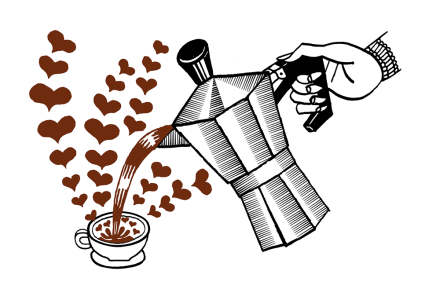
It’s strange the things that can trigger amity or affection. At the beginning of the capsule/pod coffee-maker craze, when George Clooney, with his come-to-bed eyes, was seducing the world with Nespresso machines, I bonded with my eldest daughter’s Italian boyfriend over the Bialetti Moka pot. Notwithstanding the expense and waste of the capsule coffee-makers, I need at least three pods to get the lights on in my head in the morning. I’ve never had a good coffee from any of them. Contrast that with the cute, economical, environmentally friendly little Moka, the smallest of which – one cup – costs about £20 and, depending on the quality and freshness of the coffee used, makes a better cup than any café or restaurant.

How I met Jeremy

From our UK edition

In the early 2000s, academics, philosophers, politicians, members of the royal household and business people – including the CEO and the owner of a newspaper group – sometimes came round to the house for tea, drinks or dinner. Anxious to keep up, I started to read the papers more thoroughly. The Economist and New Statesman I found dull. On the recommendation of a friend, I bought The Spectator. The writing was better. Sometimes you’d find arguments for and against a subject, for example fox hunting, in the same magazine. But more than that – it was entertaining. Jeremy Clarke’s Low Life column, however, was in another league. It was poetry; brilliantly observed, lyrical, fearless and funny.

The day Tilda Swinton came to stay

From our UK edition

An exhibition at the Eye Film Museum in Amsterdam devoted to the multi-talented and award-winning actress Tilda Swinton, runs until February. Reading about it prompted me to think back to the mid-2000s, when I got to know her slightly. Through work, her then partner, the artist and playwright John Byrne, came down from Nairn to stay in Glasgow for a few days. I’d first heard of him when I was a teenager – he was responsible for his friend Gerry Rafferty’s 1970s album covers, and later went on to write The Slab Boys trilogy and the 1987 TV series Tutti Frutti, which starred Robbie Coltrane and Emma Thompson. Because Tilda was away filming one of the Narnia films and their nanny was due days off, John brought their twins, a boy and a girl. They were about six.

LSD was a fuss about nothing

From our UK edition

The flight from Nice to Bristol was packed. As soon as the doors closed I spotted a hummingbird hawk-moth bumping about the lights beside the overhead lockers. Poor thing. I often see them on my little terrace, wings a blur, freakishly long proboscis burrowing deep into the flowers. A woman with a steely bob a few rows in front jabbed at it with her inflight magazine and when the creature landed at her feet stamped it to dust, saying loudly to the people around her: ‘You’re all safe now!’ The lady beside me, a hospital cleaner from Liverpool, clenched her fist. I had three hours to wait before the connecting flight to Glasgow and looking around the airport I noticed that everyone was weirdly fit – ripped even. Folk were wearing decent gym gear and hardly anyone was fat.

What’s wrong with ‘over-testing’ for prostate cancer?

From our UK edition

According to a recent study at Oxford, celebrity prostate cancer awareness campaigns have contributed to the over-testing of white, wealthy men from the south of Britain for PSA – prostate-specific antigen, a marker used in the diagnosis of the disease. This over-testing, the Oxford academics say, has led to unnecessary treatment, harm to individuals and expense for the NHS. My late husband, Jeremy Clarke, would still be here if he’d been offered a test at 50. He was diagnosed at 56 after he got up one morning unable to pee. His PSA at diagnosis was 38 and his cancer had spread to three lymph nodes. Once the cancer has spread, surgery isn’t an option. His brother, who was ten years younger, should’ve been tested after Jeremy’s diagnosis but wasn’t.

I took on a hornet – and won

From our UK edition

Provence Midnight. In preparation for a 5 a.m. rise I’d been asleep for two sweltering hours under the ceiling fan when the phone rang. It was a video call. Without glasses I don’t see well but recognised the caller as Jacob, a man I’d met in June when I’d been invited to a fancy villa near the coast for the night with old pals who were visiting friends of theirs. Jacob and I got on well. In the heated pool, having only just met, we sang: ‘Heaven… I’m in heaven…’ At dinner I admired his string of huge black Tahitian pearls and he told me about his exotic social life in New York. We exchanged our best anecdotes. At the end of the week he called to see me at home in the cave.

A tale of two Martins

From our UK edition

Provence The canicule broke yesterday, heralding the end of high summer. Wild figs and mulberries litter the path, filling the air with their scent which, combined with lavender, rosemary and thyme, is the smell of Provence. Even though we’ve had more rain than previous years and fewer weeks of extreme heat, we’re relieved – especially those of us with no pool in which to cool off. When the temperature rises above 35°C, actions become clumsy and the mind dulls. Even here in the relative chill of the cave, with the shutters and windows closed, it can be insufferable. Small chores become mammoth tasks, work piles up and the fridge sits empty. Hours of the afternoon are spent lying on the bed under the ceiling fan.

Medics make the worst patients

From our UK edition

Provence Apart from three Covid years, the German rock cover band Five and the Red One (named, so they say, because one of them has a ‘fire mark’) have played a free concert on the Cours here in the village every summer since 2008. I first saw them in 2009 when my three daughters were teenagers. The four of us, along with our friends Monica and André, who were then in their mid-sixties, stood together near the front jumping up and down and singing along. Some of the wee ones who sat on their fathers’ shoulders behind us might have children of their own by now. Last year a rowdy coterie let the well-built 6ft 3in guy who owns the expensive hat shop in the village crowd-surf and, discovering the burden was beyond them, let go. As he fell he narrowly missed crushing tiny Monica.

How not to behave at a London gentleman’s club

From our UK edition

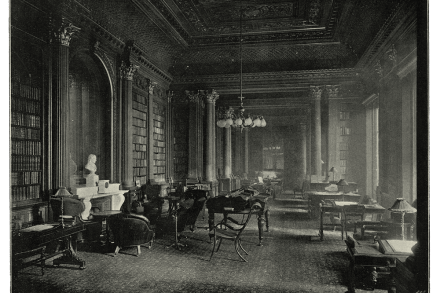
After a 5 a.m. start, I arrived at the departure gate in Nice airport to discover there was an air traffic control strike and my flight had been delayed by two hours. Annoyance gave way to relief when the board turned red and all later flights were cancelled. This was the week of the Spectator summer party and, because of work commitments and for reasons of economy, I was flying back at 5 p.m. the following day. I was packing a lot into those hours: on arrival a late lunch in Pimlico, where I was staying in a flat belonging to a friend, Kate, who was away; the party; a hungover breakfast with Will, The Spectator’s features editor, the following morning; a solitary wander round the National Gallery and lunch with Martin Vander Weyer, before a dash back to the airport.

I’ve rekindled my love affair with England

From our UK edition

Late spring. Sitting in the armchair in the living room, I was chilly and disconsolate. My middle daughter was seven-and-a-half months pregnant and unwell. The pregnancy had triggered two serious autoimmune disorders. She’d been successfully treated for thyroid cancer a few years before, but this new disease was attacking her lower spine; she was exhausted and in almost constant pain. At times she couldn’t pick up her two-year-old daughter. I could barely afford to fill up the car, never mind pay for parking and a flight back to England, and every night lay awake worrying. Beside the chair to the left, a live rock wall, and in front, a wood-burner.