Caspar Henderson

The North American fruit tree that provides a model for economics

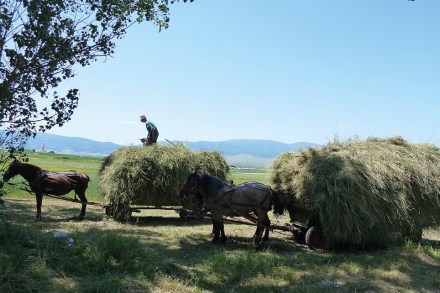
Life on Earth is not a zero-sum affair. Most plants only exist thanks to partnerships with fungal filaments in the soil which mobilise essential nutrients for them and receive sugars made from sunlight in exchange. Without those partnerships, humans and most other land animals which depend on plants either directly or at one or two removes would not exist. Cooperation gives rise to a living world that is vastly more complex, productive and beautiful than the sum of its parts. An understanding of this reality is one of the key insights of an ecological worldview; and, argues Robin Wall Kimmerer in this short and charming book, it is of vital relevance when thinking about how human societies and individuals might organise, and think differently and more expansively about the future.

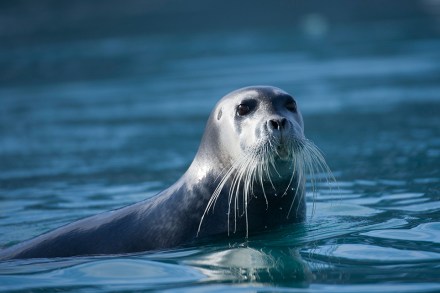
The song of the bearded seal and other marvels

In his satirical Devil’s Dictionary, Ambrose Bierce defined the ocean as ‘a body of water occupying about two thirds of a world made for man – who has no gills’. Bierce may have been right to poke fun at human arrogance, but he underestimated the importance of the seas. Averaging almost 3,700 metres (12,000ft) deep, the ocean constitutes around nine tenths of the habitable space on our planet. It plays a commensurate role in the Earth system, not least as an engine – a ‘blue machine’ in the phrase that also titles an excellent book by the physicist and science presenter Helen Czerski – that moves heat around the planet.

The good old ways: nature’s best chance of recovery

Britain is one of the most nature-depleted places on Earth. The consequences for human wellbeing and resilience, as well as for non-human life, are grave. Conservationists and others say it doesn’t have to be this way. But when it comes to recovery, what should we aim for? How much can we know about what was once present? How much is it practicable or sensible to restore? What does recovery, let alone ‘rewilding’, really mean in a rapidly heating world? Sophie Yeo does not have the answers to all of these questions. Nobody does. What she does offer in Nature’s Ghosts are insights that could help shape a better informed and more constructive debate.

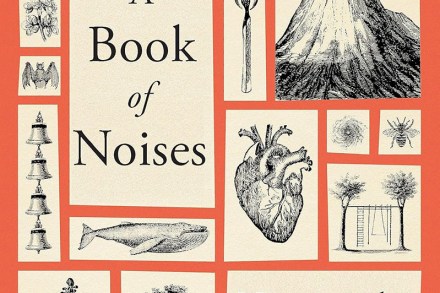
Caspar Henderson: A Book of Noises

47 min listen

My guest in this week's Book Club podcast is Caspar Henderson, whose new book A Book of Noises: Notes on the Auraculous really is a journey into sound. He tells me why the music of the spheres – at least in this solar system – is a terrible racket, what we can learn from whale earwax, and why bat-squeaks are, in fact, very very loud indeed.

Britain’s lost rainforests

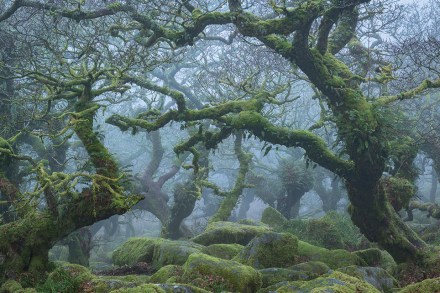
One of the most beautiful spots I know in Britain is a steep-sided gorge in Devon where the River Dart carves through the Dartmoor rock on its way to the sea. The trees on either side are small, twisted and covered in ferns, mosses and lichens, so that even on a dull day the colours, shapes and textures are vibrant and dynamic. It was here that I took my wife shortly before she gave birth to our daughter. Nowhere I have been is more utterly beautiful and alive. This extraordinary place is a fragment of temperate rainforest: a rich assemblage of life made possible by ample rainfall, mild winters and damp summers.

Fish that swim backwards – and other natural wonders

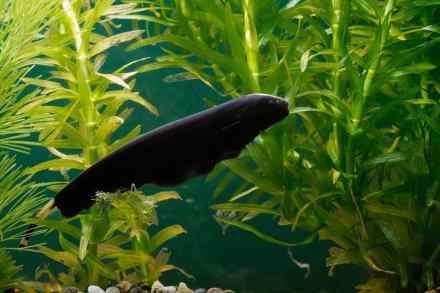
In the Zhuangzi, a collection of tales attributed to the eponymous 4th-century BC Chinese philosopher, a frog that lives in a well boasts about its comfortable way of life to a visiting sea turtle. When the turtle describes its own existence in the vast expanse of the ocean, however, the frog has no idea what to make of it. The story is, of course, a humorous parable about typical human limitations and the possibility of stepping beyond them. But it could serve almost as well as an introduction to Ed Yong’s new book, which confirms in rich detail what Zhuangzi intuited: the nature and range of different forms of animal perception is astounding, and a greater appreciation of them has the potential to enrich human life.

Why the first self-help book is still worth reading: The Anatomy of Melancholy anatomised

Footling around on the internet recently, I stumbled on a clip of a young woman singing Leonard Cohen’s ‘Hallelujah’ to a full-grown cow. As she sat cross-legged, strumming away not very well on a guitar, the cow lay down beside her and gently nudged her with its huge head as adoringly as any puppy. The sight brought to mind a passage in Robert Burton’s The Anatomy of Melancholy in which he reflects on music as a remedy: Harts, hinds, horses, dogs, bears are exceedingly delighted with it; elephants, Agrippa adds; and in Lydia in the midst of a lake there be certain floating islands (if ye will believe it), that after music will dance.

Nature fights back with tooth and claw as we persist in destroying it

Where to turn in anxious and febrile times? One answer is to nature, or the ‘non-human living world’, which, despite the ravages inflicted on it by humans, continues to offer solace and hope to many. Such, at least, is a possibility linking these fine but quite different books. Lucy Jones’s starting point in Losing Eden is her own struggle with depression and addiction a few years back. She writes that three of the things that helped her recover — psychiatry, psychotherapy and the support of others — were straight-forward, but the fourth was more mysterious: a greater connection with the natural world. Surprised and interested, she embarked on investigating the power of nature to heal.

The wilder shores of Britain

After kayaking solo in a November storm to a square mile of rock called Eilean a’Chleirich in the Summer Isles off the north-west coast of Scotland, and camping overnight on top of its cliffs, David Gange awoke to revelation. To the west he could see almost the entire length of the Outer Hebrides. To the north-east the mainland, with its distinctive peaks, stretched towards Cape Wrath. The British Isles may be diminutive on a global scale but, Gange realised, ‘just how small they really are depends on how you measure them’. Merely the first hundred miles of longitude on the mainland’s north-west coast hold thousands of miles of coastline, with mountains, bays, estuaries, cliffs and islets — ‘enough to repay a lifetime’s exploration’.

Raiders of the lost Ark

Years ago, in an ill-conceived attempt to break into natural history radio, I borrowed a nearly dead car from a friend in West Hollywood and drove across town to the Los Angeles Zoo to report on a project to save the California condor from extinction. By the 1980s the number of condors had — thanks in part to the birds’ tendency to fly into live power lines — plunged to a few tens, and the species was on the brink. The remaining individuals were taken into captivity and a breeding programme begun. Newly hatched chicks were raised by hand — that is, by glove puppets made to look like adult condors. The chicks, imprinting on the puppets, would imitate their behaviour, which included avoiding dummy power lines.