Bruce Anderson

Bruce Anderson is The Spectator's drink critic, and was the magazine's political editor

The key to dealing with this election? Wine

An old friend phoned. Normally cheerful, he was fed up. One of his business partners was being more than usually incompetent. ‘I told him that I’d describe him as a halfwit, if I could find the half.’ We went on to discuss another couple of friends, both good men and true, who seem doomed to imminent parliamentary defenestration. By the end of lunch, we were thoroughly benign. I was persuaded I could endure a Labour government Then there was hunting: a passion. It survived for several years under the Blair government and it seemed clear Tony had no stomach for the ban, which was half-hearted. That witty and cynical fellow Charlie Falconer said he could not understand why anyone was complaining. The antis wanted a ban and got one. The hunters wanted to go on hunting and did.

A lunch good enough to lift Tory spirits 

Things could have been worse. My host was determined to lunch al fresco, and after all it was late June. Yet this is England and as everyone knows, even D-Day had to be postponed for 24 hours. In the event, we were fine. The elements were kindly. The temperature did not fall below 60, the rain held off, we more or less managed to forget about politics and it would have been hard to improve on the setting. Saint Jacques, a restaurant which I have often praised, always deservedly, has a courtyard and is next to Berry Bros: so this is a sophisticatedly bacchanalian quartier. The rain held off, we forgot about politics and it would have been hard to improve on the setting The sophistication may be recent.

The joy of Portuguese wines

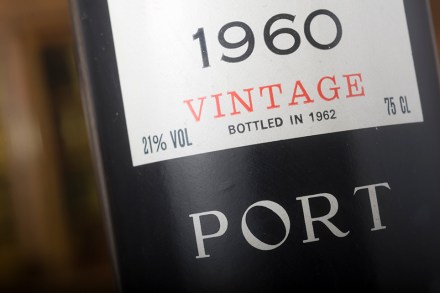
There was a wonderful old boy called John – Sir John – Wordie, who was a quintessential member of the establishment. A barrister, he spent much of his time defusing controversies before they had boiled over. In that enterprise, he never sought publicity, finding it much easier to dispense wise advice if no one knew who he was. An accomplished sailor from his RNVR days during the war, he was always a stalwart of nautical good and goodery – and he knew a very great deal about wine, especially port. A Texan can extract five syllables from Goddam: Go-o-o-day-um. John could do as well with port. Po-o-o-o-rt. It was a deeply reassuring sound. Whatever was going wrong with the world, as long as John was in his place, saluting the port, nothing could be as bad as it seemed.

The best bottle to come from the Gigondas

One needs wine more than ever, yet when imbibing, it can be hard to concentrate. So much is going on. We were at table and the news came through about Slovakia. Was this an obscure incident, regrettable but below the level of geopolitics? Or would it become a second Sarajevo? Fortunately, that seems unlikely. In Mitteleuropa, there are always ancestral voices prophesying war and there is usually plenty of dry timber. But it does not seem that this assassination attempt will be the spark. The Barruols have a reputation for delightful eccentricity but they are committed to their bottles When we had come to that conclusion, there was an obvious next step. Gavrilo Princip nearly missed his chance to murder the Archduke. If he had failed to do so, would there still have been a war?

How to become an old soak

Drink and longevity: there seems to have been a successful counter-attack against the puritans, prohibitionists and other health faddists. Indeed, there is virtually a consensus that red wine has almost medicinal properties. That said, a confusion about so-called units remains. When the measurement was explained to me, I said that it sounded adequate. ‘Really?’ ‘Yes, that ought to be more or less enough.’ Then the cross-purposes were unscrambled. The 98 units or whatever – a figure clearly designed to give a bogus authority to the calculation – was a weekly total, not a daily one.

The case for Churchillian drinking

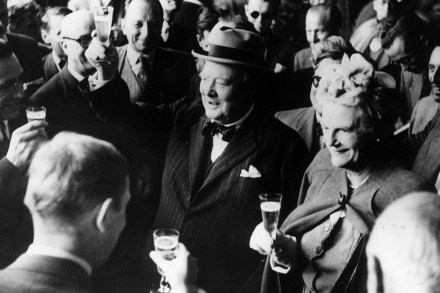
Churchill. No disrespect to Andrew Roberts’s more recent work, but I set out to look up a point about drink in Roy Jenkins’s biography and ended up rereading it. I think that it is Roy’s best book and extremely well written. There are also passages where he slips in points from his own experience of high office: never excessive, always illuminating. Although Churchill was rarely drunk, he was equally rarely sober I did not need to be reminded what an extraordinary figure Churchill was: the drama was so vivid. After the ‘fight on the beaches’ oration, Josiah Wedgwood, a Labour MP, said that it was the speech of a thousand years. Britain was menaced as never before; France was about to surrender.

The glory of German wines

I have had three recent conversations, all lively if unrelated – and all well lubricated. The first concerned Anglo-Saxon England around ad 700. Recent discoveries of coin hoards suggested that economic activity during that period of the Dark Ages was more extensive than had been supposed. Without damaging the coins, it had been possible to establish that some of their silver content had come from Byzantium. Every timeI drink a German wine I am convinced that one should do so more often The main discussants were a couple of academics who had been disciples and friends of Philip Grierson, one of the greatest numismatists of all time: a scholar, collector and major benefactor of the Fitzwilliam in Cambridge. That reminded me of an embarrassing meeting.

A fitting overture to Holy Week

Holy Week, but not everywhere. After reading that the diocese of Birmingham wanted to hire staff to help with deconstructing whiteness, only one conclusion is possible. Large parts of the C of E have become a theological and liturgical wilderness. The Devil is in charge and it is unholy week, 52 weeks a year. Anglican friends assure me that this is overdoing the pessimism. There are sound clerics – even the occasional sound bishop – and in some areas, traditions survive. Certainly Sherborne Abbey has just put on a superb Palm Sunday, and the procession included a donkey, the sweetest-natured of animals and a perpetual outlet for sentimentality.

There is good news in the world – and it is mostly about wine

My last piece began with a one-word sentence: ‘Gloom.’ A dear friend reproached me. ‘In a world already abundant with gloom, surely you can find a way of cheering us up. After all, you’re not writing about politics – or at least you’re not supposed to be.’ I promised to try harder to propagate good news. When it comes to wine, that is not impossible. Twenty years ago, in Lisbon, I was treated to a bottle of Barca Velha. I was told that the Portuguese regarded it as their Château Latour. Needless to say, it was not that good but I remember thinking that it was a jolly decent drop of stuff, and – in those days – excellent value. Only half of that judgment still holds true. I tried a 2012 the other day and it was excellent: as good as a Bordeaux second growth.

Idris Elba’s champagne makes the world seem less troubled

Gloom. Relentless rain out of a sullen sky enhanced an already pessimistic mood. We were talking geopolitics and agreeing that the West ought to brace itself for a hard landing. Try as we might, we could find no good news, anywhere. Where is the self-belief of the Reagan/Thatcher years? Instead, a culture war is taking place Some of us were veterans, one or two of whom had spent time in Washington in 1980, the build-up to the Reagan era and the prelude to the most successful decade in modern peacetime history, in which Margaret Thatcher played a crucial role.

I’m a rosé convert

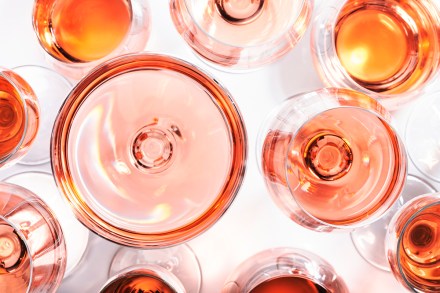
Paris is more than a city. It is a state of mind, an aspiration. Though it glorifies the military, it remains feminine and beguiling. Its heroes moved effortlessly from triumphs on the battlefield to triumphs in the boudoir. The very stones of Paris seem redolent of the dreams and ecstasies of past lovers, and of their frustrations, follies and pains. Heloise and Abelard loved and suffered here. We had come to perform two simple tasks: sitting in judgment over wine and food In many respects, alas, contemporary Paris has fallen a long way from romance. Everyone has stories of rubbish, dirt and rats. The days when bon chic, bon genre set the tone for the Grands Boulevards are long gone. Today, the scruffiness is enhanced by McDonald’s and Starbucks. The very crimes lack grandeur.

The miracle of limoncello

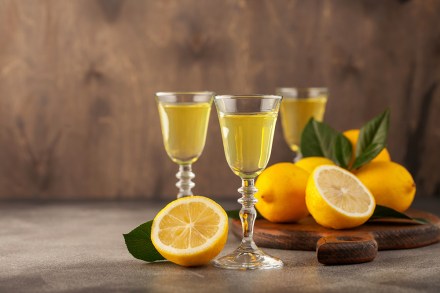
Consider the paradox of lemons. In Italy, one associates them with scented groves. A few years ago, Helena Attlee wrote the book The Land Where Lemons Grow, in which citrus fruits become a golden thread running through the history of Italian agriculture. Yet though the lemon is arguably the most beautiful of fruits, its tart taste is bracing. A spremuta di limone finds a swift route to any shaving nicks. Most limoncello is produced on the Amalfi coast but there is an outlier from Godalming But the lemon can be sweetened, in the form of limoncello, an after-dinner drink of no great subtlety, good for pouring over puddings but hardly a match for the fortified wines of the Iberian peninsula. That said, there is an exception.

I’m raising a glass to the Tory party’s future

Wine stimulates the wits, emboldens debate, and inspires the mind. Judicious quantities, abetted by judicious quality, encourage the participants to attack the important questions. Thus it has been over the past few days, discussing God and the Universe. I was talking to an astronomer, whose day is spent contemplating the vastness of interstellar space. Consider one single light year, and how far that would take us from our own celestial neighbourhood. Then let your mind give way before the unimaginable distances. Already daunted, move onwards to the queen of the sciences, theology, and the question posed by that outstanding 20th-century theologian, Mr Prendergast in Decline and Fall. He could not explain why God had bothered to make the world.

My adventures in rosé

During the festive season, I usually spend far too much time thinking and talking about politics. But the latest was an exception. One hostess fixed me with a gimlet eye and announced that she had forbidden any discussion of Israel/Palestine. At a recent dinner party, the table had been repeatedly banged, someone had stormed out and others were now on non-speaks. I quoted the late Clarissa Eden. During the Suez crisis, she felt that the Canal was running through her drawing-room. This girl gave a hearty nod in agreement. I was happy to agree with the ban, but declared my surprise. How could anyone be so sure of the solution? The most I could come up with was ruminative gloom.

Let’s hope for good cheer this Christmas

A couple of years ago, I saw a charming cartoon. A boy and a girl aged about seven were in an earnest conversation. ‘Of course I don’t believe in Father Christmas,’ said the boy. ‘But we’ve got to keep up the pretence for the sake of the parents.’ This Christmas, all over the world, many parents will be especially keen to dwell on the great festival’s innocent joys. Innocence: in many places the fear is that the glory of birth will give way to the massacre of the innocents. Like the shepherds, a large number of people are sore afraid. Unlike the shepherds, their fear has no relief at hand from the Heavenly Host. A lot of friends have been converging on London, not all of them with glad tidings.

The Swiss appetite for wine gives them a good name

A friend was in town, who rebuts two instances of dull conventional wisdom. The first is that although Swiss Germans may have many qualities – they make excellent bankers – they have no joie de vivre. The Calvinist heritage persists. Second, that the Swiss are an implacably martial race. Other armies, especially the British, use humour to palliate the rigours of serving. The Swiss would be appalled by such frivolity, which may explain why no one has been in a hurry to assail their mountains. There was a serious French restaurant across the border, so he borrowed a tank and set off In both respects, Nick Sillich is a triumphant exception. He is also a fellow who puts the trench into trencherman. That explains why he was the last Swiss soldier to invade France.

I hope David Cameron will find time to drink the odd good bottle

Back in 1989, a most unsatisfactory fellow called General Aoun started a civil war around Beirut in the hope of seizing control of the Maronite Christian portions of Lebanon. He ended up with political wreckage, which has endured. Château Berliquet 2015 is a fruity St Emilion that deserves to be better known During the fighting, I spent a few days cut off in the British ambassador’s summer residence, watching the battle going on below. We felt safer than we probably were, partly because Pauline Ramsay, the ambassador’s enchanting wife, tried to turn the crisis into a house party. So British: so best of British. We watched, helpless, as one block of flats was regularly hit by shells.

The world is a mess. Why not find escapism through wine? 

In most children’s stories, the good characters live happily ever after. Works suitable for older readers tend to greater realism. Even ‘Gaudeamus Igitur’, that most joyous of drinking songs, presses the case for carpe diem. ‘Get stuck in to your pleasures laddie,’ it seems to be saying, ‘before it is too late.’ With the world in such a mess – less carpe diem than dies irae – the case for a vinous route to escapism might seen persuasive. Housman seemed to think so. ‘Could man be drunk for ever,’ starts one poem, then all would be well. Not for long. ‘But men at whiles are sober/ And think by fits and starts/ And if they think they fasten/ Their hands upon their hearts.

It’s time to take Italian wine seriously 

Tuscany: earth has not anything to show more fair. The landscape is charming. The gentle hills seem to smile down upon humanity. The inhabitants give the impression that they were already civilised when we British barely had enough woad to paint our backsides blue. There are also the grapes. From early on, Tuscany sent its vinous plenitude to Rome. Today, it still does, and to Orbi as well as Urbi. There was a time when Italian wine was not taken seriously in the world, and Italians themselves seemed to concur with this patronising assessment. That is no longer the case. One of the most interesting intellectual disputes in vinous matters now concerns Italian wine. There was a time when Italian wine was not taken seriously.

Tories know how to find themselves a good drink

I feel old, and feelings are not always wrong, This eheu fugaces mood came on me at the Conservative party conference in Manchester. I realised that it was 46 years since I first attended this gathering, before the present Prime Minister was born and when his predecessor was barely old enough for Father Christmas. The trouble is that she still believes in him. Jeroboams loves nothing more than finding small growers who produce good bottles There have been changes in the near half-century. In the old days, the conference hotel was dominated by knights of the shire, or the grander esquires of the suburbs. They were all at least 55 and identically attired. If it was not Savile Row and Lobb it was something similar and almost as expensive, with a hint of eau de cologne grand cru.