Boyd Tonkin

Snafu at Slough House: Bad Actors, by Mick Herron, reviewed

Reviewers who make fancy claims for genre novels tend to sound like needy show-offs or hard-of-thinking dolts. So be it: here’s mine. Anyone who tries to understand modern Britain through its fiction but overlooks Mick Herron’s satirical thrillers merits a punishment posting to the critics’ version of Slough House. That noxious midden of a building opposite the Barbican, its leprous chambers groaning like ‘the internal organs of some giant, diseased beast’, is a sort of landfill site for failed spies. Herron first opened its flaking doors in 2010 with his novel Slow Horses. Seven books later, his squad of borderline sociopath rejects from polite espionage has risen to the dignity of a luxury cast series on Apple TV+.

From Mrs Dalloway’s West End to Tolkien’s Middle-earth

Professor David Damrosch, the director of Harvard’s Institute for World Literature, fell in love with ‘a fictional realm that I’d never imagined’ in 1968. His English teacher, Miss Staats, gave him Laurence Sterne’s Tristram Shandy. This horizon-stretching Manhattan educator turns up again in another light towards the end of this book. A long-term girlfriend of Saul Bellow, Maggie Staats prudently said no when the novelist proposed to her. At this point, Damrosch has just told us that the hero of Bellow’s Henderson the Rain King remembers having ‘dreamed at the clouds from both sides’, so planting an idea in the young Joni Mitchell’s mind. You get the drift.

A broken nation: Chronicles from the Land of the Happiest People on Earth, by Wole Soyinka, reviewed

One of the best episodes in Wole Soyinka’s third novel (his first since 1973) takes place not in Nigeria but in Salzburg. An engineer-turned-entrepreneur has died in hospital there after a bomb attack back home. His grasping clan descends from Lagos to parade their last respects — and stake their claims. The drive to the cemetery triggers a ‘torrent of eulogies to Austrian horticulture’. In a ‘concerted sibling gush’, plutocratic relatives swoon over the contrast between these clean, green vistas and the choking inferno of Lagos — an urban nightmare aggravated by their own mercenary scams. Soyinka’s characters often hide behind such ‘straw masks’ of pretentiousness, hypocrisy and fakery.

The power of the translator to break nations

No one ever raised a statue to a translator, disgruntled adepts of that art sometimes complain. I beg to differ, since I’ve seen one: the handsome monument to the 12th-century scholar-physician Judah ibn Tibbon, ‘patriarch of translators’, beneath the Alhambra in Granada. But if the brokers between languages and cultures still lack many bronze or marble tributes, the books that celebrate their calling have begun to pile higher. A few of them retaliate against the downgrading of translation skills with a mystagogic tone which repels curious civilians. Which makes Anna Aslanyan’s wide-angled and reader-friendly tour of her profession’s many roles, in literature, politics, law, diplomacy, business and data science, all the more welcome and appealing.

A Danubian Narnia: Nostalgia, by Mircea Cartarescu, reviewed

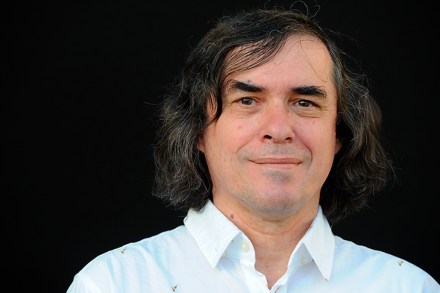
Mircea Cartarescu likens his native Romania to a Latin American country stranded in eastern Europe. Certainly, his writing delivers not the pared-down parables and ironies of his self-exiled compatriot (and Nobel laureate) Herta Müller, but a rainbow-hued riot of fantasy, imagination and invention. The gender-switching narrator of ‘The Twins’ — one of five linked tales that make up Nostalgia — urges his lover to remember that ‘under the obscene rococo of our world and flesh, our bones are gothic and our spirit is gothic’. That feels about right, although Cartarescu fills his grotesque and hallucinatory scenes with tropical warmth, colour and light on top of the sepulchral chills of old Europe.

The dictator of the dorm: Our Lady of the Nile, by Scholastique Mukasonga, reviewed

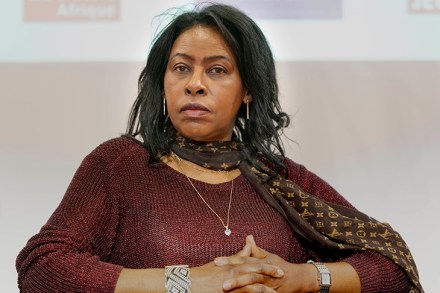
In the cloud-capped highlands of Rwanda, even the rain-makers sound like crashing snobs. When two teenage pupils from Our Lady of the Nile lycée slope off to consult the sorceress Nyamirongi about some boyfriend trouble, she sizes up their genealogies and comes over all Mitford duchess: ‘You’re not from very good families. But nowadays they say it no longer matters.’ Like so much in Scholastique Mukasonga’s novel, it’s a comic scene with a rumble of menace in the background — akin to the rainy season’s distant thunder in these lush, green hills. Where you belong — your people, your connections, your identity — has been a matter of life and death before. Soon it will be again.

Algeria’s War of Independence still leaves festering wounds, two new novels reveal

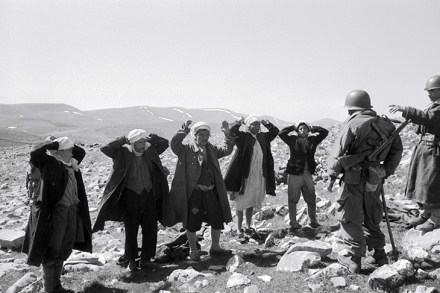
In France, even the car horns yelled about Algeria. A five-beat klaxon blast — three short, two long — signalled Al-gé-rie Fran-çaise. In the early 1990s, I slunk into a rally held by Jean-Marie Le Pen in Nice to find that for the ranks of cropped, thickset pieds noirs in leather jackets, the bloodbaths and betrayals three decades back in Oran, Constantine or Algiers drove what they thought and how they voted. A generation later, Algerian migrants or returnees — Arab, Kabyle, European — now have second- and third-generation families. But the atrocity-littered independence war of 1954-62, and its gruesome aftermath, remain festering wounds.

In search of Noëlle: Invisible Ink, by Patrick Modiano, reviewed

At some point in his twilit, enigmatic novels of vanished lives and buried memories, Patrick Modiano likes to jolt his reader with a glimpse of the all-too-real horrors that underpin his work. In Invisible Ink such a moment comes when the narrator recalls images from a postwar trial, where ‘behind the accused were about 30 suitcases — the only remaining traces of persons who had gone missing’. You might say that Modiano has spent a literary lifetime opening those suitcases to find out whose lives they contained. Born in Paris in 1945 to a Belgian actress mother and a Jewish father who had survived the Occupation by weaving through an underworld of shady deals, he grew up in a family microclimate of evasion and oblivion.

Full of desperate longing: Unquiet, by Linn Ullmann, reviewed

The scrawny little girl with ‘pipe-cleaner legs’ wants to feel at home with her parents. But father and mother live mostly apart —the former in Sweden, the latter in Norway or New York — and the trio fails to bond: ‘It was never us three.’ Her famous father is a migratory sage with ‘a unique talent for partings’, obsessively orderly and punctual but happy to let this youngest child (of nine, by five wives, and the girl’s unmarried mother) grow up ‘without any plan or direction’. Her mother, often dubbed the father’s ‘muse’ (though never by the father), fills the planet’s screens with beauty ‘of the sort that belongs to everyone and no one — like a national park’.

Stockholm syndrome: The Family Clause, by Jonas Hassen Khemiri, reviewed

Some faint hearts may sink at the idea of a torrid Swedish family drama peopled with nameless figures identified only as ‘a grandfather who is a father’, ‘a sister who is a mother’, and so on. Stick around: this gets better. That grandfather, an immigrant trader who ‘could sell sand to a beach’ or ‘wind to a hurricane’, remembers his first taste of Swedish TV: a child- ren’s programme featured ‘two different coloured socks with sequins for eyes’ discussing ‘how vital class struggle was for a happy society’. Later, after the long-distance skating, came ‘a documentary about Latin American poets or Ukrainian beekeepers’.

Foreign fields: Boyd Tonkin chooses his favourite shorter classics in translation

If I had a rouble or a euro for every reader who fulfilled their lockdown promise to devour Dostoevsky, Tolstoy or Proust my bank account would hardly grow by a single penny. Duty, guilt and pride never made the pages turn more swiftly, whatever a book’s length. Almost all vows to catch up on doorstopper classics from the global canon will have failed to outlast the fallen blossoms. Yet you might more realistically blend discovery and delight by exploring some of the smaller miracles of great fiction in translation. Freshly completed, in first-rate new translations, the 75 volumes of Georges Simenon’s Maigret mysteries bear witness to a Penguin Modern Classics project of majestic scope and unflagging quality.

Sinister toy story: Little Eyes, by Samanta Schweblin, reviewed

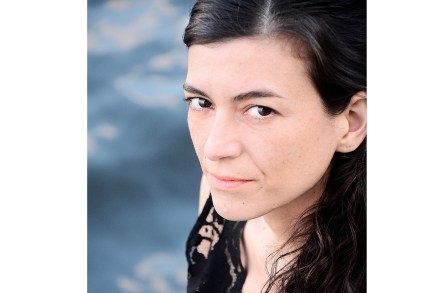
We often hear that science fiction — or ‘speculative’ fiction, as the buffs prefer — can draw premonitory outlines of the shape of things to come. Well, consider the case of this novel by an acclaimed Argentinian-born, Berlin-based writer, first published in Spanish last year. Little Eyes imagines a gadget (nothing fancy really, just a plush animal toy with camera and wifi implants) that creates a private but silent connection between its owner anda single, remote watcher.

Albanian literary icon Ismail Kadare revisits ‘home’

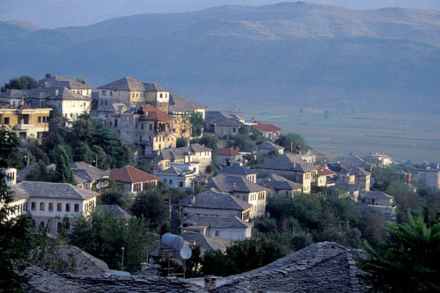
Ismail Kadare is a kind of lapidary artist who carves meaning and pattern into the rocky mysteries of his native Albania. Born, like his frenemy the Communist dictator Enver Hoxha, amid the blank-faced mansions and feuding clans of the ‘stone city’ of Gjirokaster, the novelist has always framed the terror, secrecy and confusion of the regime as a family affair. The usual comparisons with Kafka and Orwell underplay the sheer, gut-twisting intimacy of politics and power in his work. It baffles outsiders who want to label Kadare either a brave dissident or a complicit stooge. Ideology be damned: this is, and always was, strictly personal. The Doll even wonders whether ‘tyranny is a real thing or something one projects oneself. The same goes for enslavement.

Making mischief: J.M. Coetzee’s The Death of Jesus is one almighty tease

Late in this final volume of a tantalising trilogy, we hear that its enigmatic boy hero ‘would never tell you his meaning directly. Always left it to you to puzzle things out.’ That verdict surely applies not only to the trio of gnomic novels that ends with The Death of Jesus. It fits the entirety of John Coetzee’s utterly lucid yet fiendishly elusive work. The South African Nobel laureate, resident in Australia since 2001, began his weird, stark but oddly hypnotic series of stories about an immigrant to a Spanish-speaking land and the ‘exceptional child’ he adopts with The Childhood of Jesus in 2013.

Living life to the full

In 1971, Tove Jansson paid one of her many visits to London, where 1960s fashion hangovers made the whole city look like ‘one big fancy-dress ball’. When not partying to celebrate 20 years of British editions for her Moomin books, she and her life-partner ‘Tooti’ — the artist Tuulikki Pietilä — caught performances of Hair (‘a grand glorification of psychedelic hippiedom’) and the ‘racy’ Canterbury Tales musical. They also saw that ‘incredibly powerful’ film, The Trials of Oscar Wilde — ‘very unlikely to come to Finland, unfortunately’.

In praise of Tove Ditlevsen — the greatest Danish writer you’ve never heard of

Pick up a Penguin Classic from a cult Danish author who ‘struggled with alcohol and drug abuse’ and took her own life aged 58, and you may have one or two prior expectations. They will probably not include a flirtatious dinner with an enthralled Evelyn Waugh (‘so attentive and kind’) in a Copenhagen restaurant so quiet that ‘we could hear the thumping of ships’ motors far out on the water’. Tove Ditlevsen and the ‘vibrant, youthful’ Waugh have their evening spoiled when her third husband — a crazy, drug-pushing medic — turns up in his motorcycle leathers to drag Tove away for her bedtime injection, plus a bout of rougher than usual sex that leaves her spaced-out, ‘limp and blissful’.

Between the devil and the deep blue sea

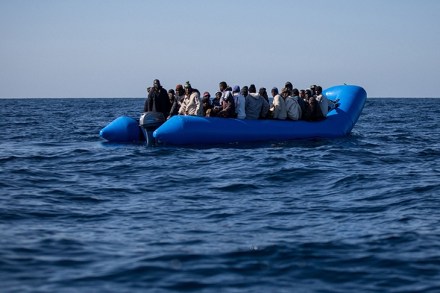
Death by water haunts the stories of Africans in Europe that flow through this fourth novel by Helon Habila. From the drowning of Milton’s swain Lycidas (a sort of tidal refrain for the book) to the capsized boat in the closing pages that offers victims in their hundreds to the ‘enraged leviathan’ of the sea, the imperious waves help wash these personal histories in an aura of myth. Whether privileged or penniless, the migrants whose journeys fill this episodic fresco of a work all crave the stories ‘traded as a currency among homeless, rootless people’. They hunger for narratives because ‘the water they all crossed to come here has dissolved the past’.

Mocking the mandarins

Stendhal likened politics in literature to a pistol-shot in a concert: crude, but compelling. When that politics largely consists of machinations within the European Commission in Brussels, readers may fear that the writer who pulls the trigger wields no more than a pop-gun. Yet the Austrian author Robert Menasse has scoured these corridors of power — and powerlessness — to furnish a thoroughly entertaining fiction that serves both as a sort of campus satire and a novel of ideas. For sure, Menasse has an agenda. His nicest characters tend to believe in the ‘post-national democracy’ of EU integration. Still, their efforts to sell the Brussels system as ‘the moral of history’ pass through enough comically convoluted byways to give succour to sceptics too.

A tragic fall from grace

Nurture hatred in your heart and you will keep ‘an unfed tiger in a house full of children’. A man who passes on a plausible lie ‘may be offering a rattlesnake in a calabash of food’. Someone who lugs grievances around carries ‘a full pitcher of resentment from which, every step or so on its rough journey through the worn path of life, a drop or two spilled’. This second book from the young Nigerian author whose debut, The Fishermen, reached the Man Booker shortlist does not quite escape that difficult second novel syndrome. It’s overlong, raggedly structured and freighted with rambling digressions.

Another tale of star-crossed lovers

It’s hard, in Britain, to imagine a popular museum devoted to a single poem. The Polish city of Wrocław hosts just such a shrine. It celebrates Pan Tadeusz, the verse novel written in his Parisian exile by the poet, dramatist and freedom fighter Adam Mickiewicz in the early 1830s, and now taught as a keystone of collective identity to every Polish schoolchild. Even the idea of a ‘national epic’ sounds like a great big bore, especially as the action of this one turns on a sideshow in the Lithuanian backwoods during the Napoleonic wars, while ‘the wide world ran riot/ In blood and tears’.