Benedict Rogers

Benedict Rogers is Senior Director of Fortify Rights, co-founder and Chair of Hong Kong Watch, and author of “The China Nexus: Thirty Years In and Around the Chinese Communist Party’s Tyranny”

China’s human rights crackdown is getting worse

From our UK edition

The Chinese Communist Party regime’s repression is pervasive and intensifying. Over the past five years, Xi Jinping’s brutal assault on basic human rights has accelerated with horrifying ferocity and speed.  But while the incarceration, forced sterilisation and enslavement of millions of Uyghurs is increasingly recognised as a genocide, and the dismantling of Hong Kong’s promised freedom and autonomy a grave breach of an international treaty, it is worth remembering that numerous groups in China are under attack.

China has taken control of Hong Kong’s legislature

From our UK edition

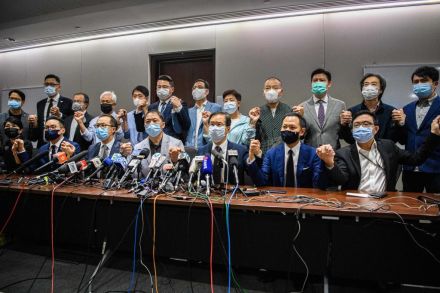
Hong Kong’s legislature has today moved one step closer to becoming a local branch of the Chinese Communist Party, after the disqualification of four of the most moderate, mainstream pro-democracy legislators resulted in the resignation en masse of every single pro-democracy legislator in protest. For the first time since 1997 the body now has no pro-democracy voices, marking yet another nail in the coffin of ‘one country, two systems.’ The four legislators who were ousted by Beijing – Alvin Yeung, Kwok Ka-ki, Dennis Kwok and Kenneth Leung – are hardly radical pro-independence activists.

Hong Kong’s ‘one country, two systems’ is over

From our UK edition

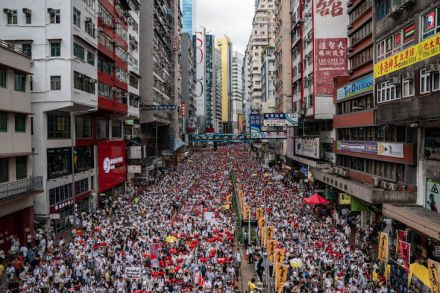
The Chinese Communist party made an announcement yesterday which effectively ends 'one country, two systems' in Hong Kong, and in so doing launched a brazen assault on the international rules-based order. They have also dramatically changed the very nature and way of life of the city which was once my home. Over the past six years, the regime in Beijing has increasingly tightened its grip on Hong Kong, eroding its freedoms initially subtly but more recently with dramatic acceleration, and tearing up the promises it made in an international treaty with Britain before the handover.

How coronavirus can save Hong Kong

From our UK edition

The coronavirus has enforced a hiatus in Hong Kong’s widespread political unrest with worries about transmission stalling protests. Dissatisfaction with the government still festers, fuelled by the mishandling of the health crisis - all the ingredients are there for protests to reignite. But the lull in the unrest gives the Hong Kong government and their counterparts in Beijing a window of opportunity. It is imperative that the British government encourages all sides to grasp the next few months as a moment for reconciliation. President Xi Jinping has been busy using this space to reshuffle the officials overseeing Hong Kong from Beijing’s side by appointing loyalists Xia Baolong and Luo Huining.

How Boris Johnson should deal with China

From our UK edition

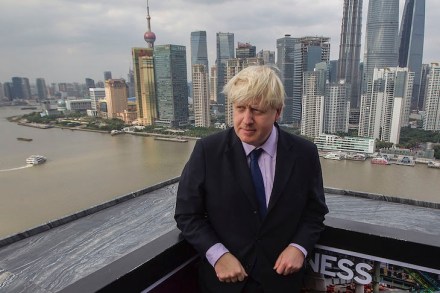
Boris Johnson now has a hefty majority in Parliament. He can reshape Britain. He can redefine the Conservative party. And he can – to use a well-worn phrase – 'get Brexit done'. Which also means that after more than three years of being engulfed with Brexit, the government can now begin to turn its attention to the UK's relationship with China, and in particular our responsibilities for our former colony, Hong Kong. The Prime Minister could potentially go in two directions. He may prioritise trade deals, even if that means sacrificing our values, our conscience and our reputation. Or he could say that 'Global Britain' will be a nation that, yes, trades with the world but also stands up for its values and defends others struggling for them.

Britain’s failure to speak out for Hong Kong

From our UK edition

Today in Westminster Abbey, Britain will remember the life of one of our most inspirational, colourful and remarkable political leaders: Paddy Ashdown. As we do, I know he would want us to remember our responsibilities to Hong Kong, a cause close to his heart. Paddy lived in Hong Kong from 1967 to 1970 while in the special forces, returned in 1989 to march in protest at the Tiananmen massacre, and campaigned for the right of abode for Hong Kong holders of British National Overseas (BNO) passports, prior to the handover. When I helped found Hong Kong Watch just under two years ago, Paddy agreed to be one of our patrons, and was a steadfast ally in speaking out against the increasing erosion of Hong Kong’s freedoms.

Hong Kong’s first political asylum seekers

From our UK edition

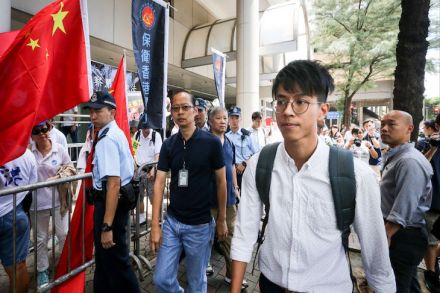
Hong Kong’s freedoms, autonomy and rule of law face ever-increasing threats, but there is a twin set of legal dangers that pose the most serious risks for the city’s way of life: an old colonial law that needs reform, and a new law that should never be introduced. Last week, two Hong Kong activists, Ray Wong and Alan Li, announced that Germany had granted them political asylum – the first ever asylum seekers from Hong Kong. For a city that has for decades been a destination for refugees fleeing mainland China, Vietnam, Pakistan and other parts of the world to be producing its own asylum seekers is a sign of just how bad the situation has become. These two young Hong Kongers fled their city to escape prosecution.

It’s time for the UK to stand up to China over Hong Kong

From our UK edition

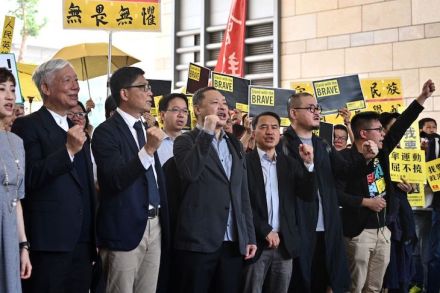
Today’s conviction of nine leaders of the Hong Kong Umbrella Movement on charges including ‘incitement to public nuisance’, ‘incitement to incite public nuisance’ and ‘conspiracy to public nuisance’ is, in itself, one of the biggest public nuisances in Hong Kong in recent years. And the verdict is yet another hammer blow to Hong Kong’s rapidly eroding freedoms. The nine convicted leaders include three of the most prominent activists and figureheads of the Umbrella Movement: law professor Benny Tai, sociology professor Chan Kin-man and Baptist pastor Chu Yiu-ming. They could face up to seven years in jail.