Arash Azizi

Arash Azizi is the author of What Iranians Want: Women, Life, Freedom (Oneworld, 2024)

Who will lead Hamas now?

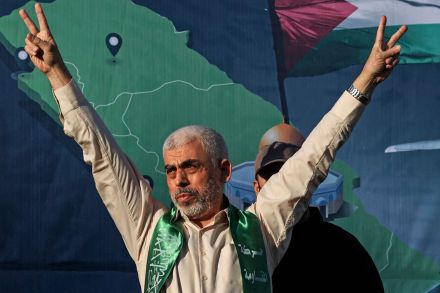
It took more than a year of waging war, but Israel has finally succeeded in killing its top target in Gaza: Yahya Sinwar. Alongside Mohammad Deif, who is thought to have been killed by an Israeli strike in July, Sinwar was the man most responsible for organising the horrific attacks of 7 October. At the time of those attacks, Sinwar was the head of Hamas’s Gaza branch, but since August he had been promoted to the group’s overall leader, replacing the Qatar-based Ismayil Haniyah who was assassinated on 31 July while on a trip to Tehran. The group must now pick a new leader.
Will Iran attack Israel?

The Middle East is bracing for an attack whose exact source, targets, method, timing and scope are unknown. On Monday, a suspected Israeli air strike targeted a group of Iranian officials in Damascus, Syria, and citizens of the region are now waiting to see how Iran’s regime will respond. Israel has scrambled GPS signals across the Middle East to confuse Iranian weapons – people living in places as far away from Israel as southeastern Turkey couldn’t use Google Maps on their phones this week. The GPS placed everybody in Beirut. Monday’s attacks hit the Iranian consulate in the Syrian capital. Israel has staged dozens of attacks on Iranian targets in recent years, but this was in a league of its own.

Iran and the Yakuza are natural criminal bedfellows

On Thursday, a 60-year-old Japanese crime boss appeared in a New York court to respond to charges that he helped traffic illicit material from Myanmar to Thailand. You might expect this to be a story about the Southeast Asian drug trade – it’s a vibrant business after all. In fact the supposed Yakuza boss, Takeshi Ebisawa, was allegedly caught trying to supply uranium and weapons-grade plutonium to an undercover DEA agent purporting to know a general in Iran. According to the court documents, Ebisawa and his Thai partner, who are being held in a Brooklyn jail, had been able acquire the nuclear material from an ethnic insurgent group in Myanmar. The Islamic Republic has long used its sprawling global reach to advance its shady military, political and economic goals.

Airstrikes won’t stop the Houthis’ Red Sea attacks

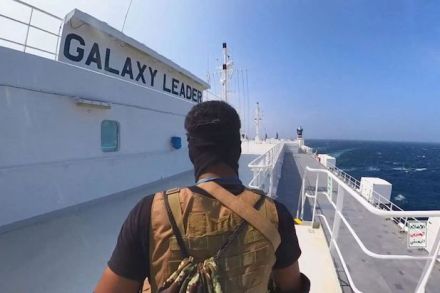
It was less than two weeks ago that the US and UK introduced a new element to the multi-faceted conflict in the Middle East. On 12 January they carried out joint strikes against the Houthis, a militia that controls Yemen’s capital Sanaa and large parts of Yemeni territory and is recognised as the country’s government by its main backer, Iran. The UK and US strikes came in response to weeks of Houthi attacks on ships passing through the Red Sea. The militia claimed its attacks were in response to Israel’s assault on Gaza but in practice it was targeting any and all shipping in the area as well as US and UK warships. In other words, they started it.

Who are the Houthis?

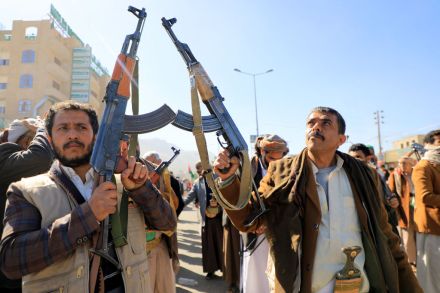
About a month ago, a regional brigade of the Islamic Revolutionary Guards Corps (IRGC), the militia that undergirds the power in the Islamic Republic of Iran, held a political conference in the port city of Bushehr on the Persian Gulf. The keynote speaker was a surprise for most attendees: Salim al-Montasser, an envoy of Yemen’s Houthis, who the UK and the US targeted in airstrikes last night. The Houthis are a Shia militia that holds power in Yemen’s capital, Sanaa, and is regarded as the sovereign Yemeni government by Tehran (but not by the Arab League or the international community).

Iran and Hamas didn’t always get on

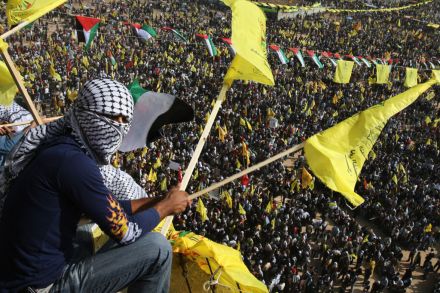
In the days after Hamas’s attack on Israel last week, everyone wondered how much Iran knew beforehand. But a focus on the specifics of the 7 October operation misses the point. The attacks just wouldn’t have been possible without Iranian support. It doesn’t matter much if they directed them.  A Hamas leader said Soleimani had given a delegation of his group $22 million in cash The kinship between Hamas and Iran began in the nineties. Hamas was founded in 1987 by followers of the Muslim Brotherhood, an Egypt-based Islamist movement, and throughout the 1990s, as the conferences in Madrid and Oslo led to hopes for an Israeli-Palestinian reconciliation, with the Palestine Liberation Organisation (PLO) representing Palestinian interests, Tehran opposed the plans.