Annabel Denham

Annabel Denham is a column and acting comment editor at the Daily Telegraph

Debate: what’s the point of the Lib Dems?

From our UK edition

24 min listen

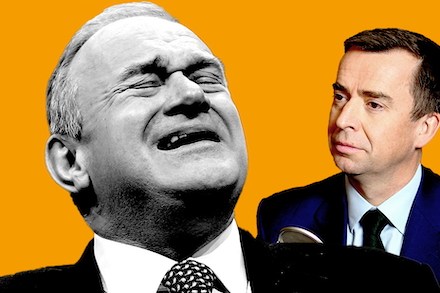
As Ed Davey condemned Donald Trump's military manoeuvres abroad, Annabel Denham looked on and asked 'what's the point of the Liberal Democrats?'. Thinking about the Lib Dem's longstanding europhile stance, the senior political correspondent at the Telegraph wrote: 'the party that once stood on a tradition of civil liberties now wants us to rejoin a bloc which regulates everything'. Calum Miller MP – foreign affairs spokesperson for the Liberal Democrats – joins Annabel and deputy political editor James Heale to address Annabel's challenge that the party is defined more by opposition the other parties than by their own policies. So, from localism and the UK's place in the world to free markets and social care, what do the Lib Dems stand for? And what constitutes 'liberalism' today?
Why is WFH still as common as it is?

From our UK edition

Have you seen Severance? If not, I urge you to cancel all evening plans and commit to binge-watching it for the next week. I'm not a PR for Apple TV+, or not a paid one at least, merely an optimist who believes the creators of this multi-award-winning show may have gifted mankind one of the best series of all time. It’s still early days, we’re only ten episodes in, but Severance could be proof that high-concept, done well, is unbeatable viewing. Apple certainly has a great deal riding on it: the new season’s budget was reportedly $200 million. And though the data are hard to come by, Apple TV+ is apparently watched less in one month than Netflix is watched in a day. What’s the premise of this show I’m running the risk of overhyping?

Optimism alone won’t raise Britain’s birth rate

From our UK edition

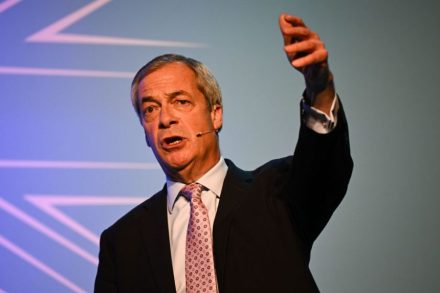
Few things could make Nigel Farage squirm, but a question from Jordan Peterson at this week's Alliance for Responsible Citizenship (ARC) conference seems to have done the trick. During a fireside talk, the Canadian psychologist asked the Reform leader whether long-term, monogamous, heterosexual, child-centred marriages were the foundation stone of a civilised society. After conceding that, having been divorced twice, he might not be the best advocate for stable unions, Farage, a father of four, responded that 'we need higher birth rates' and emphasised the importance of our 'Judeo-Christian' culture. 'Of course we need higher birth rates,' Farage said. 'But we’re not going to get higher birth rates in this country until we can get some sense of optimism.

Immigrants won’t fix Britain’s baby crisis

From our UK edition

The fertility rate of foreign-born women is almost a third higher than that of UK-born women, according to new analysis. And yet, even the foreign-born rate of 2.03 children per woman (compared with 1.54 for UK-born) remains below the replacement rate of 2.1. It has steadily declined from its peak of 2.46 two decades ago. In other words, we cannot rely on immigration to make our population self-sustaining. For years British policymakers seem to have assumed that high levels of net migration would alleviate our demographic woes. Open our borders, and in would flow young people willing to abandon their own ageing parents in order to care for, and fund, ours.

Is it a surprise that Labour want to ban outdoor smoking?

From our UK edition

Anyone surprised by leaked documents showing smoking may soon be banned in beer gardens, small parks, outdoor restaurants, open-air spaces at nightclubs and outside football stadiums hasn’t been paying attention.  For a start, the UK has been on the slippery slope towards tobacco prohibition for nearly two decades: Tony Blair banned smoking outdoors, Theresa May set a target of going ‘smoke-free’ by 2030. Rishi Sunak – a man whose opposition to some of the tougher lockdown measures gave a glimmer of hope that liberalism hadn’t been entirely extinguished in the Tory party – attempted to make a generational ban on tobacco sales his legacy. All of this is a death by a thousand cuts, our freedom slightly curtailed with every stroke.

Is the ‘motherhood penalty’ really behind the UK’s falling birth rate?

From our UK edition

Britain is so beset with immediate problems that major issues, ones which could drastically alter our society and the way we live, are being sidelined. One of these is our plummeting birth rate. The number of deaths in England and Wales could this year exceed the number of births. Our total fertility rate, at 1.49 children per woman and falling, is far below the 2.1 required to sustain population growth. Ultimately, we don't know how to get people to have more children The economic implications are obvious: in the late 1970s, there were four workers for every dependent person. There are now only three and, all other things being equal, this could drop to two by 2050. Welfare is already ballooning; we are spending £138 billion on the state pension, almost £2,000 per UK citizen.

Working from home won’t fix Britain’s productivity

From our UK edition

Why is Britain’s productivity so stubbornly low? Output per worker increased just 0.1 per cent in the year to April. Across swathes of the economy it is in absolute decline.  One theory, posited by those brave enough to voice unfashionable opinions, is that working from home is dragging down productivity growth. This has been dismissed by unions and the Labour party, who go to great lengths to show flexible working boosts output. Workers, they say, will get more done with fewer breaks, take fewer sick days, and are less likely to change jobs.  Such claims should be taken with a pinch of salt. According to new data from the Office for National Statistics, productivity in London tumbled in 2022, taking output per hour worked to its lowest level since 2009.

The Green party is terrifying

From our UK edition

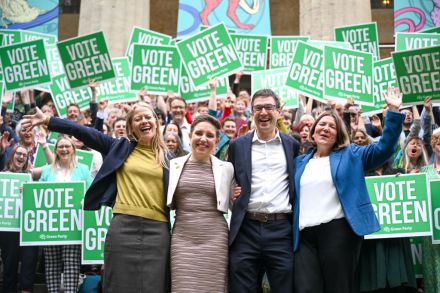
Is the Green party the most controversial force in British politics? It’s certainly giving Reform a run for its money. In the past few months, the Greens have suspended a former London Assembly member and two-time London mayoral candidate after he lamented that colleagues had denounced the Cass Review. After the local elections, one councillor sparked outrage by shouting ‘Allahu Akbar’ to celebrate his victory. At the weekend, it was reported that three candidates for the party were no longer standing amid suggestions they made racist comments. What do traditional Green voters – those primarily driven by environmental concerns – make of these developments?   Now there’s the backlash to their scandalous maternity policy.

The problem with Labour’s free breakfast clubs plan

From our UK edition

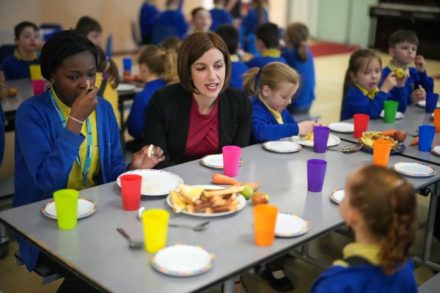
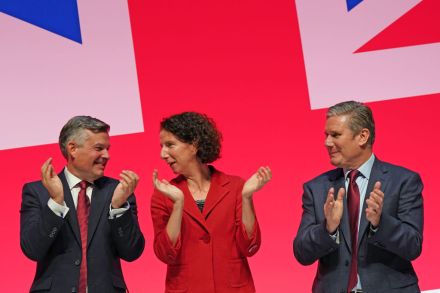
Labour has been deliberately opaque when it comes to their plans for government, but on one issue Sir Keir Starmer has been uncharacteristically lucid. The leader of the opposition will be slapping VAT on private schools on ‘day one’ in Downing Street, a promise which has already prompted some parents to cancel places for September. Shadow education secretary Bridget Phillipson has made clear that this punitive, green-eyed levy on independent school fees will fund her broad-ranging education plans, from ‘higher standards’ (though the number of schools judged by Ofsted to be ‘good’ or ‘outstanding’ increased from 68 per cent in 2010 to 90 per cent in 2023) to ‘higher paid jobs’ (these details remain unknown).

The horror of NHS maternity wards has been exposed

From our UK edition

Will any woman who has given birth on the NHS be surprised by a damning report into maternity services? I wasn’t. I was horrified to read of babies born with cerebral palsy because of mistakes and failures made before and during labour. I was deeply saddened to read about mothers who were mocked, neglected, patronised, even shouted at, by midwives during childbirth, with many suffering long-lasting effects. But surprised? No.  Aspects of this Birth Trauma Inquiry are eerily familiar. In 2022, the Ockenden report into maternity services at Shrewsbury and Telford Hospital concluded that ‘repeated’ failures in care may have led to the deaths of more than 200 babies, and of nine mothers.

Elphicke is wrong: the Tories haven’t abandoned the centre ground

From our UK edition

It takes some brass neck to cross the floor, but to do it in the manner of Natalie Elphicke also requires considerable levels of delusion. A year ago, the Dover MP warned Labour were not to be 'trusted' on immigration because they 'really want open borders'. Yet a deciding factor behind her defection, she writes in her parting statement today, was the 'safety and security' of those borders – a matter on which Keir Starmer's party has yet to convince anyone. Elphicke objects to the ousting of Boris Johnson, yet her new colleagues wanted him out on day one Elphicke also lambasts the Tories' housing policy, although even Angela Rayner would struggle to articulate just what Labour plans to do to alleviate the crisis.

What do falling birth rates mean for the future of the planet?

From our UK edition

Few Britons will have heard the phrase 'apocalyptic winter', but that may soon change. It's how Italian politicians describe the season when deaths in the country outstrip births. In Italy, the total fertility rate (TFR), the average number of children born to a woman in her lifetime, is now 1.24, far below the 2.1 required to sustain population growth. Other European nations are faring worse: in Malta, it's barely over 1; in Spain, just 1.19. In the UK, meanwhile, the TFR decreased to 1.49 children per woman in 2022 from 1.55 in 2021. According to a new study in the Lancet, this trend will get much worse, on a global scale, and fast. The world population, researchers suggest, will fall, within decades, for the first time since the Black Death.

It’s time to take a chainsaw to the British civil service

From our UK edition

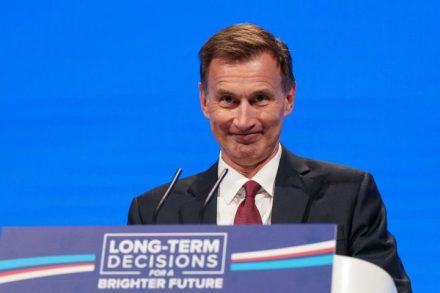
Slashing Whitehall waste is a pledge that brings to mind Augustine’s prayer for the Lord to make him virtuous – but not yet. It is something repeatedly promised by governments, but rarely delivered. Here we are again, days out from the final Budget before voters go to the polls in a general election, and Jeremy Hunt is announcing a crackdown on bureaucracy in the public sector. He intends to reduce the civil service headcount by 66,000, returning it to pre-pandemic levels. Do we need a Department for Culture, Media and Sport? Voters are likely to feel cynical. Britain’s public sector is riddled with entitlement and waste at levels described by the Chancellor as 'immoral'.

The cynicism behind Labour’s Race Equality Act

From our UK edition

Labour is desperate to come across as business-friendly. Last week, the party said it will no longer reinstate a cap on bankers’ bonuses, and that it will ‘unashamedly champion’ the financial services industry. But how to square that with the party’s new Race Equality Act? Most people understand equal pay to mean exactly what was intended when it became law in 1970: that remuneration must be the same for two identical jobs within an organisation, regardless of who is in post. But since the EU’s 2006 Equal Pay Directive it has taken on a new meaning: now, it covers ‘like work’ (where the job and skills are the same or similar), ‘work rated as equivalent’ or ‘work of equal value’.

The Tories’ childcare plans aren’t grounded in reality

From our UK edition

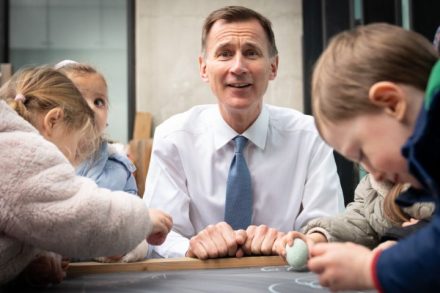
Of all the reasons why the Conservatives deserve to lose the next general election, their nonsensical childcare policy is among the most convincing. Labour had needlessly meddled in this sector, with little positive effect on affordability, accessibility, or maternal employment. The Tories could have taken on the vested interests and trades unions, scaled back the state’s involvement, and created a competitive environment with lower costs and greater parental choice.  Instead, on assuming power in 2010, they introduced 15 free hours for all 3-and-4 year-olds in England and maintained strict regulatory requirements, including cumbersome record-keeping and mandatory targets. By 2023, government spending on childcare and pre-school had swollen to around £6 billion.

Why is measles on the rise?

From our UK edition

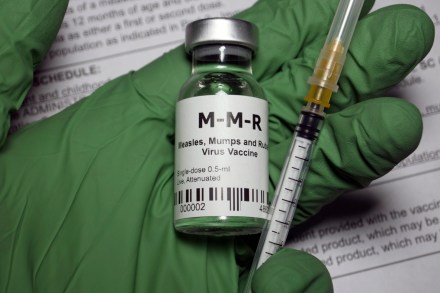
Having endured months of restrictions on our freedoms to deal with Covid-19, we now face a major health threat entirely of our own making: vaccine hesitancy. Measles – a centuries-old contagious disease which can lead to serious complications – is on the rise. Hospitals in Birmingham are dealing with their biggest outbreak in years. Health experts are warning that, unless more children are vaccinated, more admissions should be expected. This should worry, but not surprise us. In some areas and groups in London, coverage of the first MMR (measles, mumps and rubella) dose is as low as 69.5 per cent. Approximately 10 per cent of children in the UK are unprotected from measles by the time they start school, with coverage at 12 year lows.

Labour won’t fix Britain’s childcare mess

From our UK edition

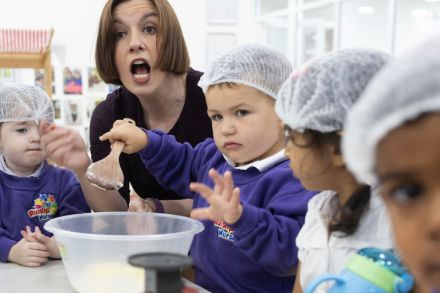
Labour appeared stumped when, earlier this year, the government announced it would be drastically increasing its 'free' childcare provision. Given it was a policy that shadow education secretary Bridget Phillipson was rumoured to be considering, her party would now need to find a way to outdo itself. Now, we have a clearer idea what its 'signature offer' to voters might entail. At present, all parents of pre-school children over the age of three are entitled to 15 'free' hours with registered providers. From April 2024, this will expand to all over-twos, and from September, to all children over nine months (the point at which Statutory Maternity Pay ends).

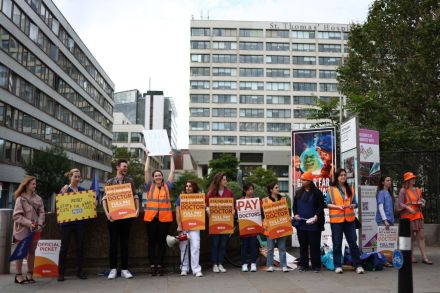
Will striking doctors bring down the NHS?

From our UK edition

Doctors haven't always been keen on the NHS. A former chairman of the British Medical Association (BMA) said in response to the 1946 National Health Service Act, that: ‘It looks to me uncommonly like the first step, and a big one, to National Socialism as practised in Germany.’ In 1948, the BMA claimed that only 4,734 doctors, just over 10 per cent of those polled, were in favour of such a system.  At one point, the Minister for Health and father of the NHS Aneurin Bevan described the BMA as a ‘small body of politically poisoned people’ who had decided to ‘fight the Act... and to stir up as much emotion as they can in the profession’. Among his adversaries was the secretary of the BMA, Charles Hill, who argued healthcare should be paid for by insurance, not taxation.

The Tories must get serious about welfare reform

From our UK edition

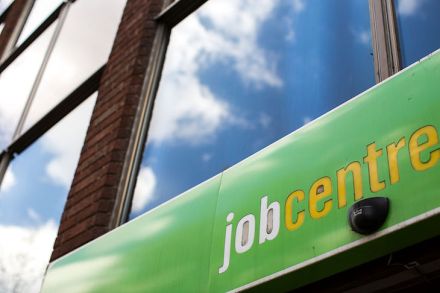
You can't fault Mel Stride for trying. Conscious that our current levels of worklessness are neither sustainable nor likely to win the Tories plaudits at the next general election, the Work and Pensions Secretary has been proposing a range of wild and wacky solutions. In February, it was reported the government would be expanding ‘midlife MOTs’ to get the unemployed under-50s back to work. In July, the Department for Work and Pensions (DWP) policy generator was at it again, encouraging doctors to refer patients to life coaches rather than sign them off sick.  Now we're getting the stick: new reforms would see people who refuse take on work placements or to engage with job centre staff having their Universal Credit and other entitlements, such as dental care, stopped.

Snooping on benefit claimants’ bank accounts won’t cut fraud

From our UK edition

Another day, another wheeze from a desperate government as it tries to move the polls. Benefit claimants could soon have their bank accounts checked each month to ensure they are not lying about their savings. The law change, designed to crack down on benefits fraud, appears to be the government's answer to the fact that welfare payments have exploded in recent years. It will reportedly be unveiled in the Autumn Statement, with estimates suggesting it could save the taxpayer £100 million a year. But will it make a difference? The Department for Work and Pensions' total proposed expenditure for 2023/24 is set to reach £279 billion (almost half of which is pensioner benefits). As a result, this £100 million figure – which itself sounds optimistic – is a mere drop in the ocean.