Annabel Denham

Annabel Denham is a column and acting comment editor at the Daily Telegraph

What striking workers don’t tell you about public sector pay

From our UK edition

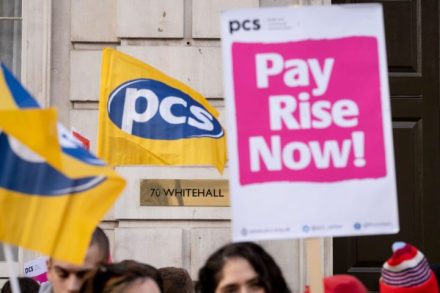
You’ve got to hand it to the trade unions: they’ve done a fine job rallying the public behind industrial action that has caused widespread disruption and inconvenience. Despite train cancellations, school closures and medical appointment delays, nearly two-thirds of the British back the nurses’ walkout and close to half back the teachers’ strike. Even sizeable minorities support the ongoing train strikes, according to recent polling.  The argument from the unions – that their hardworking members deserve a hefty pay rise (in order to 'improve service') – has captured the public imagination. But how many of those who complete YouGov or Opinium surveys stop to consider the huge discrepancy between public and private sector pensions?

Childcare is broken in the UK

From our UK edition

The Truss administration made many missteps, but on childcare it was on the right track. Though details were lacking, the blink-and-you-miss-her prime minister was planning to rush through ‘big bang’ changes to childcare provision that would bring down costs both for parents and providers. But it has now been reported that Rishi Sunak will shelve these proposals indefinitely and, if they are ever dusted off, it's likely the scale of reform will be much smaller. This is a mistake. Our pre-school and childcare sector is broken. It’s unaffordable both for parents and the taxpayer and increasingly inaccessible. Providers are also closing at record levels and staff retention is poor.

Water woes: who’s to blame for the shortages?

From our UK edition

39 min listen

In this week’s episode:Who’s to blame for the water shortages?James Forsyth, The Spectator’s political editor and Ciaran Nelson from Anglian Water join us to discuss the UK’s deteriorating water supply. (0.29)Also this week: Is it time for some old-fashioned Tory state-building?Tim Stanley from the Telegraph shares his vision for a Conservative future. He’s joined by Annabel Denham, Director of Communications at the Institute of Economic Affairs. (11.19) And finally: What’s behind France’s new sexual politics?Jonathan Miller writes about a new civil war in France between the nudes and prudes. He’s joined by Louise Perry, columnist and author of The Case Against the Sexual Revolution. (23.08)Hosted by Lara Prendergast.

The energy windfall tax will harm net zero

From our UK edition

There's no pleasing some people. Back when the government still believed windfall taxes were a terrible idea, the Scottish National Party was insisting one be imposed to help tackle the cost of living. In March, the SNP's Stephen Flynn asked in the Commons: ‘Is it right that those who have benefitted from the pandemic... are able to benefit while our constituents are struggling? Absolutely not.’ The previous month, Nicola Sturgeon tentatively voiced support, arguing oil and gas firms should ‘absolutely’ be asked to pay more to alleviate the crisis. How unexpected, then, to see the SNP's work and pensions spokesperson Kirsty Blackman launch repeated attacks on the levy in the days after the Chancellor announced it would be introduced.

There’s never been a better time to ditch the net zero agenda

From our UK edition

The cost of living crisis is confronting Westminster elites with the stark reality of some of the dubious policy choices they’ve recently made. Last week, the government was forced to postpone its ban on buy one get one free deals on ‘junk food’. The foolishness of outlawing cheap food – a policy Boris Johnson adopted after his spell in intensive care – has been laid bare now that inflation has risen to a 40-year high. Soaring energy bills ought to give proponents of eco-austerity similar pause for thought. Dozens of retail energy companies have gone bust in recent months. We are shipping fracked gas from the US while banning the technology here.

The protocol is hurting Northern Ireland

From our UK edition

With every sausage war or fish fight over the past 18 months, the chances of survival for the Northern Ireland protocol have narrowed. But the fallout from the NI Assembly elections, which saw Sinn Féin become the largest single party, has made it increasingly likely that the UK will take unilateral action to override parts of the Brexit deal. The protocol has few supporters. Arguably its only redeeming feature was that it allowed Boris Johnson to break the deadlock and conclude the withdrawal agreement. Because a porous land border between the UK and the Republic would have threatened the single market – and a hard border between Northern Ireland and the Republic was unacceptable on political grounds – the Prime Minister compromised.

When will Boris face up to the real challenges facing Britain?

From our UK edition

It’s rarely a good sign when, moments after a major set piece event such as yesterday's Queen's Speech, the government’s PR machine kicks into overdrive to defend it. Though Labour’s claims that Boris Johnson isn’t doing enough to support squeezed households were wearyingly predictable, the Tory narrative about turbocharging the economy and slashing EU red tape has quickly fizzled out. And Michael Gove’s surreal media performance this morning won't do much to allay concerns that Boris's government is up a creek without a paddle. Brits are currently facing rising energy bills, inflation is forecast to hit ten per cent and wages are failing to keep up with the increase in prices.

The nanny state is making us poorer

From our UK edition

As household budgets face their worst squeeze for decades, one wonders whether the public health establishment feels any remorse for their role in driving up the cost of living. The kinds of taxes – on food, alcohol, tobacco, and soft drinks – that nanny statists have dedicated entire careers toward delivering are proven to have taken a greater share of income from the poor than the rich. An average family that indulges in drinking and tobacco will now spend £891 in cigarette levies and £216 in alcohol duty every year. Advocates for sin taxes argue that their tactics are progressive if they improve the health of the poor more than the rich.

Why does the City still use quotas?

From our UK edition

It sometimes feels like every regulatory body in Britain today misuses its influence to advance progressive causes. A welcome exception is the Financial Conduct Authority, which last week decided to allow firms to choose whether they use sex or gender as the definition of ‘woman’ for reporting on their representation on corporate boards. It is clearly not the role of a financial services regulator to attempt to define 'man' and 'woman'. Out of 540 responses to a consultation on the matter, all but one said they did not want trans women to be automatically included in the targets and data. As the group Sex Matters has pointed out, there is no reason to believe that the perceived advantages and disadvantages of female workers are shared by men who self-identify as women.

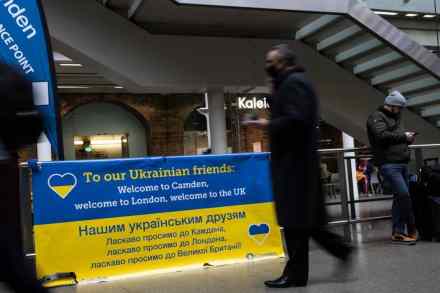
Why are councils blocking homes for Ukrainian refugees?

From our UK edition

Over the course of three days in September 1939, 1.5 million evacuees were sent to rural locations across Britain considered to be safe from the impending war. In a staggering logistical feat facilitated by thousands of volunteer helpers – from teachers to railway staff – children were swiftly relocated, with gas masks around their necks, suitcases in hand. Stately homes were given over for use as nursery schools. Local authorities attempted to provide a full-time education by finding alternative buildings – pubs, chapels and church crypts.

From fracking to net zero: ten energy myths busted

From our UK edition

This week we will find out how government intends to end any UK reliance on Russian energy and tackle rising household bills. While the war in Ukraine has brought the problems with our energy policy into sharp relief, it has highlighted issues that have been decades in the making. The government’s long-awaited 'energy independence plan' has been delayed, not just by wrangling between No. 10 and the Treasury over how it will be funded, but because the Conservative party is fundamentally split on the best way forward. Business Secretary Kwasi Kwarteng is a sworn enthusiast for green energy sources, yet Brexit Opportunities Minister Jacob Rees-Mogg has urged Boris Johnson to press ahead with fracking.

Stop attacking billionaires

From our UK edition

The $5.79 trillion budget plan Joe Biden submitted to Congress yesterday was more notable for what it didn’t include, rather than what it did. There were no line items on the environment or education – key pillars of his 'Build Back Better' agenda – but it did call for a new minimum tax requiring 'billionaires' to pay at least 20 per cent of their income in taxes, including on the gains on investments that have not been sold. This will, apparently, reduce the government deficit by $360 billion over the next decade. The President is in a tight spot. Since the turn of the year, his approval ratings have fallen to their lowest levels since he took office, with voters justifiably concerned by the nation’s largest inflation spike in four decades.

Does anyone still believe in low taxes?

From our UK edition

Speculation over which taxes the Chancellor will slash or, more likely, hike at tomorrow’s spring statement seems to have settled on two areas. First, a cut to fuel duty and, second, an increase in National Insurance thresholds, a way of tweaking the already announced tax hike to reduce the burden on the poorest.  On the first point, a cut in fuel duty could cost the Treasury around £2.5 billion a year (although the government is unlikely to get much political credit if Sunak does go down this route given how quickly energy costs are rising). On the second, it looks almost certain that the Chancellor will proceed with his planned 2.

Can Britain afford to spend more on defence?

From our UK edition

With rumours swirling that the Ministry of Defence will see its budget boosted in next week’s spring statement it’s hard not to wonder: was Donald Trump right? The former President repeatedly criticised Nato members in Europe for not contributing enough to support the alliance, relying instead on the US to shoulder the burden. And while the UK has met the Nato commitment to spend 2 per cent of its GDP on defence, we’ve seen a massive decrease in our defence budget over the last half century. As war returns to Europe, a consensus view has emerged – that the UK grew complacent when it came to security. We recoiled at Emmanuel Macron’s plans for a ‘true European army’, while spectacularly underestimating Russia’s disruptive potential.

The problem with International Women’s Day

From our UK edition

Am I the only one wondering how long it'll be before the organisers of International Women’s Day are forced to rename their campaign? How, depending on what they mean by 'women', it'll need to be called 'International People-with-a-cervix Day' or 'International People-who-identify-as-a-woman Day?' Quite what the founders – a group of American workers who back in 1909 demanded shorter hours, better pay and voting rights – would make of the word 'woman' being gradually pushed out of the lexicon as a meaningful term we will never know. But on a better note, they would surely be overawed by the progress made in the past 113 years. Women account for over half of all workers employed in management, professional and related occupations in the US, for instance.

Britain is paying the price for its fracking panic

From our UK edition

Between 1980 and 2005, the UK produced more energy than it needed. Today, we import more than a third of our energy and over half of our natural gas. Households are facing an increase in their annual tax bills from £1,500 to an eye-watering £3,000. While the Business Secretary may have tweeted this week that the current situation is a matter of high prices rather than security of supply, families already struggling to heat their homes are unlikely to tell the difference as they decide whether to heat their homes or pay for food. This was never a foregone conclusion. A decade ago, the US shale gas revolution was well underway, with fracking creating hundreds of thousands of jobs and driving down gas prices.

How much did the Covid crisis cost?

From our UK edition

The true cost of Covid cannot be quantified only in death rates or GDP figures. Though it could have been far worse, the pandemic nonetheless inflicted a deeper wound on our society than any productivity calculus can measure. But as legal domestic restrictions end, and the economic fallout from months of stringent controls is increasingly felt by households, it’s worth exploring how the nation’s balance sheet could have looked had this virus never appeared.

It’s time for Rishi Sunak to become a low-tax Tory

From our UK edition

This week marks two years since Rishi Sunak was thrust from relative obscurity into the political spotlight as Chancellor of the Exchequer. After less than a month in post, he delivered his first Budget. Weeks later, Britain was in lockdown. How has the ‘Covid Chancellor’ fared in the intervening period? When he was splashing taxpayer cash early on in the pandemic, he was cheered to the rafters. Now, he faces criticism both for holding the line against big spending colleagues, and for presiding over the highest tax burden in several decades. If Sunak were a speech, his opening paragraph would be full of promises. He’s a low-tax Thatcherite who believes in the power of the free market and champions freeports.

The cost of online safety

From our UK edition

Few people in Britain will have heard of the draft Online Safety Bill. Fewer still will oppose it. Protecting children against harm and exploitation online is an entirely rational goal in modern-day society. And when the Culture Secretary is boldly promising, as Nadine Dorries did at the weekend, to 'bring order to the online world' and 'force social media companies to take responsibility for the toxic abuse that floods their platforms,' it can be quite convincing: painting the web as a virtual Wild West that governments urgently need to regulate. Doubtless, the internet is home to abhorrent abuse that isn’t acceptable in any circumstance. Beyond that, there are instances of unlawful behaviour and serious crime — and anyone who sees it should alert the police. Many do.

Is Boris really serious about Brexit?

From our UK edition

As the partygate furore rages on, Boris Johnson is retreating towards familiar territory: Brexit. A policy blitz is underway this week and the issue that guided him to power in 2019 has come first, with the announcement of a new Brexit Freedoms Bill. It will be brought forward to mark the two-year anniversary since we parted ways with the European Union. There are two flaws with Boris’s plan, however. First, recent polling found 46 per cent of Leave voters who backed the Tories in 2019 say he should resign, suggesting that Brexit doesn’t resonate in quite the same way as it did before the pandemic.