Annabel Denham

Annabel Denham is a column and acting comment editor at the Daily Telegraph

On child vaccination, parents should have the choice

From our UK edition

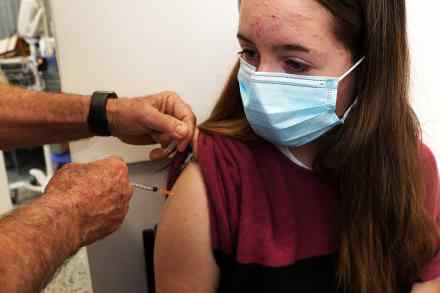
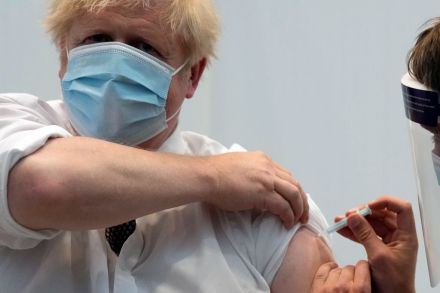
On Saturday, the Health Secretary made his most bullish comments on child vaccination so far. Writing in the Times, Sajid Javid argued that offering all teenagers the jab will ‘solidify our wall of protection,’ offering a stronger defence against Covid and new strains. In doing so, Javid has intensified the debate on whether over-12s ought to be vaccinated. Earlier this month, the Joint Committee on Vaccination and Immunisation (JCVI) advised that jabs should be offered to 16 and 17-year olds, bringing the UK into line with countries such as Sweden. The JCVI is now investigating whether the jab could be offered to all 12-15 year olds, as in the US and several other European countries.

Covid has exposed the flaws in the welfare state

From our UK edition

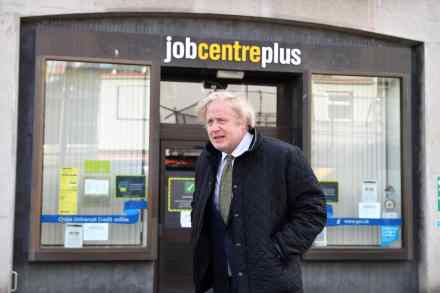
Upheavals in welfare policy have historically followed major crises such as wars, civil unrest, recessions and pandemics – the Ministry of Health itself was established in 1919. The experience of the second world war led to the creation of the contemporary welfare state. If a course of action (a furlough scheme, say) is pursued in an emergency, we know it is possible. Keep the measure in place too long and it can swiftly become an accepted norm — and politically awkward to unwind. But those expecting a post-Covid reboot of the welfare system might be disappointed.

Giving workers a ‘right to switch off’ could backfire

From our UK edition

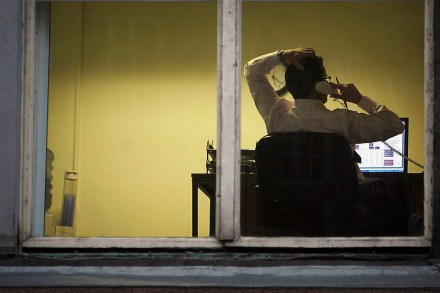
Millions of workers are 'never quite switching off' and are answering emails out of hours, warns Autonomy, a think tank. It suggests that the 1996 Employment Rights Act should be amended to give employees a legal 'right to disconnect'. Unfortunately for Autonomy, Labour’s new deal for workers, outlined last month, somewhat stole its thunder. Spearheaded by deputy leader Angela Rayner, the party’s radical package of labour market reforms includes a default right to flexible working, new worker status for those in the gig economy and, of course, a French-style law barring employers from contacting workers outside strictly regulated hours. Nonetheless, Autonomy’s suggestion has received fawning coverage.

Should Boris pay people to take the jab?

From our UK edition

The steady stream of mixed messages coming from government ministers have been one of the few constants during the pandemic. Boris Johnson's numerous u-turns have been well-documented and widely ridiculed. And while the news that the unvaccinated could be offered 'kebabs for jabs' may not constitute a full volte-face, it certainly flies in the face of the government’s 'junk food' advertising ban. Young people could now be offered discounts on Big Macs if they get vaccinated, but McDonald’s soon might not be able to promote the product on TV before 9pm or online at all. Where's the logic in that? This latest approach on encouraging vaccine uptake makes life difficult for public health experts who are keen on building up the nanny state.

Covid has revealed the limits of the big state

From our UK edition

When Rishi Sunak turned on the spending taps last March, a triumphant Jeremy Corbyn said he had been proved 'right'. History would be written by the losers. In the 16 months since, government spending on the pandemic has swelled to an eye-watering £372 billion. Wages have been nationalised, along with the railways. Individuals have radically altered their behaviour to shield a state institution. Many now hold the view that coronavirus demonstrates government can borrow and spend a large amount of money quickly and wisely — and that it can therefore continue to do so. But two new reports from the Commons Public Accounts Committee decisively debunk that myth.

The problem with polling

From our UK edition

If you did an opinion poll about opinion polls, chances are most people would recognise the limitations of market research, offer some unfavourable views of pollsters and deride the uses to which their work is sometimes put. Yet if you asked politicians and the media whether polls deserve our attention, they would almost unanimously agree. Even after Brexit. Or Trump in 2016. Or the eye-popping poll earlier this month that found that one in five Brits support having a nationwide 10 p.m. curfew permanently in place, regardless of whether or not the pandemic is still raging. Polls have major shortcomings. Even if pollsters avoid leading questions and interview the perfect cross-section of society, talk is still cheap.

Will Italy’s Euro win lead to a baby boom?

From our UK edition

Could Italy’s triumph on Sunday result not just in a trophy for the azzuri, but a baby boom for a nation with one of Europe’s lowest fertility rates? The anecdotal evidence would support this theory. Nine months after Iceland beat England in a Euro 2016 match, it experienced an unprecedented increase in births. This was the first time the nation had ever qualified for a major European tournament, and close to 10 per cent of its 300,000 population watched the game in person. Spain’s birth rate also shot up 16 per cent nine months after Barcelona won the 2009 Champions League. Yet a new paper from Luca Fumarco and Francesco Principe pours cold water on the idea that sports success euphoria boosts human conception.

The economic case for ditching mask mandates

From our UK edition

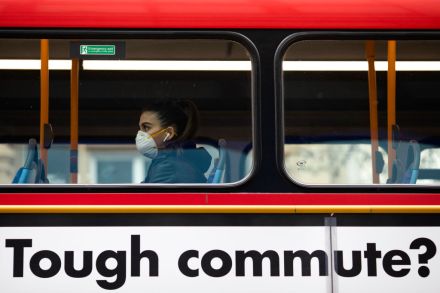
After many months of hardship and sacrifice, freedom is finally within grasp. Boris Johnson has reclaimed his buccaneering, libertarian spirit and punctured the hopes of zero Covid zealots who wanted more working from home, social distancing and masks. When it comes to face coverings, however, lockdown fans have been working hard to convince the public that they ought to wear them voluntarily — on the off-chance they have the virus and unwittingly hop on to a tube carriage with the unvaccinated. Are they right? Masks are undeniably inconvenient. They’re a pain to wear and a nuisance if forgotten. They reduce the ability to communicate, interpret and mimic the expressions of those with whom we engage.

The economic illiteracy of anti-capitalists

From our UK edition

Back in October, World Bank chief economist Carmen Reinhart recommended that countries borrow heavily during the pandemic. ‘First, you worry about fighting the war,’ she said, ‘then you figure out how to pay for it’. As thousands of mask-free demonstrators took to the streets of London this weekend to campaign on issues ranging from Palestine to climate change, you have to wonder: are we still at war? And does anyone care about the economy anymore? It has been apparent for some time — though it may continue to confound psephologists — that issues such as identity, patriotism and culture are more important to the electorate than economic concerns.

Boris’s Brexit battle isn’t over yet

From our UK edition

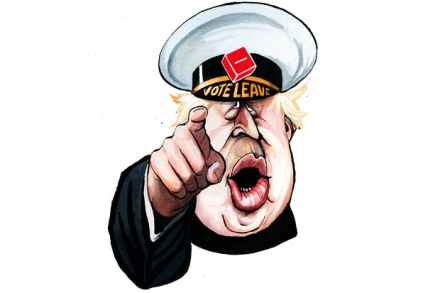
On the eve of the five-year anniversary of the Brexit referendum, it's hard to shake the feeling that Brexit was the dog that never barked. Project Fear portended half a million job losses – a hard measure to test given a year of lockdowns and furlough, but before Covid hit (and now) the unemployment rate is lower than it was five years’ ago. We were warned of a 'punishment Budget,' as though there is ever any other kind. The hysteria, the stalling of Parliamentary machinery, the well-documented family rifts – was it all for nothing? First, a few caveats. There are many problems that still need fixing – especially in Northern Ireland and the service sectors.

The cost of delaying ‘freedom day’

From our UK edition

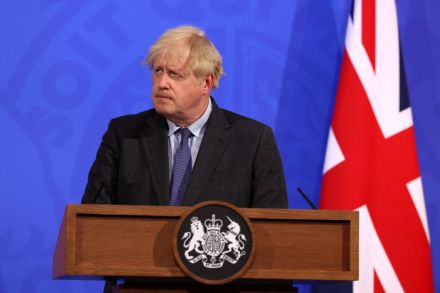
When Boris Johnson announced that unlocking would be guided by ‘data not dates’ he handed detractors ample scope for derision and defiance. In the four months since, lockdown critics have rightly insisted that he uphold the slogan and accelerate a roadmap, designed to move at such a glacial speed, that it risked fraying the DNA of our economy and permanently crushing our joie de vivre.  Why did we spend Easter isolated from loved ones? April in wintry beer gardens? Why did we roll out the vaccine at phenomenal pace only to keep restrictions in place as the number of Covid deaths hit single digits? Contrary to expectation, however, that mantra was probably a good hill to die on.

What’s wrong with electric scooters?

From our UK edition

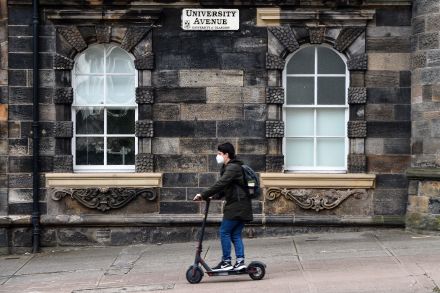
Less than a year into e-scooter trials, ministers are coming under pressure to ban the new transport technology, with concerned critics claiming they need to be made safe and the public educated on the law. Matthew Scott, Kent’s police and crime commissioner (PCC), has written to the Transport Secretary calling for a clampdown on electric scooter usage. Given the government’s fondness for the precautionary principle, it wouldn’t come as a huge shock if it capitulated to the quibbles of a tiny minority, however weak their opposition may be. There’s actually little to dislike about e-scooters. For a start, they’re no more dangerous than many other forms of transport.

Is working from home here to stay?

From our UK edition

National Work from Home Day might not be a calendar highlight but it has undoubtedly taken on increased significance during the pandemic. Remote work is du jour and the big question now is: will it become the new normal? Take headlines at face value and we’re living in both a Zoomshock dystopia and a commute-free Shangri-La. We're selfishly contributing to the hollowing out of city centres, and we're righteously boosting the local economy. The same ministers now pushing for hybrid working to become the default unless employers have good reason to forbid it were last summer warning absenteeism risked making people more 'vulnerable' to getting sacked. We should probably be wary of those who say: 'Covid killed the office. Long live hybrid working'.

Why the High Street won’t be another Covid casualty

From our UK edition

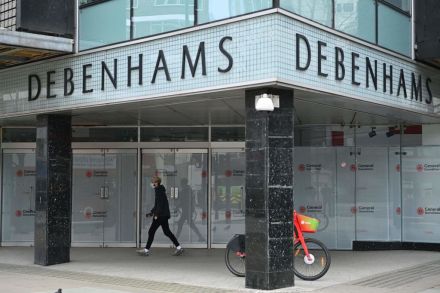
Can the High Street recover from the Covid crisis? Even before lockdown, around 14 shops were shutting every day, and 2019 was the worst year for sales in a quarter of a century. After months of enforced closure, shops have finally reopened. But with mandatory face masks, social distancing and roped-off fitting rooms – and no indoor cafes, or restaurants to punctuate a day of retail therapy – shopping will be vastly inferior to the pre-Covid experience.  Nonetheless, there are good reasons to be bullish on the future of the high street – and too many commentators are being needlessly gloomy on its prospects. For a start, households have accumulated significant savings during lockdown.

Is this the end of the gig economy?

From our UK edition

Before too long, news that Uber will offer 70,000 drivers holiday pay and the national living wage will be viewed less as an unmitigated triumph than a Pyrrhic victory. In the UK you can be an 'employee' with an ever-growing raft of employment rights, a 'worker' with rather fewer rights, or 'self-employed'. These statuses have different implications for tax purposes. Last month, the UK Supreme Court, ending a six-year case brought by two Uber drivers, ruling that the ride-hailing firm must classify drivers as workers rather than self-employed.

20 taxes Rishi should bin

From our UK edition

When Rishi Sunak takes to the Despatch Box on Wednesday it will be against a backdrop of colossal national debt, the recent rise in government bond yields and the ongoing Coronavirus crisis. The British state owes £2.1 trillion, ten times the size of the entire economy of an independent Scotland. Yet some concerns over the health of the public finances are misguided – or at least exaggerated. The increase in borrowing to pay for Covid does not itself have to be repaid (at least in the short term). Why? Because provided the government can continue to make the interest payments, debt can simply be rolled over. What's more, the UK economy is already at – or close to – its maximum taxable capacity.

The BBC needs to face up to the truth about the licence fee’s future

From our UK edition

It won’t come as much of a surprise to learn that the National Audit Office thinks the BBC faces 'significant' uncertainty over its financial future due to changes in viewing habits. The NAO’s findings are about as ground-breaking as your average anodyne Beeb drama, but they do tighten the cilice on a funding model that is impossibly outdated in the 21st century.  In the past decade alone, there has been a 30 per cent decline in BBC TV viewing; on average, the amount of time an adult spent watching broadcast BBC TV fell from 80 minutes per day in 2010 to 56 minutes in 2019. When it comes to younger viewers, the NAO’s findings are ever more troubling for the BBC: in the UK, 18-34 year olds now watch seven times as much Netflix and YouTube as BBC1 content.

Pregnant women don’t need nannying

From our UK edition

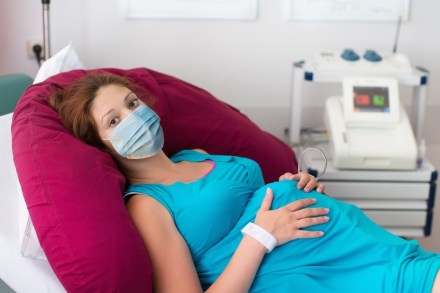
Some bright spark at the National Institute for Healthcare Excellence wants all alcohol intake by expectant mothers to be recorded, regardless of whether they consent. This would reveal whether a mother had consumed a single drink during the first week of pregnancy – a time when they may not even have realised they were expecting. There is no consistent system in place to monitor drinking among pregnant women which, according to NICE, is a problem. Midwives ask about alcohol but it is not mandatory to record the information; NICE wants women at antenatal appointments to be grilled on the pattern and frequency of their drinking and the numbers and type of beverage.

Covid won’t kill the office

From our UK edition

The rapidity and willingness with which workers have adopted and adapted to remote working has led some – including Rory Sutherland in this week’s Spectator – to hail a home-working revolution. But there are convincing reasons why the office won’t be another Covid casualty. First, while it is not inconceivable that coronavirus could accelerate the pre-existing home working trend for office workers, it is bordering on Panglossian to think that we could broaden this out to most people in Britain.  Recent research from the Institute of Economic Affairs has revealed that headline statistics on full-time home workers are misleading. The bulk of the 13.7 per cent of the labour force classified in this way are working from home rather than at home.

The Tories’ bid to police the internet is a big mistake

From our UK edition

Today, a Government in dire need of a good news story has mooted legislation resulting in the very opposite. The Conservative manifesto from 2017 said: 'Some people say that it is not for government to regulate when it comes to technology and the internet. We disagree.' Now the Tories are delivering on their promise. But their attempt to police the internet should worry us all. The 'Online Harms' white paper calls for an independent watchdog to write a 'code of practice' for tech companies. Under the plans, tech firms will be held accountable for what their users post and share, and penalised if they fail to take down offending content swiftly – a move that presents a serious threat to innovation, competition and free speech.