Annabel Denham

Annabel Denham is a column and acting comment editor at the Daily Telegraph

Is Labour ready to become the party of business?

From our UK edition

While the Tories limp from one scandal to the next, an opportunity has opened up for Labour when it comes to courting business. Although it’s unlikely many voters elected Boris Johnson into office because they trusted his moral compass they did at least think he would deliver on his promise of sunlit uplands. But two years and a pandemic later, government spending as a percentage of national income is set to top 45 per cent, we’ve yet to ignite a bonfire of EU regulations, inflation has reached 5.4 per cent (and still rising) and the cost of living crisis is rapidly worsening. Voters are starting to question whether, with the Conservative party, the economy is really in a safe pair of hands. But can Labour position itself as the new party of business instead?

How to fix the BBC licence fee

From our UK edition

Nadine Dorries came out fighting over the weekend to declare it was time to discuss new ways to fund and sell the 'great British content' produced by the BBC. But it turned out she had little in the way of ammunition once she reached the Commons yesterday. There will be a two-year freeze in the £159 fee — a measure that will represent a real-terms cut in the corporation’s funding, but hardly the 'mortal threat' some alarmists have declared. In 2019–20, the BBC generated total income of £4.94 billion, of which £3.52 billion was public funding from the licence fee. The Department for Culture, Media and Sport said the BBC is expected to receive about £3.

A windfall tax on energy firms is a mistake

From our UK edition

Is it time for a windfall tax on energy companies? Judging by a poll during the first lockdown – which found more than half of the UK public would welcome an additional tax on businesses that had thrived because of the extraordinary circumstances of the pandemic – it would be a popular measure. A windfall is typically something you get for free, after all. Energy policy has become increasingly muddled in recent years Advocates often reference Chancellor Gordon Brown’s windfall tax on privatised utilities in 1997, which raised £5.2bn over a number of years and was justified on the grounds that corporate profits had risen due to failed government policy. But even in such circumstances, windfalls are a bad idea. Companies don’t pay taxes, people do.

How well is Brexit going?

From our UK edition

Twelve months after a comprehensive trade deal was signed with the EU, where are we now? How has the UK performed? Even arch Remainer Andrew Adonis admitted last year that 'the UK government clearly did a better job than the EU in procuring vaccine supplies and putting in place urgent industrial production'. Yet so far we’ve had no financial or employment deregulation, we’ve signed up to a minimum corporation tax (like the EU), and we haven’t reformed our commitment to the European Court of Human Rights. If Brexit were a pupil, what would its 2021 report conclude? Has the UK proven itself a strong independent learner, or should it try harder?

Should businesses receive more Covid support?

From our UK edition

As government considers whether to lock us down once again, should it put economic support for businesses affected back on the table? The combination of Plan B and Boris Johnson’s insistence that we modify our social behaviour has led to empty cinemas, ghost trains, cancelled gigs and ‘postponed’ Christmas parties. Just as the economy was getting back on its feet, the unofficial guidance to avoid social events is knee-capping it once again, forcing the Chancellor to not only drop his December plans but to announce yet more taxpayer-funded business compensation. So far he's fallen down on the side of more support, though nothing (yet) like last time.

How many will disobey another lockdown?

From our UK edition

Ministers may claim that ever-tightening Covid rules are proportionate and reasonable, but if enough members of the public disagree, then the government could have a real problem on its hands. Non-compliance to another lockdown wouldn’t need to be rampant: if even 10 per cent decide not to adhere it could blow a hole in lockdown's effectiveness. Last month, Professor Chris Whitty expressed concern over 'behavioural fatigue'. At the weekend, senior behavioural experts questioned the government’s prospects of successfully imposing new measures after 'party-gate'. One told The Observer that 'trust has been eroded to a very significant level… If you don’t trust the government, why would you do what [it] asked you to do?

Punishing the unvaccinated threatens everyone’s liberty

From our UK edition

How should we treat the unvaccinated? Should we stop them from participating in normal life? Castigate them in the media? Mandate they get vaccinated or block them from accessing NHS services? It’s a creeping question across developed countries — asked on Good Morning Britain’s Twitter page yesterday, and then subsequently deleted. Germany has barred the unvaccinated from most aspects of public life, including shops and restaurants. Greece is charging the over-60s Є100 for every month they remain unvaccinated, with money going to top up the health services. In Singapore, the unvaccinated will no longer have their Covid care paid for by the state. A letter in the Times this week suggested the same should happen here too.

The economic impact of the latest Covid restrictions

From our UK edition

We don’t yet know whether the Omicron variant will drastically accelerate the spread of coronavirus, or whether it will circumvent parts of the immune system. Nor can we be sure that the ‘light’ coronavirus restrictions announced at the weekend will be enough to combat the new strain. We can be certain, however, that these measures will come with an economic cost that politicians are, at least publicly, understating. Face masks are once again compulsory in shops and on public transport in England, and UK arrivals will need to take PCR tests within two days of landing, isolating until they get their result.

The confusion at the heart of social care

From our UK edition

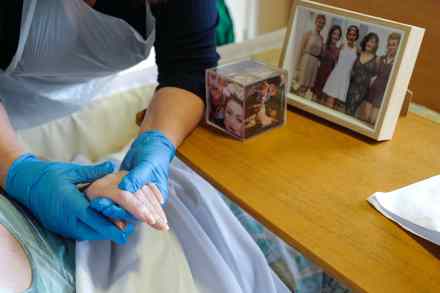
Boris Johnson’s majority plunged to just 26 last night, following a rebellion over controversial changes to social care plans. Means-tested, state-funded payments will no longer count towards the £86,000 limit on the amount people will have to pay for their care. Those with initial assets worth less than £186,000, and who have received such help, could be worse off as a consequence. Critics have pointed out that this is likely to disproportionately affect residents in the North or the Midlands because of differential house prices. Johnson’s government isn’t the first to tie itself in knots over the issue of social care funding. Successive administrations have failed to bring about reform over the past 25 years, with most proposals swiftly abandoned.

The truth about ‘Equal pay day’

From our UK edition

Could flexible working hurt women's careers? That's the view of the Bank of England’s Catherine Mann, who fears it could open 'two tracks' and widen the 'gender gap'. If that wasn't bad enough, Scottish Widows tells us that because of lower pay and longer life expectancies young women 'must save an extra £185,000 to reach the same retirement income as men'. This week, we will inevitably hear the baseless assertion that women are working 'for free' until the end of December. This Thursday, we'll also hear the Fawcett Society make its annual fuss over 'Equal Pay Day'. This, of course, is the day when women are, allegedly, no longer earning relative to men because of the gender pay gap.

Central planning won’t solve the problem of GP shortages

From our UK edition

Under plans being considered by ministers, GPs in affluent parts of England could be barred from taking jobs in wealthy areas to force them to work in deprived areas, in a bid to address health inequalities. The solution to doctor shortages, apparently, is to make the job less attractive. This would be the healthcare equivalent of the government taking charge of the hospitality industry and informing the owners of the Ivy that all new restaurants should be located in towns north of the Watford Gap, to ensure the pleasures of fine dining are evenly enjoyed across the country. And yet the Social Market Foundation (SMF) who put forward this proposal is suggesting that where GPs work should no longer be a matter for GPs and the practices that employ them.

The economic case for scrapping daylight saving

From our UK edition

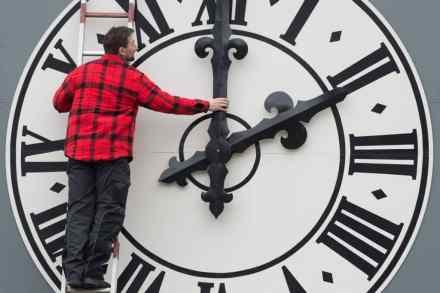
Twice a year, every year, the changing of the clocks debate begins. So is it time to finally drop daylight saving and stick to British Summer Time all year round? Boris Johnson thinks so: the future Prime Minister weighed in on the subject back in 2011, claiming BST would 'expand the economy and cheer everyone up'. Boris is right on both points, not least on the economic case for ditching the old habit of changing the clocks. Dark winter evenings, made longer by daylight saving, make around half of Brits feel more depressed, according to one poll. Other surveys suggesting we'd exercise more were it lighter longer. Perhaps this point should be taken with a pinch of salt; is it really darkness, rather than the cold, wet weather, that stops us heading out for a jog?

Why Sunak’s wrong on teachers

From our UK edition

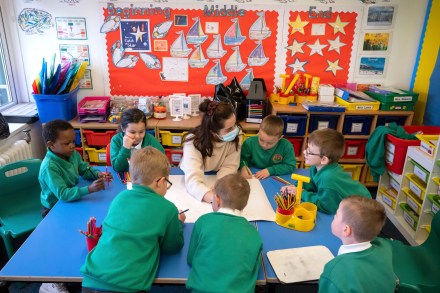
Pupils lost around a third of their face-to-face teaching during the Covid lockdowns. Downing Street has promised an extra £3 billion of catch-up funding, on top of around £100 billion spent on education in a normal year. Fixing a lack of teaching should involve doing a bit more of it — but when asked if he would extend the school day, Rishi Sunak said longer hours wouldn’t provide ‘value for money’. It’s one of few areas where, in tomorrow’s Budget, the spending taps will be turned off. But why, as the Children’s Commissioner recently noted, are British state schools routinely closing their gates at 2.30 p.m.? The length of the school day is now shorter than it was 50 years ago.

Boris Johnson should trust the market to solve climate change

From our UK edition

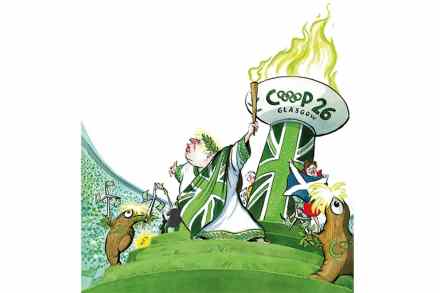
In a 368-page document published this week, the government announced its strategy to cut emissions to net zero by 2050 and confirmed its target for all electricity to come from low carbon sources by 2035.  It’s difficult to imagine worse timing for the release. An energy crisis is exposing the failures of decades of massive state meddling in the market. Insulate Britain have been picnicking on the M4 and M25. And on Wednesday a leak of documents showed Saudi Arabia, Japan and Australia are asking the UN to play down the need to move rapidly away from fossil fuels. None of this has weakened the Prime Minister’s resolve, though that’s hardly surprising.

Why is British Airways banning ‘ladies and gentlemen’?

From our UK edition

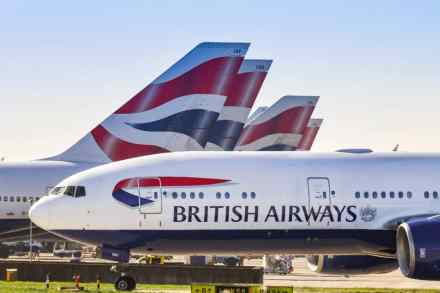
British Airways is dropping ‘ladies and gentlemen’ from its announcements. In the name of diversity and inclusion, the airline has instructed staff to use a more ‘gender neutral’ salutation. You might think that after 18 months of turbulence, BA has more important things to worry about. In spring and summer last year the company was forced to cut 10,000 jobs, representing a third of its workforce, after Covid grounded most of its aircraft. The airline was the biggest user of the furlough scheme, claiming over £10 million in June this year alone.

It is hard to take Sunak’s jobs plan seriously

From our UK edition

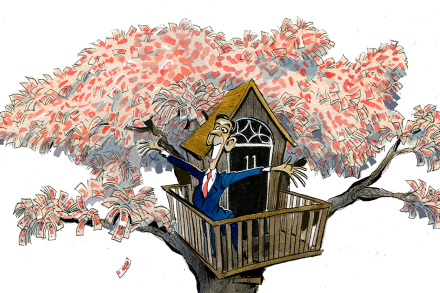
At some point, Rishi Sunak is going to need to pick a lane. There is only so long that the Chancellor can claim to believe that excessive borrowing is immoral while borrowing to such excess. His trick yesterday was to make all the right noises about restraint while unrolling a £500 million ‘plan for jobs’. Take away his earnest delivery and it’s still not clear whether he’s the boozer at the bar telling the world about the dangers of alcoholism, or the sensible friend ordering the taxi home. Let’s be fair. Sunak has had to deal with exceptional circumstances in the last 18 months, and is taking steps to cease the unprecedented spending spurge.

Why didn’t we listen to the free marketeers?

From our UK edition

Economic liberals may feel vindicated by events of the past fortnight. It turns out energy price caps, limits on immigration, over reliance on wind power and IR35 – the taxman's crackdown on contractors – are all bad ideas, just as they had forewarned. Those same free marketeers may experience a strong temptation to enjoy the schadenfreude. In 2017, some insisted that the only good argument for energy price caps was the Leninist principle of 'the worse, the better,' as the move would bring forward the day when the entire policy collapsed. But governments bought into the baseless narrative propagated at the time that energy companies were greedy, price gouging profiteers, and since 2019 a cap on unit prices for consumers has been in place.

The Tories’ muddled energy and climate change policy has been exposed

From our UK edition

A perfect storm is battering the UK’s energy sector. Due to a mix of high demand, maintenance issues at some gas sites, and lower solar and wind output, wholesale gas prices are up 250 per cent since January, and a handful of energy firms have folded. Some economists are suggesting the huge rise in gas prices could be an indicator of nascent inflation, and senior Tories have warned that a looming 'cost of living crisis' could erupt into the biggest political issue of the decade. Ofgem has announced that it has appointed British Gas to take on 350,000 customers from People’s Energy, one of two smaller suppliers which collapsed last week. Bulb – energy provider to 1.7m customers in the UK – is pleading with the government for a cash injection.

The misguided experiment of British childcare

From our UK edition

Everybody agrees that childcare in Britain is an unholy mess. According to a new study, tens of thousands of parents are desperate for 'radical change'. And yesterday, after a petition bemoaning childcare costs received 112,907 signatures, Labour’s Catherine McKinnell kicked off a Westminster Hall debate to address funding and affordability. Her answer, inevitably, was more state spending — on nurseries, parents, even an independent review. But the awkward truth is that more state interference makes childcare more expensive. We already pour £6 billion of taxpayer money into the sector each year, and the results are miserable. The quality is often poor, staff retention a perennial battle, and closures common.

No, Britain isn’t a gerontocracy

From our UK edition

Outrage over the government’s National Insurance hike is wholly justified. It is absurd to have the working-age population foot the bill for social care while those over state pension age with substantial incomes and assets don't contribute. It is regressive, reneges on a 2019 manifesto pledge and is nothing more than a sticking plaster to heal the festering wound that is our social care system. As for employer NI, this is a crude payroll tax that discourages employment at the margin and which will translate into lower wages down the line. But the insistence by inter-generational warriors that we increasingly live in a gerontocracy, where the needs of the young are perpetually disregarded, is less convincing.