Andrew Taylor

Recent crime fiction | 4 June 2011

From our UK edition

Mo Hayder has a considerable and well-deserved reputation as a writer of horrific crime novels that often revolve around the physical violence men do to women. Her latest, Hanging Hill (Bantam, £18.99), is no exception. Set in Bath, it’s the story of two estranged sisters — Zoe, a detective inspector equipped with a motorbike and a welter of scars, both physical and emotional; and Sally, the divorced mother of a teenage girl, who is struggling to cope with her vertiginous plunge from the agreeable plateau inhabited by Bath’s affluent middle classes. The narrative moves alternately between the sisters’ lives and the impact that the murder of a beautiful teenage girl has upon them.

Recent crime fiction

From our UK edition

Henning Mankell bestrides the landscape of Scandavian crime fiction like a despondent colossus. Last year’s The Man from Beijing, was a disappointing stand-alone thriller with too much polemical baggage. His new novel, The Troubled Man (Harvill Secker, £17.99), brings the return of his series hero, Inspector Kurt Wallender. The title says it all: now that he’s 60, Wallender’s trademark gloom is darkened still further by the creeping fear that his memory is no longer what it used to be, and that this is the first symptom of a far more serious condition. In the first few chapters, he also faces disciplinary action, breaks his wrist and gets mugged.

Recent crime novels

From our UK edition

Andrew Rosenheim is building a solid reputation for intelligent, thoughtful thrillers driven by character and theme rather than plot mechanics. His latest, Fear Itself (Hutchinson, £14.99), breaks new ground for him in that it is also a historical novel. Set mainly in the United States in the late 1930s and the first year of the second world war, it deals with the activities of the Bund, an outwardly respectable German-American organisation with a pro-Nazi agenda. Jimmy Nessheim, a young Special Agent in the recently established FBI, is given the job of infiltrating it. The stakes are high — President Roosevelt is trying to obstruct Hitler’s increasingly ruthless advance in Europe, and the Bund’s priority is to obstruct Roosevelt.

BOOKENDS: Gothic tales

From our UK edition

Much of Stephen King’s recent work has been relatively lighthearted, but in Full Dark, No Stars (Hodder & Stoughton, £18.99) he returns with gusto to his dark side and explores the perils of getting what you ask for. Much of Stephen King’s recent work has been relatively lighthearted, but in Full Dark, No Stars (Hodder & Stoughton, £18.99) he returns with gusto to his dark side and explores the perils of getting what you ask for. The first and longest of these four novellas, ‘1922’, is a murderer’s confession: a farmer describes murdering his wife in Nebraska just after the first world war and the unexpected consequences that gradually destroy his life.

Mean streets | 27 November 2010

From our UK edition

Christmas is coming, which generally leads to a surge in sales of crime fiction. Fortunately for readers, some delectable crime novels have appeared in the past few months. Among them is Val McDermid’s Trick of the Dark (Little, Brown, £18.99). This is not one of her series novels but a standalone thriller whose plot revolves around St Scholastika’s College, Oxford, a women’s college with a certain resemblance to St Hilda’s. One of its alumnae is Charlie Flint, a clinical psychologist whose professional reputation is hanging in the balance. She receives an anonymous bundle of press cuttings relating to a recent murder at the college, now the subject of a high-profile criminal trial.

Bookends: The King of Horror

From our UK edition

Here is the latest Book End column from this week's issue of the Spectator: Much of Stephen King’s recent work has been relatively lighthearted, but in Full Dark, No Stars he returns with gusto to his dark side and explores the perils of getting what you ask for. The first and longest of these four novellas, ‘1922’, is a murderer’s confession: a farmer describes murdering his wife in Nebraska just after the first world war and the unexpected consequences that gradually destroy his life. It’s stark and compelling, and should be avoided at all costs by readers with a phobia of rats. In ‘Big Driver’, an author of cosy crime novels is raped and left for dead.

Innocents abroad

From our UK edition

In John le Carré’s fiction, personal morality collides messily with the grimly cynical expediencies of global politics. In John le Carré’s fiction, personal morality collides messily with the grimly cynical expediencies of global politics. Loyalty is never something to take for granted. That is the issue at the heart of his new novel, his 22nd, as it is in so many of his other ones. The plot centres on a pair of innocents abroad, both literally and figuratively — Perry, a left-leaning Oxford don who yearns to replace the dreaming spires with what he thinks of as real life; and his girlfriend, Gail, a young barrister hesitating between her career and the possibility of six children with Perry.

The child is not there

From our UK edition

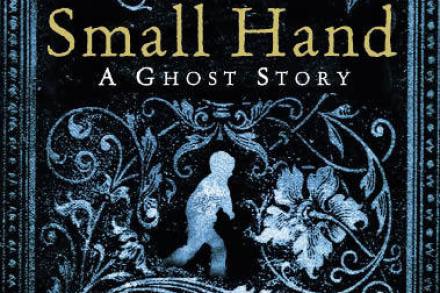
The ghost story is a literary form that favours brevity. Its particular emotional effects — the delicious unease it creates, the shapeless menace and the unsettling uncertainty — work particularly well in concentration, as both Henry James and M. R. James knew so well. A ghost story does not need distractions. Susan Hill has already established herself as a distinguished modern exponent of the genre with The Woman in Black and The Man in the Picture. She returns to it in her latest novel — or, rather, novella, The Small Hand. It is set firmly in the present, in a world with emails and trips to New York; but, as so often with a ghost story, it is also full of echoes from the past. Adam Snow, the possibly unreliable narrator, is an antiquarian bookseller.

Fearful symmetry

From our UK edition

Kate Atkinson’s latest novel is the fourth in her series about Jackson Brodie, the ex-soldier, ex-police officer and ex-husband who now works in a desultory way as a private investigator. Kate Atkinson’s latest novel is the fourth in her series about Jackson Brodie, the ex-soldier, ex-police officer and ex-husband who now works in a desultory way as a private investigator. Like its predecessors, Started Early, Took My Dog takes place in an exhilarating and occasionally infuriating version of modern Britain that reads as if designed by a theoretical physicist with a sense of humour. The novel is equipped with two epigraphs. The first is the rhyme beginning ‘For want of a nail the shoe was lost’, which sums up one of the book’s themes.

Recent crime novels | 17 July 2010

From our UK edition

Michael Ridpath, best known for his excellent financial thrillers, explores new territory in Where the Shadows Lie, which combines elements of the American cop crime novel with J. R. R. Tolkein and post-credit-crunch Iceland. Magnus, a detective with the Boston Police Department, is a key prosecution witness in a case that may bring down a Dominican drug gang. For his own safety, he’s temporarily transferred to Iceland to advise their police department on modern criminal methods. He’s promptly provided with work experience — the killing of a philandering academic. Why did a suspicious Yorkshire truck driver with a fetish for Tolkein have an appointment with the dead man? How does the attractive art dealer fit in?

Recent crime novels | 29 May 2010

From our UK edition

Tudor thrillers are thick on the ground nowadays but this one is rather special. The Bones of Avalon (Corvus, £16.99) is something of a departure for Phil Rickman, best known for his excellent Merrily Watkins series about a diocesan exorcist in contemporary Herefordshire. Here he writes in the first person as Dr John Dee, the astrologer, mathematician and adviser to Queen Elizabeth I. In 1560, William Cecil despatches him to Glastonbury, with his younger but more sophisticated friend Robert Dudley, to search for the bones of King Arthur. But Dee’s mission turns into far more than an attempt to strengthen the dynastic foundations of the Tudor dynasty: there’s a conspiracy against the Queen for him to contend with, and also something even darker lurking in the shadows.

Low dishonest dealings

From our UK edition

The strange, unsettled decades between the wars form the backdrop of much of D. J. Taylor’s recent work, including his novel, Ask Alice, and his social history, Bright Young Things. At the Chime of a City Clock is set in 1931, with a financial crisis rumbling in the background. The strange, unsettled decades between the wars form the backdrop of much of D. J. Taylor’s recent work, including his novel, Ask Alice, and his social history, Bright Young Things. At the Chime of a City Clock is set in 1931, with a financial crisis rumbling in the background. James Ross, a struggling writer, tries to keep his landlady at bay with the meagre income he earns as a door-to-door carpet-cleaner salesman.

From gloom to dispair

From our UK edition

In little more than a decade, the cosy world of Anglo-American crime fiction has been transformed by wave after wave of Scandinavian invaders. Some, like Steig Larsson, are suddenly parachuted into the bestseller lists almost before we have had time to become aware of their existence. Others, like Iceland’s Arnaldur Indridason and Norway’s Karin Fossum, advance steadily but less dramatically in terms of sales and critical plaudits. And then there’s Henning Mankell, the Swedish commander-in-chief of the invading forces, who deserves a category to himself. He is a distinguished playwright, publisher and children’s author, who has a long and honourable record of supporting charitable causes, especially in Africa.

I smell a rat

From our UK edition

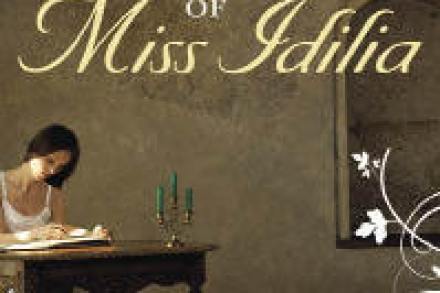
The Diary of Miss Idilia presents the reader with an unusual problem. The writing is entirely comprehensible, the tale it tells couldn’t be easier to follow. The tricky bit, though, comes with trying to work out what on earth the book is. In 1851, 17-year-old Idilia Dubb was on holiday in the Rhineland with her middle-class Edinburgh family when one morning she disappeared. A lengthy search found nothing, and her parents returned home. Then, in 1860, workmen restoring Lahneck castle outside Coblenz discovered her remains at the top of a seemingly inaccessible tower.

Recent crime novels | 30 January 2010

From our UK edition

Blue Lightning (Macmillan, £16.99) is the fourth novel in Ann Cleeves’ excellent Shetland quartet. Blue Lightning (Macmillan, £16.99) is the fourth novel in Ann Cleeves’ excellent Shetland quartet. It is just as good as its predecessors. Cleeves has found a way to serve up many of the pleasures of the traditional mystery in an unusual modern setting. Her series detective, Jimmy Perez, returns to his own island, Fair Isle, with his artist fiancée, Fran. Autumn storms cut the island off from the rest of the world. Perez anticipated that he would suffer mild embarrassment when he introduced Fran, an outsider from the south saddled with a six-year-old daughter, to his family home.

Recent crime novels | 25 November 2009

From our UK edition

Fever of the Bone (Little, Brown, £18.99) is the sixth novel in Val McDermid’s Jordan and Hill series. Fever of the Bone (Little, Brown, £18.99) is the sixth novel in Val McDermid’s Jordan and Hill series. Someone is using a networking website to lure young teenagers, both boys and girls, to their deaths. Meanwhile Detective Chief Inspector Jordan is struggling with the demon drink, and also with a new boss, who questions both the cost-effectiveness of her unit and the nature of her personal and professional relationship with clinical psychologist Tony Hill. As for Hill, a father whom he never knew has just left him a posh house, a lot of money he doesn’t want and yet more doubts about his own self-esteem.

New departures

From our UK edition

For a crime writer, success comes with its dark side. As Conan Doyle learned to his cost, your readers often become obsessively attached to your series hero, while you yourself find him or her increasingly tiresome — and limiting. Ian Rankin’s well-deserved success with the genre has largely derived from his Inspector Rebus novels set in Edinburgh. When he brought the series to an apparent end with Exit Music in 2007, his readers were curious to know what lay ahead. Last year’s Doors Open, a relatively lightweight caper novel set in Edinburgh, was no more than an expanded version of a previously published short story and clearly a way of marking time. Now we know the answer. This year, Rankin returns with The Complaints, which may well be the first of a new series.

Recent crime fiction

From our UK edition

An Empty Death (Orion, £18.99) is the second instalment of the series Laura Wilson began with her previous book, the award-winning Stratton’s War. An Empty Death (Orion, £18.99) is the second instalment of the series Laura Wilson began with her previous book, the award-winning Stratton’s War. Time’s moved on to 1944, and Hitler’s doodlebugs are spreading fear and destruction through the war-weary city. But Detective Inspector Ted Strattton’s immediate concern is the murder of a doctor on a bombsite near the Middlesex Hospital in Fitzrovia and the linked activities of a medical impostor.

A choice of crime novels | 20 June 2009

From our UK edition

Dublin has a special relationship with fiction, which in recent years has inspired some excellent crime novels. Among them is Declan Hughes’s Ed Loy series, which gives a distinctively Irish twist to the flawed private investigator of American pulp fiction. Loy has many of the classic characteristics of the breed, including the tastes for hard liquor, lovely women and lost causes. But Hughes places his protagonist in a sharply observed contemporary Dublin; and his plots erupt from the city’s faultlines. In All The Dead Voices (John Murray, £16.

Recent crime novels | 28 March 2009

From our UK edition

The Ignorance of Blood (Harper Collins, £17.99) is the fourth of Robert Wilson’s novels to feature Inspector Javier Falcon of Seville, and it completes a planned quartet examining some of the demons, old and new, plaguing modern Spain. The Ignorance of Blood (Harper Collins, £17.99) is the fourth of Robert Wilson’s novels to feature Inspector Javier Falcon of Seville, and it completes a planned quartet examining some of the demons, old and new, plaguing modern Spain. A fatal traffic accident leaves an absconding Russian gangster dead. In his Range Rover, the police find more than eight million euros, drugs, compromising DVDs and a gun. As the August heat increases, Falcon is sucked into a turf war between Russian mafiosi.