Andrew Roberts

Andrew Roberts sits in the House of Lords as Lord Roberts of Belgravia

Churchill as villain – but is this a character assassination too far?

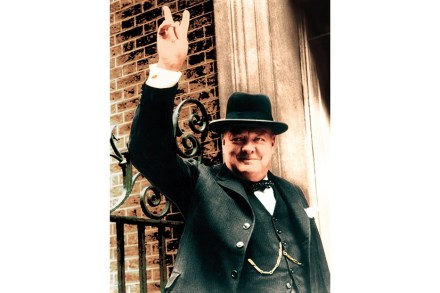
The veteran journalist Geoffrey Wheatcroft claims in his prologue to Churchill’s Shadow that: ‘This is not a hostile account, or not by intention, nor consciously “revisionist”, or contrarian,’ before launching into a long book that is virtually uninterrupted in its hostility to Winston Churchill, his memory and especially anyone who has had the temerity to admire Churchill or learn lessons from his life and career. Churchill revisionism is hardly new.
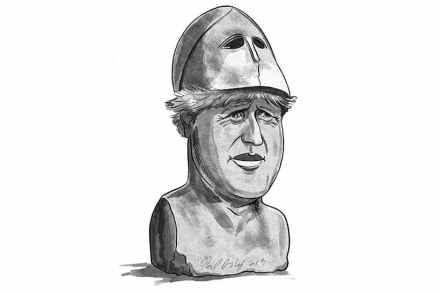
History may hold the secrets of statecraft – but not the secrets of business leadership

‘How can one person lead one hundred?’ That was one of the questions in my Cambridge entrance exams back in 1981, and although I can’t now recall whether I tried to answer it in the three hours we were given, it has fascinated me ever since. So when I was given the splendid opportunity of delivering nine Lehrman Institute lectures on military history at the New-York Historical Society three years ago, I used them to try to answer it, at least in terms of war leadership. What became apparent was what a total waste of time and effort most of the modern ‘leadership skills’ industry is whenever it tries to apply the lessons of war leadership to anything else, and especially business.

Diary – 7 March 2019

John McDonnell might think Churchill a villain, but he’s beloved in America. I’ve just returned from a ten-week, 18-state, 27-city, 87-speech book tour there, and can report that the enthusiasm for all things Churchillian in the USA is stronger now than at any time since his death. Merely bringing out a new biography of him secured me interviews on all the major TV morning news shows, invitations to speak at three presidential libraries, and a place on the New York Times bestseller list for nine weeks. There are active Churchill appreciation societies in 14 states and more being set up.

Diary – 11 October 2018

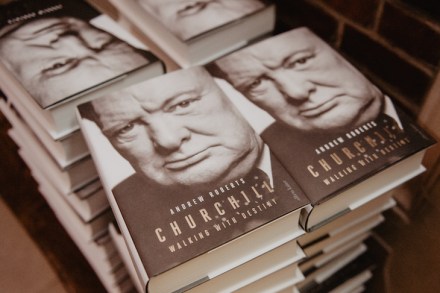
I’m giving 93 speeches over the next four months to promote my new book, Churchill: Walking with Destiny, but I don’t actually like public speaking. I enjoy it once it’s over, but not while it’s happening. I envy those writers of the 1970s who just got on with writing the next book as soon as the last one was finished. Once, at the Royal Hospital in Chelsea, a lady started her question, ‘You seem to be very ignorant, Dr Roberts.’ The Pensioners naturally roared with laughter. She was referring to my failure to have read the latest issue of a psychology journal that explained Adolf Hitler’s career in terms of his potty-training. More loud laughter from the veterans in scarlet. ‘Madam,’ I replied.

Scott Kelly was foolish to apologise for quoting Winston Churchill

This week, an astronaut called Scott Kelly was quoting Churchill and his great line, 'in victory, magnanimity'. He got massively trolled by the anti-Churchill cyber warriors who denounced him for all sorts of things. One of the things for which he was attacked, of course, was the Bengal famine, which they say he caused. In October 1942, Bengal was hit by a massive, terrible cyclone which destroyed the rice crop, which the Bengalis living in that area entirely depended upon. The road and rail links that had hitherto brought food in were also destroyed. In the past, rice from Thailand and Malaya and Burma was brought in to deal with these horrific famines.

Napoleon dynamite | 14 June 2018

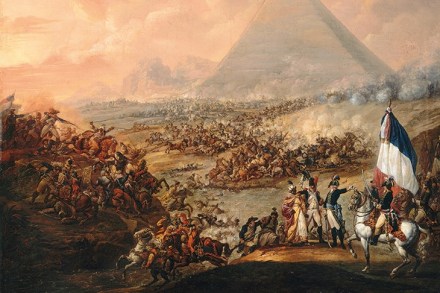
The Musée de l’Armée at Les Invalides in Paris has a new exhibition that I believe to be the best and most extensive on the Emperor in three decades. Anyone interested in Napoleon Bonaparte, early 19th-century military history and strategy, the Grande Armée’s campaigns from 1796 to 1815, monumental battle paintings, First Empire beaux-arts, uniforms, weaponry or cartography, has only until 22 July to visit the truly breathtaking Napoleon: Strategist. On entering, you walk past the large busts of six of the seven great captains of history that Napoleon said he admired and wished to emulate: Alexander, Hannibal, Julius Caesar, Henri de la Tour d’Auvergne, Marshal de Saxe and Frederick the Great.

Churchill did not have an affair – so don’t fall for Channel 4’s spin

‘Revealed,’ blares the Sunday Telegraph. ‘Churchill's secret affair and the painting that could have damaged his reputation.’ ‘Winston Churchill’s secret love Doris Castlerosse a blackmail risk,’ agrees The Sunday Times. At least the Daily Mail inserted a note of doubt in its headline - ‘Churchill may have cheated with society's wildest woman’ - and included a question mark in its opening line: ‘Did Churchill cheat on Clemmie with Cara Delevingne's great-aunt, who was 1930s society's wildest and most ecstatically beautiful woman?

Churchill was all in favour of a united Europe — as long as it didn’t include Britain

From our US edition

Dr Felix Klos is an extremely personable, highly intelligent American-Dutch historian who has undertaken much archival research, worked extremely hard and is an excellent writer. In trying to persuade us that Churchill favoured Britain joining a federal Europe, however, he comes up against several immovable obstacles. The most serious of these is that in the four years that Churchill was prime minister, between 1951 and 1955, he personally, regularly and decisively blocked all movement towards Britain joining any of the European federal institutions that existed. However engaging Klos may be, and however well written his book, he is utterly wrong in his central thesis.

With Europe, but not of it

Dr Felix Klos is an extremely personable, highly intelligent American-Dutch historian who has undertaken much archival research, worked extremely hard and is an excellent writer. In trying to persuade us that Churchill favoured Britain joining a federal Europe, however, he comes up against several immovable obstacles. The most serious of these is that in the four years that Churchill was prime minister, between 1951 and 1955, he personally, regularly and decisively blocked all movement towards Britain joining any of the European federal institutions that existed. However engaging Klos may be, and however well written his book, he is utterly wrong in his central thesis.

A tough act to follow

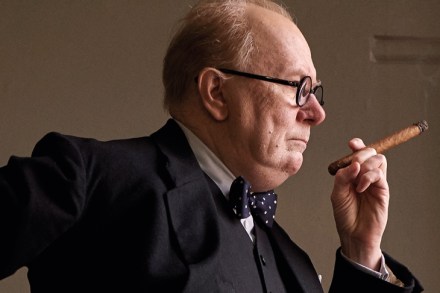
Gary Oldman has joined a long list of actors who have portrayed Winston Churchill — no fewer than 35 of them in movies and 28 on television. He is one of the best three. ‘I knew I didn’t look like him,’ Oldman has said. ‘I thought that with some work I could approximate the voice. The challenge in part was the physicality, because you’re playing someone whose silhouette is so iconic.’ We all have our own mind’s-eye view of what Churchill should look and sound like, and his personality was so strong and sui generis that it is almost impossible for an actor to impose himself on the role. He is therefore almost always left with either mere impersonation or caricature. Oldman avoided this in Darkest Hour through research.

National Army Museum

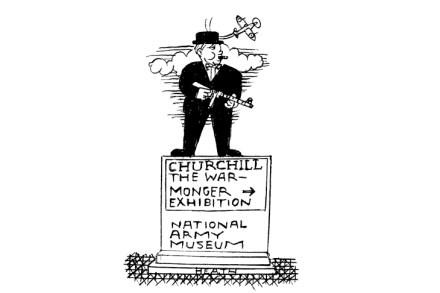
I used to love the National Army Museum in Royal Hospital Road, Chelsea, which was crammed with the memorabilia of four centuries of the British Army. I even visited it on the morning of my wedding. It taught you about the history of the British Army in a completely non-political way, allowing the objects — which were carefully factually annotated — to speak for themselves. It was housed in a hideous 1971 building, but the artefacts inside were superb.

Jaipur Notebook

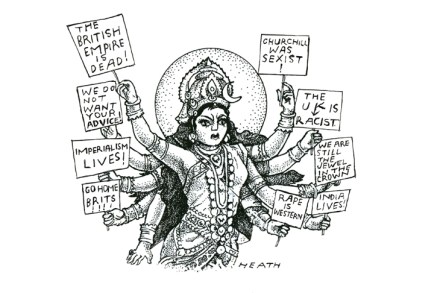
Did Winston Churchill, like Donald Trump, also like to ‘grab them by the pussy?’ Last week at the Jaipur Literary Festival, I was on a panel discussion entitled ‘Churchill: Hero or Villain?’, where the Indian biographer Shrabani Basu told a large crowd that at a suffragettes’ demonstration outside Parliament in November 1910, Churchill, then home secretary, had ‘given instructions for police that they can batter the women and assault the women and sexually assault them as well’. He allegedly told policemen to ‘put their hands up their thighs, they can grope them and press their breasts’. ‘Can I just point out that that is completely untrue?’ I intervened.

Dear Mary: I’m addicted to Gogglebox

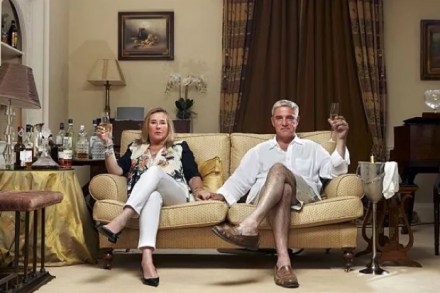
From Andrew Roberts Q. My wife and I are addicted to the brilliant TV series Gogglebox, which makes us feel proud to be British. We know two of the people who appear on it socially and might be meeting them in the new year. How can we show our appreciation of their superb, hilarious and insightful contributions without seeming sycophantic or embarrassingly adulatory? A. No need to worry as one of the couple is so reclusive you are unlikely to encounter him outside the television screen. The other would be able to offset any sycophancy with her memory of the verbal abuse she once received when tactlessly bursting into your bedroom at a house party to give you an unwelcome wake-up call. For more letters to Dear Mary, including ones from Ed Balls, Nigel Farage and Bill Bryson, click here.

Fidel Castro was a cruel dictator. Ignore the revisionists

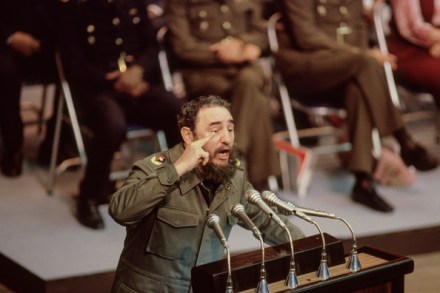
Why are left-wing dictators always treated with more reverential respect when they die than right-wing ones, even on the Right? The deaths of dictators like Franco, Pinochet, Somoza are rightly noted with their history of human rights abuses front and centre, but the same treatment is not meted out to left-wing dictators who were just as monstrously cruel to people who opposed their regimes. The death of Fidel Castro is a perfect case in point. BBC News described him as ‘one of the world's longest-serving and most iconic leaders’ only mentioning in the fourth paragraph that ‘Critics saw him as a dictator’. Critics?!

The National Portrait Gallery has never had a proper Wellington. Now it has the chance

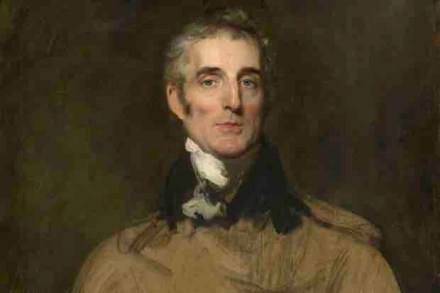
For some inexplicable reason the National Portrait Gallery, of which I am a trustee, doesn’t have a significant portrait of the Duke of Wellington. There’s one rather stiff picture in oil by Robert Home from when he was a young soldier in India and a few watercolours of him in retirement, but weirdly none at all of the vigorous statesman and victor of Waterloo at the height of his prestige and powers. This is astounding considering that — apart from the Duke of Marlborough — Wellington was by far the greatest soldier Britain has ever produced, and moreover one who went on to become prime minister.

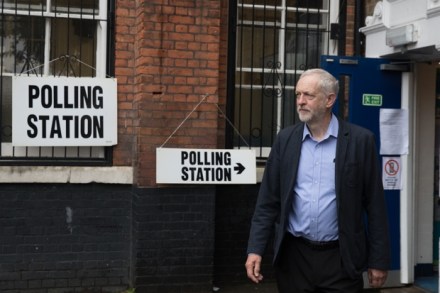
Has Jeremy Corbyn rebelled against himself and voted Leave?

How do you think Jeremy Corbyn voted in the privacy of the booth? Might he have kept his 100 per cent record of rebellion by even rebelling against himself, and voting Leave in line with his long-held anti-EU beliefs? It won’t be long before politicians start tweeting selfies with their ballot papers; a ghastly development, obviously, but I’d like to have seen his. This is an extract from Andrew Roberts' diary. The full article can be found here.

Diary – 22 June 2016

It was a nice touch that MPs sat in each other’s seats in the Commons during the tributes to Jo Cox on Monday. I hope it helped remind Tories where they’ll be sitting permanently after 2020 if they don’t bind the party’s wounds on Friday. If Remain wins, then everyone must coalesce around David Cameron; if it’s Leave then Michael Gove. These things were managed much better before 1965 when the Queen decided on Tory leaders. For all his reservations about the premiership, Gove wouldn’t refuse Her Majesty’s request to form a government, not in the year of her 90th birthday. How do you think Jeremy Corbyn voted in the privacy of the booth?

‘Sell everything’ – here’s the incendiary RBS warning on deflation, risk and the next crash

The advice of Andrew Roberts, head of European Economics at RBS, has today gone around the world: its time to sell, ahead of a stock market crash. The RBS European rates research team said that things all "looks similar to 2008.” It seems to cap a bearish round of forecasts: Standard & Poor’s, the credit ratings agency, has more companies on a negative outlook than at any time since the last crash. Are we due another one? The fill document of the RBS note is here (pdf). And the edited highlights below:- I think my ‘severe downside for the world’ call is looking ok so far. The fact that we are going well is very dangerous for every investor in the world. Why?

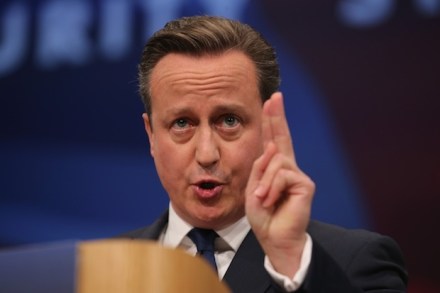
Where will David Cameron end up in the history of Conservative Prime Ministers?

At a large Tory breakfast meeting that David Cameron spoke to recently, the tables were named after all of the Conservative premiers of the past: the good, the bad and Ted Heath. So there were the Lord Salisbury, Harold Macmillan and Margaret Thatcher tables, for example. (I was delighted to be on the Winston Churchill table; the people on the Neville Chamberlain one looked suitably ill-favoured.) As Cameron — who was sat at the David Cameron table, appropriately enough — looked around the huge room that morning, he could be forgiven for wondering where he will wind up in the pantheon of past premiers.

Premier league

At a large Tory breakfast meeting that David Cameron spoke to recently, the tables were named after all of the Conservative premiers of the past: the good, the bad and Ted Heath. So there were the Lord Salisbury, Harold Macmillan and Margaret Thatcher tables, for example. (I was delighted to be on the Winston Churchill table; the people on the Neville Chamberlain one looked suitably ill-favoured.) As Cameron — who was sat at the David Cameron table, appropriately enough — looked around the huge room that morning, he could be forgiven for wondering where he will wind up in the pantheon of past premiers.