Andrew McQuillan

Andrew McQuillan writes about politics and unionism across the UK. He is Scottish and has lived and studied in Belfast for several years.

Suella Braverman has a point about Northern Ireland

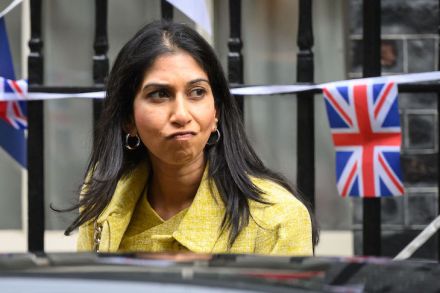
Suella Braverman’s description of pro-Palestinian protests as being 'disturbingly reminiscent of Ulster' has given the Province’s political class yet another reason – not that they need one – to chunter on at length.  The professionally po-faced, from SDLP leader Colum Eastwood to Stephen Farry of the Alliance Party, dutifully trod the path to X/ Twitter, or whichever broadcasting studio would take them, to intone about how off piste the Home Secretary had gone. They said Braverman's remarks showed how ignorant about the reality on the ground in Northern Ireland she was.  For all the claims the Home Secretary doesn’t know what she’s talking about when it comes to Northern Ireland, she may well have a point.
Sinn Fein’s troubling ‘solidarity’ with Palestinians

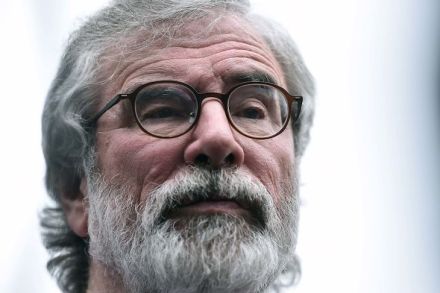
Black Mountain, which looms above West Belfast, acts as a blank canvas for Irish republicans to plaster their thoughts across. Over the years, banners covering a range of subjects, from Irish unity to Brexit, have been draped across it. In recent days, a Palestinian flag was placed there by a group styling itself Gael Force Art, claiming it was in 'solidarity with the Palestinian people who launched their biggest operation in fifty years against the rogue state of Israel'. Gerry Adams shared a picture of the flag on Twitter/ X. 'The Mountain Speaks! Free Palestine,' he wrote. Irish republicanism has always been a reliable well-spring of support for their Palestinian equivalents.

The sectarian shame of Ireland’s women’s football team

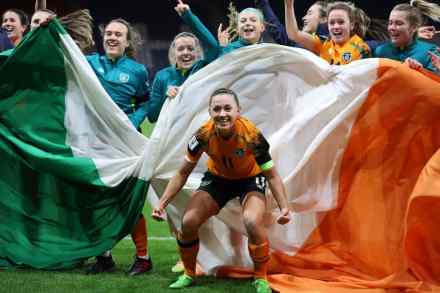
How bad is Irish nationalism’s sectarian problem? In the somewhat Panglossian world occupied by nationalist and republican activists and politicians – boosted by recent census and election results – it doesn’t really feature in the discussion.  At the recent 'Ireland’s Future' conference in Dublin, attended by thousands of people, the grubby stuff – the legacy of the Troubles and all – barely featured amidst the hopeful mood music and good vibes. The sight of the Republic of Ireland’s women’s football team celebrating their World Cup qualification in Glasgow earlier this week with the pro-IRA chant of 'Oh, Ah, Up the ‘RA" – a line taken from a Wolfe Tones song – struck a discordant tone.

Northern Ireland’s police service is weak and inept

The data breach at the Police Service of Northern Ireland, which has seen the personal details of all serving officers and just under 2,500 civilian staff accidentally released as part of a response to a Freedom of Information request, is the sort of grotesque, IT foul-up normally reserved for the realms of satire like The Thick of It.  There is a slim chance that any officers in the Province will be laughing. The attempted murder of DCI John Caldwell in front of his young son in Fermanagh earlier this year underlined acutely that dissident republicans hellbent on killing police officers ‘haven’t gone away you know’, to quote Gerry Adams.

The Orange order risks damaging the cause for Irish unionism

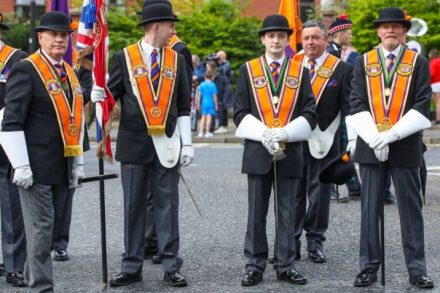
Another year and another July has come round where viewers in the UK have been treated to the sight of some of their compatriots in Northern Ireland marking William of Orange’s triumph over his father-in-law James II, the Catholic Stuart King, on the 'green grassy slopes of the Boyne' – as the Orange song goes – in 1690.  Mention Ulster unionism and, to the casual mainland observer, it will conjure up images of stern bowler hatted men in orange collarettes and sashes, the skirl of pipes and flute bands, parading disputes and monumental bonfires of pallets and tyres on loyalist housing estates.

Is Sinn Fein really on the march?

In the visceral two horse race which is Northern Irish politics, it is the green horse which is out in front after last Thursday’s local council elections.  Sinn Fein, as at Stormont, is now the largest party across Northern Ireland’s local authorities. A lot has changed since the 1980s, when, during the IRA’s campaign of murder and mutilation across the Province, unionists would walk out of council meetings rather than sit with Sinn Fein councillors.  The stain of terrorism which will forever be part of Sinn Fein does not seem to be a deterrent to the nationalist electorate in Northern Ireland.

Is Chris Heaton-Harris the worst Northern Ireland secretary yet?

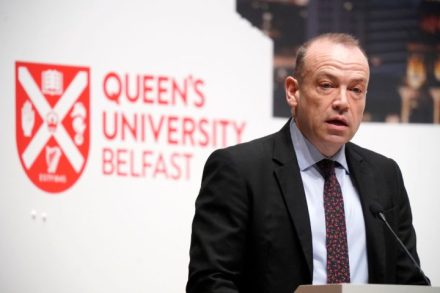
Amidst the veneration of the Belfast Agreement taking place at Queen’s University this week, there has been a less than subtle message: that the DUP should get back to work and re-join the devolved executive at Stormont. One of the many banging that particular drum – and unlikely to feature in any Orange parade this July – is Chris Heaton-Harris, the Northern Ireland Secretary. Heaton-Harris's speech to those gathered in Belfast yesterday was a browbeating performance par excellence which has raised unionist hackles rather than assuaged them. But while his speech grabbed the headlines for this reason, it also contained an extraordinary appraisal of the history of Northern Ireland and bizarre phraseology for a supposed unionist to use.

Will Northern Ireland ever learn to solve its own problems?

If the relationship between the UK and the United States is allegedly special, the relationship between Northern Irish politicians and the US presidency is a whole different level.  In the mythologised, Derry Girls telling of the Troubles, Bill Clinton turning on Belfast’s Christmas lights in 1995 heralded a transformative US intervention. One which allegedly managed more in delivering the Belfast Agreement than the hard yards trod by UK and Irish civil servants, the security forces and the more constructive figures involved in local politics.  How can Northern Irish politicians be encouraged to take some responsibility for providing stable, local government?  Since then, Northern Irish politicians have revelled in the purported glamour of a presidential head rub.

The intellectual hollowness of Scottish Labour

The implosion of the Scottish National Party has led Scottish Labour to dream again of one day returning to what it assumes is its birth right: the berth at the top of Scottish politics. Many of the banalities and buzzwords in Labour’s most recent manifesto make Humza Yousaf’s blandishments about a ‘wellbeing economy’ sound deep and serious. Humza Yousaf’s increasingly pyrrhic looking triumph in the contest to replace Nicola Sturgeon was met with much merriment in Labour ranks; one source quoted in the Times during the leadership contest bluntly said, ‘I hope Humza wins because he is fucking s****.’ Polling since Yousaf’s win has found that the SNP’s lead over Labour in Westminster seats has been slashed to five points.

The Good Friday Agreement hasn’t solved Northern Ireland’s troubles

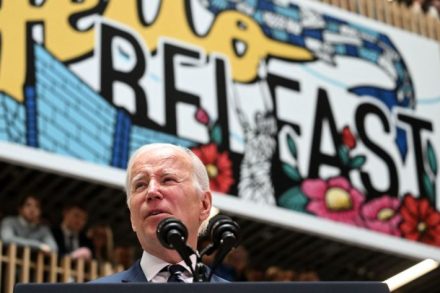
Northern Ireland is a few weeks out from a Davos-style gathering of the great and the good to mark 25 years since the signing of the Belfast Agreement. The Clintons will be in town, Joe Biden will be there to presumably tell some folksy, paddywhacking wisecrack and Tony Blair might even feel the familiar touch of the hand of history upon his shoulder.  Unhelpful, then, that the real world is deciding to intrude. Outside the backslapping get-togethers planned at venues such as Queen’s University in Belfast, villains still roam the streets and backroads of Ulster.

Rishi Sunak’s Protocol could tear the DUP apart

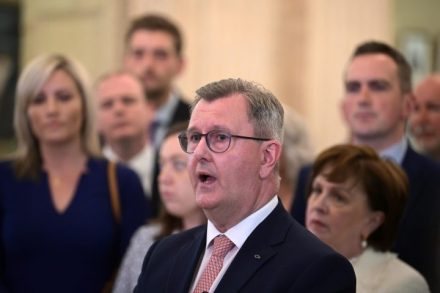
Will the Windsor Framework prove the undoing of Jeffrey Donaldson and the DUP? The mood music amongst some of the louder elements of this fractious political tribe points to trouble ahead.  The premature champagne corks released in London and Brussels earlier this week were greeted with stony silence in the unionist heartlands. The party’s public position – and that of its leader – is that it is still chewing through the document. Though Donaldson did not issue an outright no, he did say some issues remained with what had been agreed by the UK and EU.  However, the pressure on Donaldson to respond in the negative has been cranked up by an intervention from some of the DUP’s more outspoken and mischievous types.

The Windsor knot – how long will Unionists wear the deal?

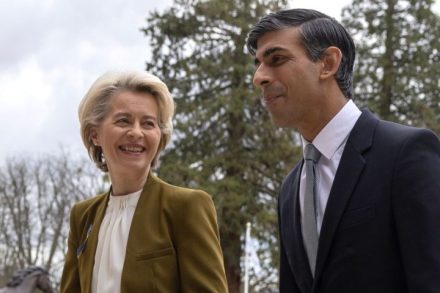
White smoke has emerged from Windsor. Now that a deal between the UK and EU over Northern Ireland has emerged, can the DUP endorse it?  Early reports that the party were on board – and were planning on using a dinner in London this evening to begin rationalising this to their supporters – were dismissed by the DUP leader Jeffrey Donaldson as ‘entirely fictional’. He reiterated the line that he and his party needed time to chew it over.  The DUP themselves have said in their own response to today’s developments that there has been progress. The fact they have not gone for an outright no will please Downing Street and the Northern Ireland Office greatly.

The DUP has a right to be difficult over the Northern Ireland Protocol

It’s easy to take an unsympathetic view of the Democratic Unionist Party. For many, its politicians are caricatures of the dour Ulsterman come to life; flinty types with an antediluvian outlook. An unfortunate reminder – for a certain type of Englishman – of all that ‘Irish stuff’ they would rather not have to deal with.  The back and forth over the Northern Ireland Protocol has seen this sentiment ratcheted up. Jeffrey Donaldson’s standpoint – no return to devolution without his party’s tests being met – is engendering incredible frustration among government ministers and a press tired of having to surrender column inches to this intractable tale.

Is Whitehall inadvertently funding Sturgeon’s push for separatism?

Is Whitehall at last baring its teeth in response to the Scottish government and SNP’s separatism push? A look into how the Scottish civil service conducts itself is long overdue.  Scotland Secretary Alister Jack confirmed earlier this week that senior civil servants in the Cabinet Office are examining whether their Edinburgh counterparts should be allowed to keep working on plans for independence following last week’s Supreme Court ruling. Unless Whitehall intervenes or the Scottish government junks its plans, around £1.5 million worth of taxpayer money will reportedly continue to be spent each year on the team of 25 civil servants tasked with providing a revised prospectus for separation.

Nicola Sturgeon is running out of road

Nicola Sturgeon gave a predictable response to the Supreme Court's ruling that the Scottish government does not have the power to legislate for a referendum on Scottish independence. The First Minister dialled up the grievance factor by claiming the decision ‘exposes as myth any notion of the UK as a voluntary partnership’. If only there was a vote in the past eight years which disproves her point.  The court's ruling, delivered in the clipped tones of the Edinburgh-educated Lord Reed, was a fitting coup de grace in response to the grandstanding of the Scottish government and Scottish National Party. Rallies and protests are reportedly being scheduled the length and breadth of Scotland by the faithful of the nationalist movement in response.

Another set of Northern Irish elections won’t solve anything

Northern Ireland is set for another election. The failure to reboot the province’s power-sharing Executive by the deadline last Friday means Northern Ireland Secretary Chris Heaton-Harris is compelled to call another poll. The current absence of an Executive stems from the Democratic Unionist party’s refusal to join in until substantive progress is made on the Northern Ireland Protocol. What will an election solve? The frank answer is nothing. Sinn Féin, currently the largest party following an election in May, will be able to present this to nationalists and republicans as yet another chance to give those democracy-denying unionists another mighty kicking on the road to a united Ireland.

Has Sinn Féin really changed its spots?

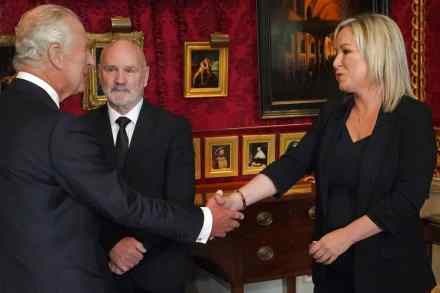
In a week of solemn intonation and symbolic meaning, the sight of Sinn Féin’s leader Michelle O’Neill shaking hands with the King at Hillsborough Castle was yet another event to be dissected and extrapolated. Hushed tones providing narration from London fell over themselves to stress the meaning of this and repeated the article of faith: ‘How far we’ve come’. From the BBC to Sky, and even GB News, broadcasters were united on that front in their commentary. Others, especially those outriders for the so-called ‘New Ireland’ which would appear following any border poll, pointed triumphantly. This gesture showed that unionists had nothing to fear and that their traditions would be accommodated.

The DUP is failing to learn any lessons from Sinn Fein’s victory

Is the DUP intent on compounding the disaster of its recent election defeat which saw Sinn Fein returned as Northern Ireland’s largest party? It certainly seems that way. In the aftermath of that result, the DUP, the TUV (Traditional Unionist Voice) and other loyalists have been quick to point out that the unionist designation remains the largest at Stormont, albeit marginally. They argue that polling continues to show a majority in favour of Northern Ireland staying within the UK. This has been used to downplay Sinn Fein’s achievement last week. But this complacency is dangerous. Contrary to the predictable hyperbole of recent days, a united Ireland is not imminent.

Are Northern Ireland’s unionists about to hand Sinn Fein victory?

'Ulster stands at the crossroads,' Northern Ireland's prime minister Terence O'Neill famously declared in 1968 as the Troubles began to take hold. A crossroads moment is once again looming into view. If current polling is to be believed, Sinn Fein will be returned as the largest party following Thursday’s assembly election. Such a victory would pose an existential problem for Northern Ireland’s unionists – and the governments in London and Dublin.  Unionists only have themselves to blame for this crisis. While what they stand for – the preservation of the Union – is obvious, the means by which they want to achieve it is anything but.

The DUP’s dangerous game in Northern Ireland

Sir Jeffrey Donaldson’s leadership of the DUP has been characterised as something of a phoney war against the Northern Ireland Protocol (NIP) – until now. After months of threatening to pull down the Northern Ireland executive should he and his party not be satisfied with progress on removing the protocol (which creates checks on goods between Britain and Northern Ireland) Donaldson has made his move. Paul Givan, something of a lame duck in his role as First Minister, has resigned and left his post at midnight. Because of the intricacies of Stormont, the deputy First Minister Michelle O’Neill of Sinn Fein will also depart but junior ministers will remain in post until an election.