Andrew Lambirth

A fresh perspective on reassuringly familiar artists

From our UK edition

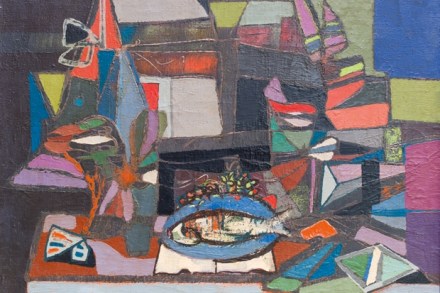
This exhibition examines a loosely knit community of artists and their interaction over a decade at the beginning of the last century. It is centred around the marriage of Ben and Winifred Nicholson (which began to split up in 1931), involves their crucial joint-friendship with Christopher Wood and a fruitful exhibiting relationship with William Staite Murray, topped off by the all-pervading influence of a true original, Alfred Wallis, Cornish fisherman, marine-stores dealer and compulsive painter. The intellectual and artistic meeting of these individuals was a formative impulse in the development of Modernism in England; and it could be said — with some justification — that they brought out the best in each other.

The Matisse Cut-Outs is a show of true magnificence

From our UK edition

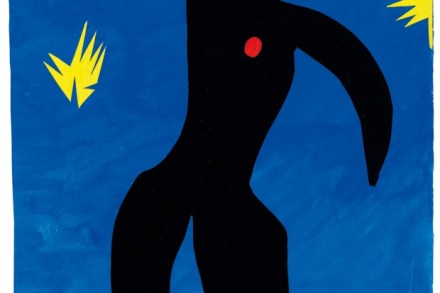
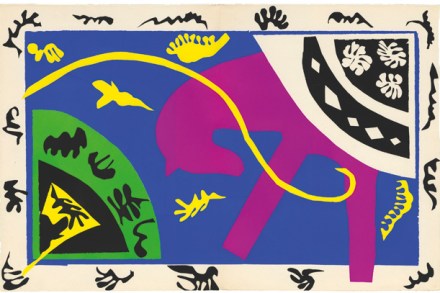
Artists who live long enough to enjoy a late period of working will often produce art that is radically different from the achievements of the rest of their careers. Late Titian and late Rembrandt are two such remarkable final flowerings, but Henri Matisse (1869–1954) did something even more extraordinary: he not only changed direction, he also gave up painting entirely. In the last years of his life he concentrated exclusively on making pictures, some of them vast, from cut paper. If ill health prevented him from painting, it could not stop him creating, and he reached new heights of greatness in the breathtaking beauty and daringly simplified harmonies of his cut-outs. ‘I have attained a form filtered to the essentials,’ he said.

The National Gallery’s Veronese is the exhibition of a lifetime

From our UK edition

Paolo Veronese (1528–1588) is one of the great painters of the Venetian School, often joined in an unholy trinity with Titian and Tintoretto. But he was not Venetian, and only arrived in the city when he was well into his twenties. His formative years were spent in Verona, hence his popular name (he was also known as Paolo Caliari, and before that as Paolo Spezapreda, in reference to his early training as a stonecutter, following his father and grandfather), which suggests a very different background from his two most famous confrères. He has also been categorised as a Mannerist, but this is more art-historical pigeonholing than useful elucidation.

William Kent was an ideas man – the Damien Hirst of the 18th century

From our UK edition

How important is William Kent (1685–1748)? He’s not exactly a household name and yet this English painter and architect, apprenticed to a Hull coach-painter before he was sent to Italy (as a kind of cultural finishing school) by a group of patrons who recognised his abilities, became the chief architectural impresario and interior decorator to the early Georgian nobility. His Italian studies made him a devoted Palladian, and in partnership with his principal collaborator Lord Burlington he set about transplanting the architectural principles and beliefs of Andrea Palladio to the English countryside. He was probably a better ideas man than artist (the Damien Hirst of his day, perhaps?), but he had access to the finest craftsmen, who could execute his plans to great effect.

It’s the whisper you’ve got to listen for in Arturo Di Stefano’s paintings

From our UK edition

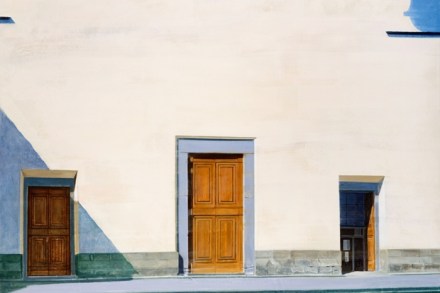
One of the paintings in Arturo Di Stefano’s impressive new show at Purdy Hicks Gallery is called ‘Santa Croce’ and it depicts the arcaded cloister of the church in Florence where Giotto painted a series of frescoes. Di Stefano has not chosen to paint the obvious view — its famous black-and-white façade — but focuses instead on the cloister, where he imagines Giotto walking during the making of his frescoes. The painting is thus charged with the human presence of an artist Di Stefano much admires, a hidden presence, though real enough in the frescoed chapels behind the façade of the basilica.

The great and the good and the gassed and the dead

From our UK edition

Last week, three exhibitions celebrating the art of Germany; this week, a show commemorating the first world war fought against that great nation. In this centenary year of the beginning of WW1, there will be numerous events marking the start of hostilities. (Will there be as many celebrating the anniversary of their cessation, I wonder?) Although there is some film footage of the war, and detailed photographic documentation of its horrors, the best record we have of the human reality of those five years of conflict resides in the art made about it. When the contagion of battle has passed from the blood, the conscious mind may turn to better things, and culture reassert its high priority.

Upside down and right on top: the power of George Baselitz

From our UK edition

It’s German Season in London, and revealingly the best of three new shows is the one dealing with the most modern period: the post-second world war era of East and West Germany and the potent art that came out of that split nation. In Room 90 is another immaculately presented British Museum show of prints and drawings, focused this time around Georg Baselitz (born 1938). Of the 90 works on display, more than a third has been donated to the BM by Count Christian Duerckheim, the remainder lent by this assiduous collector. The show begins with Baselitz’s contemporaries and I was surprised to find myself quite liking some things by Gerhard Richter, currently the most overrated artist in the world.

Richard Deacon – from Meccano into art

From our UK edition

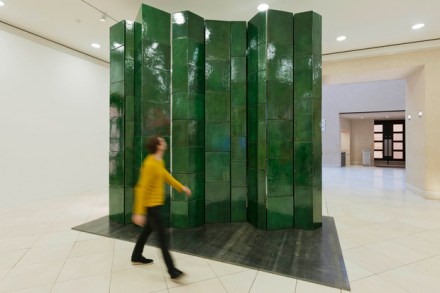
When I visited the Richard Deacon exhibition at Tate Millbank, there were quite a lot of single men of a certain age studying the exhibits with rapt attention — some even making notes. (I realise I’ve just described myself...) This is perhaps because the show is all about the glories of construction, and reminiscent of hobbies on an industrial scale. The exhibits are made of bent wood, looping metal, other materials cut or sewn or carved, exoskeletons of imaginary, or rather invented, things. Much of the early work in this fascinating survey is linear, the structures resolutely open, but the emphasis gradually becomes more volumetric and involved with three-dimensional plasticity. Richard Deacon (born 1949) is an object-maker of intriguing presence and diversity.

The British Museum’s Vikings: part provincial exhibit, part gripping drama

From our UK edition

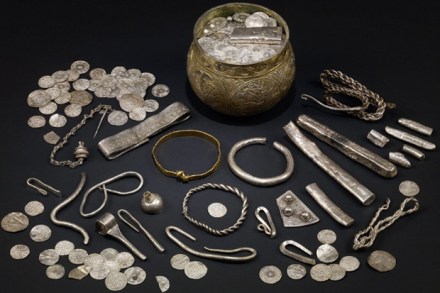
Exhibitions are made for two main reasons: education and entertainment. Although I recognise the importance of education I am, by nature, a devotee of pleasure and want people to enjoy what they see in museums — not just feel that they must learn from it. Great exhibitions marry the two impulses effortlessly, and on balance the Vikings show, supported by BP, in the marvellous new Sainsbury Exhibition Gallery at the BM, is a great exhibition, though it does rather fall into two sections, the first somewhat more earnest than the last. But this also has the effect of significant build-up: the first half is like Sir Les Patterson and Sandy Stone warming the audience before Dame Edna appears after the interval.

‘At last I wasn’t worried about making pictures’: an interview with Mark Shields

From our UK edition

Mark Shields is a painter of considerable versatility and skill who is unable to rest on his laurels. Born in 1963 in Northern Ireland, where he still lives, he developed a powerful realist style that owes much to the Old Masters, and scored early success with meticulous portraits and still-life paintings. If he had been happy to continue in that vein, he would no doubt have made a very good, if safe, living, but ambition and self-questioning have led him on to develop new ways of painting and drawing, from mysterious, atmospheric landscapes and complex narrative pictures to large-scale pastel drawings on canvas.

Four artists you ought to know — and a famous one you can know better

From our UK edition

In this round-up of exhibitions in London’s commercial galleries, I feature three shows of little-known but mature contemporary British artists. There is a great deal of interesting and worthwhile art being made out there, but not enough of it comes to public attention. Most museums won’t show it, and there are only a handful of commercial gallerists who are prepared to back quality over proven popularity. In such a world, the quieter talents tend to get overlooked, so it is a particular pleasure to be able to draw your attention to the subtle small paintings of Liam Hanley (born 1933). Hanley paints in oil and draws in pencil on linen laid down on to paper.

‘Castiglione: Lost Genius’ loses his genius in a sea of brown

From our UK edition

Giovanni Benedetto Castiglione (1609–64) was, I must admit, unknown to me until I visited this show, the only Castiglione I was properly aware of being the one who wrote The Book of the Courtier published in 1528; clearly not the same man. The artist Castiglione was a tempestuous character, always losing his temper and getting into fights. He tried to throw his sister off a roof and is said to have committed murder; perhaps more importantly for his artistic career, when he was at the height of his popularity in Genoa, he slashed to shreds a painting commissioned for the Doge of Venice, and fled the city in which he was born and trained.

‘Uproar!’ The Ben Uri gallery punches above its weight

From our UK edition

Last year saw the centenary of the London Group, a broad-based exhibiting body set up in a time of stylistic ferment in the art world as an independent alternative to the closed shops of the academies. Formed from the amalgamation of the Allied Artists’ Association and the Camden Town Group, it boasted such notable founder members as Lucien Pissarro and Walter Sickert, while Jacob Epstein is credited with naming it. Inevitably, the London Group has gone through innumerable highs and lows in its 100-year history, yet the mere fact that it still exists is testament to the enduring need for such an independent collective.

John Craxton was more gifted than the Fitzwilliam show suggests

From our UK edition

It is often said of John Craxton (1922–2009) that he knew how to live well and considered this more important than art. Perhaps there is a certain truth in this, but if he really believed it, did he have any business in being an artist? And an artist he undoubtedly was, by temperament and sensibility, as well as by the rich endowment of natural talent. Of course, letting it be known that you think life more important than art is a very good cover for that most debilitating (and paradoxically productive) of besetting fears: self-doubt. Craxton had it in large measure, and it is probably this quality that accounted both for his originality and for the painter’s block he periodically suffered.

Painting Now doesn’t represent painting now. Thank goodness

From our UK edition

The death of painting has been so often foretold — almost as frequently as its renaissance — that any such prediction today is nothing short of foolhardy. Of course, painting is alive and well and living in London, but you wouldn’t know that from the current exhibition of five artists at Tate Millbank. (By the way, this is a paying display, the regular admission fee being £10. Not surprisingly, it was deserted when I visited. This sort of show, to do its job properly and communicate to the public at large, should be free.) According to the press release, each of the five artists ‘has adopted an approach to painting that both exploits and subverts its conventions’. I wish.

Alan Sorrell, oddly original and shamefully neglected (till now)

From our UK edition

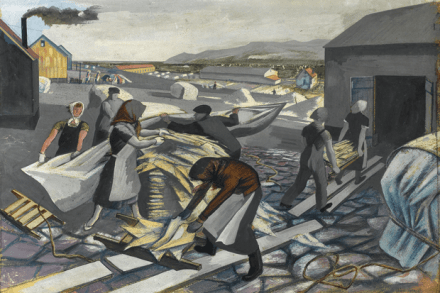
Rediscovering the unduly neglected is one of the chief excitements of those who curate exhibitions and write books. And there’s nothing I enjoy more than saluting the achievement of those who bring back to our attention an artist who – for one reason or another – has slipped off the art world radar. Before this exhibition and, more importantly, the book accompanying it, Alan Sorrell was only a name to me, with a few rather vague visual connotations. Now I can put definite images to the name and begin to build a context for his work. For anyone interested in the broader picture of 20th-century British art, the current Sorrell initiative is of real interest and value.

Art shows you simply mustn’t miss in 2014

From our UK edition

One of the great treats of the exhibiting year will undoubtedly be Henri Matisse: The Cut-Outs (17 April to 7 September) at Tate Modern. The last phase of Matisse’s productive career was devoted to making extraordinarily vivid images from painted paper cut with scissors, as the physical effort of wielding a paintbrush became too much for him. Matisse’s greatest strengths were as draughtsman and colourist, and the cut-outs combine these skills in abundant measure, releasing a new sense of joyous celebration almost unmatched in the history of art. The largest ever exhibition of the cut-outs, the Tate’s show will feature 120 works, many seen together for the first time. Unmissable.

John Bellany: potent, prolific, patchy

From our UK edition

When John Bellany died in August last year, an odyssey that had alternately beguiled and infuriated the art world came to an end. Famously, Bellany had nearly died from liver failure in 1988 after years of hard drinking, but an organ transplant saved his life and gave him another 25 years of painting. Although his health was latterly precarious (he had a near-fatal heart attack in 2005) he was determined to continue working. His output was prodigious, but inevitably tended to be uneven. As both the artist and his sympathetic biographer, John McEwen, admitted, Bellany’s post-1970 work requires strict editing. (Bellany confessed that he had to paint a dozen pictures to get one beauty. Unfortunately, too many of the also-rans have found their way onto the art market.

There are too few masterpieces in Masterpieces: Art and East Anglia

From our UK edition

The mood is celebratory in East Anglia: the University (UEA) marks 50 years since it opened its doors in Norwich, and the Sainsbury Centre, its visual arts flagship, is back in business after refurbishment by Foster & Partners. The first public building designed by Norman Foster, it opened originally in 1978, a huge glass and steel hangar to house the Robert and Lisa Sainsbury Collection, given to the University five years earlier. This impressive collection is wide-ranging, including a substantial group of early Francis Bacon paintings, an important collection of Hans Coper ceramics, and excellent things by Moore, Giacometti, Picasso and Epstein, as well as quantities of other artefacts, ancient and modern.

God in a stained glass window

From our UK edition

Writing about Graham Sutherland in 1950, the critic Robert Melville observed: ‘When one looks at a picture one finds oneself over the frontier or one doesn’t. Criticism has no power of making converts to an experience which occurs without the intervention of reason ... Criticism considers the sensitive flesh of the image and discovers its spiritual stature: indeed, unless we pursue the meaning of the image as language, painting may well fall silent and rest content in the pride of its flesh.