Andrew Lambirth

Omega watch

From our UK edition

Beyond Bloomsbury: Designs of the Omega Workshops 1913–19 Courtauld Institute, until 20 September ‘It is time that the spirit of fun was introduced into furniture and into fabrics,’ proclaimed Roger Fry in 1913. ‘We have suffered too long from the dull and the stupidly serious.’ To this end he led a band of like-minded artists in the hand-production of decorative items for the home, operating from a three-storey townhouse at 33 Fitzroy Square that was both workshop and showroom. Among the clients were H.G. Wells, George Bernard Shaw and W.B. Yeats. Among the artists working for Fry were Vanessa Bell and Duncan Grant, Wyndham Lewis and Frederick Etchells, Gaudier-Brzeska and Winifred Gill.

Summer round-up

From our UK edition

It’s a rewarding moment for a stroll round the London galleries. Good art is still being made and exhibited (some of it even selling), while more historical figures such as Winifred Nicholson (1893–1981) and Robert Motherwell (1915–91) are being accorded the benefit of monographs and mini-retrospectives. Winifred Nicholson is often overshadowed by the ambitious and radical modernism of her husband Ben, and, although they split up in 1931 (he went off with Barbara Hepworth), they remained lifelong friends and artistic allies. Ben acknowledged Winifred’s inspiration and influence, particularly in the realm of colour, but her work still gets sidelined in the histories.

Frenetic attack

From our UK edition

Futurism Tate Modern, until 20 September The centenary of Marinetti’s ‘First Manifesto of Futurism’ is a wonderful excuse, if excuse be needed, for a celebration and perhaps re-assessment of a movement that attacked the past in the name of all that was modern. Today, Futurists would be execrating any movement as old and as passé as themselves, but we may look more calmly at their frenetic attempts to capture in paint and sculpture the dynamism of modern life. The large show at the Tate aims to do two things: to gather together as many as possible of the works that were shown in the first Futurist exhibition in London, at the Sackville Gallery in 1912, and to demonstrate how Futurism related to (and influenced) the other radical art movements of the time.

Celebrating diversity

From our UK edition

Summer Exhibition Royal Academy, until 16 August Every year the Summer Exhibition arrives with promises of innovation and difference, every year it’s much the same. People gamely ask ‘what’s it like this year?’, and the imaginative struggle for a novel way to describe it. Yet its great strength is its unchangeability — the extraordinary (occasionally preposterous) juxtaposition of the international avant-garde, establishment figures and amateurs from the Home Counties and beyond. Nowhere else can such diversity and potential richness be found. The Academy continues to try to tame this leviathan, to modify its rules, or to dedicate a whole gallery to some lately trendy off-shoot of art such as film and video.

Leith: Scotland’s Independent Art School

From our UK edition

Leith: Scotland’s Independent Art School, by George Ramsden Founded in 1988 in a former church for Norwegian seamen by the inspirational teachers Mark and Lottie Cheverton, Leith Art School comes of age this year. This book tells the story of its founders and recounts how the school survived their tragic early deaths (aged 39 and 31 respectively) in a road accident. Mark was a printmaker and Lottie a painter, both very talented, and with a vocation to raise a Christian voice in the arts. The text is a patchwork of reminiscences from friends and family held together by the narrative of a successful teaching project. That such small independent schools can still thrive in today’s increasingly regulated society is a blessing.

Visual delights

From our UK edition

Garden and Cosmos: The Royal Paintings of Jodhpur British Museum, until 23 August Part of the Indian Summer season of events sponsored by HSBC I don’t know when I last enjoyed an exhibition more. I had an idea from the publicity material what I might be seeing, but the reality of it is a thousand times lovelier. Many of us are familiar with Indian miniatures, but this exhibition consists mostly of large paintings done between the 17th and 19th centuries. Made for the northern Indian court of Jodhpur (the royal capital of Marwar), none of the 54 paintings on show has ever been seen before in Europe.

When poem meets image

From our UK edition

Andrew Lambirth talks to Douglas Dunn and Norman Ackroyd about their latest collaboration Illustrated books are one of the glories of a library. Looking over my own shelves I find assorted delights ranging from The Story of My Heart, the unorthodox vision of the naturalist Richard Jefferies fittingly partnered with woodcuts by Ethelbert White, to David Gascoyne’s poems decorated rather sombrely by Graham Sutherland, and ‘The Traveller’ by Walter de la Mare, accompanied by colourful landscapes by John Piper. The pairings of writer and artist are often intriguing: Wyndham Lewis and Naomi Mitchison, William Beckford and Marion Dorn, Samuel Johnson and Edward Bawden.

Personal treasures

From our UK edition

The Intimate Portrait: Drawings, Miniatures and Pastels from Ramsay to Lawrence British Museum, until 31 May In Room 90 at the BM is one of the free exhibitions the Department of Prints and Drawings do so well. This one has been organised in collaboration with the National Galleries of Scotland and was first seen at the Scottish National Portrait Gallery at the end of last year. It focuses on informal portraits made between the 1730s and the 1830s, the period often thought of as the heyday of British portraiture. There are no grand public statements: the emphasis is on private images.

The new vision

From our UK edition

Framing Modernism: Architecture and Photography in Italy 1926-65 Estorick Collection, until 21 June Adrian Berg: Panoramic Watercolours Friends Room, Royal Academy, until 11 June Architecture exhibitions, as I’ve had occasion to note before, are not always the most visually exciting of events, principally because the experience of a building can only really be conveyed in front of it or inside it. Architectural models can be aesthetically pleasing quasi-sculptures, and plans or elevations can be beautiful drawings in their own right, but they are no substitute for the actual thing. The great stand-by in architectural exhibitions is the photograph, often a cunning shot of an interesting detail blown up to gigantic proportions to give a simulacrum of experiencing the building itself.

A place to linger

From our UK edition

Isa Genzken: Open, Sesame! Whitechapel Gallery, until 21 June Passports: Great Early Buys from the British Council Collection Whitechapel Gallery, until 14 June The Whitechapel has just re-opened after a major renovation and expansion, increasing gallery space by 78 per cent, incorporating and transforming the old library next door as part of a Heritage Lottery Fund assisted project. The results are spectacular: the original exhibition spaces which have beguiled generations of gallery-goers are still there, looking better than ever, with the addition of several new areas to discover. As a result, the Whitechapel can offer a range of exhibitions at any one time and will no longer need to be shut for lengthy periods to rehang.

State of transition

From our UK edition

Mark Wallinger Curates the Russian Linesman Hayward Gallery, until 4 May Annette Messager: The Messengers Hayward Gallery, until 25 May For many people, Mark Wallinger (born 1959) is the man who likes horses. He is the artist with a passionate interest in racing and thoroughbreds, the successful competitor for the Ebbsfleet Landmark commission, in which he will place a vast sculpture of a horse in the heartlands of Kent to greet visitors to our green and pleasant racing stable. Now he has been invited to curate an exhibition for the upper floor of the Hayward Gallery. Its odd title will be familiar to football fans, referring to an infamous and still-debated decision in the 1966 World Cup.

Style and opulence

From our UK edition

Baroque 1620-1800: Style in the Age of Magnificence V&A, until 19 July The Baroque is a style of drama, movement and opulence. Until the 19th century it was a term for the grotesque or absurd; then it was taken over by those who sought to categorise the mainstream developments of European culture. As an adjective, Baroque still means florid or overblown, but if the age it adorned was devoted to spectacle, it was also dedicated to unity and balance, unlike the sensationalism of today. I had misgivings about this exhibition.

Russian danger

From our UK edition

Rodchenko and Popova: Defining Constructivism Tate Modern, until 17 May Art is always at its most dangerous — but perhaps also its most endearing — when it approaches the idealistic. In the wake of the Russian Revolution of October 1917, the group of artists who called themselves Constructivists came to believe that abstraction could transform everyday life. But, unlike many theorists, they weren’t content simply with the idea of art’s revolutionary potential, they longed to put it into practice, and this they proceeded to do. Abstraction is a great tool in applied art, and the Constructivists used it to good effect in posters, books, textiles and furniture. For once, art had a use.

Beyond ‘face-painting’

From our UK edition

Constable Portraits: The Painter & His Circle National Portrait Gallery until 14 June Sponsored by British Land The portrait was the dominant form in British painting up to the end of the 18th century, principally because this was what patrons wanted. Landscape painting was really the invention of Richard Wilson (1713–82), who inaugurated this particular branch of nature-worship. Constable, with his great gift for naturalness and observation, developed it further than any artist, except Turner. And it is as a landscape painter that we think of Constable, though he also painted about 100 portraits. These have tended to be overshadowed by his nature studies, and the current show at the NPG is the first to concentrate on his portraits. It is something of a revelation.

Master of print

From our UK edition

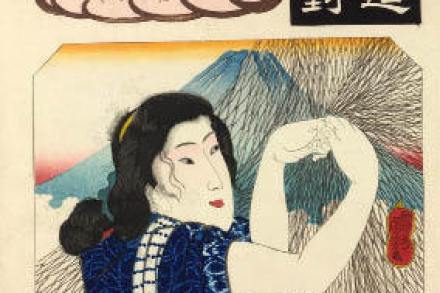
Kuniyoshi From the Arthur R. Miller Collection Royal Academy, until 7 June Sponsored by Canon The Royal Academy is making something of a reputation for staging exhibitions of Japanese printmakers: the current Kuniyoshi show follows on neatly from Hokusai (1991–2) and Hiroshige (1997) and adds considerably to our understanding of the genre. There hasn’t been a major Kuniyoshi show in England for nearly 50 years, and he is certainly one of the less well-known of the great Japanese print artists. Master of an unexpected versatility and variety of subject, Kuniyoshi was also possessed of an originality that stands out even among such talented contemporaries.

Power of the pencil

From our UK edition

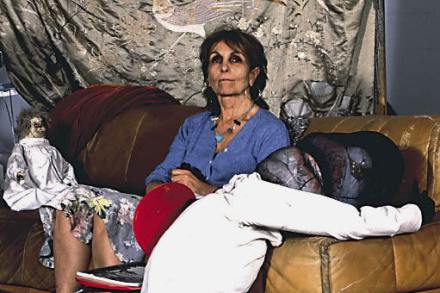
Andrew Lambirth talks to Paula Rego about the new museum dedicated to her and the politics behind her work Paula Rego is an artist working at the height of her powers, internationally celebrated and with a museum dedicated to her about to open in her native Portugal. It’s been a long climb to this pinnacle of success, and Rego has worked exceptionally hard to reach it. Born in Lisbon in 1935, she grew up largely in the care of her grandparents while her father, an electrical engineer, took a job in England with Marconi. His anglophilia was responsible for Rego herself going to London to study art.

Bathed in light

From our UK edition

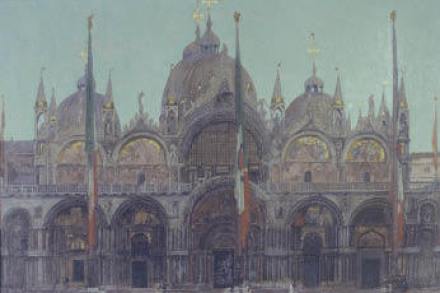
Sickert in Venice Dulwich Picture Gallery, until 31 May Walter Richard Sickert (1860–1942) is a key figure in 20th-century British art, and an immensely talented and enjoyable painter into the bargain. His long life was a productive one, so there’s room for many exhibitions dealing with different aspects of his achievement. Following the excellent Camden Town Nudes at the Courtauld last year, the current exhibition focuses on Sickert’s paintings of Venice done between 1895 and 1904. Meanwhile, at the Fine Art Society (148 New Bond Street, W1, until 27 March) is a fascinating display of Sickert as printmaker. The Dulwich show begins strongly with a roomful of views, mostly of St Mark’s Cathedral, inside and out.

Escape from reality

From our UK edition

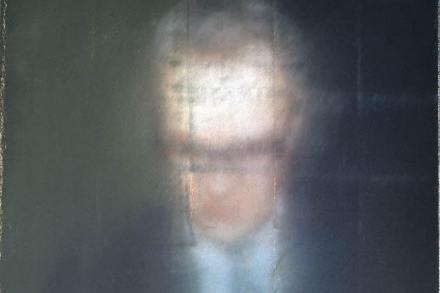
Gerhard Richter Portraits National Portrait Gallery, until 31 May George Always: Portraits of George Melly by Maggi Hambling Walker Art Gallery, Liverpool, until 31 May Gerhard Richter (born 1932) is one of the most influential figures in the art world. This show of his portraits is slightly more enlivening than his recent coloured-panel exhibition at the Serpentine, but don’t expect fireworks. Richter offers a subdued measure, a restricted purchase on the world of paint. He has said, ‘I don’t think the painter need either see or know the sitter. A portrait must not express anything of the sitter’s “soul”, essence or character.’ So what’s the point, then?

Past imperfect

From our UK edition

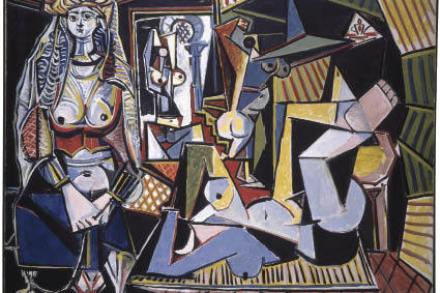
Picasso: Challenging the Past National Gallery, until 7 June The ostensible subject of this show is Picasso’s relationship with past art, and accordingly the visitor might expect to see great works of the past hung next to Picassos for purposes of comparison. This does not occur. The exhibition contains only some 60 paintings by Picasso, some of which indeed evince references to particular Old Masters, though others don’t, apart from showing the kind of sound knowledge of art history which used to be expected of artists, before the foppish ignorance of today became fashionable.

Out of proportion

From our UK edition

Van Dyck and Britain Tate Britain, until 17 May In the course of my work last week, which included attending the press view of van Dyck at the Tate and visiting a couple of artists’ studios, one in north London and one in Oxfordshire, I found myself thinking about the current state of exhibition catalogues. This train of thought was encouraged by having to carry the van Dyck catalogue around for two days, on and off public transport, along with the more essential items of the itinerant writer’s kit. I say ‘more essential’ because catalogues have become less useful as they’ve grown more unwieldy and overblown.