Alexander Larman

Alexander Larman is an author and the US books editor of The Spectator.

Should biographies be written about the young?

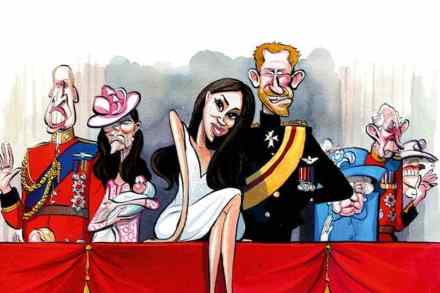
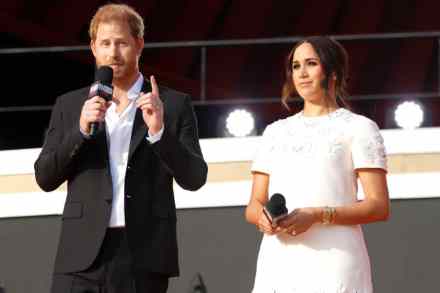
Last year, the apparently definitive biography of Harry and Meghan, Finding Freedom by Omid Scobie and Carolyn Durand, was published, and immediately became a bestseller, despite Harry and Meghan only having reached the tender ages of 36 and 39. It seemed inevitable that as soon as the biography had hit the shelves, it would be superseded by events. Sure enough, in the light of the Oprah interview, Scobie and Durand have updated the book for its paperback publication. A news report suggested that extra chapters will cover ‘their interview with Oprah Winfrey, allegations against Meghan over the bullying of royal staff, which she denies, and Prince Philip’s death.

Short books to read on the commute

As lockdown shows early signs of (finally) coming to an end, there is the likelihood that, once again, early morning trains will be full of bright-eyed and bushy-tailed commuters, keen to leave their ‘home offices’ in favour of being around people who they are neither married to nor responsible for. And this means, one hopes, that they will be choosing appropriate books for the hour or so’s journey into work. While there is a time and place for a 600-page behemoth, there is also something deeply rewarding (and, let us be quite frank, relieving) about a shorter title; not only is it considerably easier to fit inside a briefcase, handbag or satchel, but many great writers produced some of their finest work in less than 200 pages.

‘I couldn’t possibly comment’: Novels about political scandals

Thanks to the indelible characters found in the Houses of Parliament, and beyond, it sometimes seems as if there is nothing especially shocking that novelists could dream up for their fictitious political scandals. This means that stories about political naughtiness and shenanigans have to be that much more dramatic in order to ring true. Here are seven novels that mix fiction and reality in the most readable of ways. Rest assured, our current Prime Minister looms large in at least two of them, too. Seventy-Two Virgins, Boris Johnson To date, Boris Johnson has only written one novel, along with several works of non-fiction, but it’s surely one for biographers to seize upon.

Beyond Bond: the timeless appeal of the spy novel

There is something intrinsic to the British novel-writing tradition of a good espionage story. From its beginnings in the early twentieth century with Rudyard Kipling and Erskine Childers through to the thoroughly contemporary likes of Mick Herron and Charles Cumming, there is apparently no shortage of gripping, witty and brilliantly executed spy tales, all of which continue to fascinate us with their combination of cloak-and-dagger mystery, larger-than-life protagonists and antagonists and twist-laden storylines. Everyone, of course, thinks of James Bond when it comes to spy stories, and it would be churlish to omit his adventures from a selection like this. But there are many more distinctly unglamorous spooks and joes whose tales are worth a read.

Books to cheer you up: from P.G. Wodehouse to Kingsley Amis

The days are short, the nights are dark and the temperature is freezing. Oh, and in case you hadn’t noticed, we’re in an indefinite lockdown that shows no discernible signs of coming to an end. With most other pursuits thus denied to us, now is the perfect time to immerse yourself in a good book. But sometimes, the improving but ‘difficult’ literary novel or the tense crime thriller isn’t entirely what you want. Instead, here are seven recommendations for a purely entertaining read. Most, if not quite all, are laugh-out-loud funny, but there are quieter and sadder moments along the way, too, just like in life.

The best period dramas are irreverent

At the moment, there are two costume dramas that everyone is watching, namely Bridgerton and The Great. If you’re a fan of the former, then you’re in good company; it seems to be the Netflix streaming show du jour and millions are enjoying its soap operatic storylines. However, The Great is the real thing, if you’re after laugh-out-loud outrageousness. It comes complete with a scene-stealing, career-best performance from Nicholas Hoult as the vile, hilarious Peter III, Emperor of Russia (not ‘The Great’, as he is constantly reminded, to his chagrin) and with an equally enjoyable Elle Fanning as a young, scheming Catherine (who really is the Great), and a fine array of supporting actors giving various degrees of incompetence, scheming or nastiness.

When the past becomes a page-turner: our pick of the best history books

'May you live in interesting times’. So the Chinese curse goes, and we undeniably live in interesting times, alas. But that doesn't mean the past has lost any of its allure; indeed, quite the opposite. Right now, it's just the tonic we need. If you found history dull at school, being merely an endless parade of facts and heavy-handed analysis, then you are the perfect potential reader for these superb examinations of past eras by some of Britain's best popular historians.  Here are half a dozen of our favourite page-turning history books, guaranteed to have you rapt and astonished at the revelations therein. Dan Jones – The Plantagenets (William Collins, £10.99) Perhaps the most popular new historian of our generation is the medieval writer Dan Jones.

10 films to banish the January blues

At the best of times, January is a depressing month. Everyone is feeling poor and bloated after the Christmas extravaganza, and the days are still short and cold, with the nights drawing in far too early. Nobody has ever said ‘I’m really looking forward to January’. Which is why, with the spectre of illness and infection still stalking the land, the best thing that we can do is to stay at home with some of the most cheering films that we can find, and hope to banish the January blues that way. Of course, everyone enjoys a whacky comedy, or a gripping thriller, and they definitely have their place. But these films represent some of the most uplifting and purely enjoyable examples of cinema that we’ve seen over the past years.

The best heist films to watch

One of the first films ever produced, 1903’s The Great Train Robbery, revolved around a robbery of a steam locomotive train, and ever since then the genre has continued to be one of the most enduring in cinema. It isn’t hard to see why. The core elements of the heist film are some of the most solidly pleasurable devices in big-screen entertainment. They often consist of the wily and charismatic veteran thief, putting together a crew for a ‘last job’; a love interest who is either unaware of his or her plans or an enthusiastic participant in them; a supporting cast of various degrees of eccentricity or unreliability; an implacable nemesis, whether a lawman or a rival; thrilling action scenes; and exotic locations.

Six spy films to watch this weekend

As Christopher Nolan’s mind-bending, time-travelling espionage extravaganza Tenet finally makes it to British cinemas (America, amusingly, has to wait a while longer) and with the much-delayed release of the new James Bond film No Time To Die apparently just a few months away now, big-budget films dealing with glossy espionage in all its forms are very much in demand. Yet cinema of the past couple of decades has found numerous different ways to portray spying, from the banal to the glossily explosive. It has encompassed literary adaptations, unrecognisable resurrections of Sixties television shows, deconstructed Cold War sagas and even sly updates of classic Seventies films. Here are half a dozen of the very best. Spy Game https://www.youtube.com/watch?

Six sequels that outdo the original film

‘Sequels are whores’ movies’, the great screenwriter William Goldman once opined. As with so much that Goldman said, it’s pithy, witty and often accurate. All of us have been lured into cinemas with the promise of the continuation of a great film, only to be sorely disappointed by the cynicism of a lazy cash-in. Several of these have deservedly gone down as some of the worst pictures ever made: there is no need for any sensible person to watch Dirty Dancing 2: Havana Nights or Jaws: The Revenge. Yet there are also examples of sequels that equal, even surpass, the original, where either the original filmmakers return to a story with new passion or a new director manages to revitalise a narrative with vigour and enthusiasm.

7 Christopher Nolan films to watch while you wait for Tenet

This August, if all is well, Christopher Nolan’s eleventh film, Tenet, will be released in cinemas around the world. The storyline apparently involves aspects of time-travel, predetermination and espionage. As usual with Nolan, the details are shrouded in mystery. But it sounds as if it combines many of his usual tropes: a mixture of household name stars (Robert Pattinson, Michael Caine, Kenneth Branagh) with up-and-coming actors (led by John David Washington), beautifully filmed global cityscapes and innovative, gravity-defying action scenes. Practically the only change from before is that his regular collaborator Hans Zimmer, unavoidably detained by other work, will not be contributing a score, which will instead be supplied by the Oscar-winning composer Ludwig Göransson.

Six geopolitical thrillers to watch this weekend

We live in a strange time. Forbidden to travel beyond our national borders for fear of infection and quarantine, we are nevertheless all too aware that we are connected to the wider world in all manner of ways. You might even call it chaos theory in action; a man eats a bat in a Chinese market, and a few months later we are all locked up in our homes, terrified to resume our daily lives. It is this sense of paranoia and interconnectedness that some extremely able filmmakers have tapped into over the years, as their pictures have combined a globe-hopping sweep along with scenes of palm-sweating tension and mystery.

Six superhero films with a highbrow edge

Even as we experience a momentary hiatus from the onslaught of superhero films, it is hard not to feel that the whole genre has been unnecessarily debased. There is nothing especially wrong with the vast majority of Marvel films, but they are the cinematic equivalent of a visit to Byron or Nando’s; enjoyable while it lasts, good enough not to feel guilty afterwards but formulaic and unadventurous in the extreme. The aversion to risk-taking might make financial sense, to the tune of billions, but artistically it is often disappointing. No wonder Martin Scorsese dismissed them as ‘theme park rides, not cinema’. Which is why, on the occasions that a filmmaker does move outside the confines of the genre, the results are often hugely stimulating.

The best comedies to watch on Netflix

At the moment, what everyone needs is a good laugh. This doesn’t necessarily mean that the funniest comedies have to exist in their own bubble; many of the best examples of the genre have held a mirror up to society, in all its complexity and absurdity. But then many also manage to divert and entertain on their own terms, too. Whether you’re into jet-black political satire, deceptively clever romantic comedies or broad farce, there’s something here for everyone. Even if humour remains the most personal of inclinations, these half-dozen masterpieces are endlessly, hilariously rewatchable. The Death of Stalin https://www.youtube.com/watch?

8 London restaurants that will deliver during lockdown

In the midst of the greatest threat to individual liberty – not to mention health and livelihood – that most of us have experienced in our lives, it is a sad inevitability that the hospitality industry has taken the first economic hit. What we don’t know at the moment is if this is a recoverable, if irritating, situation that can be overcome with patience, good humour and forbearance, or if it spells the end of many of the interesting drinking and dining options that we have in this country. Yet there is something that individuals can do to support their local restaurant rather than simply writing posts of solidarity on social media (and those help, too).

A choice of first novels | 24 March 2012

Charlotte Rogan’s The Lifeboat (Virago, £12.99) comes garlanded with praise from the likes of J. M. Coetzee and Hilary Mantel. Rogan, who has only taken up writing after a career in architecture and engineering, tells the story of Grace Winter, a young woman on trial for murder as the novel opens. She and her husband Henry had been travelling on a transatlantic liner, the Empress Alexandra, in 1914. When the ship mysteriously sank, Grace managed to secure  a place on a crowded lifeboat, commanded by the enigmatic Hardie. But what happened to her husband? And why did the ship sink? Rogan does an excellent job of conveying the fear and claustrophobia of a lifeboat full of strangers, whose travails form a large part of the story.

The best Oscar-winning films to watch on Netflix

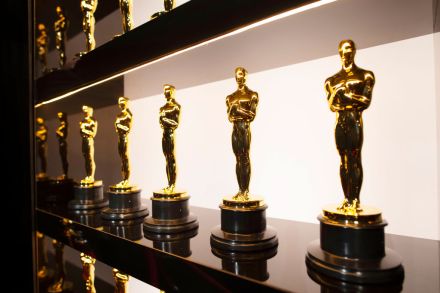
As this year’s Oscar-winning films continue their box office reign, it’s salutary to remember that some excellent films have been honoured over the years. Even as many have faded from memory (Crash, anyone?), some of the award-winners that can be found on Netflix represent the very best in contemporary cinema. Here are some of our favourites. The Silence Of The Lambs (1991) https://www.youtube.com/watch?v=W6Mm8Sbe__o Jonathan Demme’s psychological thriller was the last (to date) film to win the ‘big five’ at the Oscars – Best Film, Best Director, Best Actor, Best Actress and Best Adapted Screenplay.

The joy of rummaging through Gladstone’s annotated books

Gladstone’s Library began as that most English of things: a great man’s visionary idea. William Gladstone, at the age of 85, decided that he had amassed too many books, and wanted to share them with the less fortunate. As his daughter Mary put it: ‘He wished to bring together books who had no readers with readers who had no books.’ He duly spent £40,000 of his own money on founding and building the library that bore his name, carrying 32,000 of his own volumes three-quarters of a mile between his home, Hawarden Castle in Flintshire, Wales, and the temporary structure that housed them, aided only by his valet and the long-suffering Mary.

Seaham Hall

I’m standing in milady’s boudoir, a room which would have delighted Liberace. Here, nothing is de trop and everything is geared towards lavish indulgence. Two enormous freestanding baths face the window, giving exhibitionists a heaven-sent opportunity to disport in the altogether. The upstairs bed could comfortably accommodate four adults. Portraits of Ada Lovelace — who has given her name to the suite — festoon the staircase, and a half bottle of Taittinger champagne begs ‘Drink me’ in an ice bucket. It’s somewhat strange to think that amid this bling lies a sad and brutal history. The small coastal town of Seaham in County Durham, contains the house in which Lord Byron contracted the 19th century’s most bizarre marriage.