Alexander Larman

Alexander Larman is an author and the US books editor of The Spectator.

Bring back the book launch

Last week, I had the pleasure of heading to the Freud Museum in Hampstead for the launch of Zoe Strimpel’s much-discussed new book Good Slut. Not only was the venue one of the most splendid I’ve been to for a party of this kind, but the guest list – which included The Spectator’s esteemed editor – was suitably glittering for a Thursday evening in early March. Everyone was on top form, much jollity was had, and by the time the author gave a suitably witty speech from the top of the staircase that Sigmund Freud once ascended and descended, a fabulous time had been had by all.  Would that this was the norm for all book launches.

The awkward truth about Charles’s Commonwealth message

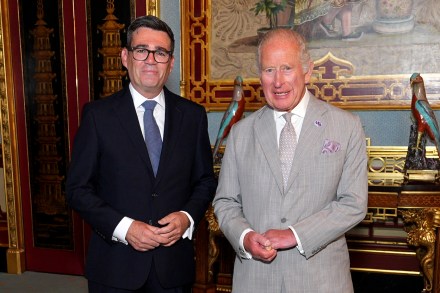
Under normal circumstances, King Charles’s message to the Commonwealth would be a carefully crafted and anodyne series of platitudes, designed for little more than to fulfil its brief and to keep the other Commonwealth leaders happy. However, this year, the King is faced with two pressing issues. The first is international, in the shape of the war in Iran – something that Charles himself has little direct influence on. The second, however, is rather more personal and concerns the continued embarrassment that his younger brother Andrew Mountbatten-Windsor has brought on the royal family.

Serge Gainsbourg would not survive modern France

Yesterday marked the 35th anniversary of the death of Serge Gainsbourg at 62 from a heart attack. The only real surprise is that he ever made it to such an age. Gainsbourg, whose unlovely but strangely beguiling countenance can best be likened to a garden gnome left outside in the rain for too long, was a performer and composer who epitomised French popular music of the 1960s and 1970s in all its bizarre contradictions. Compared to such wholesome British figures as Cliff Richard and Tom Jones, Gainsbourg was a seedy, almost sinister figure whose demeanour gave off an odour of stale aftershave, Gitanes and day-old red wine.  That he was also a songwriter of genius who has influenced countless other musicians – everyone from Jarvis Cocker and Radiohead to R.E.

Has SNL gone too far?

From our US edition

It has been a very long time since Saturday Night Live was in the headlines for a good reason (probably Nate Bargatze’s first hosting stint in October 2023), and those who have been wishing that the increasingly beleaguered show would be put out of its misery now finally have their opportunity to say so. In last weekend’s episode, one sketch in highly questionable taste revealed a gang of canceled celebrities – including Bill Cosby, Armie Hammer and Mel Gibson – as coming forward and explaining that their various controversial or criminal activities had been driven by their having Tourette’s.

SNL

Why are Parisians so awful?

I have recently returned from a fleeting visit to the City of Light. As usual, Paris itself was a delight. It is an architectural and historic marvel that nevertheless manages to offer the best food and wine in the world at all kinds of prices, and somehow also has a respectable number of quirky and interesting independent shops and boutiques amidst the more anticipated international names. In other words, any trip to the French capital should be an alloyed pleasure. So why, when I arrived back at St Pancras, did I all but sink to my knees in gratitude that I was once back in rainy old Blighty, and that the land of the Belle Époque was a distant memory?

Andrew Mountbatten-Windsor is on his own

For future royal historians, the date 19 February may take on the same totemic significance as the abdication of Edward VIII on 10 December. It was the date that Andrew Mountbatten-Windsor, eighth in line to the throne, was arrested on the day of his 66th birthday – it is fair to surmise this wasn’t a coincidence – and taken to Aylsham police station. Before yesterday, Aylsham was an unexceptional North Norfolk market town, perhaps best known for the presence of a firm of fine art auctioneers. Now, it will forever go down in history as the place where the former Duke of York was taken, put in the cells, and interrogated.

The demise of the first Oxfam bookshop would be a catastrophe

The news that Oxford’s main Oxfam bookshop on St Giles in the city has been threatened with closure is one of the most depressing things I have heard this year. The building’s landlord, Regent’s Park College, has declared that it needs more space for its graduate students. This sums up everything that is wrong both with Oxford University and Regent’s Park, a religious-oriented permanent private hall that I studied at just over two decades ago.

The seismic arrest of Andrew Mountbatten-Windsor

Ever since the Restoration of Charles II in 1660, no member of the Royal Family has been arrested. Which makes this morning’s news that Andrew Mountbatten-Windsor has been taken into police custody under suspicion of misconduct in public office all the more seismic. And with a certain grim irony, his arrest comes on his 66th birthday, of all days. This arrest represents not so much the beginning of the end as the point at which the Rubicon has been crossed, forever This development had seemed inevitable for a considerable amount of time now. Remarks from both Buckingham Palace and Sir Keir Starmer in the past few days seemed to indicate that both the King and the Prime Minister expected that the once-unthinkable would happen sooner rather than later.

Is BrewDog finished?

The news that the Scottish beer company BrewDog has put itself up for sale has been greeted with a mixture of sorrow and shrugs by drinks commentators and enthusiasts. Those who have been stalwart fans of BrewDog – an organisation that always valued PR stunts as much as it did brewing –will mourn its diminished presence in our high streets and pubs, as well as the potential end of beers like Punk IPA and Elvis Juice. While those who viewed the company as a triumph of style over substance may now feel vindicated by their belief that the craft beer renaissance in Britain was always driven as much by hype as good drinks.

Robert Duvall was one of the Hollywood greats

The death of the actor Robert Duvall at the age of 95 – almost exactly a year after that of his friend Gene Hackman – brings to the end another chapter of Old Hollywood. But unlike Hackman, who combined on-screen brilliance with a combustible, confrontational personality, Duvall was a thoroughly professional and popular figure who was a delight to work with, by all accounts.

The battle for Britain’s oldest Indian restaurant

There are relatively few restaurants in London – or anywhere else, for that matter – that have made it to their centenary. There are even fewer that have been threatened with the closure of their premises in the precise year they are going to turn 100. And there are practically none so popular that news of their possible eviction has resulted in a petition with tens of thousands of signatures – which will be sent to the King in the hope he can reverse what would be a heritage-threatening disaster for one of the capital’s most historic establishments.  Such is the recent story of Veeraswamy, the country’s oldest Indian restaurant which was founded in March 1926 and has been a haunt of the beau-monde and demi-monde ever since.

Is it time to scrub Andrew from the line of succession?

The sheer weight of allegations against Andrew Mountbatten-Windsor – all tawdry, all sordid – runs the risk of creating not so much outrage as weariness. It was clear months ago that the former Duke of York appeared to have been behaving in a way that brought shame not just on his family but on his country. Yet as the stories from the Epstein files continue to weave their insidious way into the public consciousness, the effrontery with which Andrew behaved seems quite unparalleled in any kind of recent history. Well, perhaps if we exclude the antics of Lord Mandelson, that is.  What is of most interest, at this demeaning point, is to examine the complex psychological relationship that appears to have existed between Epstein and Andrew.

What lies behind the royal redactions?

From our US edition

Nothing has been as damaging for the British royal family as the unfortunate meeting of Andrew Mountbatten-Windsor and Jeffrey Epstein. Republican Thomas Massie and the Democrat Ro Khanna know this. In a press conference yesterday, they said they had been shown documents that have been otherwise redacted and withheld from the Epstein files. These documents included mention of girls as young as 9 years old. Massie and Khanna are responsible for the bipartisan Epstein Files Transparency Act. They have said that the levels of redaction and secrecy are unacceptable, and that they will continue to challenge the Justice Department’s approach to the documents. And this, according to Khanna, is extremely bad news for the royals.

The royal family has entered uncharted waters

The statement issued by Buckingham Palace last night, addressing the ongoing fallout from the latest release of Epstein files, was undeniably terse: The King has made clear, in words and through unprecedented actions, his profound concern at allegations which continue to come to light in respect of Mr. Mountbatten-Windsor’s conduct. While the specific claims in question are for Mr. Mountbatten-Windsor to address, if we are approached by Thames Valley Police we stand ready to support them as you would expect.  Its inference was every bit as clear as the Prince and Princess of Wales’s remarks earlier the same day.

William and Kate are bracing themselves for more Andrew scandal

There has been much hand-wringing and drama about what the royal family should be doing – and criticism of what they are doing – about the former Duke and Duchess of York and their respective relationships with Jeffrey Epstein. But amidst all this, two of the most significant voices in the Firm have been conspicuously silent. The Prince and Princess of Wales, especially William, were thought to be instrumental in last year’s decision to strip Andrew Mountbatten-Windsor of his royal titles and to exile him from Royal Lodge. Nevertheless, the most recent moves to hasten his banishment to the Sandringham estate were believed to have come entirely from the King, rather than from his son and daughter-in-law.

Is Industry the Brideshead Revisited of our times?  

At first glance, there are few similarities between Brideshead Revisited, Evelyn Waugh’s classic 1945 novel – later adapted into an equally classic ITV series – of prelapsarian bliss in Oxford and Industry, the BBC’s adrenaline-fuelled show that exposes the dark iniquity at the heart of the financial industry. The one is a languid examination of (discreetly portrayed) same-sex love and Catholic guilt, and the other is a profane, sexually charged and palpitation-inducing dive into hedonistic self-indulgence. Brideshead is plover’s eggs and Meursault; Industry class A drugs and group sex. They would seem as distinct from one another as chalk and (Comté) cheese.

Coppola, Lucas and Spielberg’s outsized impact on 1970s cinema

From our US edition

For any serious lover of cinema, the 1970s were both a golden decade and the beginning of the end of film as an art form. After the permissiveness and countercultural impact of the 1960s, a whole generation of new filmmakers emerged, many of whom remain household names. These men – and they were almost exclusively men – produced work that shook up expected norms and took the medium in new, thrilling directions. It is impossible to list all the pictures and their directors who made this difference, but there are good reasons why they remain celebrated today. And then Star Wars came along in 1977 and changed the trajectory of the industry forever.

coppola

The golden years of David Bowie

From our US edition

This year marks the anniversaries of two of David Bowie’s most compelling and powerful albums: 1976’s Station to Station and 2016’s Blackstar. Given that they are often – rightly – described as Bowie’s crowning artistic achievements, amid severe competition from his other releases, they also have the intriguing fillip that both were originally released in January: a fortunate time for the musician, who was born on January 8, 1947, even if it was also the month in which he finally departed this Earth. Yet the comparisons between Station to Station and Blackstar, which came out 40 years apart, are far more pervasive – and persuasive – than the serendipity of their release dates.

david bowie

Why Andrew had to be booted from Royal Lodge

The news that the disgraced former Duke of York has been turfed out of his home of Royal Lodge in the middle of the night and rusticated to a rather less grand property somewhere on the Sandringham Estate will not, perhaps, be greeted with particular sorrow by many. Ever since the latest and highly embarrassing round of revelations concerning Andrew’s scandalous association with Jeffrey Epstein, it was inevitable that the royals would have to act ruthlessly and swiftly in order to get ahead of the situation. In truth, King Charles had fewer options available than he might have liked.

The Epstein files have exposed the extent of Fergie’s greed

Since the latest tranche of the Epstein files was released over the weekend, the people who have been most embarrassingly affected by them include Peter Mandelson, Andrew Mountbatten-Windsor and Bill Gates. Yet inevitably, attention has turned to Sarah Ferguson, the former Duchess of York, who is emerging spectacularly poorly from the scandal. This is thanks to a series of revelations that portray her as, variously, greedy, an appalling judge of character and someone seemingly willing to figuratively pimp her children, Princesses Eugenie and Beatrice, while she sought to obtain the money that she craved from Epstein. Many distasteful details were revealed in the first files released last year.