Alexander Chancellor

Alexander Chancellor: Can one be addicted to making emergency calls?

From our UK edition

The police have been complaining a lot lately about frivolous calls to the emergency services. All over the country people in their thousands are calling 999 for the weirdest or silliest reasons. In Gloucestershire one man called to say that his wife was a werewolf, and another that he was being poisoned by a satellite controlled by witches. In Scotland someone rang to complain about the service he had received at a hamburger joint; another to ask where he could buy some milk. The police have been publicising such incidents in the hope that we will stop wasting their time in this way, but it seems most unlikely that we will; for to call 999 is a spreading addiction. Not all the calls of which the police complain can be described as frivolous.


Alexander Chancellor: Do you think you should read this piece for free?

From our UK edition

I was in Nottingham last Sunday to address university students about journalism. The occasion was a one-day ‘media conference’ organised by the Nottingham University students’ magazine, Impact, for the purpose of encouraging students to embark on journalistic careers. The conference, it promised, would give them a ‘kick start’ in this direction. I hadn’t realised until I got there that this was the intention, for I had planned to say how it was now almost as bad an idea for a young person to try to go into journalism as it had been, in Noël Coward’s song, for Mrs Worthington to put her daughter on the stage.

Is Northamptonshire not scenic enough to visit?

From our UK edition

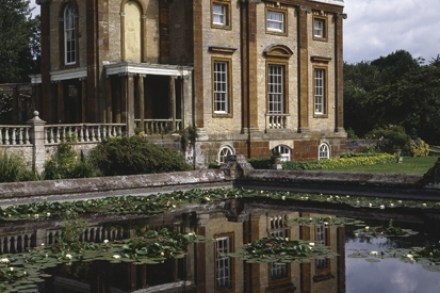
I don’t know whether Bruce Bailey, a proud Northamptonshire man, agrees with the late Sir Nikolaus Pevsner that no one would visit his county for its landscape. In the introduction to the first edition of this architectural guide, published in 1961, Pevsner wrote that although Northamptonshire bordered on more counties than any other in England (nine in all), it lacked ‘any of the memorable scenic qualities one may connect with some of them’. ‘Its beauty spots are few,’ he said. ‘There is no coast, nor a spectacular range of hills.’ Pevsner was, of course, German-born and therefore perhaps of the German romantic view that landscape without rocks and peaks and waterfalls is not really worth bothering with.

A dog mess or two is not too high a price to pay for an owner’s happiness

From our UK edition

A month ago I was reporting complacently that peace and calm had returned to Stoke Park after a series of bestial attacks on my chickens and ducklings by foxes and birds of prey. No foxes had come to call since the spring, and seven of the eight Indian runner ducks hatched here in September had survived and grown big enough to deter avian predators. All seemed to be well in this little corner of south Northamptonshire. The hens seemed contented and were laying copiously in gratitude; the ducks were gliding dreamily on the pond. But my complacency was premature, for last weekend turmoil returned.

‘Too Fat Polka’, and other politically incorrect songs of the 1940s

From our UK edition

When I was a child, growing up in Hertfordshire just after the second world war, my parents employed a cook called Mrs Sharp, who was a very kind and good woman. But she was also extremely fat and had an enormous protruding stomach that impeded her access to the kitchen stove. Lying around in the house at the time was a 78rpm record of a new popular song from the United States called the ‘Too Fat Polka’, of which the recurrent chorus was ‘I don’t want her, you can have her, she’s too fat for me’. The song, recorded by the then famous but now generally forgotten American broadcaster and entertainer Arthur Godfrey, was a big hit in 1947 when people may have been more amused than offended by gentle mockery of the obese.

Alexander Chancellor: Why aren’t Italians angrier about Nazi atrocities?

From our UK edition

Given that more than 9,000 innocent Italian civilians, many of them women and children, died in Nazi massacres during the dreadful last 18 months of the second world war, it is amazing how few of the perpetrators have been brought to justice. Only five members of the German occupying forces were ever imprisoned in Italy for war crimes; and with the death last week, aged 100, of Erich Priebke, the former SS captain who in 1944 helped organise the execution of 335 men and boys at the Ardeatine Caves south of Rome, none of them is now still alive. Hundreds of others were, of course, involved in these crimes, but none of these has ever been punished. And now, it seems certain that none will be.

Alexander Chancellor: I don’t like traffic jams or lager louts but that doesn’t mean I hate Britain

From our UK edition

The Italians are often thought of as being unpatriotic, and one can see why. They relentlessly denigrate their national institutions, abuse their politicians, and compare their democratic arrangements most unfavourably with those of the ‘more mature’ north European countries. You might conclude, therefore, that most Italians ‘hate’ Italy. But, of course, you would be wrong, just as the Daily Mail was wrong when it decided on the basis of Ralph Miliband’s political opinions that he ‘hated Britain’.

Good news from Alexander Chancellor’s menagerie

From our UK edition

There is at last good news to report on the poultry front. In the past, when I have mentioned my chickens or my ducks, it has usually been after some grisly tragedy — a duck decapitated by a terrier, another disembowelled by a fox. I can no longer remember how many chickens I have lost to foxes, which usually leave only piles of feathers as evidence of their visits (though I once saw a fox brazenly killing a chicken in broad daylight just outside my front door). But since I am determined never to yield to terrorism, I always head off to the poultry centre in Towcester to replace whatever bird has been killed with one looking as much like it as possible. I thus keep my poultry numbers roughly stable at around eight ducks and eight chickens at any one time.

Alexander Chancellor: The Kindle is marvellous, but it cannot satisfy an addiction to books

From our UK edition

My brother John’s great book sale, about which I wrote on this page a couple of weeks ago, finally took place at Stoke Park last weekend, and it went far better than I had anticipated. Admittedly, I had expected little. For a while I had even feared catastrophe. John, who is 86 and in poor health, seemed to think that he alone could sort out and price some 6,000 books in three weeks, even though he liked to stop and read them as he went along. But he has always had an enviable gift for arousing in others an urge to take care of him; so many helpers duly appeared, unprompted, to offer their services for free.

Alexander Chancellor: It seemed a little creepy that thousands of people wanted to

From our UK edition

My village, Stoke Bruerne in south Northamptonshire, is just getting back to normal after a great influx of visitors for its annual weekend festival called ‘Village at War’. Stoke Bruerne is a small place that sits astride the Grand Union Canal about halfway along its route from London to Birmingham. Its fame, such as it is, rests on its seven locks and the fact that it houses a Canal Museum; and the ‘Village at War’ event was started six years ago by the Friends of the Canal Museum to raise money for that excellent institution. I don’t yet know how well it has done this year, but last year it was attended by more than 12,000 people and raised £20,000.

Alexander Chancellor: Pursued around the world by a thousand books

From our UK edition

It is exactly 40 years since my elder brother John gave up a successful career as a publisher to set up in business on his own as an antiquarian bookseller. He lived at the time in a fine 18th-century house on Kew Green next to the botanical gardens, and perhaps for no reason other than its location he decided to specialise in botanical books. The business, conducted from his home, went quite well; but various events led him in due course to move to New York, where Kew Books, as the business was and still is called, established itself grandly in Madison Avenue on the Upper East Side. This proved less successful. The overheads were enormous and the competition formidable, so John moved to Puerto Rico where Kew Books was re-established in the capital, San Juan.

Alexander Chancellor: what’s wrong with the word ‘toilet’?

From our UK edition

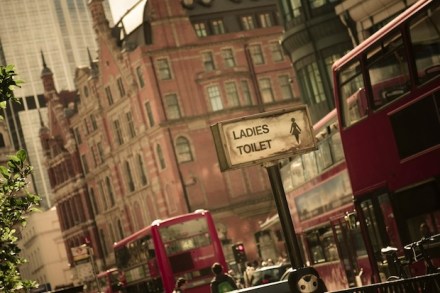
I was having a nice telephone conversation with a friend the other day when I put my foot in it by suggesting that we might soon meet for a ‘meal’. ‘No,’ he said firmly. ‘Perhaps lunch or dinner?’ For a second I couldn’t think what he meant; but then it drifted back to me that there had once been a time — long, long ago — when I, too, might have been embarrassed by talk of a meal. For use of the word ‘meal’, clear and straightforward though it is, was thought ‘common’ or ‘non-U’ in those days, an indicator of social inferiority, though I cannot imagine why.

Alexander Chancellor: Why was Bradley Manning ever allowed to join the army?

From our UK edition

I have been puzzling about why the United States authorities ever thought that Bradley Manning, who was jailed last week for 35 years for leaking military secrets on an unprecedented scale, was a suitable person to join the army. His size alone might seem to be an impediment to effective military service, for he is only five feet, two inches tall and weights 105lbs (7.5 stone). But his stature, though tiny, nevertheless comes within the army’s prescribed limits. He would have had to be two inches shorter and a stone lighter to have been rejected on grounds of size or weight. (If he had weighed over ten stone, he would have been rejected as obese.

Alexander Chancellor Why can’t we have more public toilets and fewer wheelie-bins?

From our UK edition

After a carefree month at my wife’s house in Tuscany — the longest summer holiday I have spent there for maybe 30 years — the return to England this week has proven especially irksome. It is depressing enough to land at any British airport, but Stansted takes the cake. Arriving there after a Ryanair flight from Pisa (in itself a dispiriting experience), I found myself at the end of an enormous queue, so long that its front was indiscernible, and took 40 minutes to reach the desk of an immigration officer. There were literally thousands of people in front of me. Why so many? Why is England so much more crowded than anywhere else, even than countries with as dense or denser populations?

How can you be racist and Italian? Quite easily, it seems

From our UK edition

The Italian shop assistant accused by Oprah Winfrey of showing racial prejudice towards her in a shop in Zurich has hotly denied the charge, but with a curious twist. ‘I am Italian,’ she said in an interview with a Swiss magazine. ‘Why should I discriminate against anybody because of their origin?’ She seemed to be suggesting that no Italian could ever possibly harbour any racial prejudice against anyone. It is a claim that seems especially implausible at the moment when Italy’s first-ever black cabinet minister, the Congolese-born doctor Cecile Kyenge, has been reeling from a number of crude racist attacks. Kyenge, Italy’s recently appointed Integration Minister, has been pelted with bananas and subjected to death threats.

Alexander Chancellor: I found the key to holiday happiness in a car park

From our UK edition

While sitting beside a pool under a blistering Tuscan sun, I’ve been reading an article in Corriere della Sera about how to make the most of a summer holiday. The paper says that it isn’t enough to do what I have been doing — sweat, swim, sweat again, swim again, and then eat and drink too much — because this leaves you feeling gloomy when the holiday is over. Strongest in your memory, it claims, will be the last few days of the holiday, which are the most depressing ones because you are starting to dread the resumption of the usual drudgery at home. The answer, it says, is for your holiday to include at least one exciting and emotional event that will stick in the mind and give you something positive to remember it by.

Why don’t the Italians ask me to translate their restaurant menus?

From our UK edition

When we bought the farmhouse in Tuscany, where I am now, more than 40 years ago, there were only two restaurants within a five-mile radius and neither of them was much good. And being in the unfashionable province of Arezzo, as opposed to the then already popular Chianti region between Siena and Florence, there were few foreigners among their patrons, so they published their menus only in Italian. But 40 years have brought many changes. Many foreigners priced out of the Chianti region have bought houses here, foreign tourism has increased dramatically, and new restaurants have sprung up all over the place. And now it is very hard to find a restaurant that doesn’t publish its menu in English as well as Italian.

Romans always love a Vatican scandal. But what if this time they’re right?

From our UK edition

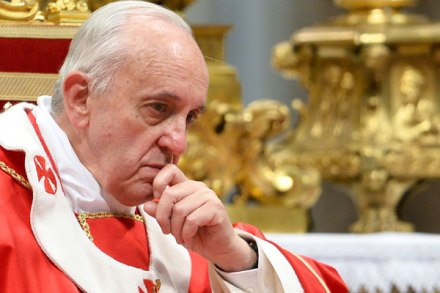
The people of Rome have always liked to believe the worst of their bishop. When I was a correspondent in Rome more than 40 years ago, I was constantly assured by its citizens that the Pope not only had the evil eye but was known for a fact to be living secretly in the Vatican with a male ballet dancer. These were absurd rumours. Not only did Paul VI have rather dull eyes; he was also a cautious, unexciting fellow, a dry bureaucrat who had served for decades in the Vatican’s Secretariat of State before becoming archbishop of Milan and, after that, pope. I doubt if he had ever met a ballet dancer.

The Annals of Unsolved Crime, by Edward Jay Epstein – review

From our UK edition

Edward Jay Epstein is an American investigative journalist, now in his late seventies, who has spent at least half a century trying to find answers to the troubling theories and nagging questions that always swirl around notorious crimes. The more famous the crime, the harder it is to get at the truth, especially if the crime has political consequences. For example, John Wilkes Booth, who murdered Abraham Lincoln in 1865, was quickly proven to have been part of a conspiracy involving leaders of the defeated Confederate states; but when a reunited country was later seeking reconciliation, it was found expedient to suppress this fact and portray him instead as a deranged individual who had acted alone.

Alexander Chancellor: Seduced by a Benson & Hedges packet aged 16

From our UK edition

The government has done a puzzling U-turn over its plan to introduce plain packaging for cigarettes. It had seemed determined to put the plan into effect, but suddenly announced last week that it had had second thoughts. It was no longer sure that this would in fact discourage the young from taking up smoking, so it planned to wait and look at the effects of a similar measure in Australia before taking any decision. This has provoked fury among the Liberal Democrats in the coalition, who accuse the Tory leadership of sacrificing the health of young people to the interests of the tobacco companies. And I must say it does seem a surprising development when it has been agreed for years that seductive packaging makes a significant contribution to the allure of cigarettes.