Alexander Chancellor

Our first kills of spring

From our UK edition

The arrival of spring is not an unmitigated joy. The warmth is nice, of course, as are the fresh leaves on the trees and the general sense of rebirth and renewal after a dismal, soaking winter. And maybe, if you live in London, there is very little to complain about. There are delightful parks and squares, lovingly tended by others, in which to lie semi-naked in the sun or otherwise disport yourself. Nature in its wantonness is held at bay without any effort on your part. But here in the countryside of Northamptonshire, spring has its dark and menacing side. The daffodils have been splendid, as were the snowdrops before them; but they are over now, and the nettles are rapidly taking over.

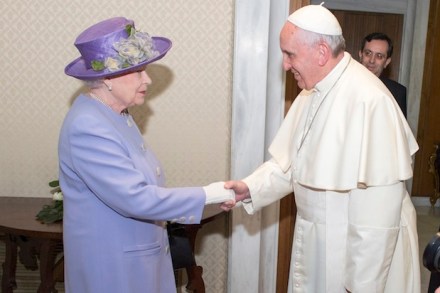
Compassion is fashionable again. Thank the Pope

From our UK edition

There was something poignant about the decision of L’Wren Scott, Mick Jagger’s American girlfriend, who committed suicide in New York last month, to leave everything she had to him in her will. Maybe it was out of gratitude for his help in keeping her foundering fashion business afloat; or maybe it was just a mark of her devotion to the man she referred to in the will as ‘my Michael Philip Jagger’. But whatever her motive, it was a decision very much against the spirit of the times, one that will further widen the gap between rich and poor by adding property worth £5.5 million to Jagger’s already estimated personal fortune of around £200 million. He is hardly the most needy recipient of such largesse.

America’s crazy war on old pianos

From our UK edition

More than 20 years ago, when I was living in New York, I wrote an article about the mutilation by the United States government of a fine old piano on the pretext of saving the African elephant. The piano was a 1920 concert grand from the once famous Parisian house of Érard, from which came the favourite piano of Franz Liszt. It had been bought in Paris by the Israeli–American pianist Ophra Yerushalmi, a huge admirer of the Hungarian virtuoso, and flown by her at great expense to New York, where it had been seized by the US Fish and Wildlife Service on the grounds that it had ivory-coated keys. Well, of course, until recently all piano keys had ivory on them, and this particular piano was then 73 years old.

I’ll have to give up Waitrose. It’s too exciting for me now

From our UK edition

Waitrose in Towcester has closed down for a week to make what it describes as ‘a final few touches’ to an ‘exciting’ refurbishment. We will see just how exciting this is when the store reopens this weekend with its ‘improved customer toilets’, ‘improved café’, and so on. But forgive me for being a little sceptical, for normally the main effect of a supermarket ‘refurbishment’ is to disorient shoppers. Managements wait until customers such as myself have finally mastered the layout of the store and know where to find everything they need (something that can take a long time to achieve) and then suddenly they move everything around again.

It’s sheer madness for Cameron to resurrect the hunting issue

From our UK edition

My house in south Northamptonshire looks out over parkland on which Henry VIII used to hunt deer with Anne Boleyn. The only deer on it nowadays are the unhunted muntjacs, charmless little creatures that only arrived in England from Asia 400 years later; but there still are plenty of foxes, which carry out periodic massacres of my chickens. I am in the country of the famous Grafton hunt, but the hunt, alas, never ventures into my area because of the busy roads that surround it. The Grafton is still, however, extremely active elsewhere in the county and thrives just as much as it did before Parliament’s ban on hunting with hounds came into effect nine years ago.

I want to age like the Three Tenors

From our UK edition

In February each year the Oldie magazine gives ‘Oldie of the Year Awards’ to people who show unusual vigour and enterprise in old age. This year’s winner was Mary Berry, the cookery teacher, who at 78 had achieved sudden fame as a presenter and judge on the BBC television show The Great British Bake Off. ‘I just love being an oldie,’ she said. ‘There’s no Botox, no implants and no tucks, and that’s how I think we should all be.’ While this surely reflects the views of Richard Ingrams, the Oldie’s founder and editor, not everyone would agree. To look one’s age as a pastry cook may be no disadvantage, but survival in other forms of popular entertainment may well be dependent on the odd tuck.

Dear Bill de Blasio: there are better reasons to boycott the St Patrick’s Day parade

From our UK edition

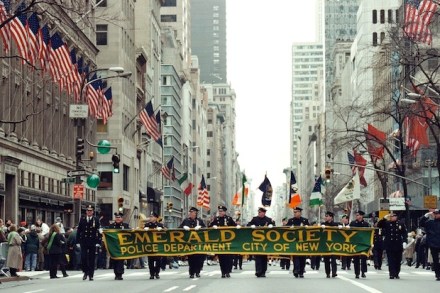
The new mayor of New York, who despite his name (Bill de Blasio) claims Irish ancestry, is boycotting this month’s St Patrick’s Day Parade because its organisers refuse to allow a contingent of gays and lesbians to march up Fifth Avenue as an identifiable group bearing the insignia of gay pride. This is not exactly surprising, because the New York St Patrick’s Day event, claimed to be the oldest such parade in the world, is more or less controlled by the Roman Catholic Church, which doesn’t encourage displays of gay self-congratulation.

I was forced on to the internet in the 1980s. I still don’t belong there

From our UK edition

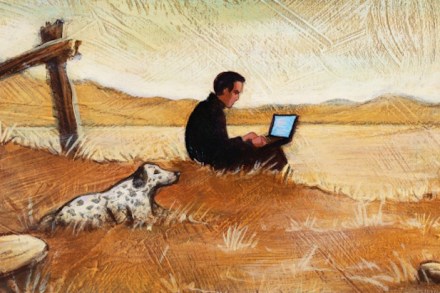
With regard to modern technology, I find that people of around my age — by which I mean people in their seventies or over — are divided into two camps. There are those who have embraced the digital revolution with embarrassing enthusiasm, knowing much more about it than it is decent to know; and then there are those who, almost as embarrassingly, take pride in knowing nothing about it whatsoever. The former seem determined to show that they are not past it, that they are in tune with the modern world, and, like teenagers, are never parted from their computers, emailing and tweeting as the day is long. The latter claim to see no point in email or any of the social media and talk nostalgically about the days when people used to write each other letters in long hand.

Was Graham Greene right about Shirley Temple? 

From our UK edition

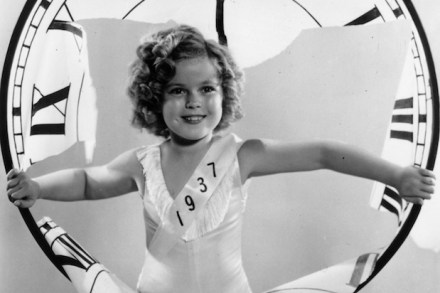
Shirley Temple, who died last week at the age of 85, was the most successful child film star in history. During the second half of the 1930s, a decade in which she made 23 films and earned $3 million before puberty, she was America’s most popular film star of any kind; Clark Gable came only a distant second. What was the secret of her enormous popularity? According to Temple’s own oft-repeated explanation, ‘People in the Depression wanted something to cheer them up, and they fell in love with a dog, Rin Tin Tin, and a little girl.’ This surely has truth in it, for the precocious, confident, sparkling little actress embodied an optimism for which her country yearned.

In praise of Milton Keynes

From our UK edition

Who would ever have thought it, but I have become quite fond of Milton Keynes. Although I live slightly closer to the ancient city of Northampton than to this widely mocked ‘new town’ of the 1960s, I definitely prefer the latter. Northampton is a fine example of the ruination of an English market town by misguided post-war planners; Milton Keynes an example of the fulfilment of their utopian dreams. It is no utopia, of course.

Local protests don’t stop windfarms. Subsidy cuts do

From our UK edition

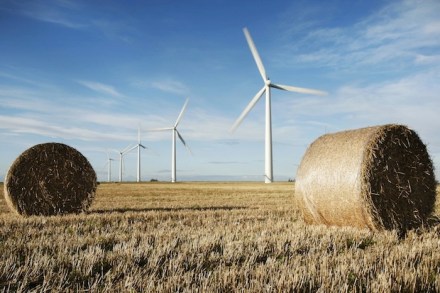
Here in the valley of the River Tove in south Northamptonshire my chickens are laying copiously, my ducks are quacking loudly, and my Jack Russell, Polly, is yapping gaily in celebration of a great victory: the Spanish energy company, which for more than three years has been threatening to desecrate this pleasant bit of countryside with a line of eight giant wind turbines, each taller than Big Ben, has suddenly said it is abandoning the plan after deciding that it is not feasible.

Why I get my health advice from the Daily Mail

From our UK edition

When one is in one’s seventies, as I am, one begins to fear the horror of dementia and to carry out anxious checks on one’s memory to see if the brain is still working. The results in my case are not very encouraging. For example, it took me several days to remember that the film star who canoodled with Leonardo DiCaprio in the stern of the Titanic was called Kate Winslet, although I am an admirer of hers and even once met her. Nor can I remember the words of the songs and poems that I used to know by heart. Am I on my way to becoming a helpless vegetable at the mercy of resentful carers? This is the point at which one turns to the Daily Mail for comfort.

If America can’t put a person to death painlessly, it should stop executions altogether

From our UK edition

I have never supported the death penalty. Maybe I was influenced when I was six or seven years old by the fact that our next-door neighbour in Campden Hill Square, west London, was a woman who devoted her life to campaigning for its abolition. She was born Violet Dodge in Surrey in 1882, the daughter of a washerwoman and of a ‘coal porter’ (a person whose job is to carry sacks of coal). She herself had worked for a while as a scullery maid, but eventually became immensely rich for inventing and manufacturing Shavex, the first brushless shaving-cream. She also married a Belgian painter called Jean Van der Elst, who died suddenly in 1934 and in whose memory she dedicated herself to the campaign against capital punishment.

Forget the sex scandal. Why does Francois Hollande have only one pair of shoes? 

From our UK edition

Of all the interesting revelations by the French magazine Closer about François Hollande, the most interesting for me is its claim that he owns only one pair of shoes. I don’t think I know anybody with only one pair of shoes. Even my brother John, who at the age of 86 has rather let himself go sartorially-speaking, possesses two pairs. Yet if Closer is to be believed, the President of France has only one pair. The president’s shoes are important because when he arrived from the Elysée Palace on the back of a moped for a visit to his alleged mistress in a nearby apartment, his face was hidden by a safety helmet. So Closer, which secretly photographed his arrival, had to rely on his shoes to confirm his identity.

Alexander Chancellor: The Chinese must save the cigar from extinction

From our UK edition

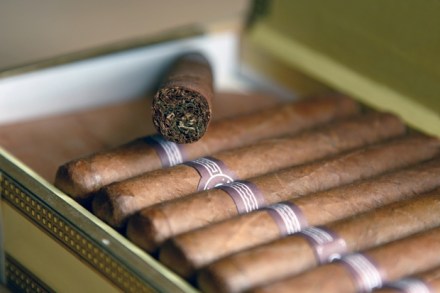
In Dorchester during the Christmas holiday I bought a two-slice electric toaster at Currys. It was a nice little toaster that worked very well when I got it home. And it cost only £4.50, which turned out to be little more than half the price of a packet of Marlboro cigarettes. It’s some years since I gave up smoking; but at my peak I smoked three packets of Marlboros a day, which now would cost the same as more than five two-slice electric toasters. Or, put another way, with the money I have saved from giving up smoking I could buy nearly 2,000 electric toasters a year. I could by now be running a successful electric toaster shop.

Alexander Chancellor: I think my doctors are trying to frighten me

From our UK edition

The date of this issue of The Spectator is 4 January 2014, which also happens to be my 74th birthday. There is nothing very special about being 74 except that it is the last year in which one can be described as being in one’s ‘early seventies’; for it is the last year in which one is closer to 70 than to 80. You may wonder how I am at this pivotal moment in my life? Well, to be frank, not terrific. I get short of breath after climbing the stairs. I have to sit down to put on my socks, and I usually need to take a rest in the afternoon. My chief problem is something disspiritingly described by doctors as Chronic Obstructive Pulmonary Disease, which means that I cough rather a lot and make a sound like a little organ pipe when I breathe in and out.

Alexander Chancellor: This Christmas it’s nice to be able to pity the stinking rich for a change

From our UK edition

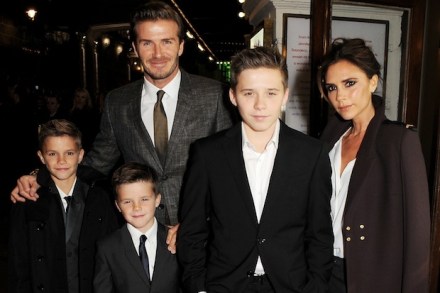
This is the season of goodwill when one should think about people less fortunate than oneself and wish them better luck. It’s easy to forget to do this when one is having a wonderful time with one’s family and friends, playing charades, getting drunk, and so on. But it would be heartless not to spare one little thought for David and Victoria Beckham, who are planning at this joyous time to squander millions of pounds on turning a nice, cosy Victorian family house in Kensington into some kind of grim Californian spa hotel, equipped with massage beds and powder rooms and a catwalk on which Posh Spice can walk up and down, parading her new clothes. According to Posh’s plans, even her young children will have their own ‘en suite’ bathrooms.

Remembering the journalist John Thompson, who turned down the editorship of The Spectator

From our UK edition

John Thompson, who died last week at the age of 93, could have been editor of The Spectator if he had wanted. He was offered the job in 1970 by its then proprietor, Harry Creighton, but with typically good judgment he declined. Creighton, a jovial, rumbustious manufacturer of machine tools, fired two editors, Nigel Lawson and George Gale, before making himself editor in their place. One of his reasons for doing this was almost certainly to save money; for the magazine was in steep decline and its losses were growing. An editor’s salary was a useful saving. So if John Thompson had taken the job, he would doubtless have eventually been fired as well.

Alexander Chancellor: A slice of Italy in Milton Keynes

From our UK edition

Back home from a week in Italy, I almost feel that I haven’t left. For I go almost at once to Milton Keynes to see Donizetti’s quintessentially Italian opera, L’elisir d’amore. It is a superb, joyous production by the Glyndebourne Tour company, one of which any great international opera house would have been proud. And here it is being performed in Milton Keynes, not a town generally associated with cultural sophistication. But then ‘Das Land ohne Musik’, as England was once cruelly called by a German music scholar, is now awash with opera.

Alexander Chancellor: What Pope Francis and Silvio Berlusconi have in common

From our UK edition

It’s filthy wet weather in Tuscany, so I’m lying on my bed in the afternoon reading through the Italian newspapers. They are full of stuff about Pope Francis — how his humility, his simplicity, and his reforming zeal are breathing new life into the Roman Catholic Church. They say that the long decline in church attendance in Italy has been reversed in the few months since a previously little-known bishop from Argentina, Jorge Mario Bergoglio, was elected to the papacy. His public appearances at the Vatican are also drawing enormous crowds. He is, in short, a superstar, and by no means in Italy alone. Everywhere in the world, including Britain, lapsed Catholics are flocking back to church. And even among non-Catholics on the left, his popularity is huge.