Alexander Chancellor

Long life: Putin, Saatchi, Murdoch…hell hath no fury like an old man scorned

From our UK edition

The days may be long gone when a husband would pretend to commit adultery in a Brighton hotel so as to clear his wife, whatever her faults, of any blame for a divorce. But might it not still be customary for him at least to present their separation as mutually and amicably agreed? Not so, apparently. For such gallantry has been strikingly absent from the three most publicised divorce suits of the summer, in which rich and powerful men have each acted unilaterally and without much regard to their spouses’ dignity. A month ago, Vladimir Putin appeared on Russian television with his wife, Lyudmila, to announce that their 30-year marriage was over.

Long life: The curse of the black tie

From our UK edition

I seem to have been steeped in opera lately. First there was Ariadne auf Naxos at Glyndebourne, then Peter Grimes on the beach at Aldeburgh, and now Wagner’s complete Ring cycle at Longborough in Gloucestershire, all within the space of three weeks. As I write, I haven’t quite seen the whole Ring cycle — there is still one more opera, Götterdämmerung, to come — but it is already plain that something astonishing has happened. Martin Graham, who has lived for most of his life in a Cotswold manor house with a tremendous view next to the little village of Longborough near Stow-on-the-Wold, decided 30 years ago with his wife Lizzie that they would like to create a theatre there and one day stage Wagner’s Ring in it.

Long life: Watching the opera Peter Grimes on the beach was cold and uncomfortable — just as it should be

From our UK edition

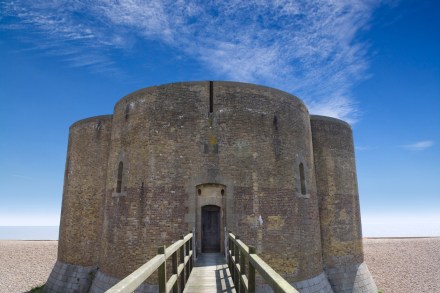
The Martello Towers — that chain of 103 little fortresses built in the early 1800s along the south and east costs of England to repel a feared Napoleonic invasion — were condemned by William Cobbett at the time as a huge waste of public money; and so they turned out to be, for the British victories at Trafalgar and Waterloo ensured that Napoleon would never invade. And in fact, during the 200 years of their existence, no gun has ever been fired from any of them, with the one exception of the Martello Tower at Aldeburgh in Suffolk, the northernmost of them all, which was used by anti-aircraft gunners during the second world war.

Long life: I passed a death sentence on two ducklings

From our UK edition

My collection of poultry here in Northamptonshire (consisting at present of six ducks and eight hens) includes two little chattering call ducks named Boris and Marina. I called the drake Boris after the Mayor of London, and its partner Marina after the Mayor’s wife. The poultryman who sold them to me said that call ducks were so devoted to each other that if one of them died the other would inevitably die soon afterwards. So I became concerned a few weeks ago when Marina disappeared, and Boris was left swimming around without her on my garden pond. But he didn’t seem nearly as disconsolate as I would have expected (in fact, he didn’t seem disconsolate at all), and after a few days it was clear why. For Marina had neither died nor deserted him.

Long life: Who’s top of the Louis XIV league of show-offs?

From our UK edition

Great wealth has always bred envy and resentment among the rest of us, which is why even in ancient times people liked to believe that it would be its possessors’ undoing. Thus one of the myths about King Midas of Phrygia was that, having sought and been granted the gift of turning everything he touched to gold, he died of starvation because his food underwent the same metamorphosis. Legend also had it that King Croesus of Lydia, still to this day a byword for unimaginable riches, lost his kingdom to the Persians, who then burnt him to death. Sadly, such myths tend to be untrue, just inventions of the poor to raise their spirits. For on the whole the very rich are perfectly happy and lead fuller, longer lives than everyone else.

Long life: I just get grumpier with age

From our UK edition

My irritability grows with age and tends to attach itself to things that surprise even me — for example, to the widely popular sight of people riding horses on country roads. The smug, self-righteous look on their faces makes my blood simmer dangerously. And another thing that particularly grates with me at the moment is the ubiquitous use of the expression ‘no problem’. Until recently the normal response to a ‘thank you’ would be ‘that’s quite all right’ or ‘my pleasure’ or maybe even, in the American manner, ‘you’re welcome’. But now, in Northamptonshire at any rate, it is always ‘no problem’; and while this is presumably meant to be polite, it comes across to me as offensive.

Long life: Will we all be Old Etonians soon?

From our UK edition

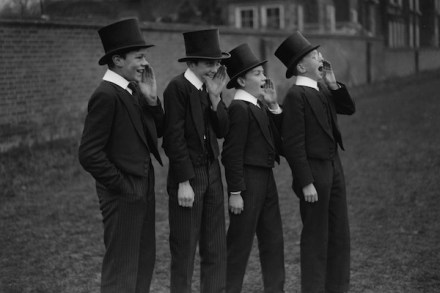
When I was a child there was never any doubt that I would go to a boarding school. My father, my uncle and my elder brother had all gone to Eton, and it was assumed that I would eventually go there, too; but I would first be expected to board at a preparatory school with a good record for getting its pupils into that famous establishment. And so it was that from the age of 8 to 18 I spent more than half of every year away from home, living in communities of other boys in the care not of parents but of schoolmasters. My two sisters went to boarding schools, too, just as our mother had before them, and it didn’t seem to matter whether or not we children were happy boarders; boarding school was our inevitable fate, and nobody questioned that it was the best thing for us.

Long life: How to fall off a moving bus backwards and land safely

From our UK edition

My mother’s father, Sir Richard Paget Bt, was not just an old-fashioned Somerset landowner but also an amateur scientist, artist and musician of boundless energy and curiosity, whose achievements included the writing of a book on the origins of human speech, the invention of a sign language for the deaf, the hand-crafting of musical instruments, and the composing and publication of various long-forgotten songs. And he was always propounding bizarre theories that he liked to test by using his children as guinea pigs, however hazardous this might be for them.

Long life: While I won’t vote for the EU withdrawal, part of me hopes the quitters will win

From our UK edition

I sometimes think that, by the time I die, my entire life will have been blighted by sterile, unresolved arguments about Europe. I have to admit that the foundation of the European Coal and Steel Community in 1951 made little impression on me at the time; but I was only 11 years old, Britain wasn’t involved in it, and I had no idea in any case what it was all about. It was, of course, the precursor to the European Economic Community, created in 1957 by the Treaty of Rome; but by then I was 17 and thought it sounded a very good idea, for its main purpose appeared to be to prevent for ever the recurrence of a European war.

Crime, corruption and sadism? No, the real Sweden is stunning – as I have discovered

From our UK edition

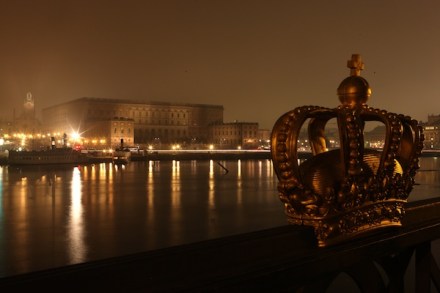
I am on my first ever visit to Sweden and enjoying it greatly. My idea of this country had recently become rather confused. I used to picture it as a social democratic paradise, a tolerant, law-abiding welfare state in which everyone was a good and caring citizen. But then came the Wallander television series and the Stieg Larsson books and films in which Sweden was portrayed as a country in which violent crime was rife and corruption, sadism and perversion held sway. The reality, as I have experienced it over the past few days, has neither upheld nor discredited either of these stereotypes.

Grand political comedy in Rome and the Vatican | 2 May 2013

From our UK edition

I’m just back from a week in Italy where a grand political comedy playing in Rome has at least been some compensation for the poor weather and the general economic gloom. Giorgio Napolitano, the 87-year-old former communist who had been looking forward to retiring after his seven-year stint as President of the Republic, was not only denied a farewell visit from the Queen of England because of her tummy bug, but was denied retirement as well. With the parliament, which elects the president, unable to agree on a successor, its members insisted that he continue in office for an unprecedented second term which, if he sees it out, will make him 94 when he is finally allowed to step down.

Long life: A long spank. How creepy

From our UK edition

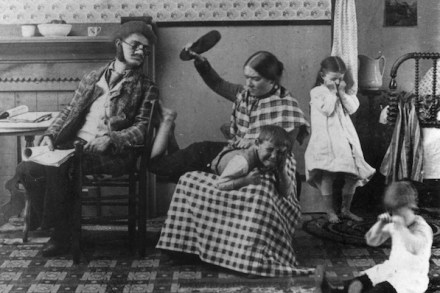
The long, intermittent debate about whether parents should be allowed to spank their children has erupted once again with the finding by an American research team that it doesn’t do children any harm provided it is tempered by love. Whether it does them any good is another matter, and it’s not really the point; for in this country it is the right of parents to spank children if they feel like it, and not the consequences for the children themselves, that has always been the main issue.

Grand political comedy in Rome and the Vatican

From our UK edition

One of the sculptures at the British Museum’s splendid Pompeii exhibition shows four ferocious dogs attacking a stag as it awaits its bloody death with quiet resignation. It is a beautiful work of art, brilliantly carved from a single slab of marble, but potentially shocking today because it appears to rejoice at the prospect of the stag being torn to pieces. The museum clearly fears so, for the label beside the sculpture anticipates objections to it by explaining that the ancient Romans, unlike us, were very keen on bloodsports. This enthusiasm, together with an obsession with erect penises, is one of the few ways in which the Romans were not our superiors in delicacy and refinement.

Long life: Either we kill wild boars or we reintroduce wolves

From our UK edition

As it happens, a male wild boar can weigh roughly what Luciano Pavarotti weighed when he was alive — about 330lbs, or more than 23 stone. But unlike the gentle Pavarotti, wild boars throw their weight about in the most destructive fashion. I know a bit about this because, more than 40 years ago, my wife bought a farmhouse in Tuscany where thousands of wild boars live. Every summer they would come by night to forage in its freshly watered garden, turning it into what next morning looked like a ploughed field or building site. (Only herds of elephants in the African bush do as much damage.) The boars also made a terrible mess of the little vineyard beside the house, for they eat anything and are surprisingly fond of grapes. We installed flashing lights to frighten them off.

The Falklands victory

From our UK edition

A little rejoicing is now in order, but only a little. We may rejoice that the Falklands war did not end in a bloodbath at Port Stanley, that the Argentinians did not stage a last doomed defence of the islands’ capital. We may rejoice at the performance of our armed forces who have conducted themselves with great skill and courage and with as much humanity as is possible in war. We may rejoice that they achieved their objectives, for to have lost a war against the Argentinians would have been an unthinkable disaster. We may rejoice that the conflict has accelerated the decline of the British Labour party.

Long life: Meeting Pavarotti’s horse

From our UK edition

Always on the lookout for new heart-wrenching tales of animal suffering, the press has seized upon the news that a great many British horse-riders are too fat for their mounts. In the quaint words of the Sunday Telegraph, this puts horses ‘at risk of several welfare conditions’, including back pain, lameness and general bad temper.  Research published in the Journal of Veterinary Behaviour had found that a third of all recreational riders weighed more than what their horses could comfortably carry. Ideally a horse should be about ten times heavier than its rider, experts said, but the growing obesity of the population meant that this often wasn’t so. I can be as obese as I like because I don’t ride.

Despite dementia, immobility and incontinence, the old are generally happier than the young

From our UK edition

Apart from the weather, which has been so relentlessly horrible that it now deservedly takes precedence in the headlines over even our desperate economic plight, this is turning out to be rather an encouraging time for the old. I do not underestimate how badly the freezing weather affects us. My Jack Russell, Polly, won’t even go outside to do her business in the morning but relieves herself on the carpet in my study instead.  And I am finding it impossible to shake off a bronchial cough that keeps me awake at night and leaves me dispirited by day. Easter is upon us, a time of renewal and rebirth, of daffodils and baby rabbits, but what do we get?

At last! A tango-dancing pope

From our UK edition

Just a year ago on this page I was writing about Pope Benedict XVI’s elder brother Georg and how, while ostensibly discreet and loyal to his celebrated sibling, he contrived at the same time to make him look too old and bumbling for the leadership of the Roman Catholic Church. In a book, My Brother, the Pope, this old priest from Bavaria said that his younger brother had never wanted the job, was too physically frail for it, and found it a tremendous strain. Georg Ratzinger must now be feeling somewhat vindicated, but at the time he was ‘off message’, for the Vatican was insistent that the pope was on excellent form. People in high office whose authority demands dignity are often embarrassed by their siblings, as several American presidents have found.

Long life: Polite silence on my old prep school’s possible paedophile

From our UK edition

It is usually a mistake to return to places one has known as a child. I have only once been back to the large, white-stuccoed, early-Victorian manor house in Hertfordshire where I was born and brought up, and it was a dispiriting experience. Although the house was near to the town of Ware, less than an hour’s drive from central London, it was set in unspoiled country alongside a village in which the names of some of the inhabitants had been there in the Domesday Book. Apart from a small row of bleak pre-war council houses on the edge of the village, there was nothing there to offend the eye or to suggest proximity to a great city. My parents, finding the house too expensive to run, sold it in 1959, when I was 19 years old, and I didn’t go back for some 20 years after that.

Edinburgh Zoo and the great panda racket

From our UK edition

If you have nothing to do, are suffering from stress, and wish to be rendered comatose, I recommend that you get interested in the efforts being made by Edinburgh Zoo to mate its two giant pandas. The zoo has thoughtfully installed video cameras in the pandas’ enclosure so that we can constantly watch them online and marvel at their sloth. I had my laptop tuned to the ‘Panda Cam’ throughout the weekend and checked it from time to time to see what the pandas were up to. The answer was never anything at all except for sleeping or eating.