Alexander Chancellor

The word ‘holiday’ has become a political taboo

From our UK edition

It’s August in Tuscany, and the market towns are eerily quiet, presumably because most of their inhabitants are off on their summer holidays by the sea, in the mountains, or wherever. But there also seem to be fewer foreigners about than usual. Maybe they are lurking somewhere — in Florence or Siena probably — but what I do know is that there are no foreign political leaders spending their holidays in Italy this year. There was a time when they all came pouring in. Tony Blair came here year after year, usually freeloading as the guest of some grandee or other, earning much criticism within the Labour party as a result. But leaders of France and Germany came too, though more modestly, staying in hotels and paying their own way.


If you want real stress, move to the country

From our UK edition

It’s much more stressful to live in the country than in a town. There are always threats of one kind or another — wind farms, housing developments, road ‘improvements’, and so on. And then there are often arguments with neighbours about this and that. If it’s not leylandii, which are not one of our problems in south Northamptonshire, there’s always something. We used to have peacocks that migrated to our neighbours’ gardens and proceeded to ruin them. (The peacocks were duly eliminated.) Then the man who mowed our lawn upset people by doing it too early in the morning and waking everybody up.

You can’t spin yourself into authenticity – as Ed Miliband is finding out

From our UK edition

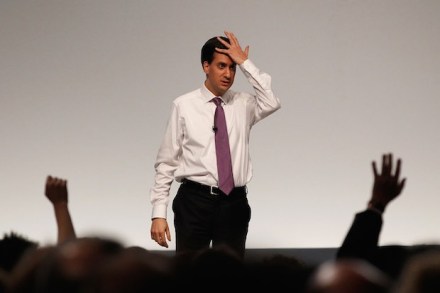
For a politician to draw attention to his own deficiencies is a desperate attempt to curry favour with the electorate that has been tried before with dismal consequences. The most famous case is that of the former Tory leader Iain Duncan Smith who, at his 2002 party conference, addressed the problem of his dullness as a political performer by saying that no one should ‘underestimate the determination of a quiet man’. One result was that Labour backbenchers would raise a finger to their lips and say ‘shush’ whenever this croaky-voiced man was speaking in the House of Commons.

Why Ed Miliband’s public image matters

From our UK edition

For a politician to draw attention to his own deficiencies is a desperate attempt to curry favour with the electorate that has been tried before with dismal consequences. The most famous case is that of the former Tory leader Iain Duncan Smith who, at his 2002 party conference, addressed the problem of his dullness as a political performer by saying that no one should ‘underestimate the determination of a quiet man’. One result was that Labour backbenchers would raise a finger to their lips and say ‘shush’ whenever this croaky-voiced man was speaking in the House of Commons.

Freedom for my chickens! All it took was a man with a gun

From our UK edition

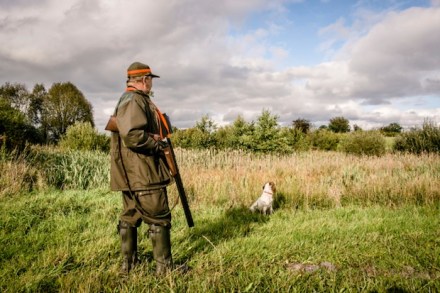
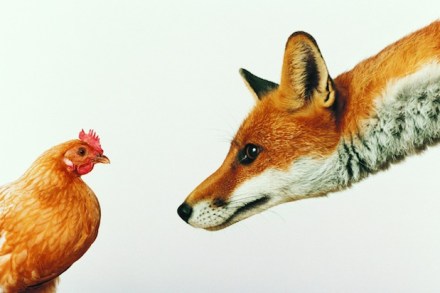
If I haven’t mentioned my poultry for a while, it’s because the subject has been too depressing. I had been very fond of my ducks and chickens until the constant attacks on them by foxes began to harden my heart. I had protected them in every way I could, short of keeping them cooped up all the time; but as a fox kept on killing them all the same, I almost stopped caring. Acceptance of their seemingly inevitable fate brought with it a loss of interest. If they were going to die, I must learn to be indifferent. For a while, I felt callous only about the ducks, six out of my flock of 14 ducks had been killed, but only one of my nine chickens had gone.

Assisted suicide is too close to murder to be legal

From our UK edition

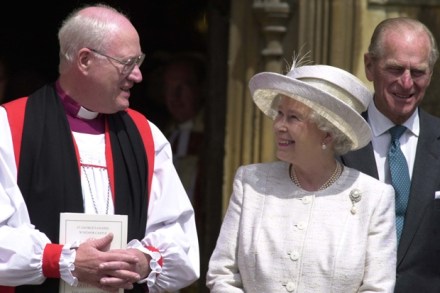
How amazing to have two former Anglican archbishops, George Carey of Canterbury and Desmond Tutu of South Africa, supporting Lord Falconer’s bill to legalise assisted suicide! It has always been, and remains, a firm doctrine of the Church of England that it is wrong to take a life. Yet here are two Church leaders agreeing with a majority of Britons — more than 80 per cent, according to the polls — that it should be legal for a doctor to supply a suffering, terminally ill patient with a lethal dose of poison if he wants it. Lord Carey said that in changing his mind on this issue he had been deeply influenced by the case of Tony Nicklinson, who suffered from locked-in syndrome after a stroke, which meant that he could only move his eyes and head.

I thought paedophiles were rare – but then I read the newspapers

From our UK edition

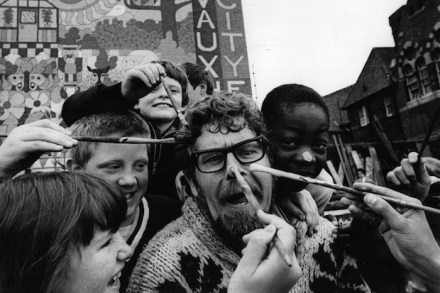
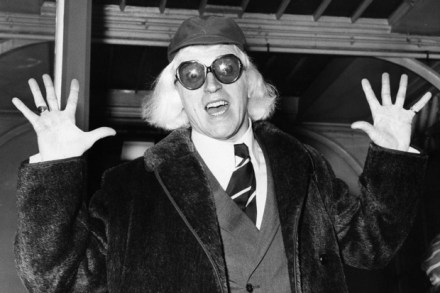
One problem from which I am confident I don’t suffer is paedophilia. I have always liked picking up babies and hugging them, especially my own children or grandchildren, but never in the ‘Rolfie deserves a cuddle’ kind of way. The idea of sexually lusting after children seems to me not only abhorrent but also almost unimaginable. If anything is against nature, it must be to regard children as sexual objects. I have always known, of course, that paedophiles exist. I was aware of it when, as an eight-year-old, I went to a prep school in Berkshire where the headmaster would snog the prettiest boys (alas, not me) in their dormitory beds and where the violin teacher had a habit of placing his hand on my thigh.

How did paedophilia come to be such a problem in Britain?

From our UK edition

One problem from which I am confident I don't suffer is paedophilia. I have always liked picking up babies and hugging them, especially my own children or grandchildren, but never in the 'Rolfie deserves a cuddle' kind of way. The idea of sexually lusting after children seems to me not only abhorrent but almost unimaginable. If anything is against nature, it must be to regard children as sexual objects. I have always known of course, that paedophiles exist. I was aware of it when, as an eight-year-old, I went to a prep school in Berkshire where the headmaster would snog the prettiest boys (alas, not me) in their dormitory beds and where the violin teacher had a habit of placing his hand on my thigh.

The profitable delusion shared by Bill Clinton and Tony Blair

From our UK edition

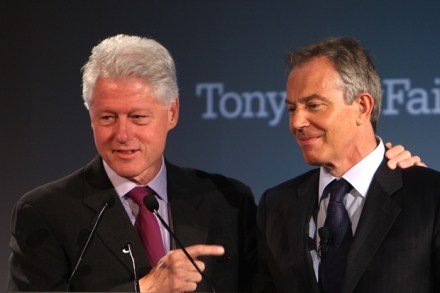
Tony Blair and Bill Clinton must be very happy about how they have fared since leaving political office, for each has since become enormously rich. Tony Blair may well be the richest British prime minister since the 14th Earl of Derby in the 19th century, and Bill Clinton is among the ten richest American presidents ever (richer even, it is said, than President Kennedy) — not bad for the child of a junior tax inspector in Edinburgh and for one from a poor and dysfunctional family in Hope, Arkansas. But to temper our envy we may note that what they have gained in wealth they have been losing in reputation.

Brave, noble, forgotten – the other side of Italy’s second world war

From our UK edition

At the time of the armistice of September 1943, when the kingdom of Italy formally transferred its allegiance from the Germans to the invading Allies, there were some 40,000 British prisoners-of-war languishing in camps around the country. Camp gates were thrown open by fleeing Italian guards, but on orders from Whitehall thousands of PoWs stayed put until the Germans arrived and packed them off to other camps in Germany. Some 4,000 of them, however, set off to seek freedom either by heading north towards Switzerland or south towards the advancing Anglo–American forces, which had just arrived on the Italian mainland after their conquest of Sicily.

On being fired – and hired – as an editor

From our UK edition

Last week was unusual. At the start of it, I was mooching about in the country in my customary way, doing little odd jobs and fretting over the fate of my poultry, which is once again under attack from foxes. I have yet to see a fox in Northamptonshire this year, but the farmer says there is a fox’s lair in an old barn in the park below my house. He sits there with his shotgun most evenings at dusk, but he never seems to get a shot at one. I have to admit there’s no evidence that foxes are responsible for the losses among my flock of ducks, but it’s hard to think who else might be. In the past few weeks, ducks have been disappearing one by one, and now there are only nine of them left out of the previous 14.

On being fired – and hired – as an editor | 18 June 2014

From our UK edition

Last week was unusual. At the start of it, I was mooching about in the country in my customary way, doing little odd jobs and fretting over the fate of my poultry, which is once again under attack from foxes. I have yet to see a fox in Northamptonshire this year, but the farmer says there is a fox’s lair in an old barn in the park below my house. He sits there with his shotgun most evenings at dusk, but he never seems to get a shot at one. I have to admit there’s no evidence that foxes are responsible for the losses among my flock of ducks, but it’s hard to think who else might be. In the past few weeks, ducks have been disappearing one by one, and now there are only nine of them left out of the previous 14.

Young Italians flock to London – for just the same reasons it scares me

From our UK edition

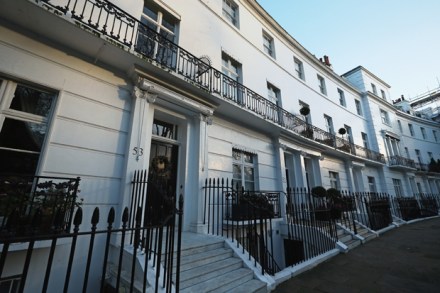
Although I live in the country in Northamptonshire, I go to London often — almost once a week — and I find it more and more intimidating. This isn’t just because of the skyscrapers that spring up boastfully everywhere, parading one’s own insignificance, but also because of the aura of terrifying wealth that pervades its central area and now even its inner suburbs. Fifty years ago, when I got married, my wife and I bought our first London house in Kensington Park Road, Notting Hill, for £9,500. I wonder how many millions it is worth now.

I wouldn’t have accepted Lord Rennard’s apology – but then he shouldn’t have made it

From our UK edition

Shirley Williams has a point when she says that Lord Rennard’s alleged harassment of four female Lib Dem colleagues was very small beer compared with the sexual abuse attributed to so many other prominent people nowadays. Indeed, when the charges were made public early last year, I was underwhelmed by the account given by one of these women of Lord Rennard’s behaviour towards her during a Lib Dem conference in a Peterborough hotel. His knee had brushed hers on a sofa in the bar; and when she had shifted her knee, his had followed and brushed it again. She had fled to the bathroom, only to find him waiting outside it when she emerged. He had then invited her to his room for a nightcap; but when she declined, that was that: end of story.

Sorry, Tara Erraught, but the age of the fat lady singing is over

From our UK edition

London’s opera critics have been roundly condemned for suggesting that a female singer’s personal appearance could make her unsuitable for a role. The singer in question is Tara Erraught, a young Irish mezzo-soprano based in Germany, who has just made her British debut in the new Glyndebourne production of Richard Strauss’s Der Rosenkavalier. She takes the part of Octavian, who, although always played by a woman, is supposed in the plot to be an irresistibly attractive young man. The critics all admired Erraught’s voice, but took the view that she was too stocky, dumpy, chubby and unsightly (to use four of their adjectives) to be even remotely plausible as an object of sexual desire. Uproar followed, with other opera singers leaping to her defence.

Why do consultants write such scary, incomprehensible letters?

From our UK edition

There is a kind of letter designed to bewilder, upset and possibly terrify its recipient, and this is the standard letter sent by specialist medical consultants to the victims of disease. Actually, the letter is usually addressed to the sufferer’s GP, but a copy is always sent to the patient as well; and because of this it usually begins with a flattering personal reference just to soften him up (‘It was a delight to meet this charming old gentleman’, or some such phrase). Thereafter, it may propose some little variation in the person’s treatment, but its main purpose is to describe in lurid and impenetrable detail the symptoms of his disease.

Why Glyndebourne’s George Christie always cut his own hair

From our UK edition

One curious fact about Sir George Christie, who died last week, aged 79, was that he always cut his own hair, a notoriously difficult thing to do. He did it with a three-way mirror and, according to his wife Mary, did it very badly. His reason, apparently, was a reluctance to waste money on a barber. For while George was very well-off (and the epitome of generosity when it came to others), he hated to spend anything on himself. For example, he never took a taxi — he would always travel in London by Tube or bus, even to such an event as the Queen’s Diamond Jubilee service in St Paul’s Cathedral — and he had his suits made by the wardrobe department of the Glyndebourne opera company rather than pay a London tailor.

Would the urine of an eight-year-old protect my chickens?

From our UK edition

I was predicting in a recent column that the arrival of spring would be bad news for my poultry, and so it has turned out: two ducks, a fat, waddling Silver Appleyard called Doris and a graceful, elegant little call duck called Marina (the loyal partner of a still-surviving drake called Boris), have disappeared, almost certainly victims of a marauding fox in search of food for its new cubs. For a while I thought that the missing ducks might be sitting on eggs somewhere, but the belated discovery of a pile of feathers put an end to this hope. Now I am waiting gloomily for the fox to strike again, probably this time against my chickens, which can’t even hope to escape to the safety of the garden pond. What, then, can I do to protect them?

The rich have given up their freedom

From our UK edition

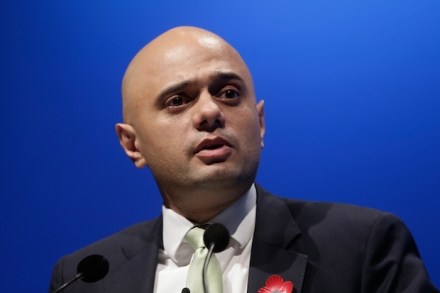
The appointment of Sajid Javid as the new Secretary of State for Culture has been much criticised on the grounds that culture is not his forte; and in an interview with the Times the other day he confessed that he had never been to the opera. This is a little surprising because, as a former banker in the City earning an estimated £3 million a year, he is just the kind of person you might expect to go to the Royal Opera House if only to flaunt his wealth. However, Javid has never seen an opera; and the reasons he gave for this in his interview were that when he was young he was too poor, and that once he had become rich there was ‘not much time outside work’. Not much time outside work?

As a nation of voyeurs, we don’t cook but watch TV cookery programmes instead

From our UK edition

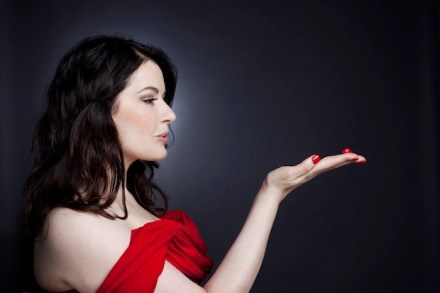
When I got married 50 years ago, my wife and I had somehow acquired a little cookery book called Cooking in Ten Minutes. We never quite managed to cook anything in so short a time, mainly, I think, because the book was a bit of a cheat: it seemed to expect you to have a saucepan full of boiling water and a whole lot of washed and prepared vegetables ready before the ten minutes began. We lost the book long ago, but 40 years afterwards I read a volume of essays by Julian Barnes, The Pedant in the Kitchen, in which he devoted an entire chapter to French Cooking in Ten Minutes and to its author, Edouard de Pomiane, who, he informed me, had been a food scientist and dietician much admired by Elizabeth David.