Alexander Chancellor

Long life | 28 May 2015

From our UK edition

From reading the newspapers you might get the impression that honeybees were on the way to extinction. In Europe, it is said, the number of honeybee colonies has fallen in a few years by a quarter. In the United States, it has halved since the 1940s. Nobody knows exactly why. The experts blame any number of things, from pesticides to climate change, from disease-bearing parasites to the loss of those plants on which bees like to feed. They all agree, however, that the disappearance of the bee would be a disaster. Bees don’t just make honey and beeswax. Eighty per cent of all plant species depend on them for pollination. One third of all the food that people eat would not be available but for bees.


Long life | 21 May 2015

From our UK edition

I have rather a poor record for speeding over the years. I have been caught by cameras quite often, sometimes getting points on my licence and paying modest fines, and twice avoiding further points by attending speed-awareness courses to be educated in the dangers that speeding can cause. It has all sort of worked; I am now much more careful. But imagine if I was Finnish? According to a report I read recently in the New York Times, a Finnish businessman called Reima Kuisla was fined €54,024 (about £39,000) for driving at 64 mph in a 50 mph zone. This, Mr Kuisla pointed out, was enough to buy a brand-new Mercedes. But this was not his first speeding fine. In 2013 he drove at 76 mph in a 50 mph zone and was fined even more — €63,448 (about £46,000).

Long life | 14 May 2015

From our UK edition

On election day I was in Puglia in the ‘heel’ of Italy, where interest in British politics could hardly be lower. One local news website that I consulted appeared to give higher priority to the fact that Italian penis-enlargement operations had increased by 20 per cent during the past year than to the electoral bombshell in Britain. I was staying with friends in their beautifully restored house — a former olive-oil press — close to the sea and below the remarkable hilltop town of Ostuni, between Bari and Brindisi, known as ‘la città bianca’ for its white medieval walls and palaces. At dusk it seemed to glow as in a dream.

Long life | 7 May 2015

From our UK edition

It’s more than four months now since my 75th birthday, but I’m still waiting for a ‘cold call’ from the NHS to ask if I have ‘thought about resuscitation’. This is what the Daily Mail warned me last week that anyone over 75 might now receive. As it so happens, I do quite often think about resuscitation, though only in the sense that I would like to be somehow revived when I fall asleep at my desk. But the Mail was talking about something different: NHS guidelines by which doctors are required to ask their elderly patients if they would like to be resuscitated when they suffered a heart attack or a stroke or other such life-threatening events.

We are lucky that the royal baby won’t distort the democratic system

From our UK edition

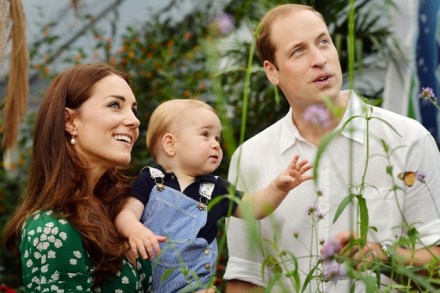
The Duchess of Cambridge has given birth to a baby girl. It is hardly a very exciting event. Babies are born all the time, and there are already quite enough descendants of the Queen to ensure the survival of the Windsor dynasty on the throne of the United Kingdom for a long time to come. Yet there are many people in this country for whom this commonplace event will be more thrilling than the forthcoming general election, even though it could presage the dismemberment of the country itself. The British monarchy continues to enjoy enormous popularity. There may be doubts about the suitability of Prince Charles to succeed to the throne, but latest polls also show that about 70 per cent of the people of Britain still support the institution itself.

Long life | 30 April 2015

From our UK edition

I remember the first time that someone stood up and offered me a seat on the London Underground. It was in 2002, when I was 62 years old, and rather a pretty girl whom I had been quietly admiring through the crush on the Piccadilly Line suddenly rose to her feet and beckoned me to take her place. I was so shocked that I responded most ungraciously. I just shook my head in irritation and signalled to her to sit down again. For, notwithstanding the fact that my hair had long ago turned white, it was the first time I had realised that I actually looked old. From then on, offers of seats on crowded Tube trains started to come my way occasionally, and they came with gradually increasing frequency, until now, 13 years later, I have almost come to expect them.

Long life | 23 April 2015

From our UK edition

There are already people camping outside St Mary’s Hospital, Paddington, to await the birth shortly of another royal baby, the second child of the Duke and Duchess of Cambridge. It is hardly a very exciting event. Babies are born all the time, and there are already quite enough descendants of the Queen to ensure the survival of the Windsor dynasty on the throne of the United Kingdom for a long time to come. Yet there are many people in this country for whom this commonplace event will be more thrilling than the forthcoming general election, even though it could presage the dismemberment of the country itself. The British monarchy continues to enjoy enormous popularity.

Long life | 16 April 2015

From our UK edition

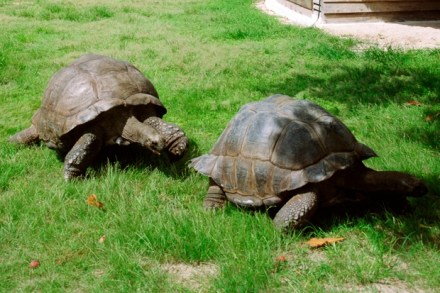
No sooner had I written last week’s column about the sad disappearance of the two tortoises in my care than they suddenly showed up. The sun had shone for two days, and that was enough to bring them out from underground. I had become convinced that I would never see them again. They had vanished from sight nearly five months earlier, and the expert websites that I consulted not only said this was longer than tortoises normally hibernate but also made clear that I had been an utterly irresponsible tortoise-keeper. They should have been starved before hibernating, they should have been measured, weighed and minutely inspected, and then they should have been placed in a ‘vivarium’ with a glass front through which they could be regularly examined throughout the winter.

Long life | 9 April 2015

From our UK edition

It’s April. It’s spring. The daffodils and the cowslips are in flower. The birds are chirping merrily. But where are the tortoises? There were two of them, a big one called Alice and a small one called Gertrude. They have been in my care since last summer when a friend, their owner, moved from her London house, which had a garden, into a flat nearby, which hadn’t. So the tortoises came up here to my house in Northamptonshire to be looked after by me. I put them in a patch of garden, about 20 yards by 15, surrounded by walls and yew hedges. Within these was erected a chicken-wire fence, buried into the ground so that they couldn’t escape; and there they stayed happily from June until the autumn when the weather got cold and they disappeared, presumably to hibernate.

The fox that killed my chickens depressed me more than 250,000 tsunami deaths

From our UK edition

It is hard to know how a tragedy is going to move a person who is not directly affected by it. Over a death or misfortune in the family, or among one’s friends, one is sure to feel pain and grief. But what of those other ghastly events involving people, maybe hundreds or thousands of them, with whom one has no connection? They provoke shock, disgust and horror, but not necessarily great personal sadness. Could it be true that I was more depressed when a fox killed all my chickens than I was when the Indian Ocean tsunami of 2004 swept over a quarter of a million people to their deaths? I have an ugly, shameful feeling that I might have been. Perhaps I am uniquely unimaginative and lacking in empathy, but I fear not.

Be different, be original: that’s what makes a popular politician

From our UK edition

I sometimes try to imagine what it would be like being a political leader. I find this difficult because I would be so utterly ill suited to the role. I’m too lazy, too disorganised and too undisciplined to be remotely credible at it. But the area in which I would fail most completely would be in the projection of a suitable image. Not only would I be incapable of saying the right things at the right time; I don’t have the appearance or bearing or dress sense to convey calm, self-confidence and authority. I suppose you could say much the same of Adolf Hitler were it not for his gift for inflammatory speechmaking. He was a miserable, rather jumpy-looking creature.

An Episcopalian vicar made me warm to the principle of women joining gentlemen’s clubs

From our UK edition

In 1993, when I was living in Manhattan working for the New Yorker magazine, I was chosen as ‘distinguished visitor’ to be a temporary member of the Century Club: there were two of us in this category, me and the Tanzanian ambassador to the United Nations. The Century, in midtown Manhattan on West 43rd Street, is one of the grandest clubs in New York, most of which were opened in the 19th century in imitation of the gentlemen’s clubs of London. The Century was founded in 1846, only 15 years later than the Garrick Club, of which I have long been a member. It was originally planned as ‘an association of artists, writers, musicians and amateurs of the arts and letters devoted to companionship and conversation’.

It’s a pointless waste of time for David Cameron to resurrect the hunting debate

From our UK edition

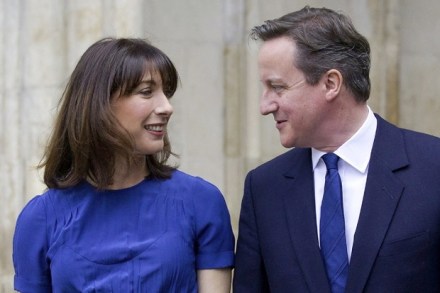
Of all the election promises politicians make in the run-up to a general election the one most certain to remain unfulfilled is David Cameron’s pledge to try to repeal the foxhunting ban. He has said he will give MPs a free vote on the issue, but he promised something similar before the last election, only to be prevented from doing anything by his coalition partners, the Liberal Democrats, who remain firmly opposed to hunting with hounds. So does the Labour party, and so does the public. A recent opinion poll found that 80 per cent of people in this country, in rural communities as much as in towns, want to keep the ban in force.

I’ve been sacked more times than I can exactly remember. It teaches you nothing

From our UK edition

The Oldie magazine — of which, until otherwise advised, I appear to be the editor — runs an occasional article about someone’s experience of being sacked. When I was young, this used to carry something of a stigma: other people found it hard to believe that you could be sacked without having somehow deserved it. But since then so many admirable people have lost their jobs for no good reason that nobody thinks any the worse of them for it. And now we are told by Anna Wintour, the editor of American Vogue and queen of the fashion world for 27 years, that to be sacked is actually a good thing. ‘I think everyone should be sacked at least once,’ she told Alastair Campbell in an interview for his new book Winners: And How They Succeed.

You can’t force low-income people to go to an art gallery or the theatre if they don’t want to

From our UK edition

I went last week to see the justly praised production of Wagner’s The Mastersingers at English National Opera, and I didn’t see a single black face there, nor even much dark hair (except in the case of Melvyn Bragg who, though now greying a bit, still seems to have Ronald Reagan’s gift for keeping white hairs at bay). This chimed with the finding of the Warwick Commission on the arts in Britain that much the greater part of live-music audiences, theatre-goers and gallery visitors is old, white and middle-class. Even though this wasn’t actually the reason for the Arts Council’s drastic decision to curtail ENO’s funding — this was because of its allegedly shambolic management — it easily might have been.

The elderly are society’s new baddies

From our UK edition

The gulf in understanding between the old and the young has widened with the news that the young are beginning to turn teetotal. If there was one thing that the old thought they knew about the young, it was that they drank too much. British youth led the world in its enthusiasm for alcohol. Our cities swarmed with loutish binge drinkers. Yet now, all of a sudden, we learn that abstinence is becoming fashionable. The number of people under 25 who don’t touch a drop has increased by 40 per cent in eight years. More than a quarter of people in this age group now don’t drink anything at all. What is going on? The conditions for heavy drinking would seem to be perfect: there is economic hardship and a generally gloomy outlook on most fronts.

How the driverless car will liberate us all (except smokers, of course)

From our UK edition

I was listening to the radio the other morning to hear people complaining about the huge cuts in the number of traffic police patrolling English roads. This meant that drivers would disobey motoring laws with impunity, they said. They would babble away on their mobile phones, unfasten their seat belts, and generally break the rules of the road in the knowledge that they were most unlikely to get caught. The only things left for them to fear would be speed cameras. As a result, road deaths, of which there were already more than 1,700 in Britain last year, would go shooting up. A grim outlook indeed. But wait, there is hope on the horizon. This is the exciting prospect of the driverless car.

Alexander Chancellor’s diary: Picking golden oldies, Ken Dodd, and the sadness of Jack Nicholson

From our UK edition

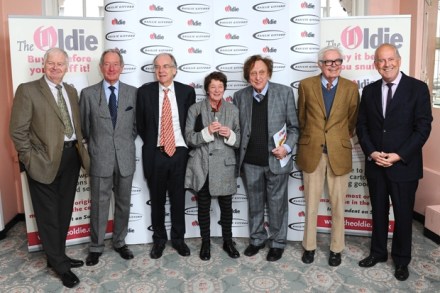
An excellent test of character is a person’s response to being offered an Oldie of the Year Award. There have always been those to whom the word ‘oldie’ is in itself an embarrassment. When Richard Ingrams founded the Oldie magazine in 1992, he was warned by many that it would fail because of its name. Nobody wanted to be thought old, he was told, and therefore nobody wanted a magazine that would portray oldness as something to be proud of. Ingrams overcame most of these qualms with the humour and irony he brought to the magazine. Nevertheless, I was nervous when I had to telephone Lord Falconer, whom I had never met, to tell him he had been chosen for an Oldie award. Lord Falconer is a political heavyweight who served as Lord Chancellor in Blair’s government.

You realise how little you know of anybody when they die

From our UK edition

Whether or not you believe in the afterlife, death remains an impenetrable mystery. One moment a person is making jokes and comments and observations about life; the next he is gone. What has happened to that store of wit and wisdom acquired over a lifetime, to that particular way of understanding and looking at things, to that unique muddle of thoughts and feelings that every individual has? Even if someone has gone to heaven, it is difficult to imagine that he has taken these things with him. If he did, they would hardly be compatible with eternal rest.

The quiet pleasure of washing up (and why I’m still buying a new dishwasher)

From our UK edition

I have been having trouble with my dishwasher. It’s seven and a half years old, and it’s manufactured by a German company called Miele. Several important people told me at the time that anyone who was anyone had a Miele dishwasher, so naturally I bought one. I found it perfectly satisfactory until a couple of weeks ago, when it suddenly stopped working; so I called up Miele and they sent someone to investigate. He said he’d repaired it and charged me £117 for the visit. But when I turned it on afterwards, the lights fused. So another Miele man came and said that his colleague hadn’t noticed that it was in fact a wreck and would need £500 spending on it for it to work again.