Alexander Chancellor

My home Stoke Park has become a hotbed of sex and violence

From our UK edition

When I’m not busy editing the Oldie magazine, I live near Towcester in south Northamptonshire where things are pretty unexciting. It’s at a place called Stoke Park, where two 17th-century pavilions, originally a chapel and a library linked by colonnades to the sides of a substantial country house, survived a fire that destroyed the main building in the late 19th century. It wasn’t always so dull here. In Tudor times one could have looked out across the valley of the River Tove to see Henry VIII hunting deer with Anne Boleyn. On the horizon one can still see the tower of the church at Grafton Regis where Henry used to stay and where he had his last ever meeting with Cardinal Wolsey.

Oh, how I will miss the plastic bag!

From our UK edition

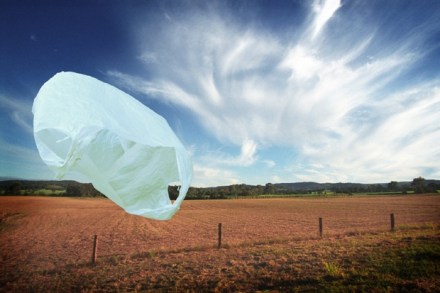
It has taken years, but finally England has joined the rest of the United Kingdom and other countries around the world in declaring war on the plastic carrier bag. This week for the first time English supermarkets are being forbidden by law to give plastic bags away for free. From now on they will have to charge 5p for every one of them. It is the beginning of the end. The plastic bag is heading for oblivion. The most useful shopping tool of the last half-century will soon, I imagine, be extinct. It seems only appropriate at this point to say how wonderful plastic bags have been. They are the most useful carriers ever invented — strong, light, capacious and absurdly cheap to produce. Life without them will never be so easy again.

Long life | 1 October 2015

From our UK edition

When Robert Peston, the economics editor of the BBC, interviewed George Osborne on television in an open-necked shirt with collar awry and a wisp of chest hair on display, he was subjected to a barrage of criticism to which he responded with vigour. It was ‘bonkers’ to suggest that wearing a tie made a journalist serious, he said, or that a tie should be worn out of respect for the interviewee. ‘I didn’t not wear a tie out of disrespect for the chancellor,’ he said. ‘I just didn’t wear a tie because I don’t really like wearing a tie. I think these TV conventions are nuts.

Long life | 24 September 2015

From our UK edition

It’s hard to turn on the television nowadays without being shown a robot. It might be looking like a grasshopper doing something terribly important, such as helping a surgeon with an operation, or just be a cute little metal humanoid designed to make schoolchildren more interested in their studies. One robot I saw on TV the other day was disguised as a cuddly white seal pup that was feigning pleasure at being stroked on a woman’s lap in an old people’s home. It seemed to make her happy without biting or scratching or doing any of the other unpleasant things that live animals are prone to. Robots clearly have their uses, then. But why is so much airtime now devoted to them?

Long life | 17 September 2015

From our UK edition

How do you address extraterrestrials in outer space? The main problem with this is that there may not be any extraterrestrials out there to address. The next problem is that, if there are any, they will be unimaginably far away. According to Anders Sandberg of the Future of Humanity Institute in Oxford, the nearest star that could potentially accommodate life is ten light years from Earth, or (I hope I’ve got this right) about 60,000,000,000,000 miles. So even if there are aliens living out there, and even if they receive and understand whatever message we send them and decide to answer it, we would probably have to wait about 200 years for their reply — or so Mr Sandberg told the British Science Festival in Bradford the other day.

Long life | 10 September 2015

From our UK edition

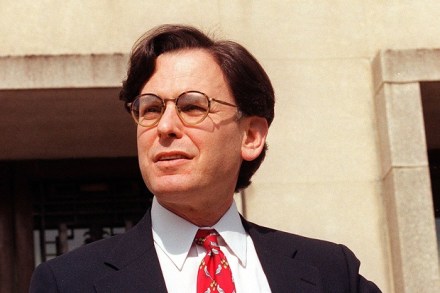
I remember Sidney Blumenthal from my time in Washington in the late 1980s when I was there as the first American editor of the Independent. He was a smartly dressed, agreeable political journalist, handsome in a donnish kind of way, who had a gracious, dignified manner that seemed to put him a cut above most of his fellow hacks. He was also a liberal of strong political conviction, whose purpose was to help rebuild American liberalism so that it could take on and beat the New Right after its long ascendancy under Ronald Reagan and restore the Democrats to power. It was at around this time, in 1987, that Blumenthal first met Bill Clinton whom he came to regard — rightly, as it turned out — as the Democrats’ best hope for achieving this aim.

Long life | 3 September 2015

From our UK edition

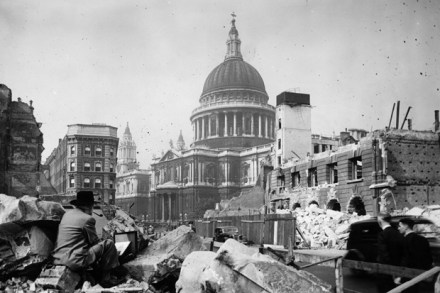
While the Germans were raining bombs on London during the second world war, the architects’ department of London County Council was busy colouring in Ordnance Survey maps of the city to record which buildings had been destroyed and which had not. These maps have now been published as a book by Thames and Hudson, The London County Council Bomb Damage Maps, 1939-45. Those buildings that had been totally destroyed were coloured black on the maps; those that had been damaged beyond repair, purple. And a review of this book in last Saturday’s edition of the Times was accompanied by a reproduction of one map covering the area around St Paul’s Cathedral, which is exactly where I was residing as a baby during the autumn of 1940 when the Blitz of the City began.

Long life | 27 August 2015

From our UK edition

We learn from a new report that children in England are among the unhappiest in the world — more unhappy, even, than the children of Ethiopia, Algeria or Israel. Why should this be so? Life is still quite good in England. It is generally peaceful and prosperous. Yet, in the admittedly rather haphazard list of countries surveyed by the Children’s Society and the University of York, the only one in which children were found to be more miserable than here was South Korea. The children of Romania and Colombia were all far happier. The two main reasons offered for this despondency among English children were bullying in schools and worries, particularly among girls, about their appearance.

Long life | 20 August 2015

From our UK edition

I was saying the other week that my new hearing aids had come with a warning not to swallow their batteries, because this could be bad for you. I doubt if anyone would choose to swallow a battery, but such warnings against barely conceivable eventualities are now commonplace. Manufacturers rack their brains to think of new perils to which buyers of their products could theoretically be exposed. Sometimes these warnings make no sense. I will not distress you with details of the colonoscopy I endured last week (all fine, just one little benign polyp), but the packets of laxative powder designed to empty the bowels prior to this humiliating procedure were labelled ‘Keep out of reach and sight of children’. Out of reach, yes. But out of sight?

Long life | 13 August 2015

From our UK edition

I’m going off Jeremy Corbyn. He seems more and more pleased with himself by the minute. But I understand why he is so popular with Labour supporters. It isn’t just his perceived authenticity in a field of machine politicians — the same attribute that has thrust Donald Trump to the fore in the race for the Republican nomination in the United States. It is something of which I have been reminded this week by the news that Silvio Berlusconi is planning to sell his preposterous Sardinian villa to a Saudi prince, and this is the shame felt by so many party members over their long servility to Tony Blair. For perhaps nothing better exemplifies Blair’s indifference to Labour sensibilities than his visit with Cherie to the Villa Certosa in 2004.

Long life | 6 August 2015

From our UK edition

Most people, when asked if they would rather be deaf or blind, say they would rather be deaf. I would say that, too. Deafness is obviously a wretched and isolating condition, but it appears to be less absolute in its effects than blindness. A blind person simply can’t see anything. With the deaf it is more complicated. Dame Evelyn Glennie, whose deafness didn’t stand in the way of her becoming one of the world’s greatest percussionists, contends that hearing is just a form of touch; that if your ears aren’t working, you can feel sounds as vibrations in other parts of the body.

Long life | 30 July 2015

From our UK edition

I was wondering what to write about this week when I suddenly realised that exactly 40 years ago this Saturday I became editor of this magazine. Despite eventually getting the sack, I hung onto the job for nine years, from 1975 to 1984, which is still the longest that anyone has had it since Wilson Harris ended his 21-year tenure in 1953. The Spectator has had 15 editors since him, but none apart from myself has lasted for much more than six years. Fraser Nelson, however, looks set to outlast us all. I am surprised how little I can remember of those years (or perhaps I shouldn’t be surprised, given my drinking habits at the time), but I will never forget how they started.

Long life | 23 July 2015

From our UK edition

The smart phone is a wonderful thing. We are never out of touch anymore, neither with friends nor with the world at large. But increasingly we read of the harm that it is doing us. We are no longer its masters but its victims. It makes us tense, anxious and insecure. We respond with unnatural haste to every noise it emits; and even when it isn’t peeping or squeaking at us, we neurotically check it all the time for messages that might have crept in surreptitiously. Psychologists and sociologists are having a field day warning us of its dangers. Our obsessive phone checking is affecting our brains, they say. It blights our relationships and stops us concentrating on anything.

Long life | 16 July 2015

From our UK edition

I have always been what I suppose one could call a weed, and a cowardly one at that. I never liked sports and was never any good at them. When fielding at cricket at my prep school, I used to while away time making daisy-chains. Of my part in football one prep-school report merely said, to my mother’s great amusement, ‘Chancellor prefers to avoid the ball.’ At my public school, where you had to choose between rowing and cricket, I chose rowing, but only because I was just small enough to get away with being a cox, which only involved sitting in the stern of a boat and bellowing orders at the oarsmen who were doing all the work.

Long life | 9 July 2015

From our UK edition

The 1960s were already more than halfway over when I realised that I was living through what was supposed to be an exciting decade. I had got married, found a job, had two babies and was leading the stressful life of a young family man, quite unaware that all around me Britain was bubbling with excitement. In 1966 I was in Paris, doing night shifts as a trainee journalist for Reuters news agency, when I happened upon a cover of Time magazine, emblazoned with girls in miniskirts and boys in flared trousers, announcing that London was ‘the swinging city’. When I came home to check this out, London seemed much the same as it had been in the 1950s — a grey and grimy but dignified city, old ladies still wheeling their wicker shopping baskets up and down the Brompton Road.

Long life | 2 July 2015

From our UK edition

The Eurostar train descended gently into the Channel Tunnel, went halfway along it, and then stopped. There it remained for what seemed a very long time, the silence broken only occasionally by mumbled announcements in French and English. The speaker was French, and his English was incomprehensible, his French only slightly less so. All that we could gather was that the train was being delayed by some sort of trouble in Calais. Only much later did we learn that migrants from a refugee camp had been swarming on to lorries heading for England and generally creating mayhem. They had even lit a fire on the railway track. Eventually it was announced that we wouldn’t be going to Paris quite yet but would go backwards instead to Ashford in Kent to await the all-clear to resume our journey.

Long life | 25 June 2015

From our UK edition

It is nearly two years since the police were granted new powers to fine motorists for ‘hogging’ the middle lane of a motorway, but it’s only now that anyone has been convicted in court of this offence. A person driving a van at 60 mph on the M62 near Huddersfield has been fined £500 and given five penalty points for doggedly refusing to move out of the middle lane on to the inside one. Press reports of this judgment failed to say to what extent, if any, police have exercised their two-year-old right to give on-the-spot fines to drivers behaving in this way, but I have yet to hear or read of a case, and I would be surprised if there had ever been one.

Long life | 18 June 2015

From our UK edition

My friend Alan Rusbridger has just given up editing the Guardian after a distinguished 20-year reign that has climaxed, as befits an accomplished musician and former chair of Britain’s National Youth Orchestra, with a magnificent crescendo of earthshaking scoops. He has now, at 61, ascended to more serene heights as chairman of the Scott Trust, the company that owns the Guardian, and also as principal of an Oxford college, Lady Margaret Hall. His departure from the Guardian after one of the most outstanding, if also rocky, periods in its long history has been appropriately marked by articles, interviews, speeches and other celebrations in which he has reflected with shrewdness and modesty on the lessons of his editorship for the troubled and topsy-turvy world of journalism today.

Long life | 11 June 2015

From our UK edition

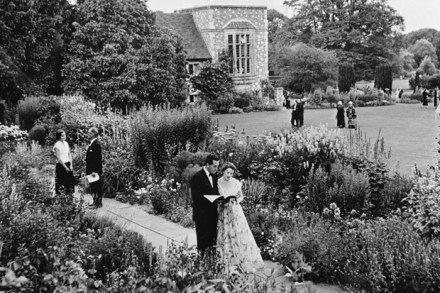
It’s June, and the country-house summer opera festivals are now in full swing. Glyndebourne, which opened the season last month, has now been joined by its leading emulators — Garsington in Oxfordshire, The Grange in Hampshire and Longborough in Gloucestershire; and next month a newcomer, Winslow Hall Opera in Buckinghamshire, will be putting on La Traviata with much the same cast that shone last year in its greatly admired production of Lucia di Lammermoor. The gentry in dinner jackets and long dresses are already flouncing about on lawns throughout England.

Long life | 4 June 2015

From our UK edition

I wrote last week about a swarm of bees that had attached itself to a wall of my house, as if this were a rare and momentous event; but since then there have been three more swarms, and the men in spacesuits have been back again to remove them. Well, they’ve actually removed only two swarms, for I don’t know where the third one ended up. I only know that Stan, my nearest neighbour, knocked on my front door last weekend to report that a swarm in flight had just crossed his house and was making a bee-line (yes) for my garden. But whether they stopped there, and if so where they settled, I haven’t managed to discover. Anyway, the experience has turned me into a bee-crisis sceptic, as some people are climate-change sceptics.