Alexander Chancellor

Long life | 17 March 2016

From our UK edition

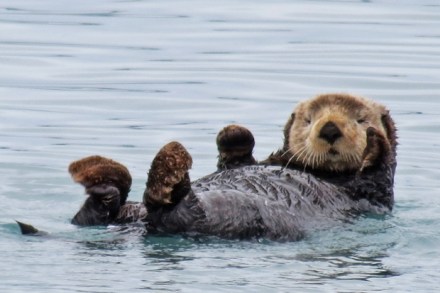
My time as a duck-keeper seems to have come bloodily to an end. I have had ducks on my pond for some years now, and I have kept buying new ones to replace those that have got murdered. This stretch of South Northamptonshire may look rather cosy and suburban, but it’s ruled by the law of the jungle. Not a day passes without some creature viciously killing another. Only a month or so ago there were 13 ducks on my pond. Then there were eight. Then there were five. And now there is only one, an Indian Runner drake that stands forlornly on the base of a statue in the middle of the pond, awaiting what it probably feels is its inevitable fate. As you see, I have stopped replacing lost ducks in the way that I used to. I became too disheartened by the endless killings.

Long life | 10 March 2016

From our UK edition

I used to enjoy the ghost stories of M.R. James, but I’ve never actually seen a ghost or even believed that ghosts existed. I have visited many allegedly haunted houses in my life but no scary apparition has ever crossed my path. The old house in which my grandparents lived in Lanarkshire was such a place (its ghost, like so many others around Britain, was supposed to be a ‘grey lady’), but I stayed there year after year untroubled by spirits, though the portraits of my puritan Scottish ancestors were sometimes frightening enough. I have always thought that people who claimed to see ghosts suffered from hallucinations or had especially sensitive peripheral vision.

Long life | 3 March 2016

From our UK edition

On Monday I went to the newsagent to buy the newspapers and picked up the first issue of a new one calling itself the New Day. This is the creation of the company that publishes the Daily Mirror, and it is, the publishers say, intended to appeal to people who have given up reading newspapers, people now so numerous that they are rapidly bringing the industry to its knees. The paper’s rather odd title is reminiscent of the carefree song ‘Many a New Day’ from Oklahoma!, and it is presumably intended to emphasise what the publishers call its ‘optimistic approach’. ‘We like to think we’re a modern, upbeat newspaper for modern, glass-half-full kind of people,’ writes its editor Alison Phillips in her introductory letter to readers.

Long life | 25 February 2016

From our UK edition

There are still four months to go before the vote, but I already feel quite exhausted by the Europe referendum campaign. Such has been the excitement in the British press that I have taken to starting the day by reading the New York Times online, which is so uninterested in this historic matter that it never seems to mention it at all. Monday’s British papers, announcing Boris Johnson’s defection to the Brexit camp, provided the kind of coverage you’d expect if the country had just won a war. Indeed, the Daily Telegraph looked exactly as if it had, with most of its front page, including its logo, consumed by an enormous colour photograph of a triumphant, smiling Boris acknowledging the applause of an invisible crowd. He looked a bit like Churchill on VE Day.

Long life | 18 February 2016

From our UK edition

It had been many years since I had seen anything of Andreas Whittam Smith, but he popped up on the television this week to discuss the fate of the Independent, the newspaper he founded 30 years ago but which is now about to close. I was pleased to see that at 78 he had acquired a knighthood, for this was an honour he had deserved for a long time. The strange thing, though, is that he was given it for services to the Church of England, to which he later became a financial adviser, and not for his great lifetime achievement in founding and successfully editing a national daily newspaper.

Long life | 11 February 2016

From our UK edition

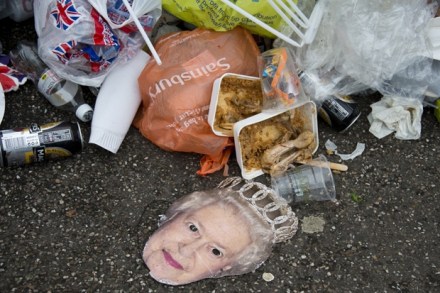
I am sure that the Queen disapproves of litter as much as anyone else, but she’s hardly ever exposed to it. There isn’t litter around at Buckingham Palace or at Windsor Castle or at any of her other homes. And when she goes away on a visit, her destination is always assiduously cleaned and tidied up in advance. She is, I suspect, almost the only person in Britain who barely knows what litter looks like. Yet we are all being asked to volunteer to spend the first weekend of March picking up litter everywhere in Britain to make the entire country clean before her 90th birthday in April.

Diary – 4 February 2016

From our UK edition

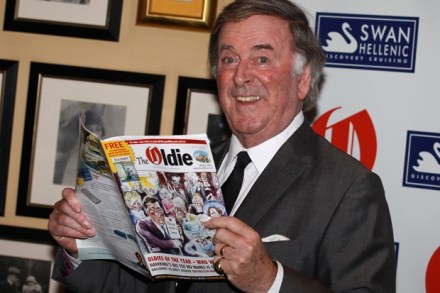
There was a cloud over the ‘Oldie of the Year’ awards luncheon this week, which was the death only a few days earlier of Sir Terry Wogan. Readers of the Oldie must rank high among Wogan’s TOGs (‘Terry’s Old Geezers and Gals’), as he called his fans, not only because old geezers and gals are exactly what most of us are, but above all because he was for many years the chairman of the judges of these awards and the person who presided at their annual presentation ceremony at Simpson’s-in-the-Strand. Wogan’s words on these occasions — whimsical, sardonic, affectionate — captured perfectly the nature of old age: its mix of dignity, poignancy and absurdity.

Long life | 28 January 2016

From our UK edition

No good deed goes unpunished. This is a saying that applies with special poignancy to Olive Cooke, the 92-year-old poppy seller who jumped to her death in the Avon Gorge near Bristol after receiving something like 3,000 begging letters a year from charities. Mrs Cooke was a great believer in charity. She had sold poppies on behalf of the Royal British Legion since 1938, taking up position every November outside the entrance to Bristol Cathedral. She may have disposed of more than 30,000 poppies during her eight decades of selling them there. She was, said her family, somebody of an ‘incredibly kind, generous and charitable nature’ who held 27 direct debits to charities. The word got about. Here, obviously, was a sucker.

Long life | 21 January 2016

From our UK edition

Here I go again. I have stopped smoking. Until recently I had been smoking about 40 cigarettes a day, but it is now two weeks since I last had one. Initially I used e-cigarettes and nicotine lozenges to help me give up, but now I already feel I can manage without them. I think I may have conquered my addiction. I feel I could be free at last. But I hesitate to say so, because it is a feeling I have often had before. Like Mark Twain, I have often stopped smoking, but always after a period of time, even one as long as five years, I have taken it up again. If one wants to stop smoking, one really should try to avoid reading Mark Twain, because his enthusiasm for it is infectious.

Long life | 14 January 2016

From our UK edition

Before the start of Aladdin in Milton Keynes this week a promotional video showed Brian Blessed in oriental costume bellowing to the audience that pantomime had never been so popular in its long history and that Britain was still full of people longing to shout ‘He’s behind you!’, ‘Oh, yes it is!’, ‘Oh, no it isn’t!’, or whatever. It was a Sunday afternoon matinée and the theatre was full. The same had been true the week before at Cinderella in Northampton. The evidence seemed to suggest that Brian Blessed was right. But I did find myself wondering why. The pantomime may still be able to fill provincial theatres, but as entertainment it has deteriorated steadily over the years.

Long life | 7 January 2016

From our UK edition

This is an uplifting story of survival with which to usher in the New Year. At Stoke Park, my home in Northamptonshire, I went the other day into the West Pavilion, one of two 17th-century buildings that were once connected by colonnades to a country house that burned down in 1896. It is one large room with a single entrance door, originally used as a library, then in the 19th century as a ballroom, and nowadays only for wedding receptions and the like. It is kept locked and protected by a burglar alarm, but inside was a hen pheasant scurrying frantically about. I wondered how it could possibly have got in there until I looked up and saw a jagged hole in the large Venetian window overlooking the park and splinters of glass all over the floor inside.

Long life | 31 December 2015

From our UK edition

The Egyptian driver of a London minicab said almost nothing during our journey but dropped me off at my destination with the words ‘What do you think of the condition of the world at the moment?’ He didn’t think well of it himself, he added: and I could not but agree. I don’t think I’ve ever felt so uneasy, not even during the Cuban missile crisis. The threats to international order and stability are now so varied and so amorphous that it is difficult to know how they are to be confronted, and even more difficult to predict when or where the next horror will erupt. But that, I suppose, gives us all the more need to be hopeful and to look on the bright side of life.

The Lord’s Prayer is no more offensive than Jeremy Clarkson or deodorant

From our UK edition

There was a time not so very long ago when the most common complaint about Christmas was that it had become too commercial and that its Christian significance was being forgotten. Since then the decline in religious belief in Britain has grown so much that the secularity of Christmas is taken for granted. It is effectively a pagan festival now. According to the Church of England, only about one million people, or around two per cent of the population, still attend church on Sundays (though about twice that number do so on Christmas Day).

Long life | 3 December 2015

From our UK edition

I have always found Thanksgiving, which was celebrated in the United States last week, the most agreeable and least stressful of holidays. It involves no present-giving, so it is almost free of commercialism and the anxieties associated with shopping; and it has no religious or political connotations, which means it can be enjoyed in equal measure by Americans of every kind. Christmas, on the other hand, despite all the efforts made in America to play down its religious origins, retains an element of exclusivity about it: if you are not a Christian, it is not really your day. Thanksgiving, with its emphasis not only on gratitude but also on goodwill and generosity towards everyone, yet without the divisive intrusion of religion, is perhaps the ideal family festival for the modern world.

How do you explain events that even adults can’t understand to a child?

From our UK edition

Seeing my ten-year-old daughter, Freya, a week after the massacre in Paris, I asked her if she had heard anything about the events there. She said, in a matter-of-fact kind of way, that she had heard something, but didn’t say what it was or from whom she had heard it. All she would say was that it hadn’t been mentioned by her teachers at school. And then she changed the subject. I didn’t feel like saying any more on the matter. Either she didn’t know anything much or she didn’t want to talk about it. And what would have been the point of discussing something so horrible with her? We turned on the television and watched an old Bing Crosby movie instead. But one of the hot topics of recent days has been what to tell children about this Isis atrocity.

How the Germans made Glyndebourne

From our UK edition

This is hardly the time of year for picnics on the lawn, but I have nevertheless had a week dominated by Glyndebourne. First I went to London to see David Hare’s play The Moderate Soprano, about the creation of the Glyndebourne opera festival by John Christie in 1934; and then to a Glyndebourne production in Milton Keynes of Mozart’s opera Die Entführung aus dem Serail. John Christie was an extraordinary man. A rich country landowner, who served bravely in the first world war, he returned home to his house in Sussex to pursue his interest in music. He purchased a colossal organ, perhaps the biggest in England outside a cathedral. He put on little opera performances in the organ room.

Long life | 12 November 2015

From our UK edition

It is hardly uncommon for politicians to lie, especially when their careers are threatened by a sexual transgression — John Profumo about Christine Keeler, for example, and Bill Clinton on not having had ‘sexual relations with that woman, Miss Lewinsky’. But there is a particular kind of distortion of the truth that is rare over here but almost routine among American presidential candidates; and this is the way they embellish their personal histories to maximise their appeal to voters.

Long life | 5 November 2015

From our UK edition

The last time I was in New Orleans was during the BP oil spill in the Gulf of Mexico when the city was still also reeling from the effects of Hurricane Katrina. Now it seems to have recovered from these traumas. The restaurants are packed and the picturesque French Quarter, the old heart of the city, throbs to the sound of jazz music in streets blazing with neon lights and crowded with excited fun-seekers. But things are hardly perfect. The city has one of the highest crime rates in America — well over 100 murders already this year — and even in the Garden District, the city’s most expensive area, full of gracious Victorian villas, the pavements are in such disrepair that they are perilous to walk on.

Long life | 29 October 2015

From our UK edition

The Metropolitan Club in Washington is so close to the White House that President Obama chose to walk there for lunch on Tuesday through Lafayette Park while his motorcade followed behind. The lunch was described in the media as ‘secret’, and American reporters were frustrated by the refusal of the White House and the club’s staff to divulge anything whatsoever about it. But nothing the President does is really secret, and his visit was certainly not secret to me, since I was staying in the club at the time under a reciprocal arrangement between the Metropolitan and the Garrick in London, of which I’m a member.

To tip or not to tip

From our UK edition

As I grow older, I find myself increasingly reluctant to travel, which is why it’s been a few years now since I last visited New York. I like New York, but there are few nastier experiences than going there. The usual horrors associated with modern air travel are bad enough, but the passengers on transatlantic flights tend to be especially uncongenial — harassed mothers with screaming babies, tattooed, pot-bellied men bursting out of their jeans. By the time I reached the check-in desk at Gatwick Airport I had become so alarmed at the thought that I might be put next to one of the scarily obese women who’d been in front of me in the queue that I paid for an exorbitantly expensive upgrade to a ‘premium’ seat.