Alexander Chancellor

Long life | 1 September 2016

From our UK edition

Americans want a president with the steadiest possible finger on the nuclear button, which is why they worry about the state of health of their presidential candidates, and why nowadays candidates often try to quash doubts about their health by releasing their medical records. Sometimes they overdo it, as in the case of Senator John McCain, who published 1,173 pages of medical records when he was the Republican presidential nominee in the 2008 election. There was too much there for anyone to absorb, but Barack Obama, who won that election, made do with just a brief letter from his Chicago doctor saying he was ‘in excellent health’.


Long life | 25 August 2016

From our UK edition

The 6th Duke of Westminster, who died this month, was living support of the claim that wealth doesn’t make you happy. He was as rich as can be, but said he wished he hadn’t been. The dukedom, and the billions of pounds it brought with it, came to him unexpectedly. He had been brought up on a farm in Northern Ireland and wished he had stayed there and become a beef farmer. Instead, he inherited a great property empire in England and around the world, as well as various estates that allowed him the pleasure of game shooting, but otherwise gave him little but grief. He was overwhelmed by the onerous duties that great riches imposed on him, and he succumbed to depression.

Long life | 18 August 2016

From our UK edition

In the four months since I had a brain haemorrhage I have had several tests to find out how my mind has been affected. The first tests were conducted in Siena, where I had been taken to hospital after falling ill on a spring holiday in Tuscany. A nice Italian lady showed up with bundles of problems for me to resolve. They ranged from mathematical ones of the sort one used to face at primary school — how many apples costing so much each could be bought with so much money and leave how much change — to finishing incomplete sentences and explaining events or processes depicted in drawings. Although I have never been good at maths, I found the mathematical questions easiest to answer: sometimes the drawings were indecipherable. Back in London I underwent other tests.

Long life | 11 August 2016

From our UK edition

A hoo-ha has broken out in the city of Oryol, south-west of Moscow, over a proposal by the officials there to put up Russia’s first ever public monument to Ivan the Terrible. This 16th-century czar had some major achievements to his credit — particularly the expansion of Russia’s territory and welding it into a united state — but seems nevertheless to deserve most of the excoriation that history has bestowed on him. There is some uncertainty about whether he actually killed his son and heir as is usually claimed; but he was definitely drunken and paranoid and given to wild swings between spasms of violent cruelty and bouts of self-loathing and repentance (he was a devout Christian).

Long life | 4 August 2016

From our UK edition

Japanese housewives are so convinced of the value of office work that they get angry if their husbands come home early in the evenings; and this is why many Japanese husbands, fearing assault by the rolling pin, spend long periods at the pub before heading home very late. Japanese wives are deluded, however, if they believe that offices are places in which much work is done; on the contrary, they are places in which time is constantly being wasted. Offices are not conducive to long and concentrated effort; they offer far too many distractions. You aren’t alone in an office, but amid people with whom to converse and to intrigue, to flirt or to fight, and in the presence of coffee machines and water coolers around which to engage in frivolous banter.

Long life | 28 July 2016

From our UK edition

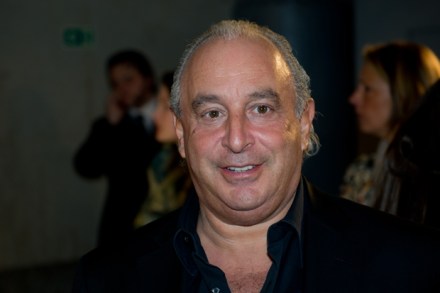
The Cabinet Office has confirmed that Sir Philip Green’s knighthood is under investigation because of his part in the destruction of BHS, which is costing 11,000 people their jobs and threatening to reduce the pensions of 20,000 others. The Honours Forfeiture Committee, which decides whether people should be deprived of any honours or titles bestowed by the Queen, is keeping Sir Philip’s case under review. Honours are usually removed from people who have been jailed for at least three months for a criminal offence or been struck off an official or professional body, the Cabinet Office explains.

Long life | 21 July 2016

From our UK edition

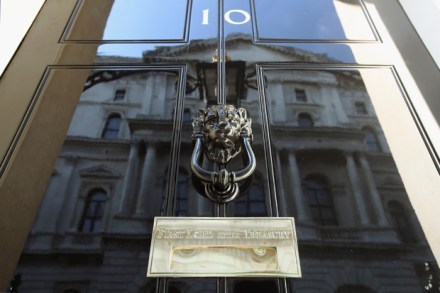
One of David Cameron’s last decisions as prime minister was to get the brass doorbell of No. 10 cleaned. I know this from my friend and Northamptonshire neighbour, Kevin, a brilliant plasterer and decorator, who has been working for years on restoring the fabric of the house in Downing Street. Cameron had noted that the doorbell had gone green and asked Kevin to deal with the problem, so Kevin cleaned it himself. It’s not as if the bell is often used, for the door tends to open magically when any important visitor arrives. It behaves like an automatic door, but it’s really opened by an unseen doorkeeper whenever the visitor appears on the threshold.

Long life | 14 July 2016

From our UK edition

When you are recovering from a stroke, you spend much of the time asleep. But when you are not sleeping, you are told that the most important thing you have to do is avoid stress. All doctors agree that stress is the main impediment to recovery. But how can you possibly protect yourself against it? The causes of stress can creep up on you from anywhere without warning, and there is nothing you can do about it; and lately I have been bombarded by shocks. I was one of the ignorant for whom the victory of Brexit in the referendum was itself a shock, but this also set in train a whole bunch of further assaults on the nervous system.

Long life | 7 July 2016

From our UK edition

Amid the bloodshed and chaos that followed David Cameron’s resignation as prime minister, Theresa May earned praise for seeking to convey calm and steadiness. In the speech with which she launched her bid to succeed him, she said: ‘I know I’m not a showy politician ...I don’t often wear my heart on my sleeve. I just get on with the job in front of me.’ These were just the kind of words that many people reeling from the Johnson-Gove fiasco were happy to hear from another possible prime minister. But there is already someone in a great office who could say these words with even greater conviction, and that is our head of state, the Queen.

Long life | 30 June 2016

From our UK edition

The Brexit vote has thrust this country into chaos. It has left it with neither a government nor an opposition and no clear purpose in the world. And if our country has been freed from the control of interfering continental bureaucrats, as the Brexiteers wish, the likely price of this achievement is the United Kingdom’s own tragic dismemberment. We also face years of wrangling negotiation and of endless parliamentary work breaking our legal ties with the European Union. Soon, I suppose, we will all have to be issued with freshly designed passports and driving licences. Can it all really be worth it? It can be said, however, that Britain hasn’t made such an impression on the world since the second world war.

Long life | 22 June 2016

From our UK edition

One of my first outings while recovering from a little stroke has been to the New London Theatre in Drury Lane to see the splendid revival of Show Boat, the 1927 musical of Jerome Kern and Oscar Hammerstein II. Show Boat not only contains some of Kern’s finest songs (‘Ol’ Man River’ and ‘Can’t Help Lovin’ Dat Man’, for example), but is remarkable as the first American musical to combine light entertainment with a dramatic story and to deal with serious themes — gambling, alcoholism and racism. It was based on a novel about life on one of the floating theatres (‘show boats’) that travelled along the Mississippi in the late 19th century and put on variety shows for townspeople on its banks.

Long life | 16 June 2016

From our UK edition

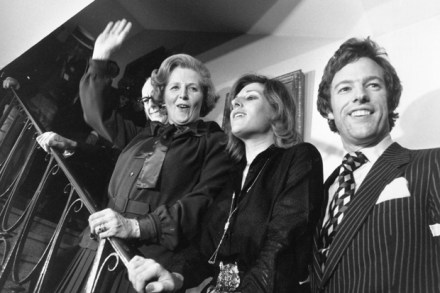
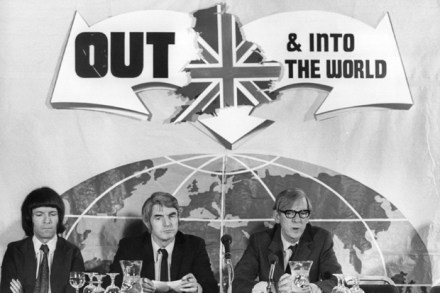
It was 41 years ago that The Spectator first urged its readers to vote Brexit in a referendum, but the circumstances were different then. In 1975 the Establishment was generally enthusiastic for Europe. Most of the Tory party, including its new leader, Margaret Thatcher, was keen to keep Britain in the Common Market it had only recently joined. The dissenters were few among the Tories and were mostly on the left wing of the Labour party and the trade unions, which saw Europe as inimical to socialism. Almost a third of Harold Wilson’s cabinet members were Eurosceptics, and he set the precedent (later followed by David Cameron) of suspending cabinet collective responsibility to let his ministers campaign against each other on this occasion.

Long life | 9 June 2016

From our UK edition

I’m back in England after travelling from Italy by railway, because I have been forbidden to fly in case the altitude affects my wobbly brain. It was rather a complicated train journey, involving changes in Florence, Milan and Paris, but rather exciting. Florence looked wonderful, as did Paris, and, perhaps because of my brain damage, even Milan seemed rather beautiful. Only London appeared dull and drab on arrival. The other excitement was that I travelled as an invalid because of the brain haemorrhage suffered during my holiday in Tuscany.

Long life | 2 June 2016

From our UK edition

It was a famous American editor and columnist Michael Kinsley who once defined the political ‘gaffe’ as something that occurs when a politician tells the truth; and he was right, for it is usually the case that a person gets into most trouble when he publicly says what he actually believes. There were a couple of examples just the other day — one when the Queen said that Chinese officials had been ‘very rude’ to a British ambassador during a visit to London, and the other, even more embarrassing, when David Cameron described Nigeria and Afghanistan as ‘fantastically corrupt countries’.

Long life | 26 May 2016

From our UK edition

When your mind suddenly goes wonky, you may be the one person who doesn’t realise that there is something wrong with it. That’s what happened a month ago when I was on a country holiday in Tuscany with my wife. It was lovely weather, and lunch had been laid out of doors. I had cooked a sea bass and was feeling rather pleased with myself. We were both happy, and things could hardly have been better. But everything began to go wrong when my wife decided to ask if I could pass her a knife. A knife? I didn’t know what a knife was. I had never heard of such a thing. I was damned if I was going to respond to this strange request, however much she persisted with it.

Long life | 21 April 2016

From our UK edition

As we prepare in Britain for our momentous referendum in June, Italy has just had one. It happened last Sunday while I was on holiday in Tuscany, and it was about as futile an exercise in democracy as there could be. Italy has lots of referendums. They come in two kinds. First, there is the constitutional referendum, which is used to approve any change to the constitution that has been passed twice by both houses of parliament. Then there is the popular referendum, which is held by popular demand to request the abolition of the other kinds of law that parliament has enacted. Constitutional referendums are rare.

Long life | 14 April 2016

From our UK edition

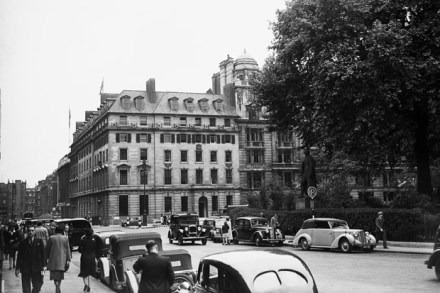
The Royal College of Nursing (founded in 1916 with 34 members, but now with 440,000) is busy celebrating its centenary; and, at its grand headquarters in London’s Cavendish Square, there was another little celebration last week. This was to mark the centenary of a small, short-lived and generally unremembered medical institution, the Anglo-Russian Hospital of St Petersburg, at which some 6,000 wounded Russian soldiers were treated by British doctors and nurses during the last two years of the first world war. These were only a tiny fraction of the millions of Russians killed and wounded in that dreadful conflict, and the hospital was so completely forgotten that it didn’t even get a mention in the ‘Official Medical History of the Great War’.

Long life | 7 April 2016

From our UK edition

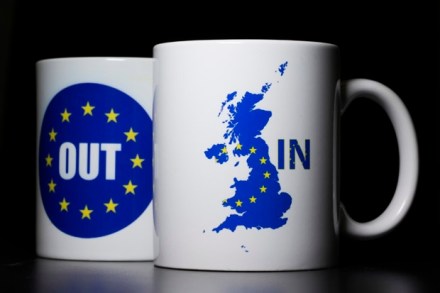
Forgive me if I feel a little depressed at the moment. There are a lot of contributory factors — among them the massacre of my ducks by an otter, the unstoppable rise of Donald Trump, and of course the European Union referendum campaign. This last is especially dispiriting, as I am tired of it already and there are still nearly three months to go before the vote. The first propaganda letter plopped through my letterbox last week, and doubtless it will be the first of many such. It was from the ‘Leave.EU’ campaign and its only effect was to strengthen me in my decision to vote to stay in.

Long life | 31 March 2016

From our UK edition

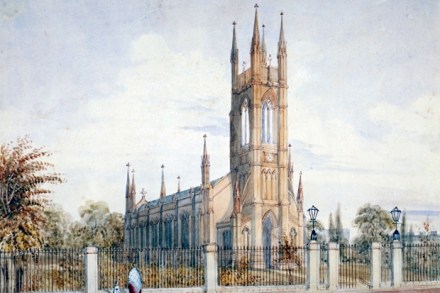
The Parish Church of St Luke in Sydney Street, Chelsea, is enormous. Vaguely reminiscent of King’s College Chapel, Cambridge, it was built in the 1820s to accommodate a congregation of 2,500 people and was one of the earliest Gothic Revival churches in London, with a higher nave than any church in the capital other than St Paul’s Cathedral and Westminster Abbey. It was built at great expense with the help of a government subsidy as a result of the Church Building Act of 1818, by which Parliament allocated funds for building new churches in the urban areas of Britain where populations had greatly outgrown the facilities for Christian worship.

Long life | 23 March 2016

From our UK edition

Apart from the right to life, liberty and the pursuit of happiness, I’ve never known what my human rights are supposed to be. Presumably they include the right to go about my daily business without being attacked, insulted or otherwise abused. But there are many grey areas. Are sudden loud noises or disgusting smells violations of my human rights? And what about the deafening mirthless laughter that I have to endure in British pubs? Perhaps my human rights are changing with age. Am I, at 76, entitled to expect an offer of a seat on a crowded Tube train? Is it my right that somebody should help me with my suitcase when I am carrying it upstairs? I don’t know. Nor do I care. But some people care very much about the deprivation of rights that they believe to be theirs.