Alex Massie

Alex Massie

The Brexiteers have blown it

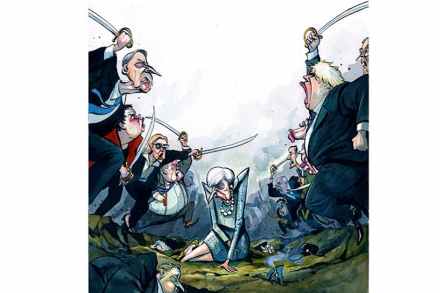
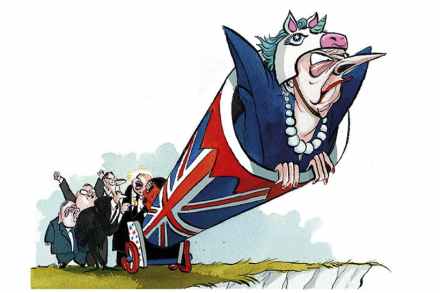
If, as Rod Liddle says, Brexit has been killed there is no shortage of suspects. 75 of them, in fact. That’s the number of Conservative MPs who voted against the Government in last night’s second – but not necessarily final – meaningful vote. They wanted Brexit and then, when they were given it, they decided it wasn’t the kind of Brexit they wanted after all. Fanaticism invariably devours its adherents and so it is with Brexit. The Brexiteers wanted the ball but once they had it they decided they did not actually want it after all. They had their chance and they blew it. All they had to do was vote for the withdrawal agreement. Now they have rejected that, there is little reason to pay them any further attention.
The Brexiteers have blown it | 13 March 2019

If, as Rod Liddle says, Brexit has been killed there is no shortage of suspects. 75 of them, in fact. That’s the number of Conservative MPs who voted against the Government in last night’s second – but not necessarily final – meaningful vote. They wanted Brexit and then, when they were given it, they decided it wasn’t the kind of Brexit they wanted after all.  Fanaticism invariably devours its adherents and so it is with Brexit. The Brexiteers wanted the ball but once they had it they decided they did not actually want it after all. They had their chance and they blew it. All they had to do was vote for the withdrawal agreement. Now they have rejected that, there is little reason to pay them any further attention.
If May’s Brexit deal passes, then her troubles really begin

Brexit is breaking British politics. Both the traditional powers have been shipwrecked by this storm and show no signs of knowing how to repair their ruined timbers. This is the sort of thing everyone understands. If the Tories enjoy more support than Labour this is only because Labour is so very bad. It is not because Theresa May’s Government commands the confidence of the people. In any case, her party is slowly but surely devouring itself over Brexit. Again, everyone knows this.  But what if we’re approaching this from the wrong direction? Instead of observing how Brexit is destroying the Conservative party, perhaps we should wonder if, actually, Brexit has both made and saved Theresa May’s Government. It might be the only thing holding it together.

In praise of the Labour splitters

The first thing to note is that it’s not about policy. The not-so secret seven MPs who left the Labour party this morning have not changed their policy preferences. They have not become Tories. Nor have they even become liberals. They could, with little difficulty, endorse much of the Labour party’s 2017 manifesto without compromising themselves in the slightest. Because this break, this rebellion, this journey into exile, is not about policy. It is about character and values and so many of the other things the Labour party believes it holds dear to the extent it often behaves as though it thinks it owns a monopoly on these things.

In praise of the Labour splitters | 18 February 2019

The first thing to note is that it’s not about policy. The not-so secret seven MPs who left the Labour party this morning have not changed their policy preferences. They have not become Tories. Nor have they even become liberals. They could, with little difficulty, endorse much of the Labour party’s 2017 manifesto without compromising themselves in the slightest.  Because this break, this rebellion, this journey into exile, is not about policy. It is about character and values and so many of the other things the Labour party believes it holds dear to the extent it often behaves as though it thinks it owns a monopoly on these things.

Theresa May’s Brexit deal has come back from the dead

At long last, something changed in the House of Commons tonight; at long last Theresa May had something that could, with only a little squinting or wishful thinking, be considered something close to a good day. Her deal, the withdrawal agreement backed by her Government and agreed with the EU, that seemed moribund less than two weeks ago, has new life. It may not be entirely healthy but it has, remarkably, enjoyed some kind of resurrection.  The choices available to parliament, and by extension the country, are becoming clearer. Now that MPs have rejected the Cooper-Boles amendment that would have placed some obstacles in the path of the default No Deal scenario, we are left with what was always most likely all along: the deal or no deal at all.

Alex Salmond’s arrest is the latest twist in an extraordinary drama

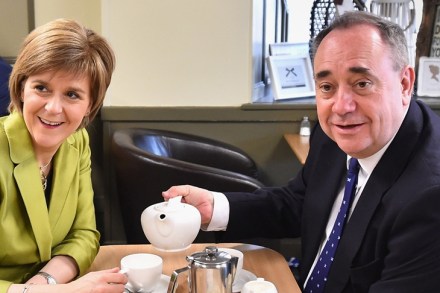
This morning Police Scotland announced that a 64 year old man had been arrested and charged with unknown offences. Not just any 64 year-old man, however, but Alex Salmond, former first minister of Scotland, twice leader of the SNP, and the politician who, more than any other, led Scotland to the brink of independence. Even if Salmond did not quite achieve that, his SNP still replaced Labour as the natural party of government. Salmond will appear in court this afternoon. I wrote about this for last week's Spectator: here is the article.  Amid the wreckage of a Brexit process that has disrupted every aspect of British political life, it is easy to forget that it is not the only drama currently playing.

Who can spare us from this Brexit disaster?

God help us all, because no-one else can or will in these present circumstances. If you wished to apportion some blame for the shambolic state of British politics these days you will not be short of candidates to bear some measure of the opprobrium they all, to one degree or another, deserve. Spare us from Theresa May whose definition of Brexit hemmed her in from the very beginning. Spare us from a Prime Minister who learnt nothing from David Cameron’s failures and continued to prize Tory unity above almost everything else and continued to do so long past the point at which it became obvious to everyone else that Tory unity was both unattainable and, more importantly, undesirable.

Sturgeon and Salmond’s fight to the death

Amid the wreckage of a Brexit process that has disrupted every aspect of British political life, it is easy to forget that it is not the only drama currently playing. Nor is Theresa May the only political leader who has no need to go searching for trouble. Michael Gove openly warns that ‘winter is coming’ for Westminster, but in the north it has already arrived. In Edinburgh, Nicola Sturgeon faces the biggest crisis of her career. It is one that may yet destroy her. Civil war is always uglier than your standard political conflict. We have the First Minister complaining that she is the victim of a ‘smear’ campaign and a ‘vendetta’ launched against her by, astonishingly, her predecessor, Alex Salmond.

Who can spare us from this Brexit disaster? | 16 January 2019

God help us all, because no-one else can or will in these present circumstances. If you wished to apportion some blame for the shambolic state of British politics these days you will not be short of candidates to bear some measure of the opprobrium they all, to one degree or another, deserve.  Spare us from Theresa May whose definition of Brexit hemmed her in from the very beginning. Spare us from a Prime Minister who learnt nothing from David Cameron’s failures and continued to prize Tory unity above almost everything else and continued to do so long past the point at which it became obvious to everyone else that Tory unity was both unattainable and, more importantly, undesirable.

There are few innocent parties when it comes to this Brexit mess

A New Year and the same old mess, only with knobs on this time. If the government cannot be said to be distinguishing itself right now, its directionless meanderings are matched by those of the House of Commons as a whole. Brexit, we were often told, was a means by which 'sovereignty' could be restored to parliament in particular and, more generally, to the great British public itself. On the current evidence, you wouldn’t entrust a tombola to the House of Commons. Last night the Commons demanded that the government avoid a no-deal Brexit. This was, if we are looking for something positive, mordantly amusing. But then gallows humour is about all that’s left to us in these hapless times.

Don’t blame Ireland for beating Britain in the Brexit negotiations

Plámás is an Irish word that lacks a precise English equivalent. It means a special kind of empty flattery, disingenuous praise, or pleasing, but soft-soaping, bullshit, offered the better to smooth over a particular difficulty or advance towards a particular objective. It is the currency, the bread-and-butter, of Irish politics where everyone is a ‘grand man’ or a ‘gas fella’ and all things may be possible, at all times, for all people. You may divide Irish politicians between the natural plámásers (Charlie Haughey, for instance) and those for whom it is a learned but never fluent skill (Garret Fitzgerald). Most of the time, the naturals win. Leo Varadkar is not a natural.

Ditching Theresa May achieves nothing

Theresa May has failed. That is no longer in doubt. Nor is there any prospect of resurrection. Her credibility within the Conservative party, the House of Commons, and the country at large is shot. The only thing propping up her Government is the fear that allowing it to collapse completely would invite Jeremy Corbyn into Downing Street. That, for the time being, is something even this deranged iteration of the Conservative party is not prepared to countenance. As a matter of party politics, May has been on some kind of unofficial probation ever since last year’s disastrous general election. In office, certainly, but only tolerated grudgingly.

The moment Theresa May sealed our Brexit fate

Theresa May is in Scotland today which is one way of ascertaining the depth of the hole in which she finds herself. One day, prime ministerial visits to Scotland – or, indeed, to Northern Ireland or Wales – will cease to be considered newsworthy events in their own right. Until such time as they are not rarities, however, they are doomed to be seen as gestures. A whistle-stop tour of the United Kingdom’s northern and western extremities is not enough, no matter how much the Prime Minister might enjoy a day or two away from the Westminster snake-pit. This visit, like so many others, will be an occasion for saying at least some of the right things but it will not make any meaningful difference to anything that is actually meaningful.

The moment Theresa May sealed our Brexit fate | 28 November 2018

Theresa May is in Scotland today which is one way of ascertaining the depth of the hole in which she finds herself. One day, prime ministerial visits to Scotland – or, indeed, to Northern Ireland or Wales – will cease to be considered newsworthy events in their own right. Until such time as they are not rarities, however, they are doomed to be seen as gestures. A whistle-stop tour of the United Kingdom’s northern and western extremities is not enough, no matter how much the Prime Minister might enjoy a day or two away from the Westminster snake-pit. This visit, like so many others, will be an occasion for saying at least some of the right things but it will not make any meaningful difference to anything that is actually meaningful.

Jeremy Corbyn is as deluded about Brexit as Jacob Rees-Mogg

Now that the coup of the plastic spoons appears to have failed – Jacob Rees-Mogg and his accomplices could not even synchronise their pocket-watches – Theresa May finds herself back where she has been all along: strengthened by her weakness. This is a remarkable situation for any prime minister but not, for May, an unprecedented one. It helps that her enemies are so utterly incompetent. The sallow men of the European Research Group are not only not a government in waiting but not a collection of kingmakers either. Just as Voltaire quipped that the Holy Roman Empire was in fact none of these things, so we may say something similar about the ERG. But, in fairness to the Moggists, they are not the only group suffering from delusions of influence.

Jeremy Corbyn is as deluded about Brexit as Jacob Rees-Mogg | 21 November 2018

Now that the coup of the plastic spoons appears to have failed – Jacob Rees-Mogg and his accomplices could not even synchronise their pocket-watches – Theresa May finds herself back where she has been all along: strengthened by her weakness. This is a remarkable situation for any prime minister but not, for May, an unprecedented one.  It helps that her enemies are so utterly incompetent. The sallow men of the European Research Group are not only not a government in waiting but not a collection of kingmakers either. Just as Voltaire quipped that the Holy Roman Empire was in fact none of these things, so we may say something similar about the ERG.  But, in fairness to the Moggists, they are not the only group suffering from delusions of influence.

The Tories deserve a lengthy spell in opposition

Brexit has many theme tunes but the Rolling Stones’ “You Can’t Always Get What You Want” is as good as any. If only the Brexiteers could understand this; if only they could grasp that compromise means exactly that. But, consumed by their own monomania, they cannot for they are blind to everything except their own convictions.  Jacob Rees-Mogg, a man evidently guilty of believing too much in his own fan mail, sonorously declares it is time for Theresa May to go. Nick Timothy, a courtier whose chutzpah has few equals in recent British political history, decries what he terms the Prime Minister’s “capitulation” to Brussels or, as some of us view it, reality.

A bad Brexit deal was inevitable

Well, what did you expect? I appreciate this is a question the Brexiteers are manifestly incapable of answering but that says more about their preconceived notions of what Brexit could reasonably deliver. It is a reflection, too, of the manner in which there have always been two different kinds of Brexit.  There has been the Brexit of dreams and the Brexit of reality. The Brexit of psychology and the Brexit of technical policy detail. There has always been an obvious tension, to put it mildly, between these two positions and it is not anyone else’s fault that in pursuit of their dreams the diehard Brexiteers decided the detail could all be arranged to Britain’s supreme satisfaction and everyone else would fall into line.

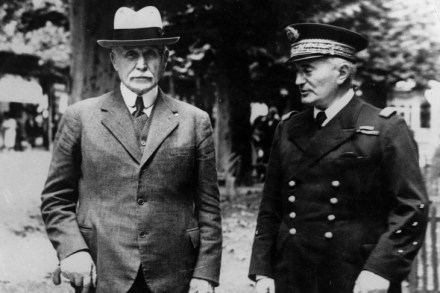
Should France honour Nazi collaborator Petain?

This weekend, of all weekends, is a moment for reflection. The eleventh hour of the eleventh day of the eleventh month will be a real thing. One hundred years on, but remembered all the more because of that. Here, as all across Europe, the centenary of Germany’s capitulation will be marked by the customary services of remembrance. The Great War was not, as it turned out, the war to end all wars but the shadows it casts are with us still.  And in France there is fresh “controversy”. President Emmanuel Macron announced he would honour Marshal Philippe Petain for his part in the saving of France. The Marshal was not the only man to do this but he was the pre-eminent hero nonetheless. That was 1918, however, and what came later is a different, and complicating, thing.