Alex Massie

Alex Massie

The pestilence of Brexit and the failure of the political class

The latest confirmation of the sickness evident in British politics these days comes courtesy of political scientists at the universities of Edinburgh and Cardiff whose latest research reveals, once again, the risks voters from across the great Brexit divide are willing to accommodate in pursuit of their preferred political objectives. Fully 71 per cent of Leave voters in England (and 60 per cent in Scotland) think the risk of violence against MPs is a 'price worth paying' for Brexit. It is important to note that the research, conducted as part of the long-running 'Future of England' project led by researchers at the two universities does not ask if voters would approve of violence directed against Members of Parliament.

Nicola Sturgeon’s Brexit bounce

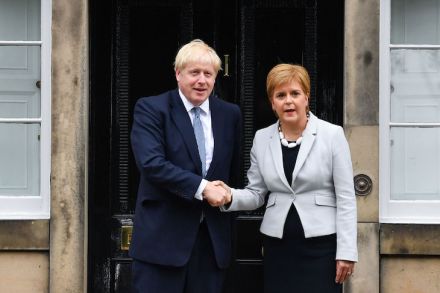
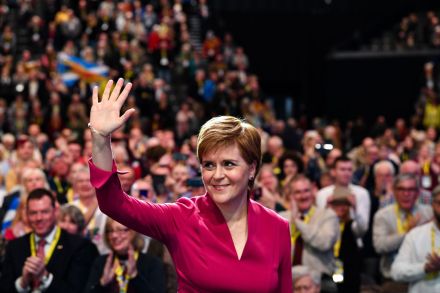
There was a fairytale quality to Nicola Sturgeon’s speech to the SNP conference this afternoon. On the one hand, she demanded a second referendum on independence next year; on the other, almost no-one in Scottish politics really believes there will be a referendum next year. In tandem with this rallying call for national liberation – an emancipation made ever more urgent by the looming Brexit fiasco – there ran another line of argument: conference delegates, like the wider nationalist movement, must be careful and canny and patient. Which is another way of saying that, whatever the headlines suggest, it’s probably not happening. At least not yet.

The stunning modesty of the Supreme Court

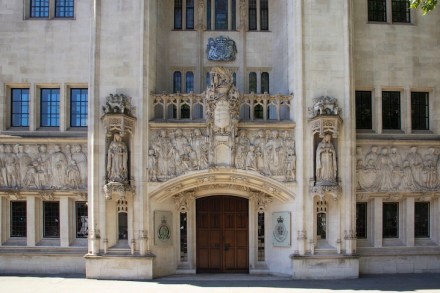
'The king hath no prerogative, but that which the law of the land allows him'. So James VI & I was told by the courts in 1611 and so Boris Johnson has, in effect, been told today. There is something weighty, something dignified, about that. The Supreme Court’s ruling this morning, upholding the Court of Session’s earlier ruling on the lawfulness or otherwise of the government’s attempt to prorogue parliament, should be welcomed by everyone, be they a Leaver or a Remainer.  Brexit, and its rights or wrongs, is both at the heart of this case and tangential to it. At the heart because Brexit, the greatest constitutional kerfuffle of our lifetimes, renders these extraordinary times, and extraordinary circumstances justify extraordinary actions.

What happened to the Conservative Party?

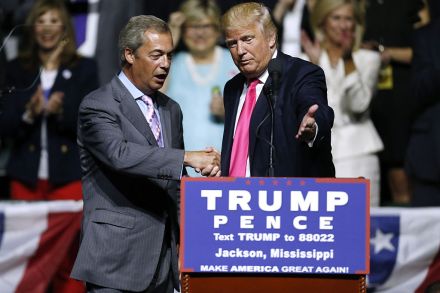
So now we know. There is no point in denying it and no advantage in wishing away plainly observable reality. The Conservative and Unionist party that exists today is not the Conservative and Unionist party of old. In spirit, and increasingly in personnel, it is now closer to Nigel Farage and the Brexit party than the traditions of the strain of One Nation Toryism Boris Johnson professes to embody. That is the obvious lesson to be drawn from the expulsion of Ken Clarke, Philip Hammond, David Gauke, Rory Stewart, Greg Clark, Nicholas Soames and the rest of the 21 Tory ‘rebels’ who voted against this already-rickety government this week. A Tory party that not only has no room for them but actively pushes them away is not a broad church, it’s closer to a cult.

What is the point of these prime ministerial statements?

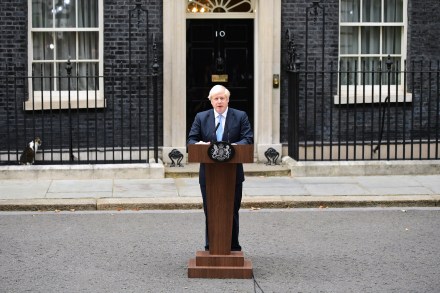
I know I can’t speak for your circumstances but I hope you’re enjoying this Festival of Brexit as much as I am. The country hasn’t endured this kind of dismal government since the last one and, sweetly, the opposition is just as inspirational and attractive as it was then too. Yet again, nothing has changed. Say what you will about Boris Johnson however – and I suppose there’s plenty you could – no-one can deny he possesses the priceless ability to spraff on and on with stuff he, even he, must surely know is nonsense on a zip wire. On Monday evening he charged out of Downing Street - rather with the air of a startled Number 8 it must be said – to tell an expectant nation that he shared their impatience.

Ruth Davidson’s true enemies have always been in her own party

Ruth Davidson is on the brink of resigning as leader of the Scottish Conservative and Unionist party. As I write this, party sources are making it clear there will be no statement on her future this evening. The absence of an immediate, dismissive, denial, gives greater credence to the suggestion that she will resign soon. Not everything is about Brexit and this is one of these things that is not entirely about Brexit. For some weeks now Davidson’s future has been the matter of some whispering at Holyrood. Very quiet whispers but whispers nonetheless. Earlier this summer one of her closer colleagues speculated to me about her future. Ruth wasn’t at the top of her game, he said, and worse her heart didn’t seem to be in it either.

Ben Stokes, hero of the new miracle of Headingley

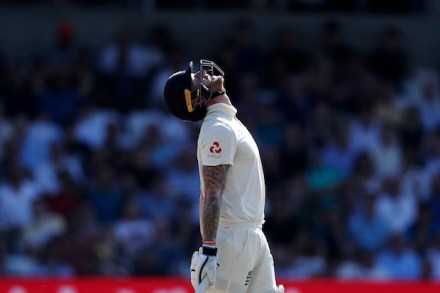
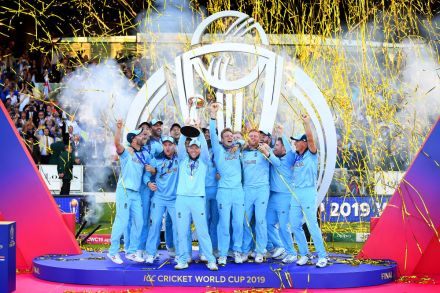
The Oval, 1902. Headingley 1981. Melbourne 1982. Edgbaston 2005. And now Headingley 2019. Move over Sir Ian Botham, you’ve got company and there’s a new king in the north. This astonishing, heart-stopping, game will forever be remembered as Stokes’s match and recalled for as long as test cricket is still played and savoured. For a game perpetually teetering on the edge of crisis, cricket’s in pretty good shape when it comes at you like this. Ben Stokes has now, as everyone agrees, played two once-in-a-lifetime innings in six weeks. The World Cup final was one thing; this was improbability on an altogether different, still more elevated, level. England’s final pair, Stokes and dear Jack Leach, added 76 runs to see England home.

The magic and mystery of English cricket

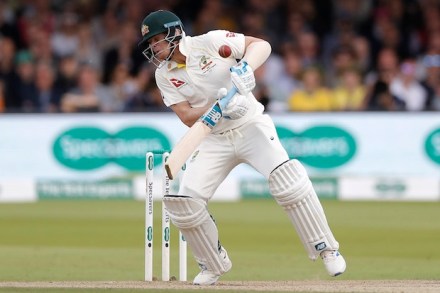
Nothing in cricket is quite as visceral, even quite as primeval, as the confrontation between a batsmen of the highest class and a bowler of the greatest velocity. Sometimes, as with a Colin Croft or a Charlie Griffith or Lillee and Thomson at their snarling fastest, this can be streaked with nastiness. Broken bones and shattered confidence is part of the point; the goal of the matter. But sometimes it is just different; somehow purer. Mike Atherton’s famous confrontation with Alan Donald falls into that category. And so to Saturday at Lord’s, always the highlight of the English summer, but rarely, even in the long history of the famous old ground, quite as compelling as this.

Can Boris Johnson find a pro-Union, pro-Brexit message?

In yesterday’s Evening Blend newsletter – to which you should sign up – Katy Balls concluded that 'If the Conservative party is going to continue to prosper in Scotland' Boris Johnson and Ruth Davidson must, between them, 'find a way to pitch a pro-Union, pro-Brexit message – and fast.' Well, indeed. The problem, though, is that outside a relatively small number of fishing communities, there is no obvious pro-Union, pro-Brexit message to be deployed and certainly none that seems likely to prove persuasive. The results of the Brexit referendum rather confirm this. Scotland, as you may have heard, rejected Brexit. True, this was a pan-UK referendum in which the overall result was all that mattered.

How English cricket can capitalise on the World Cup win

What next for English cricket? The first and most immediate answer is also an age-old one: thump the Australians in the forthcoming Ashes series. The second answer, which is more difficult to achieve, is: don’t waste this moment.   English cricket staked a lot on winning the world cup. The tournament will not be held in England for another 20 years if, indeed, it is ever held here again. For four years, this has been the target. For the first-time, and not without some controversy, the interests of one-day cricket were placed ahead of the traditional test format. To risk so much and still fail would have been a calamity.

The shame of Donald Trump’s British acolytes

Why does the right hate Britain so much? That’s one of the questions arising from both the leaking of Kim Darroch’s diplomatic cables and, more pertinently, the reaction to the entirely unsurprising contents of those cables.  Sir Kim’s appraisal of Donald Trump’s administration are not very different from those made by other sentient beings. Suggesting Trump’s White House is chaotic and inept and all kinds of dysfunctional hardly counts as news. Everyone knows this because everyone can see it.  And yet, remarkably, it is the British Ambassador to Washington who finds himself subjected to an artillery barrage of humbug and absurdity.

Boris’s backers have a lot to answer for

In today’s Times, a “long-standing friend” of Boris Johnson complains that “there’s a tendency to infantilise Boris”. Putting the man who still looks likely to be the next leader of the Conservative and Unionist party and prime minister of the United Kingdom of Great Britain and Northern Ireland under a form of, well, house-arrest must have seemed like a good idea at the time. After all, the race is his to lose and can only be lost by him. “Clearly”, the chum adds, “there was a need to protect him but it went too far”.  This seems revealing. A number of questions arise. First, *why* do people feel inclined to “infantilise” Johnson?

If Boris’s supporters don’t trust him, why should the rest of us?

Is this the best the Conservative and Unionist party can do? Really? The extraordinary thing about Boris Johnson’s campaign to become the country’s next prime minister is that even the people supporting him do not think he’s up to the job of being prime minister. The best that may be said of him is that he may defeat Jeremy Corbyn though, frankly, I wouldn’t want to bet on that.  But, his friends and allies say, you can set aside your concerns about Johnson’s suitability for the highest political office in the land. He will have help, you see. He’ll be surrounded by good people – though this is also something we are asked to take on trust – and they will limit the damage he can reasonably be expected to cause.

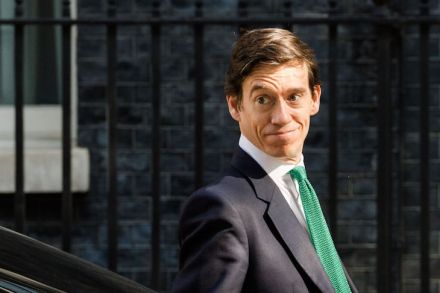
The refreshing ridiculousness of Rory Stewart

'You will hear of him at little forgotten fishing ports where the Albanian mountains dip to the Adriatic. If you struck a Mecca pilgrimage the odds are you would meet a dozen of Sandy’s friends in it. In shepherds’ huts in the Caucasus you will find bits of his cast-off clothing, for he has a knack of shedding garments as he goes. In the caravanserais of Bokhara and Samarkand he is known, and there are shikaris in the Pamirs who still speak of him round their fires. If you were going to visit Petrograd or Rome of Cairo it would be no use asking him for directions; if he gave them, they would lead you into strange haunts. But if Fate compelled you to go to Lhasa or Yarkand or Seistan he could map out your road for you and pass the word to potent friends.

Ditching Jeremy Corbyn won’t solve Labour’s woes

If the United Kingdom is going to leave the European Union – which, thanks to the Brexiteers who keep voting against Brexit in the House of Commons is no longer as certain as it once seemed – it can at least say that it went out with a crash, a bang, and one heck of a wallop. Britain’s elections to the European Parliament were never as entertaining as this. In that respect, for once the best was saved for last.  If the Tories had a thoroughly miserable night it was also a battering they deserved. The Conservatives decided to make themselves the party of Brexit and then failed to deliver Brexit. The Prime Minister must take her portion of blame for that but so must the backbenchers who voted against the withdrawal agreement she negotiated.

Anyone but Boris

If Boris Johnson is, once again, the answer it is worth asking what the question can be. The simplest response must be that he is, at least as far as some Conservative MPs are concerned, the man most likely to save their jobs at the next election. But a better question, for the country anyway, would be to ask if Boris Johnson is fit to be prime minister?  And the answer to that is obvious. We are asked to believe that, despite being a conspicuous failure at the foreign office, Johnson could be a plausible prime minister. But what, precisely, in Johnson’s history gives anyone confidence he might be a fit and proper prime minister? That the same question might be asked of Jeremy Corbyn and receive precisely the same answer in no way advances Johnson’s claims.

Nicola Sturgeon’s play for time

Nicola Sturgeon is a reader and, to judge by the statement she has just made to the Scottish parliament on the implications of Brexit for Scotland’s future, the book she’s been reading lately is ‘The Gentle Art of Letting People Down Gently’. The people being, in this instance, the SNP members preparing to attend the party’s conference in Edinburgh this weekend. Of course many headlines will focus on her suggestion that Scotland should, given the wreckage of Brexit and the manner in which Scotland still faces being withdrawn from the EU against its will, enjoy a new referendum on independence before the next Holyrood elections in 2021. That is a possibility that must always remain on the table. And it might happen yet.

We won’t see the like of Billy McNeill again

Certain deaths unavoidably feel like the closing of an era, the final confirmation that what has been and gone can never return. One such is the passing of Billy McNeill, whose death, at the age of 79, was announced this morning. The Celtic captain, skipper of not just that club’s greatest side but of the finest team that ever emerged from Scotland; the only Scottish team to win the european cup and the first British side to do so, was one of a kind. All football clubs cherish their heritage but few more devoutly than Celtic. If the club’s penchant for underdog status sits oddly with its remarkable record of achievement – Celtic will soon win the Scottish championship for a fiftieth time – it still reflects something real.

A second referendum is a big risk but it’s the only solution

You would need a heart of stone not to laugh at the predicament in which Jacob Rees-Mogg and his fellow travellers in the European Research Group now find themselves. Happily I am not so encumbered. Having spent months decrying the withdrawal agreement negotiated with the European Union the Moggists now find themselves forced to think about backing it for fear nanny may otherwise bring something worse to the table.  Well, other than anyone capable of observing the facts of Brexit life, who could have predicted this? Who could have recognised that, from the perspective of the Brexiteers themselves, half a loaf is better than no bread at all?

A changing Britain needs to ask: what kind of country do we want to be?

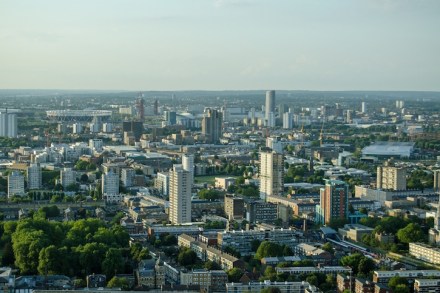
After Christchurch, I found myself thinking about East London. Not because I was wondering if it could happen here because, frankly, of course it could but because what’s happening in East London is going to change Britain and, because of that, is going to have to change the way we think about this country. Consider a pair of pioneering schools in East London. Last year pupils at Brampton Manor academy, most of them from ethnic minorities, received 41 offers from Oxford and Cambridge. Another Newham school, the London Academy of Excellence has a claim to be the best-performing sixth form college in England. While selective, around half its places are filled with pupils from one of London’s poorest boroughs.