Aidan Hartley

Aidan Hartley

Aidan Hartley is the Spectator's Wild Life columnist.

Wild life | 24 August 2017

Indian Ocean coast Like most men I wonder if I have been much good as a father, but one thing I got right was that I gave our children, Eve and Rider, the Indian Ocean. Before they could even walk my Claire taught her babies to feel happy splashing about in the sandy coral pools below my mother’s house, and this was where she taught them first to swim. They were still tiny, with curly blond locks, when they ran at the roaring breakers on the beach, getting completely lost in the white foam, then bobbing up to the surface with squeals of delight. They made up names for waves: small ones were ‘tippitisers’, a big one was an ‘abragabir’ and a huge one was called ‘Mickey Mouse Club’. They both grew up winning swimming races at school.

Wild life | 27 July 2017

Kenya   We are on the beach, where our home is full of dystopian stories. My daughter Eve is whizzing through her A-level summer reading list, and as we share her books around we all have our noses in post-third world war Australia, the Republic of Gilead, in a submarine London and totalitarian future states. The novelist Lionel Shriver, an author of dystopias herself (with whom I once shared a house in Nairobi, before she called me a ‘spiritual pygmy’ in the dedication of her book Game Control ) says, ‘The greatest joy of dystopian fiction is that it’s make-believe. We can experiment with disaster imaginatively, close the book, then mix that martini.

Wild life | 29 June 2017

Laikipia, Kenya   During our evening walk on the farm, Claire kept looking around nervously instead of engaging in conversation. At one point the dogs ran ahead, probably thinking that they were after the scent of a rabbit. Seconds later, they tore back past us, leaving a trail of dust, and heading after them came a bull elephant moving at quite a pace, trunk up, ears flapping. Claire took off after the dogs and I followed, briskly but grumpily. I had been irritated by Claire’s anxiety in the bush, excited by the story of an incident that had happened a few days before, when an elephant had charged and completely flattened a man on the plains nearby. It was probably the same elephant and, I grudgingly had to admit, she was right.

Wild life | 1 June 2017

The guests at my brother-in-law Rick’s 70th birthday lunch party were distinguished, silver-haired, well heeled. Long before Rick rescued the Rothschild’s giraffe from extinction, and did so many other things for wildlife conservation in Africa, I remember him and his friends in the 1970s. The chap sitting opposite me at table, now big in IT, had once been a hard-core hippie with heavy-lidded eyes like the stoned rabbit in Magic Roundabout. A coffee baron, now discussing ‘aromatic compounds’, once wore a headband, blue-tinted shades and hair down to his bum, and a man who is today a company chairman I picture still in his Afghan fur-trimmed coat, going barefoot.

Wild life | 4 May 2017

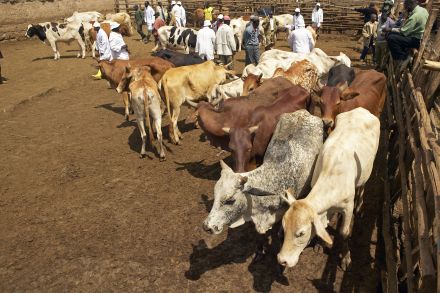
Laikipia, Kenya On my way home to the ranch, I stopped for a beer with my neighbour Martin. It was twilight and large herds of cattle were being brought into the yards around Martin’s house for the night. Pokot militias had been attacking for days, trying to rustle cattle and shooting at anybody in sight. Gunmen had a few days before shot Athaju Eloto, one of Martin’s farm workers. Doctors extracted a bullet from near Eloto’s spine but he later died. The bandits had also killed a police officer on the farm during operations to remove the attackers. In a nearby village full of smallholders, Pokot attackers had murdered a policeman and taken two others hostage; their bodies were later discovered burned and stripped of weapons and uniforms.

The lords of poverty

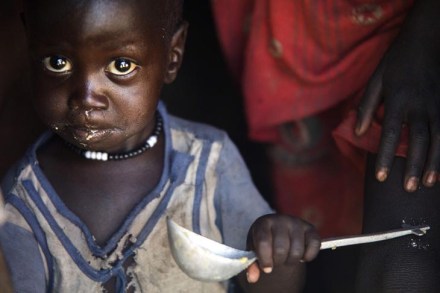
 Kenya I met Dr Tom Catena in Sudan’s Nuba Mountains — the site of an African war and famine few have even heard about — in a hospital overflowing with children. I saw bombs had ripped away their arms, flying shrapnel had taken out a baby’s eye, anti-personnel mines had shredded legs to jagged bone and ribbons of gangrenous flesh, infants suffering kwashiorkor and the other horrors of malnutrition. Inspired by St Francis of Assisi, ‘Doctor Tom’ has worked almost every day, all day, since he arrived as the only surgeon for the Catholic hospital in Nuba nine years ago. I asked him: ‘Why do you stay?’ He replied: ‘There’s no other option. You leave and abandon everyone here or you stay and keep going.

Wild life | 6 April 2017

Laikipia, Kenya   For weeks the farm has been in the eye of a storm, with violence swirling all around us in clouds of dust kicked up by multitudes of cattle. Last week to the west, tribal invaders burned down Kuki Gallmann’s tourist lodge overlooking the Mukutan Gorge. On Sosian ranch to the south our neighbours are bravely pushing on a month after the invaders murdered Tristan and burned down several homes. To the east on Suyian ranch, Anne’s safari lodge — the loveliest camp I ever saw in Laikipia — also lies in ashes. To the north invaders are still poaching elephant, as they are everywhere around us, spraying bullets into their legs and then hacking out the tusks.

Wild life | 9 March 2017

Laikipia On Tristan Voorspuy’s hell-for-leather riding safaris across Kenya’s savannah, he cracked a bullwhip at predators that tried to eat his guests. One time a lion chased American actress Glenn Close on her horse and Tristan said, ‘We nearly lost her.’ They all joked about it that night around the campfire. Tristan was among the last of the stylishly mad people in Kenya. He once rode his horse into the bar at the Muthaiga Club during a stag party. From the saddle, he toasted the groom, his steed defecated on the parquet and off he trotted between astonished drinkers into Africa’s night. Tristan was a gentleman and well read.

Wild life | 9 February 2017

 Laikipia plateau, Kenya My great-grandpa Ernest Wise was an engineer who sailed to South Africa towards the end of the 19th century to build Cecil Rhodes’s Cape-to-Cairo railway. Although that project never took off, he decided to stay on in the continent — and he prospered. A cousin recently sent us a photograph of Ernest and his six children, taken in the 1890s at his home in Pretoria. Ernest wears a humorous expression and he looks as if he is about to speak to me, still in Africa 130 years later. I imagine him saying, ‘What, my boy — still there?’ The Wise family image is among the photographs and paintings at home on the farm in Laikipia that we have started to move to safer ground elsewhere.

Wild life | 12 January 2017

We had my parents-in-law Gerry and Jean to stay with us on the farm over Christmas and being in a remote place in Africa, things often go wrong. A few days into the festivities the solar-powered electricity broke down and so did the solar water-heater. As we sat in darkness, after cold showers, Gerry said, ‘It reminds me of Ronnie and Doreen.’ In 1968, Gerry said, he was working for Kellogg’s, selling cornflakes all over the British Isles, Jean was raising two children and they lived in a semi in Billingshurst. Ronnie next door used to fiddle the electric meter. He offered, ‘Shall I do yours, Gerry?’ ‘No thank you, Ronnie,’ said Gerry, who has played a straight bat all his life.

Wild life | 8 December 2016

 Kenya I realised I had fallen from grace when we were dropped from the Queen’s birthday party guest list at the British High Commission in Nairobi. I wondered what offence I had caused to the recently arrived plenipotentiary. I worried that it was because one evening, while jogging in the diplomatic suburb of Muthaiga, I had passed him going at a slack pace and barked, ‘Giddy up!’ I have always been so fond of our British HCs. I picture them to be like Waugh’s ambassador to Azania, Sir Samson, less engrossed with unfolding revolutions outside than with playing with his rubber dinosaur at bath time, which he sat on ‘and let it shoot up suddenly to the surface between his thighs ...

Wild life | 17 November 2016

 Aero Club of East Africa   The world looked so clean and untroubled during the flight in Bob’s light aircraft to George’s memorial at the Aero Club of East Africa. It was a relief to get away from the farm for a few hours. On 27 October a mob of 300 Samburu warriors armed with spears and knives cut down our boundary fences and invaded with 10,000 cattle. Since then they’ve hurled javelins and rocks at us, flattened pastures to dust, destroyed 15 kilometres of fencing, smashed windows, demolished huts, robbed what they could, cut water pipes, broken machinery and threatened our staff with murder until half of them ran for their lives. For days before the invasion we received calls from friends saying that politicians were urging the mob to hit us.

Wild life | 20 October 2016

Kenya A woman’s bottom cheered me up recently. The lady was walking ahead of me in a Kenya street and she was wearing a kanga — a local garment worn like a bath towel and printed with colourful geometric designs. A kanga is traditionally emblazoned with a Swahili proverb or scrap of esoteric advice, making it a bit like a wearable fortune cookie. This one had written neatly across it: Huwezi kula n’gombe mzima halafu ukasema mkia umekushinda — which roughly means, ‘Don’t eat a whole cow and then say you’re defeated by the tail...’ Persevere! Never give up! That was the message I took home to the farm. I became a farmer in Kenya almost by mistake.

Wild life | 22 September 2016

Laikipia   For a rancher north of Mount Kenya, a man’s best legacy might be a good bloodline of Boran beef cattle. For years I wanted to buy a bull from George Aggett. His Borans are wide and deep and they are natural polls, that is, they are born hornless. George’s grandfather settled on the Laikipia plateau in 1920 and for nearly 100 years the Aggetts had kept almost a closed herd. I heard they never, ever sold bulls, and so it took me a long time to pluck up courage to approach George, an ex-Royal Marine with steely eyes and a fighter’s frame. When we acquired our first few cows a long time ago, the craggy man who sold them to us observed (and it was not a question), ‘You’re not a proper farmer.

Wild life | 25 August 2016

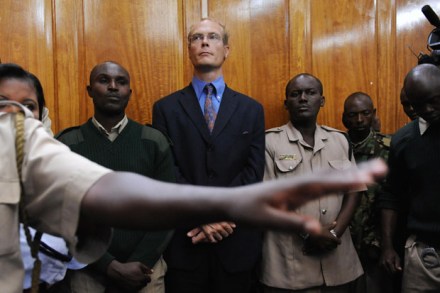
Kenya When the late Tom Cholmondeley walked into his cell after being accused of murder in Kenya’s Rift Valley, etched onto the wall were the words Ubaya ya jela ni kishoga — Swahili for ‘the worst of jail is buggery’. During an incarceration of 41 months in Kenya’s Kamiti Maximum Security Prison he endured both squalor and terror: men beaten to death, hunger, 92 inmates to a single latrine bucket, cold, dirt, rats, lice and bedbugs — which leave a line of three bites known as breakfast, lunch and dinner. While facing the death penalty or life imprisonment, he saw his two young sons for just 30 minutes a time on two occasions due to prison rules that disallowed visits by children.

Wild life | 14 July 2016

Gilgil, Kenya   At our Gilgil hut in the Rift Valley I’ve had a new flower garden planted to welcome my wife Claire home from England. Here at 7,000 feet in Africa, temperate and tropical species grow together: roses and aloes, pears and bananas. In midwinter, when she went under the knife, I was back in Kenya, trucking in gardenias, honeysuckles and hydrangeas. During springtime in her chemotherapy pod, as the red liquid dripped into her arm, I was talking with our landscaper Eileen about marguerites, birds of paradise and camellias. When Claire was pinned down by radiation earlier this summer, at our hut the rains were drenching new lilies, the giant iris, lavender and buddleias. Now at last she’s home. In some ways Claire prefers Gilgil to the ranch.

Wild life | 16 June 2016

Kenya As soon as I pulled out of town, I knew I had made a mistake taking on the new Chinese road through the badlands after dark. The route into northern Kenya was still under construction, making it an assault course of bumps, diversions and zigzags between mounds of murram. I made what speed I could in the Cruiser but on a lonely stretch of track I saw the flicker of brake lights up ahead and slowed to a dawdle behind a black city car. I was two minutes into Tannhäuser ’s rousing ‘Pilgrims’ Chorus’ on the stereo up loud and wanted badly to overtake when to my right I saw red sparks and heard the report of a rifle. A bandit ambush! I floored the accelerator and out of the corner of my eye I saw the flash of a second shot.

Wild life | 19 May 2016

   Nairobi The gangsters hadn’t heard of Brexit. ‘What is this “Breaks it”?’ they asked my friend hours after kidnapping him at gunpoint. At dusk my mate had been driving in Nairobi, with the Wings song ‘Band on the Run’ playing. He pulled over to answer his mobile when a man appeared at his side with a pistol. After letting him and two others get in, my friend was directed to an insalubrious Nairobi postcode, frogmarched up five floors and then beaten on the arms and knees with a golf putter. Big Gangster emptied his pockets and went carefully through his iPhone emails, messages and contacts list. ‘They got to know where I worked, where I lived, everything.

Wild life | 21 April 2016

   Laikipia I sip my Tusker beer on the veranda, staring at the elephant. He’s not the elephant in the room. He’s the elephant on what should be my croquet lawn. I thought he might go away, but he hasn’t. Instead he’s brought his friends — more and more of them as time goes by. They say the elephant will become extinct within a few years. Across Africa, poachers are decimating elephants — just not here, where they apparently feel safe enough to crap on my sward. Today, the fashionable argument promoted on Twitter, and followed by princes and prime ministers, is to burn all stockpiles of seized ivory in the world. This, they argue, will help shut down the illegal trade in ivory.

Lost in translation | 31 March 2016

Trencherman was first published in Afrikaans in 2006 and translated into English for a South African readership shortly afterwards, but has only now found a UK publisher. Eben Venter — one of the notable voices in white South African writing post-Apartheid — has been ‘temporarily’ based in Australia for more than two decades, but returns to his home for stories. You can see why. After Disgrace, J.M. Coetzee emigrated to Australia — and hasn’t published a decent novel since. He evacuated his subject. For Africa-born whites, the one thing worse than staying is leaving. The left brain urges you to settle in a safe economy with prospects, where the right brain dies.