Aidan Hartley

Aidan Hartley

Aidan Hartley is the Spectator's Wild Life columnist.

Another plague is enveloping the world – locusts

As if 2020 hasn’t already scared the hell out of us all, a plague of locusts is upon us. When I first witnessed a swarm swirling across my farm in Kenya, it was hard to see them in the nightmarish way they’re depicted in Exodus or the Book of Revelation. They were millions of pink and golden Tinker Bell fairies, flying in a halo around the sun, filling the air with the sound of rustling skirts. But the breeding cycle of a locust is only a few months and they are growing in numbers exponentially. Soon, it’s predicted, we will see individual swarms equivalent to the size of London, each of which consumes as much food as half the population of the United Kingdom on a daily basis.

Why we’ll all be fleeing to Nigeria

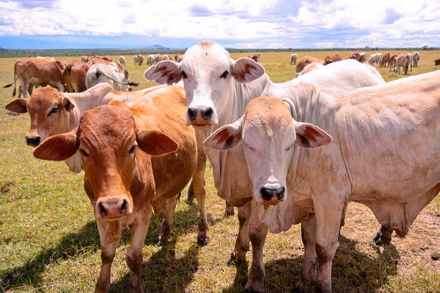
I keep thinking what I’ll do when we regain our liberty — and I picture that beer at the end of Ice Cold in Alex, when after surviving his trek through the Sahara, a sweaty John Mills traces his finger up the frosted schooner, drinks the golden liquid down in one and says: ‘Worth waiting for.’ A month ago I had big ambitions for the future at home on the farm in Kenya. We were planting thousands of avocado trees, we were about to start rearing organic broiler chickens, there was a tilapia farm to expand, a new dairy project, and preparations for the Nairobi livestock breeders’ show later this year, when we hoped to compete with a string of Boran beef cattle. The event was cancelled and all my farm plans were delayed when the flights home to Kenya were closed.

The 10,000th

40 min listen

This week, the Spectator commemorates its 10,000th edition. On the podcast, Cindy Yu speaks to David Butterfield and Fraser Nelson about the magazine's two centuries of history, finding out about how the publication started, discussing whether it is still the same now as it was originally intended, and hearing about what David calls its 'industrial drink culture'. Find out more about the history of the magazine with David's new book, 10,000 Not Out. Also on the podcast, Cindy speaks to James Forsyth and former Director of Comms at No 10, Craig Oliver. As James writes in the issue this week, when Boris Johnson comes back to work, he returns to a split Cabinet and a difficult decision - how and when to ease the lockdown?

Virus deaths may not be the greatest challenge ahead for Africa

Red roses are hardly a priority for people in a virus-wrecked global economy, and one day recently the world’s flower market pretty much collapsed. At the vast Aalsmeer auction in Holland, there were scented mountains of unsold roses, gerberas and tulips. Some last stems still find their way into bouquets across a world that has cancelled all gatherings except funerals. But in the coming months, cut flowers might become a sight as rare as bananas were for children in the Blitz. This story is a disaster for Kenya, my home country, which was until last month a top flower exporter. While western states repurpose their economies towards becoming vast hospitals, Africa is too poor to cope with the medical emergency, and virus deaths will probably not be the greatest challenge ahead.

Our exile in NW1

Laikipia The sweetest sound to me now is the dawn chorus of birdsong at home on the farm. I lay awake in bed and listened, as a light rain fell on the coconut thatch above me. When I walked out into the garden the three dogs burst out of the house to go off exploring. While I made coffee in the kitchen, our cats Omar and Bernini rubbed against my legs until I fed them and then in walked Long John Silver the orphaned calf, looking for a bowl of milk. I headed out to the crush where the herds were coming in to be dipped. Cattle were mooing, the sheep were bleating and the cowhands were whistling and shouting. With dew sparkling on the grass and the air alive with the hum of bees, I felt so grateful to be here. Home.

Africa’s invisible epidemics

Africa   ‘Ah, Africa,’ the French scientist sighed contentedly. This was 1995 and all around us was an Ebola epidemic ravaging Kikwit, a village in what they now call the Democratic Republic of Congo. ‘No lawyers to sue us!’ I had just asked him why doctors in the local hospital ward had shown me Ebola victims, lying in beds next to patients suffering milder diseases. In the Kikwit outbreak, the hemorrhagic fever killed eight out of ten people infected — 245 in all. People became sick after kissing and hugging the bodies of their loved ones at their funerals.

What our 500kg house bull taught us about the value of life

Death and failure are more integral to farming than any other experience that I’ve witnessed in my life. Some things are out of our hands — like the plagues of desert locusts heading our way from Ethiopia, promising to devour all our green pastures within hours of their arrival. Other things are within our power, such as the life of our animals who, though we want them to be contented during their stay on the farm, are mostly headed towards one inevitable end. Seconds after one of our Boran cows gives birth, she will begin to nuzzle her calf who will quickly stand and suckle its mother. It’s harder when a heifer is calving for the first time because she is more prone to reject her calf.

My narrow escape from a burning aircraft

Addis Ababa airport   This morning I caught a connecting flight via Addis Ababa’s Bole airport. For me this place has always been like a magical wardrobe, leading me towards different adventures across Africa. Today Ethiopia is the world’s fastest-growing economy and Bole is a continental crossroads, teeming with religious pilgrims, wandering tourists, African traders and sunburned Chinese workers. When I pass through the airport I always look for the wreckage of a Boeing 707 jet I know so well. It still sits there, shoved off to the side of the tarmac apron, scarred by time and caked with dust. On 11 July 1989 I was on that aircraft with a few other correspondents. We had been on a gruelling assignment to cover a military coup d’état in Khartoum.

Will Boris Johnson stand up for the white farmers in Zimbabwe?

Laikipia   After a year of peace and plentiful rain, my farm in Kenya is fantastic. Peace, rain — leave a farmer alone and he can just get on with growing food for Africa. So my thoughts are with my fellow farmers Gary and Jo Hensman, both in their seventies, who last month were chased off their property by thugs in Zimbabwe. Two decades after Mugabe began his disastrous farm invasions this story has gone entirely unnoticed by the world — but November was a busy month for Zim. Police attacked civilians in Harare. Colonial streets were rechristened after heroes such as Leonid Brezhnev, Mao Zedong, Castro — and President Emmerson Mnangagwa himself (ten of them). Hyperinflation zoomed above 350 per cent and more than half of the population were starving.

The man with the inside story on Tiny Rowland

Kenya   At his house on Kenya’s coast our neighbour Paul Spicer kept a photograph of himself as quite a young man stepping out with his boss Tiny Rowland, our founding President Jomo Kenyatta and 1970s MI6 chief Sir John Ogilvy Rennie (known as ‘C’). In the image they are all sharply dressed — by perhaps the same Savile Row tailor Tiny acquired to pamper his friends — and they look like the kings of the world. Edward Heath called Tiny the unacceptable face of capitalism — but I always admired the Lonrho boss and Paul was for many years his right-hand man. Naturally when you have been so successful you’re going to make a few enemies, but as Tiny so wisely said, ‘I don’t know why he hates me so much — I never did him a favour.

Britain is following in the footsteps of Africa’s former failed states

Kenya   ‘In the past months the people of Uganda have been following with sorrow the alarming economic crisis befalling on Britain,’ Uganda’s President Idi Amin telegrammed the Queen in 1973. ‘The sad fact is that it is the ordinary British citizen who is suffering the most… I’m sending a cargo ship full of bananas.’ Back then Fleet Street hooted with laughter at this African buffoon trying to patronise the United Kingdom and its leaders. Yet I wonder what Idi Amin would be able to say about Britain and its leaders today.

The astonishing resilience of my beach paradise

Malindi   I could measure my whole life in the summers I’ve spent on the beach in front of our family’s seaside house on Kenya’s north coast. Walking along the white sand, eyes down among the flotsam, seaweed, cuttlebones and ghost crabs, for decades I have been finding shards of blue and white porcelain washed up from some lost wreck. I like to imagine they are from one of 15th-century Chinese explorer Zheng He’s ships, which carried a live giraffe back from the East African coast to the emperor in his capital. I wonder if in a lifetime I might find enough broken pieces to make an entire bowl. That seems as likely as making all my plans in life come together, but year after year I keep finding the shards.

Wild life | 25 July 2019

Laikipia   All across the north the ritual bulls have already been slaughtered. I am waiting for the invitation from our Samburu neighbours to set off on a walk into the forested hills with my boy Rider to visit the great thorn enclosures where thousands of youths are to be circumcised. Drought in the low country may delay the ceremonies, but with any luck some clans will go ahead as planned with this great rite of passage that happens every 15 years or so. It is an immensely exciting cycle of events to observe an entire generation become initiated into the warrior age set, a process that is esoteric to us, yet makes complete sense in the passage of a man’s life in this modern world.

Wild life | 27 June 2019

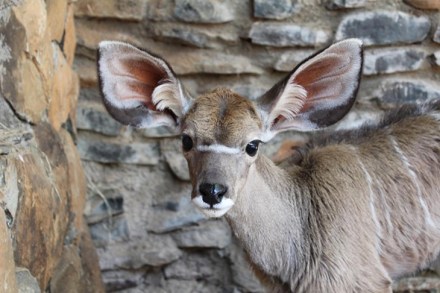
Laikipia, Kenya   On 5 April this year, my neighbour Torrie’s sister Vicki died during an operation in a Nairobi hospital. Torrie, who is the livestock manager on the next-door ranch of Loisaba, adored her and was terribly sad, as was Don, her partner for 40 years. To me, Torrie resembles a thin Dylan Thomas who has been left to bake in the tropical sun for decades. He spends his days out in the heat, caring for 4,000 head of cattle, 500 sheep and goats and 150 camels — and he does his job very well, losing few animals. On the evening of Good Friday, exactly a fortnight after his sister’s death, rangers brought in a baby greater kudu antelope.

Wild life | 30 May 2019

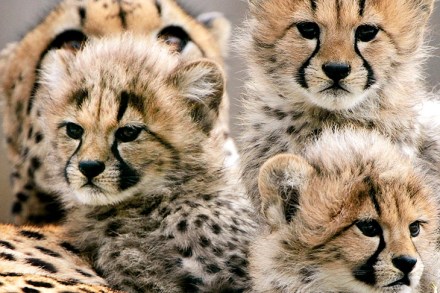
Laikipia, Kenya   A cheetah perched in the front seat of your gold-plated Lamborghini. Stick that on Instagram in Saudi Arabia and it’s the height of cool. Or a cheetah in bed with your wife in Dubai. The latest fashion among rich Arabs is buying cheetah cubs smuggled out of Africa to boast about on social media. Gangs in Somaliland are exporting at least 300 cheetahs to the Arabs each year and this represents a fraction of the losses across Africa, since hundreds of others die during capture and incarceration. Once these lovely creatures roamed India, Anatolia and the Arabian deserts, but now just 7,100 of them survive, and only in Africa. Their numbers are still in very sharp decline.

Wild life | 2 May 2019

Laikipia, Kenya   ‘An elephant has fallen over,’ said the man running up to me. My first thought was that poachers had killed the animal for its tusks. ‘Has it been shot?’ The man shrugged. ‘He was eating leaves, then he just fell over.’ As Claire and I made our way to the place, I was worried. Around our home, where we see elephants almost daily, I have come to learn that our destinies are closely interwoven. Meet a calm elephant who goes on browsing while gently billowing his ears because his herds are not being hunted and we know our valley is at peace. A skittish elephant is a harbinger of danger, a sign that poachers or armed raiders are about.

Wild life | 4 April 2019

East Africa   The late Michael Meacher represented almost everything I loathe in a politician. Before his death in 2015, this veteran Labour MP was Jeremy Corbyn’s ardent fan. He had served under Wilson and Callaghan and he was so left-wing he earned the nickname Tony Benn’s ‘vicar on earth’. Yet when I compare Michael to most MPs in the Commons today — disgusting cowardly weathercocks — I remember with admiration that effete, parchment-white Englishman I saw standing about at Mogadishu’s wrecked airfield 27 years ago. Somalia had collapsed into anarchy. Dried blood and bone fragments were smeared across the airport terminal and militia battlewagons were zooming around the runway.

Wild life | 7 March 2019

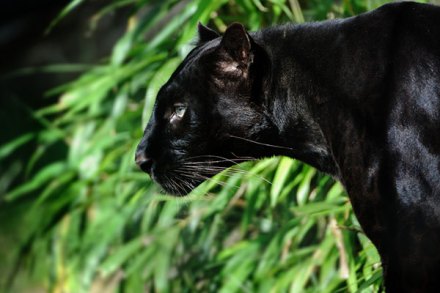
Laikipia   A female black panther was recently photographed at our neighbours’ place. Exactly like Kipling’s Bagheera, she was ‘inky black all over, but with the panther markings showing up in certain lights like the pattern of watered silk’. The images show her to be the most beautiful of creatures. A black panther is a melanistic leopard. I rarely see leopards and I have never seen this individual but for years a local Laikipia researcher called Ambrose Letoluai had heard about these black panthers from elders in our area. Based at Loisaba Conservancy next to us, Ambrose works for a San Diego Zoo leopard project. As part of his routine to record cat habits he installs devices called camera traps in rocky outcrops and trees.

Wild life | 7 February 2019

Kenya   As the Union Flag was lowered during Kenya’s Uhuru ceremony in 1963, the Duke of Edinburgh turned to the country’s new leader, Jomo Kenyatta. ‘Are you sure you want to go through with this, old chap?’ History fails to record Jomo’s reply, but last week I asked my Nairobi lawyer, Mary, to look back on 55 years. What would Kenyans have preferred — wealth under Empire or liberty come what may? Quick as a flash Mary said: ‘Independence.’ I find Kenyans tend to sympathise with Britain’s countdown to its own Uhuru. Out here, where we have faced odd challenges, people are bemused by no-deal dystopian scenarios. A little rioting, a run on currency, traffic jams, parmigiano shortages, pet passport disruptions — no problem.

Kenya’s terror threat is no worse than London’s

Kenya is getting much better at tackling terrorist attacks, as we have seen in the Nairobi hotel siege which ended this morning. Within seconds of the first explosions at the DusitD2 hotel at 3pm on Tuesday, news was circulating across the Twitter-obsessed capital. Scores of licensed private pistol owners – pudgy Kikuyu lawyers, Asian shopkeepers, random mzungus -- instantly raced towards the complex where five militants were shooting civilians in a restaurant after an Al Shabaab suicide bomber had blown himself up in the hotel lobby. Rapid response police teams arrived within minutes, but they could barely hold back the Kenyan Dad’s Army sprinting towards the gunfire and black smoke rising from burning cars.