Culture

Culture

The good, the bad and the ugly in books, exhibitions, cinema, TV, dance, music, podcasts and theatre.

Dysfunctional music for dysfunctional people: The Public Image is Rotten reviewed

Pop

A star is born, but instead of emerging into the world beaming for the cameras, he spits and snarls and announces his intention to destroy the establishment via the medium of rock records. But who is it? Is it Bob Geldof or John Lydon? Citizens of Boomtown: The Story of the Boomtown Rats — another in the ongoing trend of the BBC screening films that are fundamentally ads for a band’s new album — made the case for Geldof, suggesting he and his bandmates singlehandedly dragged Ireland into the modern age (the Daily Telegraph’s chief rock critic popped up to say they were the first roar of the Celtic Tiger).

Contains the loveliest new song I’ve heard in decades: Bob Dylan’s new album reviewed

Pop

Grade: A ‘Rough’ in terms of the mostly spoken vocals, but only ‘rowdy’ if you’re approaching your 80th birthday, which of course Dylan is. This is a sometimes playful and often self-deprecating Nobel Laureate at work, the lyrics (like the vocals) carrying a whiff of late Leonard Cohen, the arrangements of some of the slower, if not funereal, songs a nod to Tom Waits. In ‘I Contain Multitudes’, the grizzled old boomer has given us his best song since ‘Idiot Wind’; like many on here, the delicate melody is implied by the chord changes rather than explicitly stated.

In defence of Prince’s late style

Pop

In 1992 Prince released a single called ‘My Name Is Prince’. On first hearing it seemed appropriately regal. Cocky, even. Only in hindsight did it appear somewhat needy, a litany not of what Prince was going to do, but of the things he had already done. On it, he pulled rank on his status — ‘I’ve seen the top and it’s just a dream / Big cars and women and fancy clothes’ — called out young rappers for their potty mouths, and declared himself ‘fresh and funky for the 90s’. Context is everything. By 1992, Prince was still funky – but fresh? He had been, indisputably, pop’s premier agitator throughout the previous decade; as David Bowie was to the 1970s, so Prince was to the 1980s.

Skates on the edge of parody: The 1975’s Notes on a Conditional Form reviewed

Pop

Grade: B+ Just what you wanted. An opening track that matches banal piano noodling to an address by Greta Thunberg. Followed by a hugely unconvincing stab at tuneless industrial metal on a song called ‘People’, in which the aforementioned — me and you, not them, of course — are cautioned to ‘WAKE UP!!’ Leafy Wilmslow’s middle-class skag-head prophet, Matty Healy, is back, then, with a series of injunctions for us all, spread over interminable length and always skating on the very edge of parody. The 1975 are probably Britain’s biggest ‘rock’ band — those quote marks are needed — and this vast slab of pretentious, gullible, vacuous commendations to us all went straight in at number one.

Meet Dion, one of the last living links to the earliest days of rock ’n’ roll

Pop

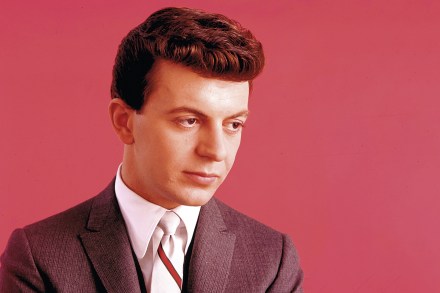
Only two of the Beatles’ pop contemporaries are depicted on the cover of Sgt. Pepper’s Lonely Hearts Club Band. One is Bob Dylan. The other is Dion DiMucci. In a pleasing third-act twist, Dylan contributes the liner notes to Dion’s new album Blues With Friends — an act of deference that the recipient is still processing. ‘I asked him, I didn’t know if he had the time, but he sent me back those paragraphs and said that I knew how to write a song.’ He whistles. ‘That’s from a Nobel Prize winner. I thought, I’ll take it, I’ll take it!’ So he should. Dion — like Kylie, a single moniker suffices — is one of the last living links to the early days of street-corner rock ’n’ roll.

Joyous and very, very funny: Beastie Boys Story reviewed

Pop

The music of the Beastie Boys was entirely an expression of their personalities, a chance to delightedly splurge out on to record everything that amused them. And early on, in their teens-get-drunk debut album, Licensed To Ill, that resulted in obnoxiousness. But mostly they were kinetic and colourful, which is why the new Apple TV+ film about them works so well. The format suits the story. Beastie Boys Story simply documents a stage show where winningly they talk the audience through their personal history. It’s much like Netflix’s Springsteen on Broadway. But since the third Beastie, Adam Yauch, died in 2012, the band no longer perform, so where Springsteen punctuated his memories with songs, the Beasties do it with film clips.

Beautiful voice, pretentious album: Fiona Apple’s Fetch the Bolt Cutters reviewed

Pop

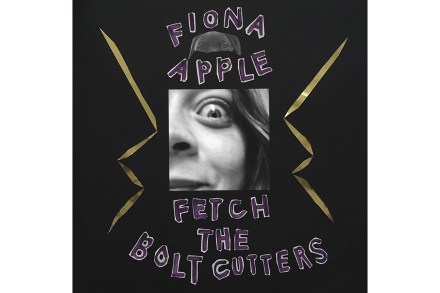
Grade: C+ Where did they all come from, the quirky yet meaningful rock chicks who don’t have a decent song between them yet put out albums by the bucketload? Back in the day it was just Joni Mitchell, who had four good songs, Laura Nyro who had two and Dory Previn who had one. Now there are thousands of these creatures, flaunting their intemperance without showing much brilliance. And all slavered over by the (still male) music press. Years of oppression, of being disregarded, they would argue. But disregarded for very good reasons, in almost all cases. Yeah, Carole King is ten times the songwriter James Taylor ever was. I will give you that. We got that wrong. But that doesn’t mean we have to be tormented for eternity by the likes of Laura flipping Marling, does it?

Livestream-hopping is just as irritating as being at a real festival

Pop

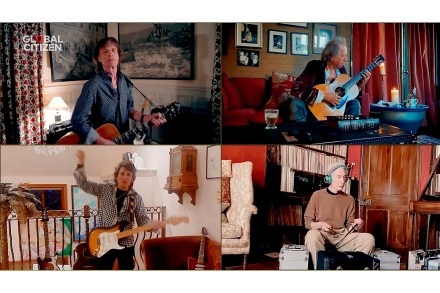
The ghost of Samuel Beckett oversaw the Hip Hop Loves NY livestream last Thursday night. Time and time again its host, the veteran hip-hop TV presenter Ralph McDaniels — known to all his guests, unnervingly, as ‘Uncle Ralph’ — tried to connect to some Golden Age legend. Time and time again, his attempts at a straightforward interview went wrong. We saw Uncle Ralph, on one half of the screen, ask a question about Covid-19, nod along to the answer, then say, ‘Thank you, doctor.’ But we didn’t have a doctor on screen, or on our audio. We had Ice T. ‘I ain’t no doctor,’ Ice-T said. Cut to Nas. But Nas was inaudible, and his picture was breaking up. ‘I see Chuck D!’ He did, but we didn’t.

Felt longer than the lockdown itself: BBC1’s One World – Together At Home reviewed

Pop

You have to admire the spirit of the organisers of last weekend’s One World: Together at Home concert. To put on an event that seemed to last longer than lockdown itself is the sort of can-do attitude we love to see. The main event — the really star-studded portion that was shown live on Saturday night on the big three US networks, and then adapted for the UK and shown on BBC1 on Sunday — began only after six whole hours of preamble from slightly lesser turns. Six hours. That’s an awful lot of watching people sit with an acoustic guitar in front of their webcam. Or sometimes not even sit with an acoustic guitar — Jessie J appeared to be doing karaoke with her own CDs and singing over the top of them.

Taylor Swift is fascinating – but you really wouldn’t want to be her

Pop

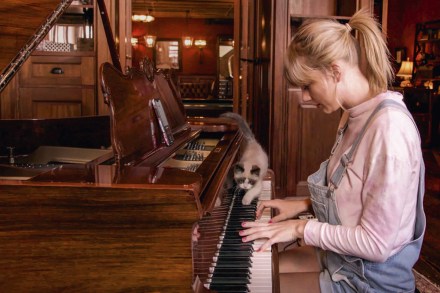
There had been some question about whether Taylor Swift’s Netflix special would actually appear. Last year it seemed that the ownership of her old songs by her previous record label would scupper it. But no, Ms Swift is not to be resisted, and lo, Miss Americana is available right now on Netflix, one of its two big music documentaries for the spring. Many older men seem to have a visceral distaste for Ms Swift. If you share that distaste, then I’m sorry, it’s your loss, because she’s a fascinating figure (who has also made three truly terrific albums in Fearless, Red and 1989), and Miss Americana is well worth watching.

The magic of Bryan Ferry

Pop

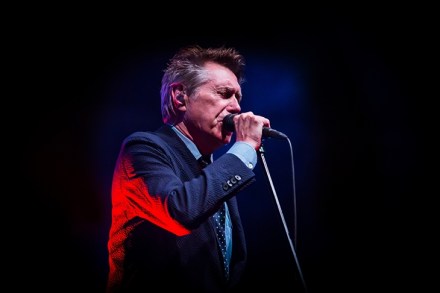
The accepted line about Bryan Ferry is that his is one of the greatest reinventions in English pop culture: Peter York said, in 1976, that his life was ‘the best possible example of the ultimate art-directed existence’. But watching him at the Albert Hall, I couldn’t help thinking of my father. That’s not to diminish the show — which was a lush and all-enveloping pleasure, like getting into bed in a very good hotel — but I couldn’t help wondering if there was actually something very specific about Ferry that tends to get ignored: his generation. He’s 74 now, though from a distance you might put him in his mid-fifties, especially in his beautifully cut suit.

Grimly compelling: The Whitney Houston Hologram Tour reviewed

Pop

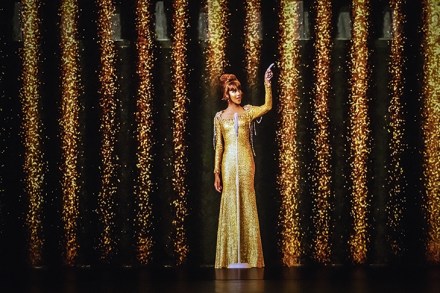
‘No matter what they take from me,’ sang Whitney Houston towards the end of a peculiar evening in Hammersmith, ‘they can’t take away my dignity.’ You want a bet on that? Eight years after she died, here was Houston — in holographic form — treading the boards once more. In death, as in life, she continues to be an object for others to make money from.The Houston on stage was not, of course, the addict who crumpled towards the end of her life; nor the one who couldn’t hit the high notes of ‘I Will Always Love You’ on her final tours. It was the beautiful young woman with the staggering voice.

Dazzling and nonsensical in equal measure: Madonna at the London Palladium reviewed

Pop

You might have thought Madonna was not a singer but a professional footballer judging by the talk before she took to the stage at the Palladium last Wednesday night. She’d missed ten out of 93 appearances, and she’d been picking up the kind of niggling injuries — would her knees stand up to the strains of a long, hard season? How’s her hip? — associated with hard-running midfielders. Just as in the Premier League, there were gripes about ticket prices — go on Ticketmaster and they range from £69 to £511.50 (yes, there are tickets available throughout the run; you’ve got until 16 February to see her).

You have to be a terrific snob not to see the appeal of Slipknot

Pop

Every development in heavy music is derided by mainstream critics. When Black Sabbath and Led Zeppelin emerged in the late 1960s, they were sneered at for their lumpen, troglodyte stupidity. A decade on, AC/DC were reviled for precisely the same reasons. When Metallica and Slayer helped lead the thrash metal movement in the mid-1980s, it was at first only enthusiasts for extreme noise who cheered them on. The disdain never lasts. People who grew up listening to those bands became critics or editors or broadcasters or musicians, and each of them was absorbed seamlessly into the rock canon. That’s precisely what’s happened to the Iowa band Slipknot, too.