Culture

Culture

Over the Moon renders the present with an eye toward the timeless

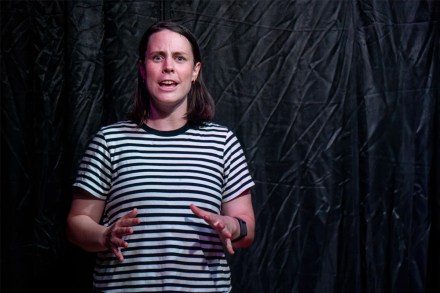
Audiences are hard to please. Give us too much of modern life in a work of art, and we find it shallow. Give us too little, and we are prone to call it stuffy and academic. There is a sweet spot between realist exposé and classically restrained theater. This is the case with Over the Moon, a new play written and directed by Matthew Gasda. In the witty, self-undercutting, and absurdly clinical language that is the contemporary speech of the young, the play’s Generation Z and millennial protagonists navigate the confusing vagaries of love. The action remains in one place: the shared uptown Manhattan apartment of 20-something cousins Eden (Lilly Brown) and Cody (Spencer Cramer). They recently moved in together after breaking up with their boyfriends.

Over the Moon

Jason Bateman breaks bad in Black Rabbit

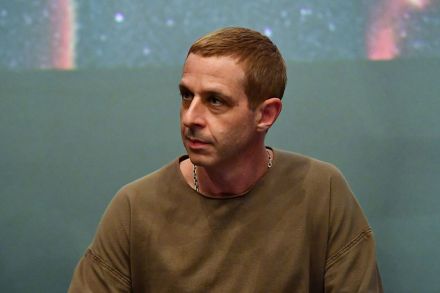
When Bryan Cranston staggered on-screen in the opening scene of Breaking Bad in 2008, stumbling out of a crashed RV dressed only in his underpants, and addressed the camera with, “My name is Walter Hartwell White…to all law enforcement entities, this is not an admission of guilt,” he immediately changed perceptions of who he was as an actor. Previously, he was best known for being the goofy dad in Malcolm in the Middle, and despite some effective straight performances, most thought of him as a comedic performer, rather than the star of what became the most talked-about crime drama series since The Wire. Jason Bateman would, one presumes, like to follow Cranston’s lead.

Don’t cry for Jimmy Kimmel

The defenestration of the supposed talk show host Jimmy Kimmel, for the inflammatory remarks that he made during the monologue in his show on Monday night about Charlie Kirk, is both an unexpected and deeply predictable development. It was unexpected because Kimmel clearly believed that he was, like Lehman Brothers, “too big to fail,” and was therefore within his rights to make such comments as how “We hit some new lows over the weekend with the MAGA gang trying to characterize this kid who killed Charlie Kirk as anything other than one of them and doing everything they can to score political points from it.” And it was deeply predictable because Kimmel now becomes the latest scalp that the right have seized this year, and perhaps the most high-profile yet.

Kimmel

Splitsville defends monogamy

The new comedy Splitsville amusingly diagnoses several urgent social ills. The film mocks those who treat marriage not as an expression of solemn vows but as a ticket to unfettered happiness to be discarded at the first sign of discontent; it also excoriates those who view the institution as so meaningless – just a piece of paper – as to persist in the midst of openly acknowledged affairs, romances and one-night stands. In its own coarse, fumbling way, Splitsville has an instinctive sense of how human beings long for monogamy and order even while they court freedom and licentiousness. Splitsville stars Kyle Marvin and Adria Arjona as Carey and Ashley, a young couple who, 14 months after getting hitched, find themselves with different notions about the success of their union.

Is Antifa a terrorist organization?

One side of the political aisle can only accuse the other of “fascism” so many times before a young, impressionable person subsumed within a social-media echo chamber takes matters into his own hands. This seems to be exactly what transpired in the case of Tyler Robinson: bullet shell casings found at the scene of Charlie Kirk’s assassination were reportedly etched with the words “Hey fascist! Catch!” Robinson seems to have been influenced by Antifa or Antifa-adjacent ideology. In response to the killing, Congress and commentators have renewed calls to designate Antifa a domestic terrorist organization. But this would have little effect. Antifa is a collaboration of autonomous cells with the ostensible goal of opposing fascism and racism.

antifa

Please let this be the end of Downton Abbey

The third and supposedly final Downton Abbey picture released in American cinemas this Friday. Ominously subtitled The Grand Finale – oh how I wish, given the residual camp elements within the show, that it had instead been called The Final Curtain! – it supposedly wraps up the story of the Grantham family, the privileged idlers who inhabit the eponymous grand house, and their unusually devoted and long-serving staff, all of whom converse with their superiors on easy and intimate terms that bear precisely no relation to how the English upper classes have ever spoken (or been spoken to) by their servants in history. Still, if you’re looking for historical accuracy from Julian Fellowes’ Downton, you are not going to find it.

America’s ‘fringe’ has taken over the country

Another day, another public execution. The talking heads on television and Twitter tell us not to worry too much: America is still strong. They repeat this sentiment after every waking nightmare. These horrific events are not the norm, they say. They’re just the actions of a few people on the “fringe.”  But what is the American “fringe”? The “fringe” tried to incinerate the country in 2020. The “fringe” tore down statues of George Washington and Abraham Lincoln. The “fringe” control the universities and has spent years indoctrinating kids with discriminatory dogmas. The “fringe” created the policies that let violent, mentally ill men prowl the streets and kill refugees. The “fringe” killed a healthcare CEO at sunrise in December.

Stephen King, The Long Walk and Charlie Kirk

Under normal circumstances, the author Stephen King should have been feeling pretty good about things and himself at the moment. The latest film of one of his works, Francis Lawrence’s horror-thriller The Long Walk, opened in American cinemas this weekend and has been met with almost unanimously rave reviews, many of which have called it a more socially aware, darker Hunger Games. He recently published a Maurice Sendak-illustrated retelling of Hansel and Gretel, which brings his trademark dark and macabre sensibilities to the age-old fairytale. And his last novel, Never Flinch, was, naturally, a bestseller – as all his books have been since he first published Carrie, over half a century ago in 1974.

Charlie Kirk

After Charlie Kirk, Trump should crack down on campus ‘safetyism’

An assassin who wants to silence a debate in America’s colleges can’t do it just by killing Charlie Kirk. Although Kirk was an exceptionally effective campus speaker – maybe the most effective since William F. Buckley Jr. in his heyday – he was far from alone in voicing conservative ideas in academic settings where they are generally unwelcome and at times violently opposed. There are others who will pick up Kirk’s microphone. But Kirk’s murderer has allies who can do systematically what the gunman could only do once. His allies in silencing voices like Charlie Kirk’s are university administrators who respond to violence by imposing stifling security costs on the targets of violence and intimidation.

Why Jane Austen is still the queen of romance

Jane Austen was born in Hampshire on December 16, 1775, the seventh child of a poor country rector. Despite being red-cheeked and a good dancer, she never married. And despite the handful of novels she wrote under the byline “A Lady,” she was always considered by her family less promising than her older sister. She died of a painful illness at 41. Her books found a readership that included the Prince Regent, but she had some prominent detractors. Charlotte Brontë scorned them: “I should hardly like to live with her ladies and gentlemen in their elegant but confined houses.” Where were the windswept moors, the big feelings? In the next century, D.H. Lawrence dismissed Austen as “mean” and “snobbish.

Austen
Esther

How Esther inspired the imagination of Rembrandt

If you attended Sunday or Hebrew school, you know the story. There once lived in the ancient Persian city of Susa a King Ahasuerus and his Jewish wife, Queen Esther. At first she hid her Jewish identity from the king, only revealing it in order to foil the plot hatched by Haman, her husband’s Jew-hating second-in-command, to exterminate all who shared her faith. In doing so, Esther saved her people from destruction – and earned a volume in the Hebrew Bible named for her. Less well-known is that centuries later, in the Amsterdam of Rembrandt van Rijn (1606-69), Esther’s valor also made her a heroine to the citizens of the predominantly Protestant Dutch Republic.

Heathers

The problem with Heathers: The Musical

There is a euphoric moment in Heathers: The Musical, based on the cult 1989 film of the same name, when anything seems possible. It happens when 17-year-old Veronica – facing ostracism from the popular clique for barfing on the group’s tyrannical leader, Heather Chandler – climbs through the bedroom window of her crush, J.D. He’s in bed, asleep. As she mounts him, she sings the sassy, come-hither “Dead Girl Walking.” She’ll be toast come Monday morning, she’s “hot and pissed and on the pill,” and J.D. is her “last meal on death row.” Cue the boldest sex scene I’ve ever seen on stage. Veronica straddles J.D. and takes charge, ripping open her shirt to reveal her bra.

Anderson

The Phoenician Scheme is Wes Anderson at his most transparent

My name is Curtis. I’m a GenXer. I love Wes Anderson. I also like IPAs. Sometimes it’s OK to be a cliché. The Phoenician Scheme is not Wes Anderson’s best movie (that would be The Life Aquatic with Steve Zissou), or even his second-best. It may be his most transparent, though. Wes Anderson is certainly our auteuriest of major auteurs. A Wes Anderson film knows it’s a Wes Anderson film and doesn’t mind that at all. As a monarchist, I always point to auteur theory as a micro-reflection of my crackpot political theories. If it were possible for corporations to make movies by committee, it would certainly be done that way. But it isn’t. Instead, even the most hackneyed superhero sequel has a director – just as even the cheapest taquería has a chef.

Camus comes to America

The 20th-century French writer Albert Camus remains a living author, a permanent contemporary, in a way that the far more dogmatic and ideological Jean-Paul Sartre does not. The latter provided a caricature of “existentialism,” nihilism dressed up as absolute freedom, beholden to no limits and no enduring truths. In contrast, the author of The Stranger and The Plague rejected Sartre’s facile nihilism, as well as his repellant accommodation with murderous messianism, typically conveyed in fashionable leftist nostrums. The more hopeful side of Camus comes through in his recently re-released Travels in the Americas: Notes and Impressions of a New World.

camus

Is Hilma af Klint overrated?

At the corner of Manhattan’s Tenth Avenue and 22nd Street, there is a mural by the Brazilian artist Eduardo Kobra. Situated over the landmark Empire Diner, Kobra's painting reimagines Mount Rushmore as a paean to art stardom or, depending on how one looks at these things, the tragically hip and perpetually overrated.  Kobra supplants George Washington, Thomas Jefferson, Abraham Lincoln and Theodore Roosevelt with the graffiti artists Keith Haring and Jean-Michel Basquiat, the Mexican fabulist Frida Kahlo and the melanin-deprived panjandrum of Pop, Andy Warhol. These cultural icons loom over the crowds supping on blistered shishitos and tuna tartare inside the diner.

I love Labubu

I don’t recall how it happened. One moment I was a sane member of society, the next I was at an arcade, slotting coin after coin into a claw machine – and on the other side of the glass, taunting me with her feral grin, was the object of my desire: Labubu. Labubu is a mischievous, furry elf-monster with bunny-like ears and distinctive sharp teeth. Depending on who you ask, she is either incredibly cute or incredibly creepy. She exists in many forms – most notably as a key-ring collectible plush doll – embodying an ugly-cute aesthetic called kimo-kawaii in Japanese that both unsettles and endears. Her creator, Hong Kong–born and Netherlands-raised Kasing Lung, was inspired by Nordic folklore.

labubu

The Paper is really, really bad

Making a spin-off of a spin-off is the trickiest task on television, not least because it assumes that the audience is sufficiently fond of the original and the reinvention alike to be happy to go steady with the third round, too. In all fairness, the new workplace-themed sitcom (although on the evidence of this first season, comedy-drama is probably a more accurate designation) The Paper is only a callback to the US The Office, in that its premise is that the same documentary crew that captured the bewildering banality of life at Dunder Mifflin has headed to Toledo, Ohio, there to follow the travails of a once-proud, now-flailing newspaper, the Toledo Truth-Teller.

Is Austin Butler a movie star?

In the old days of Hollywood, stars and starlets alike were anointed as “It” girls and men. Nobody was ever quite sure what “It” denoted – star quality, sex appeal, charisma, a willingness to sleep with studio executives – but when they were told they had “It,” their careers appeared made, for the present time at least. Today, however, with Marvel and superhero films largely making the idea of the movie star irrelevant, the concept of “It” is ever decreasing. I am sure that David Corenswet, this year’s Superman, is a lovely man, but I would struggle to recognize him if I passed him on the street without his Super-costume on. Tom Cruise and Brad Pitt aside, it seems as if the era of the old-school male leading man is past us now.

In praise of Tony McNamara

American audiences did not exactly flock to the Benedict Cumberbatch-Olivia Colman comedy The Roses last weekend, but those who did may have been pleasantly surprised, as well as appalled. Although the publicity and trailers took care to stress that it was the new film from the director of Meet The Parents – and certainly some of the more elaborate set-piece slapstick scenes bear the hallmark of the filmmaker Jay Roach – the true auteur of the picture should be regarded as the screenwriter Tony McNamara, who was previously responsible for the Yorgos Lanthimos collaborations Poor Things and The Favourite, both of which saw his screenplays Oscar-nominated. The 58-year-old McNamara is an unlikely late bloomer in Hollywood circles.

Tony McNamara

Boomer hate has gone too far

Charles Murray, whose work on race and IQ has made him something of a darling of the online right, found himself out of favor with his fan base when he posted on X that a young married couple – each making $15 an hour and working 48-hour weeks – can afford a baby and a place to live. The reaction was furious. “Charles Murray is a good man,” wrote Zarathustra, a popular dissident right-wing poster. “Sadly, however, he’s also a Boomer. Which by necessity, means his bumper sticker talking points on political economy are comically out of touch garbage, and read like a moldy Reagan Youth pamphlet from 1982.” Murray’s post broke X containment and made it to the subreddit r/BoomersBeingFools.

What is Prince Andrew hiding?

This month marks exactly forty years since I became a literary agent. In that time I have been involved with many bestsellers but the publication last week of Entitled: The Rise and Fall of the House of York about Prince Andrew has been my most successful book. What makes it especially different is that I am not just its agent but also its author. It has been a strange but exciting experience watching a project which has gestated for four years to finally see the light of day. The reaction has been overwhelming with the Daily Mail, which serialized the book over five days, calling it "The most devastating royal biography ever written" and interviews with media organizations all over the world.

Prince Andrew
robin westman

Robin Westman and the unstoppable tide of ‘slop violence’

On Wednesday, doing my laundry, I decided to turn on the TV for the first time in decades. Breaking news: a school shooting in Minnesota. It’s been years since a story like this made me cry. How could you cry at every mention of gun violence when you live in a place like the Midwest? I have been aware of gun violence in schools since I was a child myself. I remember first hearing about a school shooting when I was six years old. A little boy had shot his sister. I cried and cried and cried – I cried for the child that died, and I cried for the child who’d killed her. It remains one of my most traumatizing memories. The last shooting that made me cry was Sandy Hook. I was at dinner when a friend showed me Adam Lanza’s photo on his phone. Twenty first-graders dead.

Taylor Swift: queen of the normies?

Politicos used to know how to take the temperature of the nation. They could talk to their cab driver. They could sidle up to the man fixing their toilet. There was the Iowa farmer, the diner waitress. There was Walter Cronkite.  Now there is only Taylor Swift. In a society that increasingly consists of mutually unintelligible niches – like multivolume works of Sonic the Hedgehog erotica or reenactments of the War of the Austrian Succession in Roblox – Swift can still fill huge arenas at short notice. Her fans cut across every social and economic class. To a political nation that's often baffled by this new society, Swift has become the great barometer.

Taylor Swift

Worse than woke, Smithsonian art is bad

There’s a common myth in American culture that only the left is capable of producing great art. Right-wing art must be formulaic and preachy because it values established norms, while only transgressive leftism can reach new frontiers of form – or so we’re told. But what happens when the left’s own norms become dominantly rigid?Well, you wind up with the 20 exhibits that the Trump administration now rightly aims to purge from the Smithsonian’s sprawling array of museums, along with many other abuses. Since his inauguration, Trump has worked to rid wokeness from our cultural institutions through executive order, prompting leftist outrage against a so-called “attack” on the arts.

Smithsonian

Vegas’s seedy soul will save Sin City

I vividly remember the first time I saw Las Vegas. It was decades ago, and a friend and I did the classic LA-Vegas mini-road-trip, across the burning desert, arriving in Nevada around dusk. As we crested the final sandy hill, I saw this thing. This glittering neon jewel-box of a city, glowing in the twilight. I fell in love at once, a love that was only confirmed when we actually entered Vegas, and I realized I was motoring down Hugh Hefner Way.That love didn’t quite last, however. Not long ago I returned, and something felt very different. Sadder, somehow. Yes, I was shown a Damien Hirst-designed bedroom with a fridge full of diamonds, but I also saw too much druggy homelessness, and too many stickers that gave me a shock.

Vegas

A Gen Z defense of America

I am twenty-one. Not being on social media, I am ill-informed of the true depth of rage and fear available to the human psyche. Even so, I’ve heard that the planet will overheat. My pastor tells me the churches will sit empty, and the WSJ warns I’ll never buy a home. Boomers bemoan the laziness of my generation. Given these prophecies of doom, it is no wonder that we are a bit anxious. But if we were ever to look up from our screens and allow the evidence within sight to form our perception of reality, we might be pleasantly surprised: America’s social fabric is strong, and so are we.  I went on a run on the prairie today.

gen z

Elon is coming for your marriage

When Elon Musk quietly enabled “waifu mode” for his Grok chatbot earlier this year, the outrage was swift and familiar. Grok, now reincarnated as a coy, bare-thighed anime girl, began texting flirtatiously, calling users “darling,” and blushing in emojis. The headlines wrote themselves. Time magazine found the bot worryingly “sexualized” and “accessible even in kids’ mode”. The Verge denounced it as “ridiculous” and “alarming”. TechCrunch implied it is unethical, and noted these bots are endangering the minds, even lives, of children.The anxiety is familiar, and justified: children and adolescents, already naive, vulnerable, awkward and too online, will now fall in love with bots instead of real people.

Chatbot

What the skibidi?

People whose minds stopped evolving 20 years ago are having a snit because the Cambridge Dictionary, the world’s largest online lexicography, has added a few Gen-Z and Gen-Alpha slang terms to its more than 6,000 entries. The most controversial include “skibidi,” “delulu” and “tradwife.” You could argue that the latter is more of a millennial linguistic formulation for the extremely online, but the other two are definitely youth newspeak. Tradwife, as a term and a viral activity, is going to stick around for a while. “Skibidi,” derived from the YouTube Skibidi Toilet meme, is a word with as many meanings as “aloha” and “shalom,” and has the potential for a generation-spanning shelf life.

Trad wife