Culture

Culture

All modern art is quite useless

This article is in The Spectator’s January 2020 US edition. Subscribe here.Laramie, Wyoming ‘It’s pretty, but is it art?’ Rudyard Kipling asked in 1890. In those days the modernist movement across the Beaux Arts was gaining a grip on the western world that it maintains in the 21st century and is likely to hold into the 22nd, if there is one. One hundred and thirty years later, Kipling’s question calls for a plain response: ‘If it’s ugly, it has to be art.’ Aquinas defined art as ‘right reason in action’; reason in making. Right reason depends upon a man’s knowing what he ought to believe, desire and do. The modern artist is ignorant of all of these things.
art
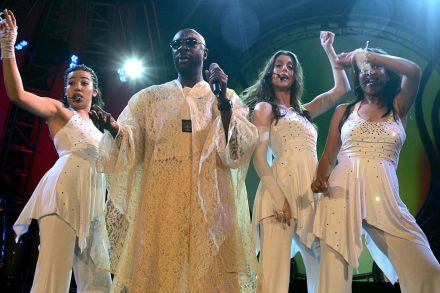
isaac hayes

The Hayes of our lives

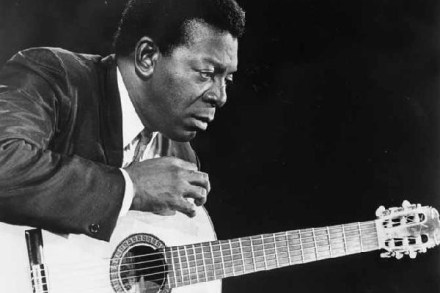
This article is in The Spectator’s January 2020 US edition. Subscribe here. Somehow it’s fitting that in the era of Donald Trump, the blaxploitation genre, which emerged from the black nationalist movement during the original call for ‘law and order’ during the Nixon administration, has been making a comeback. In 2018, Sony released a remake of Superfly starring Trevor Jackson as pusherman Youngblood Priest and directed by Director X. But perhaps no film has done more to signal the revival of the blaxploitation genre than the latest Shaft film. The franchise could scarcely appear hardier. It was Gordon Parks who first adapted the film from the works of the pulp novelist Ernest Tidyman.

The soft power of Italian jazz

This article is in The Spectator’s January 2020 US edition. Subscribe here.New York City The singer and saxophonist Ray Gelato opens his set at Birdland with a cover of ‘That’s Amore’. But this isn’t the sleepy send-up of Neapolitan street waltzes that Dean Martin recorded in 1953. Gelato raises the tempo and swings it four to the bar. As he sprints his way through the verses, Philadelphia’s City Rhythm Orchestra drives the pace, piano, bass and drums holding down the shuffle while the four-piece horn section plays call-and-response to each other and his vocals. It’s the start of a fun, high- energy set, the two hours of which feel as if they pass in half the time. You don’t tap your feet to this music: you stomp.

italian jazz

A hero for the Snowflake age

This article is in The Spectator’s January 2020 US edition. Subscribe here. What have they done to Jack Ryan? That’s a rhetorical question, by the way: he’s been captured by a crack team of Ivy League majors in Race, Gender and Weaponized Resentment Studies — probably the same guys who wrote the Washington Post headline calling Abu Bakr al-Baghdadi an ‘austere religious scholar’ — and they’ve reengineered him as a beta-cuck pantywaist woke dork for the Age of Snowflakes. To be fair, Jack did slightly show these tendencies in the first season of his Amazon adventures.

jack ryan

Christmas crackers: the tragic soul of Natalie Cole

This article is in The Spectator’s December 2019 US edition. Subscribe here. As any Yule fool knows, there’s no Christmas album like an old Christmas album. But there’s not many of them. We’ve had plenty of classic Christmas singles but hardly any classic Christmas albums. In fact, since little Phil Spector went and ‘canceled’ himself and the life of actress Lana Clarkson in 2003, there is only one. Nowadays, a double-sided helping of Spector’s A Christmas Gift For You from 1963 would have the most ardent Wall Of Sound fan hearing sirens, not sleigh bells.

natalie cole

Star Wars: the force a-weakens

This article is in The Spectator’s December 2019 US edition. Subscribe here. The first Star Wars trilogy enraptured by blending classic drama with science fiction. There was Luke Skywalker the fresh-faced hero, emerging from obscurity to save the day. There was Vader the villain, who had once been good but had embraced the dark side. There was the Emperor, the twisted puppeteer. There was the daredevil pilot Han Solo. There was Leia, the princess who had to be saved. There was even that essential companion on any voyage: a bumbling upper-class Englishman. All of it was familiar from classic cinema and adventure stories, but all of it had the strangeness of science fiction. The villain lurked behind a fearsome mask and choked people by mind control.

star wars
wild

The call of the wild

This article is in The Spectator’s December 2019 US edition. Subscribe here. People who go into the wild looking to meet bloodthirsty predators are either a living Xanax pill or some sort of dominatrix version of Jane Goodall. Especially when it’s winter. Save yourself a mauling by a hungry puma, swap your earmuffs for earphones and get wild with The Wild, in which ecologist and award-winning filmmaker Chris Morgan leaps sure-footedly from one wildlife topic to another like a mountain goat. Like Nature itself, The Wild is pretty random but always red in tooth and claw. Morgan focuses on the overlap between animals and humans: something people tend not to consider when they move into areas where the neighbors are bears or cougars.

Leonardo da Virtual

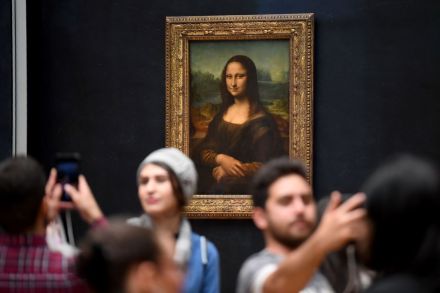
This article is in The Spectator’s December 2019 US edition. Subscribe here. The first time ever I saw her face, she was smiling. I knew her face before I saw it, but I cannot remember when I first knew it, because I had always seen it. But when I first saw her in the flesh, I couldn’t really see her at all. She was behind thick glass and a waist-high wall, and a crowd of people 20-deep were pushing toward her, shouting and pointing and taking photographs. She was still smiling, but as I forced my way out of the crowd, I felt as though the smile no longer expressed the mysterious inner mood of a high-born Florentine sitting in a loggia, but the bemused contempt of a woman sitting in the stocks for the entertainment of the mob.

mona lisa leonardo

Payton’s place

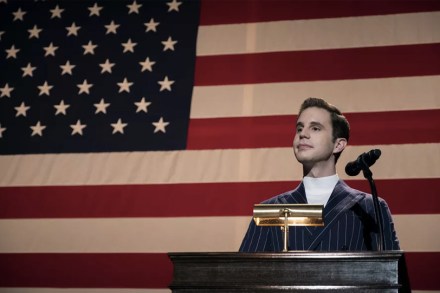
This article is in The Spectator’s December 2019 US edition. Subscribe here. Four episodes in, I finally decided I really didn’t like The Politician (Netflix). Initially, I thought I might because there was lots of advertising assuring me how good and culturally important it was going to be. Also, it’s made by the same creative team responsible for Glee, that slick but likable and quite moreish series about an American high school glee club where an impeccably diverse class of gay and disabled people keeps bursting into implausibly accomplished cover versions of classic pop songs. But no. The Politician leaves you with the same unpleasant, dirty, life-just-wasted feeling I imagine you’d get from watching Japanese hentai porn.

politician

Tough gospel: the twin cities of Sesame Street and Mister Rogers’ Neighborhood

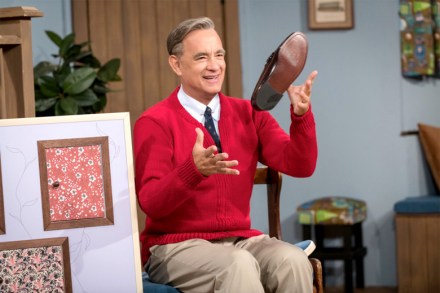
This article is in The Spectator’s November 2019 US edition. Subscribe here. For people who, like me, were born in the troubled times of the Seventies, Sesame Street and Mister Rogers’ Neighborhood were an educational crossroads. As we gazed into the cathode-ray tube for direction, each program led to a very different future. Sesame Street, now in its 50th season, remains unavoidable and familiar. Yet we’re captivated by the return of Mister Rogers’ Neighborhood, the unpolished creation of Fred Rogers that aired from 1968 to 2001. Last year, the documentary Won’t You Be My Neighbor? became a surprise hit. This week sees the opening of A Beautiful Day in the Neighborhood, a movie starring Tom Hanks as Rogers.

rogers

A motel room of one’s own

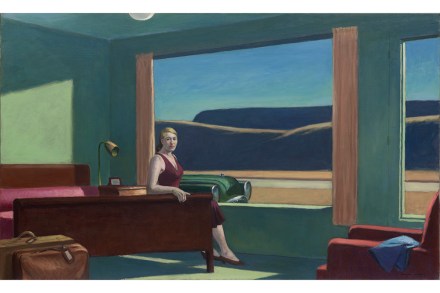
This article is in The Spectator’s November 2019 US edition. Subscribe here. To gauge a man’s character, note how he spends a month in Paris. Edward Hopper, according to the catalog of his 1933 retrospective at New York’s Museum of Modern Art, lodged with a ‘respectable French family’, studying French and ‘avoiding bohemia’. Asked if he met any painters during his visits, he responded, ‘No, I did not know anyone. Gertrude Stein was on the throne when I was there.’ Hopper knew it wasn’t his scene. Isolation was a persistent theme in Hopper’s art and life. Was he dogged by isolation or did he pursue it? ‘Did anybody really know this silent, non-communicative man?

hopper

Brazilian wax

This article is in The Spectator’s November 2019 US edition. Subscribe here. When Brazilian president Jair Bolsonaro spoke at the United Nations General Assembly in late September, he depicted Brazil as a victim of colonialism. ‘The United Nations has played a fundamental role in the suppression of colonialism,’ he said, ‘and we cannot allow this mentality to return to these rooms and corridors at any pretext. We cannot forget that the world needs to be fed.’ Foreign countries, Bolsonaro alleged, have ‘an interest in keeping indigenous people living like cave men’.

brazilian

Audio blitzkrieg

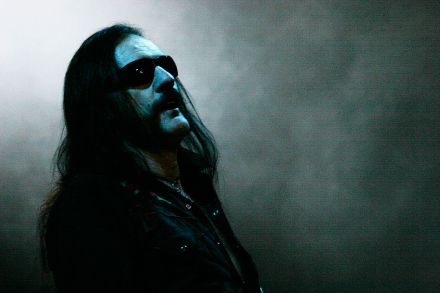
This article is in The Spectator’s November 2019 US edition. Subscribe here. Wokeness, first conceived of by the Armenian mystic George Gurdjieff (1872-1949) had barely reached the mainstream when Ian ‘Lemmy’ Kilmister died in 2015. Still, Lemmy had given considerable thought to staying woke. As a champion abuser of amphetamines, he’d spent more time awake and thinking than anyone since 1945. Perhaps his surprising death –– surprising, because he seemed indestructible –– was necessary in some Gurdjieffian way, to make room for the terrors that now occupy our psyches.

motörhead lemmy

The perfect crime

This article is in The Spectator’s November 2019 US edition. Subscribe here. Everyone loves a good murder. Tales of cold-blooded killing were bringing in audiences even before Truman Capote elevated the telling. Now, as if tales of real-life slaughter aren’t enough, podcasters color the horrors and hook the listeners with spooky music, awkward cliffhangers and a dubious sociological moral. The typical true-crime podcast has hosts who seem to be chugging wine from the box and narratives ruined by contrived social implications. A cynic or a detective would link this style to the appearance of listicles of the best true-crime podcasts in Good Housekeeping, Oprah Magazine, Town and Country and Women’s Health.

true crime

Is Lou Reed a rock ’n’ roll Dostoevsky?

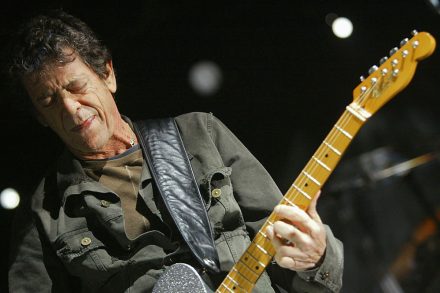
This article is in The Spectator’s November 2019 US edition. Subscribe here. A journalist friend was once ordered to interview Lou Reed in his hotel room. The meeting was not a success. Reed retreated to the closet bearing a copy of the poems of Delmore Schwartz and refused to come out until his guest had paid cash for it, saying, ‘Delmore needs the money.’ Reminded that the author of In Dreams Begin Responsibilities had died some years before, Reed observed, ‘Well, his family needs the money.’ $5.99 changed hands and the conversation continued.

lou reed

Top Boy wins the turf war

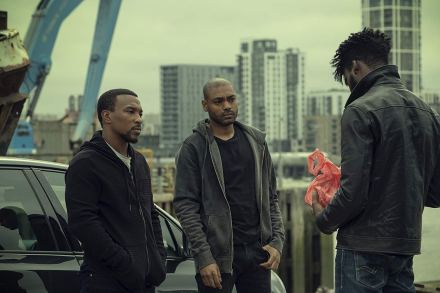
This article is in The Spectator’s November 2019 US edition. Subscribe here. I couldn’t stand The Wire. Everyone mumbled unintelligibly, the pace — inexcusably in a series about drugs and violence — was often glacially slow, and I found some of its characterization too transparent, like, ‘Ooh, I know. We’ll make the wise old black guy have the unlikely hobby that he repairs dolls’ houses, so that viewers will appreciate the nuance and hinterland.’ Top Boy (new on Netflix), on the other hand, is pacy, plausible and deliciously ruthless. It’s like The Wire, relocated to London with a much cooler soundtrack and with all the boring bits removed.

top boy

Secrets of the maestro

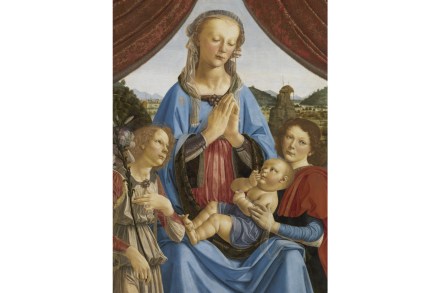
This article is in The Spectator’s October 2019 US edition. Subscribe here. At last, some justice for the ‘teacher of Leonardo da Vinci’. Verrocchio: Sculptor and Painter of Renaissance Florence, now at the National Gallery of Art in Washington, DC, reveals that this master was more than a mere footnote to his famous apprentice. Born around 1435 into the artistic boomtown that was Florence under the Medici, Andrea del Verrocchio may, in fact, have been the original Renaissance man. The greatest artists of the Florentine Renaissance took root in his studio and grew out of his mentorship: not just Leonardo, who stayed with him for over a decade, but also Pietro Perugino, Lorenzo di Credi and, most probably, Domenico Ghirlandaio and Sandro Botticelli too.

Grandpa, who were the Rolling Stones, and why?

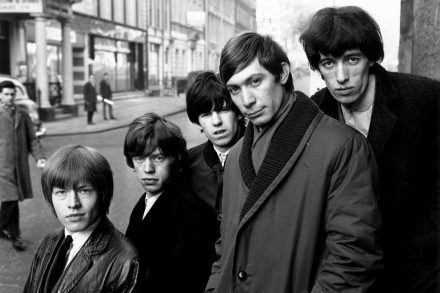
This article is in The Spectator’s October 2019 US edition. Subscribe here. The Rolling Stones’ delayed tour is back on the road. Not the tour they delayed after Keith Richards fell out of a coconut tree, but the one delayed because Mick Jagger had a heart attack. If you’re a boomer of advanced years and decayed taste, all this is no doubt a big deal, your last chance to see some of the last icons of the original and brief Rock Era, before you or they kick the bucket. Ladies and gentlemen, the greatest rock ’n’ roll band in the world, the Rolling Stones. Except they aren’t the Stones. They haven’t been the Stones for years.

rolling stones
podcasts

Pod almighty

This article is in The Spectator’s October 2019 US edition. Subscribe here. ‘Man the food-gatherer,’ wrote Marshall McLuhan, ‘reappears incongruously as information-gatherer.’ Once we foraged for information in the library. Now we graze among the podcasts. In the age of compulsive eating, podcasts are compulsive listening, an attempt to fill the silence. Nothing better to do? Click on a podcast, and let your attention drift. It takes no effort, it dissolves minutes into hours, and talking about the ‘great podcast’ you just listened to can sound just as smart as saying you’re reading War and Peace. After all, podcasts were originally made by nerds, for nerds.

A great time in the Faddisphere

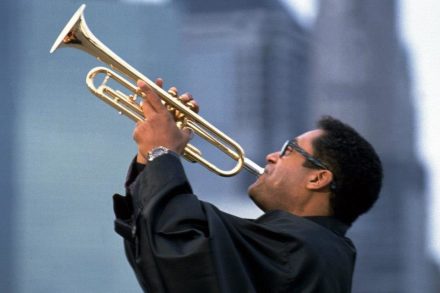
This article is in The Spectator’s inaugural US edition. Subscribe here to get yours. It’s easy enough to write an elegy for the jazz world, a tale of decline and fall, from towering heights to epigones plying their trade in the shadows of the giants. But like most such stories, lachrymose in spirit if not intent, it obscures as much as it reveals. No doubt many of the great clubs that existed in the Fifties and Sixties have faded away, but since the Eighties there has been a distinct revival of more traditional forms of jazz.

faddisphere jon faddis

Who killed the American arts?

This article is in The Spectator’s inaugural US edition. Subscribe here to get yours. The arts in America are dying. In the 20th century, Americans defined the world’s popular culture, but the 21st century world has no need of America’s arts. Through technology transfer, the world entertains itself with knock offs like Bollywood and K-Pop. In the 20th century, Americans created a new art form in jazz and its derivatives, and turned Hollywood into the world’s dream factory. In the 21st century, African American music has collapsed into monotone misogyny, and digital sex (see Julie Bindel) is America’s real movie business. Americans are in the gutter, looking up at porn stars.

lizzo arts

Is Peaky Blinders past its peak?

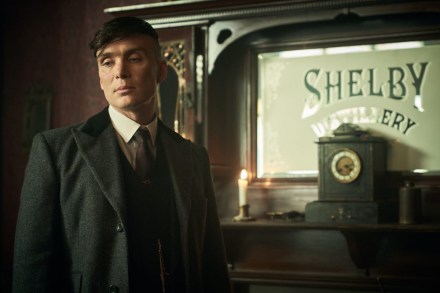
This article is in The Spectator’s inaugural US edition. Subscribe here to get yours. Peaky Blinders would have you believe it’s the best of British: sharp suits and vests, the workingman’s flat cap and the gangster’s slo-mo swagger, the chug of Anglo alternative rock, and a smörgåsbord of regional accents, Academy Award-nominated guest stars and oh-look-I-remember-him cameos from historical figures. These are the ingredients of Britain’s answer to the American sagas that set new standards for television: The Sopranos, The Wire, Breaking Bad. Yet there’s always been the whiff of style over substance to Peaky Blinders, a sense of looking back without seeing anything new.

peaky

Blondie ambition

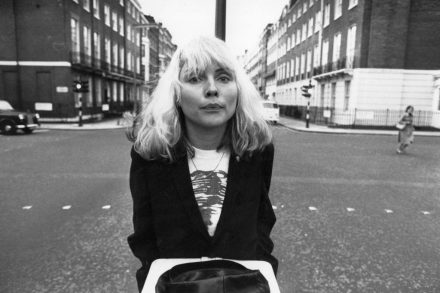
This article is in The Spectator’s inaugural US edition. Subscribe here to get yours. Once upon a time in the Seventies, rock ’n’ roll was a man’s game. Then Blondie happened –– or ‘Blondie’ herself, Debbie Harry, platinum bombshell and queen of punk. Actually, before Blondie there was the Runaways, an exploitation act from which the singer, Joan Jett, ran away. There was Patti Smith, who moved to New York City, fell in love with Robert Mapplethorpe and wrote poetry. There was Chrissie Hynde, who moved to London, passed through the rehearsals that generated the Sex Pistols and the Clash, and then, after Blondie had charted in Britain, formed the Pretenders.

debbie harry blondie

Louise Linton: why I don’t like being ‘the wife of…’

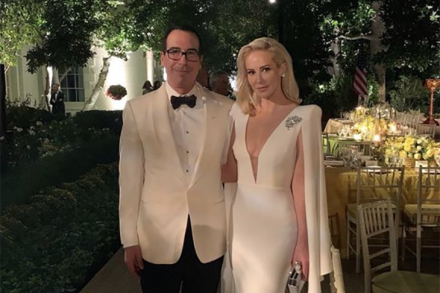
This article is in The Spectator’s inaugural US edition. Subscribe here to get yours. It’s a muggy afternoon in Los Angeles as I sit down to write this — in my bathroom; the AC’s broken everywhere else. My vanity is dusty, cluttered with books, storyboards, shot lists and Post-It notes scrawled in ALL CAPS with a frenzied thick black Sharpie: ‘LOCK PICTURE!!’ ‘BEAR!’, ‘BORN FREE!’, ‘DOG’, ‘STATE DINNER’, ‘DOCUMENTARY!’, ‘GRATITUDE’. It’s a bizarre medley, as is my life in general. I’m married to a Republican politician but I’m extremely liberal. I cannot say that I’m a Democrat either. These terms are binary and weaponized.

louise linton

Not in front of the servants

This article is in The Spectator’s inaugural US edition. Subscribe here to get yours. Tina Turner believed that she and Ike were the reincarnation of god-kings from ancient Egypt. That, she reasoned, was why they’d been reincarnated in Memphis, Tenn.; their souls would feel at home in a city that, like Memphis in ancient Egypt, was sited on a big river and noted for its artisanry. In a perversion of Buddhism by celebrity culture, people select past lives that are more interesting than their present ones. Plenty of people believe they used to be Napoleon Bonaparte, but when was the last time you met someone who boasts of having been an illiterate Corsican goat-herder who married his cousin?

downton abbey britain u country