Culture

Culture

Watching The Woman in the Window

Watching the rich and famous fail in slow motion is an American pastime. Movies like Heaven’s Gate, Eyes Wide Shut and They All Laughed weren’t reviewed — it was their circumstances, their producers, their directors that people wrote about. And that’s how most material on The Woman in the Window (not to be confused with the 1944 Fritz Lang film) begins and ends: ‘A.J. Finn’s beloved novel had a long, hard way to its release.’ Now that it’s here, dumped on Netflix in lieu of a major theatrical release by the already defunct Fox 2000 Pictures, fans of the book are largely disappointed, and fewer still are even aware of the film’s existence. Compared to the anemic ‘Netflix Originals’ it’s padding out, The Woman in the Window is a stunner.

woman window

No success like failure

It is a standard narrative in all showbiz reporting — and one that arts hacks seem to be duty bound to abide by. It is the fairy tale of ‘Making It’: the story of a star whose career took time to get off the ground but, thanks to perseverance and self-belief, went stratospheric. It goes like this: ‘I was a nobody, and I was turned down from everything. And I nearly didn’t go to that final audition, but whaddya know? I turned up and... Shazam! Oscars raining down and a mini-series on Netflix.’ There is an encyclopedia of stars who toughed it out before making it big.

failure

Girls on film

We are familiar with Dorothea Lange’s gritty photographs of Okies during the Dust Bowl. New Woman Behind the Camera, which opens this month at the Metropolitan Museum of Art, showcases Lange alongside over 120 other female photographers who refashioned modernist photography in the same years. Photography developed through an ambivalent relationship to high art: the camera was often seen as a medium for journalism or advertising. Yet the modernist works here showcase the flexibility of the form. Still, there are inherent tensions in an exhibit like this. Georgia O’Keeffe once declined an invitation to be included in an exhibit of ‘women artists’: she wanted to be seen as competing with the best, not as part of an inferior subgroup.

woman

The legend of forgotten musical genius Mieczyslaw Weinberg

Imagine a John Le Carré thriller — one of the Cold War ones, not the tedious lefty morality tales — in which we meet Moisey Vainberg, a Polish Jewish composer who defected to Russia in 1943 while the rest of his family was wiped out in the Holocaust. He dresses like a mid-level bureaucrat and seems nervous about drawing attention to himself. That’s sensible, given that under Stalin he was thrown into jail for ‘Jewish bourgeois nationalism’. Then he’s rehabilitated, his music enjoys a brief vogue, he’s performed by Rostropovich, Shafran, Gilels, Kogan and the Borodins — but he never boasts or promotes himself. A few recordings reach the West, but the critics wrinkle their noses.

Weinberg
vacation

Vacation time

Americans are a vacationing people. We are those who mark the start of the summer with a ticket to a theme park, the end of high school with a tour of Europe and the commencement of retirement with a cruise trip. In fact, it is entirely fitting that the coronavirus pandemic first gripped the American consciousness thanks to reports of travelers marooned aboard cruise ships, or that, as virus cases at last start to flatline, many long for nothing more than for a few weeks at sea in the company of, say, Tony Orlando or Marie Osmond. Some would say that this vacationing spirit is an inheritance from our empire-making ancestors in Great Britain.

Steve Austin and the age of the antihero

Having been fired from World Championship Wrestling, Steve Austin entered the World Wrestling Federation with the godawful gimmick of 'the Ringmaster’. He looked no more memorable than a Big Mac. Austin knew that something had to change. He wanted to adopt an edgier, more cold-blooded character. The WWF’s creative team, displaying the genius that had inspired 'Mantaur’, a wrestler who dressed up as a Minotaur, and 'the Gobbledy Gooker’, proposed such names as 'Otto Von Ruthless’ and 'Chilly McFreeze’. According to wrestling legend, Austin was at home when his wife told him to drink his tea before it turned 'stone cold’. Stone Cold Steve Austin was born. He quickly flourished.

stone cold steve austin
beatles george harrison

The rising cost of remembering the Fab Four

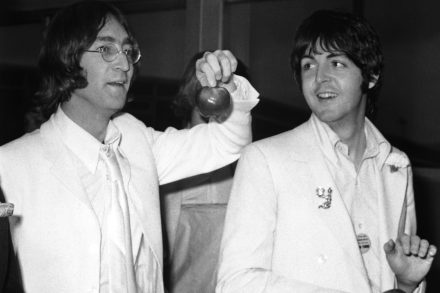
If you’re a diehard Beatles fan, it’s been a pricy year. And it’s going to get much worse. Within the last 12 months, those of us unable to resist new or repackaged product from John, Paul, George and Ringo have wrestled with sense and reason over whether to splash out on one of the numerous limited-edition, pre-release colored vinyl copies of McCartney III, the mega-box set reissue of Lennon’s Plastic Ono Band from 1970 or even, dear old Ringo’s recent EP, ‘Zoom In’. And there’s more to come; expect a cascade of marketing hoopla around August’s Get Back, the Lord Of The Rings director Peter Jackson’s reworking of the band’s 1969 misery-memoir movie Let It Be, as well as a lavish tome of McCartney lyrics and memoirs in November.

Bo Burnham flirts with post-comedy

Inside, the new Netflix special from comedian Bo Burnham, was apparently written, directed, performed and edited solely by its star throughout the COVID-19 pandemic. An impressive feat. In the same timeframe, I posted literally thousands of tweets. What can I say? Some of us are just born productive. Inside was also filmed entirely in one room. It is a bare, depressing sort of room, uncomfortably reminiscent of the bare, depressing room of the angel-faced serial killer at the center of Takashi Miike's classic horror film Audition. Happily, Burnham is not keeping a captive in a trash bag. Still, the man has a lot of morbid cerebral fun with the question of whether he can leave the room or whether he is stuck there. Burnham’s creativity is to be welcomed.

bo burnham

Friends: The Reunion turned out to be a pointless nostalgia-fest

There has never been a sitcom as successful as Friends. Between 1994 and 2004, it was watched by 25 million people a week in the US. Seventeen years after the final episode aired, Friends was still the fourth most watched show in the world. So it’s no surprise that the new Friends: The Reunion is a big deal. One of my friends, a fellow super fan, told me she drank a bottle of wine before watching it and recommended I do the same. I lack self-control so drank two, passed out, and then had to face the 94-minute special sober and hungover. It was unclear what the reunion set out to be. An extended interview with the cast? A documentary about the show’s origins? An hour in and it still wasn’t clear.

friends

Fifty years of ‘Imagine’

How should we measure the value of a work of art or, failing that, a pop song? Take for example John Lennon’s ‘Imagine’, which was recorded exactly 50 years ago. It certainly scores on the sales front, having shifted about 21 million copies worldwide according to the Chartmasters service. That’s a healthy revenue stream in anyone’s book, particularly for a tune whose lyric urges us to envision a world without possessions. The ‘ubiquitous’ box gets ticked, too, because ‘Imagine’ has been covered by more than 200 other artists. It’s the unifying song we all seem to turn to at moments of crisis, as when the pianist David Martello performed it in front of the Paris Bataclan the morning after the November 2015 terrorist attacks there.

imagine

The last American video store

Without a space or a location, ‘the movies’ cease to exist. They become another niche interest with little to no cultural penetration. Awards-season movies, summer blockbusters, sleeper hits and all kinds of popular film phenomena cease to exist without theaters themselves. The last year has shown how much movie culture relies on the activity of going to the movies and the physical space itself. The Last Blockbuster is a documentary about the death of another space: video stores, albeit through the eyes of the last representatives of a corporation that destroyed vast swaths of mom & pop stores across America. Lloyd Kaufman, the co-founder of Troma Entertainment, an independent film distribution company, is an understandably hostile subject.

video
bill evans

Along came Bill Evans

Everybody Digs Bill Evans was the title of one of the great jazz pianist’s early albums, but it wasn’t always clear that he dug himself, at least if you consider his turbulent personal life. There was, first and foremost, the lifelong drug habit, culminating in his death in 1980, which one friend deemed the ‘longest suicide note in history’. There was also the introspective streak that prompted Evans to doubt his own prowess even after he had become famous. But there is also the spellbinding music that casts as powerful a spell as ever. Small wonder that a cluster of purveyors of fine music, including Craft Records, Electric Recording Company and Acoustic Sounds, have rushed to reissue his works on CD and LP.

Meet the Medici at the Met

Someone turned up the lights on portraiture in 16th-century Florence. Lyrical poetry went hard rock. Colors became high key. Posers now scowled at the oil-on-canvas flashbulbs, giving attitude, hands on hips, codpieces a-thrusting. Not that they even cared about looking as good as they do. Sure, they got dressed for the occasion, but notice the sprezzatura, the indifference in their eyes to the whole affair. That was the maniera moderna, the new mannerism in art, and no one captured it better than Agnolo Bronzino. Whether it’s the ‘Portrait of a Young Man with a Book’ (mid-1530s), his haughty painting in the collection of the Metropolitan Museum of Art, or ‘Lodovico Capponi’ (1550-55), his side-eye romancer at the Frick Collection, these figures are boys interrupted.

Medici
van morrison

Van Morrison is a sane man in a mad world

The dopes with tropes are at it again. This time, their target is Van Morrison. But Sir Ivan is, as Billy Joel would say, an innocent man. Morrison has been called a crank and anti-Semite because of the lyrics to his new single, ‘They Own the Media’. The Guardian, which really does have a problem with Jews, has called him a tinfoil milliner. The Forward, which used to be a serious Jewish paper, claims that Van’s title ‘espouses a classic anti-Semitic trope’. No, it doesn’t. What the lyrics say is that our media are owned by a small number of people. That their outlets habitually lie to our faces. That they want us to believe that ‘ignorance is bliss’, so let’s leave the decisions to the experts. And that we’ll ‘never get wise’ until we look behind the curtain.

Take a trip with Hawkwind

Fifty years ago this midsummer, a ramshackle convoy of vehicles — cars, minibuses, motorcycles and the odd hippie caravan — could be seen wending its way through the western counties of England in search of a patch of agricultural land near Shepton Mallet called Worthy Farm. There had already been several Sixties-era tribal gatherings in the fields beyond Michael Eavis’s now legendary homestead, but this iteration, widely advertised in the countercultural press, came billed as the very first Glastonbury Festival.

Hawkwind

The end of the awards ceremony

‘People of color were snubbed in major categories,’ announced Ricky Gervais, during his final kamikaze stint hosting the 78th Golden Globe awards in January 2020. ‘Nothing we can do about that, Hollywood Foreign Press are all very racist.’ Gervais’s words haunt the HFPA this week. The Hollywood institution behind the annual Golden Globes awards is floundering beneath an industry-wide wave of condemnation and cancellation, that culminated on Monday with NBC announcing they won’t be screening the  2022 edition.

awards

Even Elon Musk couldn’t make SNL funny

When my editor asked me to watch Elon Musk on Saturday Night Live, I desperately wondered how to refuse. 'Actually, I’m busy on Saturday night.' Useless. There are a million ways to watch live television after the event. 'I’m a bit sick right now.' Too sick to watch TV and write about it? 'I can’t hear Pete Davidson’s voice without wanting to punch a hole in wall.' True, but not the sort of thing you want to admit in public. Damn it, I agreed. Journalists are asked to visit Syria and Afghanistan, after all, so I can hardly complain about having to watch Saturday Night Live. As The Spectator’s unofficial comedy critic, moreover, I have had to experience everything from Sarah Cooper’s mirthless Netflix special to Charlie Kirk’s bewildering satire on right-wing punditry.

musk

Elon Musk is too funny for Saturday Night Live

My secret hope is that Elon Musk uses his Saturday Night Live platform this weekend to launch a comedic assault on political correctness so brutal it is seared forever onto the collective retina of the biggest audience the show has had in decades. Provided he used SNL to tear with equal vigor into each faction of the intersectional oppression spectrum — ethnic minorities, LGBTQIAA+ folk, fat activists, the blue-haired and non-binary, flat-earthers and feminists — and managed while doing so to be undeniably funny, I believe Musk could get away with it. He could also create a cultural moment the value of which as a non-fungible token would be more than perhaps even he could afford.

elon musk

A film festival fiasco in Narrowsburg, New York

If you’ve been involved in the production of a film, you know how intoxicating it can be. The prospect of seeing your work projected in a theater is reason enough to put up with a nightmare of unrelenting stress — for some people, anyway. Others might struggle to understand how an entire town (Narrowsburg, an admittedly very small town in Upstate New York) could be so easily swindled by a cartoon mobster and a mysterious woman with a French accent who tells people she’s from South Africa or Normandy, or descended from French royalty. Then again, Richard Castellano did appear with Billy Crystal and Robert De Niro in Analyze This, and Jocelyne Castaldo, well, who in America wouldn’t be charmed by such an accent?

Narrowsburg
korean

Korean film has mastered the supernatural horror genre

There is a moment in the Jung brothers’ 2007 ghost film, Epitaph, when a young doctor in wartime Korea realizes that the wife he adores does not have a shadow. He is entertaining her with a shadow puppet show in their home when he notices the aberration. ‘Walk to me,’ he says as he waves a naked light bulb in front of her. She had been a visiting medical student in Japan a year earlier and, unbeknownst to him, had died in an accident. It’s a moment that perfectly illustrates the psychological subtlety and brilliant scene-making of Korean film. Epitaph is about a group of young doctors working in a hospital under the Japanese occupation.

Cousteau

Cousteau was the boulevardier of the oceans

For a few years in my youth, I tried to be a scuba diver. In the deep pool of the 63rd Street Y, I learned how to clean my goggles and clear my air regulators. In a lake in upstate New York, I earned my certification by swimming around a junked car in 40 feet of murky water. I went on to dive to some cold wrecks in Rhode Island and to swim among the warm sea life of Key Largo. But it wasn’t for me. The bobbing boats and the heavy equipment caused much discomfort. In one dive I banged my head against the tank of my divemate and nearly got knocked out. It was all less elegant, and quite a bit more involved, than I had expected. My inspiration, of course, had been Jacques Cousteau. The French underwater explorer dived the world’s oceans a generation ago as both celebrity and icon.

I’m turning Japanese

The history of late-20th-century Japanese pop music can seem like an impenetrable forest to western minds. But stare past the trees and there is light from a parallel universe. The Japanese Group Sounds records of the mid-Sixties (the Spiders, the Tempters and er, the Mops) were heavily influenced by the original moptops’ Budokan Temple show of 1966 and surf bands such as the Ventures. The university campus hard rock of Tokyo’s late-Sixties freak scene — Les Rallizes Dénudés, Flower Travellin’ Band, Speed, Glue and Shinki — and the lysergic rock soundtracks to Shuji Terayama’s revolutionary theater plays by the great J.A.

japanese

Messing up Beethoven’s Ninth

I'm sorry to start this blog with a lament, but something sad has happened in Pittsburgh. Its maestro — whom some critics believe to be the finest orchestral conductor in the world — has recorded Beethoven's Ninth and unexpectedly messed it up. Since becoming music director in 2008, the 62-year-old Austrian Manfred Honeck has transformed the reputation of the Pittsburgh Symphony to the point where no one still refers to the 'Big Five' American orchestras, traditionally those of Boston, Chicago, Cleveland, New York and Philadelphia. It's happened fast, too. In 2013, the New York Times reported that the Big Five were being swept away by 'the great western migration' of musical excellence to Los Angeles and San Francisco. No mention of Pittsburgh.

beethoven ninth

The Decemberists are the only band I adore who have a number of songs I actively despise

Sixteen years ago I interviewed a young American musician whose band had just signed to Rough Trade. We met in a café in west London, and he had with him a bag of records he’d just bought. In that bag were a handful of classic albums from the English folk revival, and in the intervening years Colin Meloy has steered the Decemberists to a frankly unlikely level of success, even topping the US album charts with The King Is Dead. Over three April weekends they have been performing shows to mark their 20th anniversary (which was actually last year, but pandemic and all that), which highlighted just what an idiosyncratic band they are. The English folk came through in the beautiful ‘January Hymn’, but also in one of Meloy’s other loves — the prog-metal side of folk.

decemberists

The decadence of Taylor Swift’s re-recorded record

As a Taylor Swift fan, I’ve greeted the past year’s cornucopia of fresh content with joy and gratitude. Every day, I wake up and wonder: will there be a new Taylor Swift album today? With astounding frequency, there is! The latest entry into the T. Swift COVID-era canon, following folklore and evermore, is the re-recording of her 2008 smash-hit album Fearless, now available as a 27-track pop-country marathon known as Taylor’s Version. Of course, the original Fearless was also, strictly speaking, ‘Taylor’s Version’. But the master recordings of that album, which can be monetized through lucrative avenues like sampling and commercials, belonged to the label she signed with as a teenager, who refused to sell them back to her.

taylor swift

Dark knight of cool

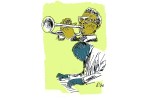
‘When the legend becomes fact, print the legend,’ Maxwell Scott announces in The Man Who Shot Liberty Valance. Something like this seems to have occurred with the jazz trumpeter Chet Baker. Other members of the West Coast jazz scene such as the great saxophonist Art Pepper were often in dire straits, but Baker has come to personify the romantic figure of the tragically doomed jazz artist. Once heralded as the ‘prince of cool’, Baker’s self-destruction was lucidly chronicled by Bruce Weber in the 1988 documentary Let’s Get Lost. Even his album covers, where he gazes broodingly at the viewer, underscore his vulnerability. His meditative, halting solos formed the antithesis of the frenetic bebop movement emanating from jazz haunts on the East Coast.

chet baker
grassi

Pictures at an exhibition

Deeply learned and with a style all his own, Marco Grassi is as at home with Duccio as with Norton Simon; Bronzino as with Bernard Berenson; a painting on his desk as with a ‘Last Supper’ in Florence’s Basilica of Santa Croce. In the Kitchen of Art presents Grassi’s most memorable essays over a span of nearly 20 years. Beginning with a previously unpublished memoir of his Florentine upbringing, and continuing with in-depth critical discussions of the greats of Italian art along with recollections of the grandest collectors of the 20th century, this book shows the art world in the round.

sundance

Sundance memories

In 1969 Robert Redford purchased 5,000 acres of land in the mountains of Utah and built a ski resort. In 1981 he founded the nonprofit Sundance Institute to cultivate new voices in American independent film through annual directing and screenwriting labs (alumni include Quentin Tarantino and Paul Thomas Anderson) and to provide financial support for select projects. In 1985 Redford took over the US Film Festival, based in nearby Park City, and brought it under the Sundance umbrella. In 1989, the festival had its breakthrough with Sex, Lies, and Videotape. Sundance became a film-industry fixture for talent scouts, acquisitions executives and journalists, particularly those inclined to go skiing in their downtime.

The old man and the documentary

If I had been told that Ken Burns’s next PBS extravaganza would be a documentary film about a 20th-century American novelist and, even more improbably, had been asked to guess his (or more likely her) identity, my last choice might well have been Ernest Hemingway. This is partly because there seem to be so many more eligible Burns subjects (Richard Wright, Willa Cather, F. Scott Fitzgerald, Toni Morrison) but largely because Hemingway, man and novelist, seems especially uncongenial to the Burns sensibility: his fiction doesn’t tell us very much about America; he remains in bad odor in women’s studies departments; his Great White Hunter persona must surely spell a painful three episodes for ‘viewers like you’. First, the bad news.

hemingway