Culture

Culture

The Christmas carol canon that could have been

Ah, Christmastime, the season for pheasant dinners, fancy ties, the land of Toyland from which you can never return, the time of year when everyone falls in love, when snowmen fly away to Snowland to become Eskimos, and when kids run around crying “dickory dock!” Right? All of these are bits and pieces from old Christmas songs that have mostly been forgotten, whose imagery and language failed to take hold in the general imagination. It’s quite fascinating how such a small number of songs, from a very narrow moment in American life, have contributed so heavily to defining the mood and feel of our secular Christmases.

Seventy-five years of It’s a Wonderful Life

Frank Capra was almost too embarrassed to pitch his greatest film to Jimmy Stewart. At the time, both men were veterans in a post-war slump. Capra was losing his first confidence in a shelved Cary Grant vehicle-that-wasn’t, a script that had been torturously adapted from a short story by a fractious committee of writers. He stumbled through the premise for Stewart, trying to explain that the story starts in Heaven, and it’s about this fellow who thinks he’s a failure in life, so an angel named Clarence has to come down and stop him from jumping off a bridge, except Clarence can’t swim so the fellow has to save him… Here Capra paused, mopping his brow to confess, “This doesn’t tell very well, does it?

wonderful life

Glee gives us a lesson in wokeness

YouTube just sent me down a spiral rewatching old Glee clips. I was never a Glee fan per se, but it was one of a handful of shows I watched when my kids were in Peak Mode, old enough to be interesting as people but not yet old enough to realize I was not interesting. My kids are adults now; did TV help form them? It did. And what we all learned, and especially how we learned it, is a lesson on the failure of 2021 wokeness to achieve change and instead just piss people off. In 2021, Glee strikes me as influential. When it first aired, it was thought of as, at least in a suburban way, edgy. I’m sure eyes all across Brooklyn are rolling but they miss the point. Glee being suburban was the point.

glee

The problem with Christmas movies

The first time I saw Love, Actually was upon its release in 2003. I thought it was generally fine, with good and bad bits jostling alongside one another, and scene-stealing performances by Bill Nighy and Emma Thompson going a long way to counteracting the dreadfulness of some of the supporting cast and general Richard Curtis-ness of it all. But what I was unprepared for was that it would go from being a reasonably enjoyable portmanteau rom-com into a film that epitomizes "the contemporary spirit of Christmas," or some such rubbish. Every year, it becomes ever more ubiquitous, whether on streaming platforms, television or even in theater re-releases. And every year, something inside me dies a little harder.

The return of the brilliant Nicolas Cage

Casting was recently announced for the film Renfield, an apparently humorous and contemporary take on the character of Count Dracula’s long-suffering assistant. The actor Nicholas Hoult, who has displayed fine comic timing in projects such as The Favorite and The Great, is to star as Renfield, and he will be joined by the hyphenate actress-rapper-comedian Awkwafina. Yet the most exciting news is that none other than Nicolas Cage will be playing Dracula. After a decade in which he has largely eschewed mainstream Hollywood, it's a career comeback that even the undead would be delighted by.

What if the Beatles never broke up?

There's a new film out about the Beatles. It's about them being in the studio doing stuff that you do in studios. It's really good. Have you heard about it? Of course you have. I am referring to the omnipotent, omniscient and omnipresent Get Back, Peter Jackson's reanimation of the Beatle Band’s last days in the bunker. It's a bit like Downfall, but without Hitler. As a middle-aged doctor of rock 'n' roll, I am required to take the cultural temperature of what we now call Heritage Rock. This is the music that middle-aged (and rising) men like when they can't keep up with young people’s music anymore. Think Neil Young, and that pretty much covers it. And when Neil Young is not re-releasing live albums from his pomp, then think the Beatles.

white album

Yellowstone appeals to a nation of soft hands

My wife, who spent much of her childhood in Northern California — and whose grandparents owned orchard land and kept horses and other animals — always laughs at me during our yearly trip to the county fair. The reason is my fear of walking past the horse stalls. I’m a transplant to rural Michigan from New York City. Farm animals were an abstraction for most of my life. I pass by rows of Clydesdales, hindquarters facing me on either side in uncomfortable proximity, and imagine my own demise if one should decide to kick. My father is no horseman, but he's had a long career in manufacturing. He can make or fix most anything. (Once, in the ‘70s, he fell from a catwalk onto a floor where F-14 Tomcats were being assembled below.

Remembering the brilliant Stephen Sondheim

The composer and lyricist Stephen Sondheim’s death at the age of ninety-one does more than simply rob the world of musical theater of its most distinguished practitioner. With the exception of Tom Stoppard, there was probably no greater figure in contemporary world drama. To mourn his passing, even at his extraordinary old age, is only to pay dutiful homage to one of the most extraordinarily diverse (in its usual meaning) and accomplished canons of work that any figure in English-language drama has ever produced. He was born in New York City in 1930 and remained the most Manhattanite of talents all his life.

The forgotten poetry of John Martin Finlay

Dense Poems and Socratic Light: The Poetry of John Martin Finlay, edited by David Middleton, Wiseblood Books, 2020 To say that the poet John Martin Finlay has been forgotten is not quite right. He was never “remembered” — read by a significant number of people — in the first place. But his best work is as good as the best work of many of the poets of his time, and Wiseblood Books is hoping to set things right with a two-volume collection of his poetry and prose. Born in southern Alabama on a peanut and dairy farm in 1941, Finlay went to university in Alabama and Louisiana, where he graduated with a Ph.D. from Louisiana State University in 1980 and converted to Catholicism that same year.

Hunter Biden: portrait of the scam artist

“Put your phone in your pocket and keep it there.” So I was told by the guard blocking the entrance of the Georges Bergès Gallery. I wasn’t going to argue. That’s because I was about to become one of the few to see The Journey Home: A Hunter Biden Solo Exhibition. I can’t think of many other art shows that have been more heavily discussed than seen. This critic is guilty as charged. But the press, and the public, are not all to blame for the ratio'd attention. The Journey Home has been open “by invitation only” for just about its full run. Invitations have not been abundant. You will not find the show listed on the gallery website or given any sense of its start or end.

hunter biden

The unstoppable Meghan Markle

It has been quite the 2021 for Meghan Markle, Duchess of Sussex. When she wasn't publishing children’s books or giving birth to her second child, the trollingly named Lilibet, she was winning court cases and dropping in at the United Nations. Little wonder that some have speculated that, in the not too distant future, she might even consider running for the highest office in the land. But more than anything else, this year has been dominated by interviews for Meghan. The conversation that she and her husband-cum-comic relief sidekick Prince Harry had with Oprah Winfrey in March certainly enlivened lockdown with endless conversations about whether the Duchess’s much-vaunted "truth" was anything of the kind, and launched a thousand opinion pieces.

A brush with Joan Mitchell

“I am not a member of the make-it-ugly school,” Joan Mitchell told Irving Sandler for an ARTnews article in 1957. No argument there. As the major retrospective of more than eighty significant paintings by the second-generation Abstract Expressionist (1925-92), now on at the San Francisco Museum of Modern Art, reminds us, Mitchell’s artistic life was an unabashed pursuit of the beautiful. Her paintings, derived from nature but fired in the kiln of memory and intuition, are testaments to that pursuit, showing us at once just how devilishly out-of-reach true beauty can be, and just how important it is to stretch one’s arms and go for it.

mitchell
six

Broadway’s back(side)

Six, a British musical about the wives of Henry VIII, is a scrupulously specious masterclass in frivolity. These onetime queens, blinged and bedazzled as fabulous pop-diva Kweens, undertake a six-way singing competition to decide who had “the biggest, the firmest, the fullest... load of B.S. to deal with” from their kingly husband. Backed by a live band, the sextet’s set amounts to the love child of RuPaul’s Drag Race and the Super Bowl halftime show. Those hoping for revisionist revenge fantasy will leave disappointed. Those seeking dramatic tension, character development, tragedy — anything having to do with the second half of the phrase “musical theater” — won’t find it here.

dress

A dream of a dress

In America: A Lexicon of Fashion, now at the Metropolitan Museum’s Costume Institute, leads with a quote from Jesse Jackson: “America is... like a quilt — many patches, many pieces, many colors, many sizes, all woven and held together by a common thread.” Odd, then, that framed above the first wall panel is a drab, blank-faced suggestion of an American flag constructed from just two rectangular pieces of faded denim. Created by Sterling Ruby as a mourning garment — a model huddles under a wearable version in the exhibition poster — “Veil Flag” (2020) sits awkwardly next to the bright patchwork skirts, dresses, trousers and jackets also on display in the first room. Yet it’s the right way to open a fashion exhibition that makes you think, not swoon.

hargrove

Roy Hargrove doubles up

There is a long tradition in jazz of duets between trumpeters and pianists. It’s a mercilessly revealing format, one that allows for no hiding on the part of either performer. But the payoff can be big. Consider the recording of the song “Weather Bird” by Louis Armstrong and Earl Hines in December 1928. Part of the epochal Hot Five and Hot Seven sessions that announced a new era in jazz, it featured Armstrong ripping up the old New Orleans playbook. Armstrong’s remarkable rhythmic innovations sometimes seem like the musical equivalent of a running back stutter-stepping to fake out his opponent before exploding downfield. He helped ensure that the Roaring Twenties really roared.

christmas

Sounds of Christmas past

Remember when you were so nonchalant about the inevitability of Christmas privilege? Time off work for the holiday season, a few messy coke sessions with colleagues, maybe a boozy catch up with an old friend? Going out and about, buying your bourgeois real (dead) Christmas tree? Remember how you hated all that cornball Christmas muzak piped into the department stores: Slade, Wizard, Macca’s “Wonderful Christmastime,” The Waitresses’ “Christmas Wrapping,” Nat King Cole’s “Christmas Song”? Then along came Covid and Christmas was gone. You, my friend, were in lockdown. As each post-2020 festive season rolls into town, so will the new variants of Covid. The smart set decrees that it’s best we all hole up for the holidays and hide from disease and death.

Threatened with yet another Downton Abbey film

I love a British costume drama. My idea of a perfect Sunday afternoon film is something picturesque, with Anthony Hopkins, Emma Thompson, Helena Bonham Carter and others looking alternately repressed and joyful, even as they exchange clenched platitudes about weather, money and train times. "The trains mean sex," someone who knows about these things told me once. "And so does money." "But what about the weather?" I asked. "Surely storms mean passion and sunshine means sex?" The expert looked at me as if I was mad. "The weather means the weather. Don’t forget, these things are filmed in Britain.

downton

Taylor Swift tells it all too well on her ‘Red’ re-release

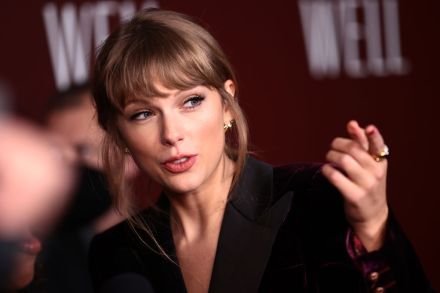
Taylor Swift's album Red, her fourth, originally dropped my first semester at college. It was Swift's first full foray into pop and she matched the change in genre with a new signature appearance; bright red lips and glossy, straight hair with bangs to replace her sweeping curly blonde 'do. Red's exploration of deep love and subsequent heartbreak, plus Taylor's personal reinvention, felt like a comfort during my own transition into adulthood. Swift announced last week that she would be dropping the "Taylor's Version" of Red earlier than expected. The re-release is part of a project Swift has undertaken to re-record all of her masters after her former label sold them out from under her to Scooter Braun.

red taylor Swift attends the 2020 Sundance Film Festival (Getty Images)

The Crown flirts with the unthinkable

Just as the real-life antics of the Royal Family continue to enthrall — and in some cases, depress — so their fictional presentation in the ongoing high-class Netflix soap opera The Crown is eagerly dissected, and garlanded with awards, with each passing season. The show's upcoming fifth installment promises to be the most high-profile yet, partly because of its starry cast featuring everyone from Dominic West (as Prince Charles) and Jonny Lee Miller (as Prime Minister John Major) to Lesley Manville (as Princess Margaret) and, unexpectedly, Imelda Staunton as HRH herself.

Spencer gives us a haunted and one-note Princess Di

Director Pablo Larrain, who delved into the emotional discontent of Jacqueline Kennedy following the assassination of her husband in Jackie (2016), has tackled another famous icon’s turmoil triggered by powerful outside forces, in this case, the British monarchy. Natch we’re talking about Princess Diana, played here by Kristen Stewart. Stewart gamely steps into big shoes, but overall, her portrait of the adored princess comes off as loaded and a bit one-note. Di, on the eve of her separation from Prince Charles and royal life, is imprisoned and harassed by the paparazzi and monarchy and at a breaking point. Like Jackie, the setting and time of Spencer is micro-focused. It’s Christmas Eve 1991 as Lady Di arrives late to the Queen's Sandringham Estate.

spencer

The decline of the woke Marvel superhero movie

One of the few upsides to the pandemic’s peak last year was that no Marvel films were released in theaters. We’ve suffered for it this year, with the arrival in close succession of Black Widow and Shang-Chi and the Legend of the Ten Rings and, now, Eternals. But it was glorious to have a period of nearly two years without the deadening, soul-destroying presence of Kevin Feige’s Riefenstahlian masterplan deafening audiences in our multiplexes, and, increasingly, at home on our televisions. But the brief respite is over. Over the next eighteen months, no fewer than seven Marvel films will fight, bite, and kick their way onto our screens, in Phase Four of the Marvel Cinematic Universe.

Afrofuturism and the decline of our art museums

In the spirit of the times, the Metropolitan Museum of Art in New York City is now unveiling an “Afrofuturist period room” that “transforms a 19th-century interior into a speculative future home” of historically oppressed blacks. It’s quite a departure in museology. Entitled “Before Yesterday We Could Fly,” the gallery is expected to have long wait lines. The Bulletin, the Met’s highly regarded quarterly publication, will devote its February 2022 issue to the project and include a “graphic novella” that “animates the objects on display.” A co-ordinate Afrofuturist festival at Carnegie Hall promises that “epiphanies will abound in this experiential saga through the realm of Astro-Blackness.

The latest Dune entertains and underwhelms

The hotly anticipated second cinematic take on Frank Herbert’s 1965 sci-fi classic Dune rolls into theaters this week. Billed as an adaptation and "not a remake" of the now infamous 1984 misfire by David Lynch, the new Dune arrives in two, two-hour-plus chapters. “Part I” is a marked upgrade from that butchered Lynch release (he lost creative control and the film was edited down to just over two hours). It's sharper, more conformable in its saga duds, and as you can imagine, the use of modern computer effects goes a long way to offset those cheesy sets and clunky models. Set some 8,000 years in the future in a galaxy far, far away, Dune, much like Star Wars (or is it Star Wars, much like Dune?

dune
mel gibson

Mel Gibson defies the keyboard cancelers

News that the John Wick spin-off TV series The Continental has cast its lead actor has produced an unusual amount of vitriol. Was this because it was not an actor of color, a trans performer or some other member of a minority? No: it was because it was Mel Gibson, the walking bête noire for liberals in Hollywood. As many other outspoken conservative or simply unsavory figures (hello, Kevin Spacey! Greetings, Armie Hammer!) have found their careers curtailed for their antics, Mel Gibson’s continued ability to book high-profile acting roles has driven the sharp-fingered mob of social media into a frenzy of disdain. Granted, Gibson’s star has waned considerably since his heyday in the Eighties and Nineties.

The PR campaign at the heart of the war on Netflix

What remains unsaid about The Closer? In the past two weeks, countless thinkpieces have tackled the controversy around Dave Chappelle’s new special by trying to determine where its content falls on the line between funny and offensive, provocative and hateful, punching up versus punching down. Some analysis has been thoughtful; some has been shallow and reactionary. But virtually all of it centers on the question of whether Netflix should have removed or censored the special for being “harmful” to vulnerable people. That notion is one that Netflix executive Ted Sarandos summarily rejected in a statement sent to employees, writing that “while some employees disagree, we have a strong belief that content on screen doesn’t directly translate to real-world harm.

chappelle netflix

The art world is cashing in on anti-capitalism

A few years ago, the American artist Barbara Kruger covered the facade of Frankfurt’s Kaufhof department store with a pair of huge eyes. It was as if Big Brother had come out of retirement. Above that unsparing gaze was the slogan, in Kruger’s signature Futura bold italic font: ‘You want it. You buy it. You forget it.’ It was a typical work of art by Kruger. She made her career from what’s called culture jamming, subverting media messages by transforming them into their own anti-messages and by indicting the business of capitalism. In 1987, for instance, she took an advertising image of an all-American boy flexing his juvenile biceps before his admiring sister and subverted that message with the overlaid words ‘We don’t need another hero’ for a billboard.

kruger art
morgan

Vital Morgan

The jazz world has seen more than its share of tragic deaths, whether it was the trumpeter Clifford Brown perishing in a car crash at night on the Pennsylvania Turnpike at the age of 25 or saxophonist John Coltrane succumbing to liver cancer at 40. But perhaps there is no more confounding early demise than that of the bravura trumpeter Lee Morgan. Morgan, who played with the likes of Miles Davis, Dizzy Gillespie and Art Blakey as a teenager, was known for his swagger, which he liked to call ‘expoobidence’, (which he deployed as the title for an album for Vee-Jay records in 1960 called Expoobident). It all came to a swift terminus in February 1972 after his common-law wife Helen, a tough cookie if there ever was one, pulled out a .

eastwood

Eternal Eastwood

No other actor epitomizes traditional masculinity and classic cool quite like Clint Eastwood. He long ago ceased being human and transformed into the American Man. When you watch an Eastwood movie, your understanding of Clint as the ultimate symbol of a bygone America is so potent that an otherwise mediocre movie like Gran Torino feels greater than the sum of its parts because of his mere presence. This is what an American man is supposed to look and sound like, you think, as Clint snarls and puts up his dukes. These young whippersnappers, they’re no good now, you hear. Which is to say that when you watch one of his films, you’re not watching the actor become a different character, but rather hoping to see ‘Clint Eastwood’.