Zadie Smith

The joyless rants of Andrea Long Chu

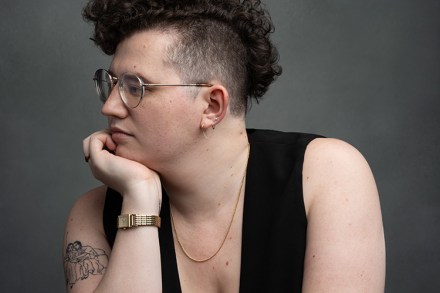
Andrea Long Chu is the poster girl critic of the American progressive left. Writing primarily for New York magazine, she made her name with takedowns of celebrated novelists such as Hanya Yanagihara, Bret Easton Ellis and Zadie Smith. In 2023, she was awarded the Pulitzer Prize for reviews that ‘scrutinise authors as well as their works’. Refusing to separate art from artist is, of course, central to both critical theory and wider progressive politics. ‘If that makes me an ideologue, so be it,’ Chu writes. Authority is a compilation of these pieces, two new essays, and others that Chu published between 2018 and last year. ‘Why shouldn’t a book review be personal?’ she asks. ‘It’s my understanding that persons are where books come from.’ Fair enough.

Bella Freud’s fashion inquisition

From our US edition

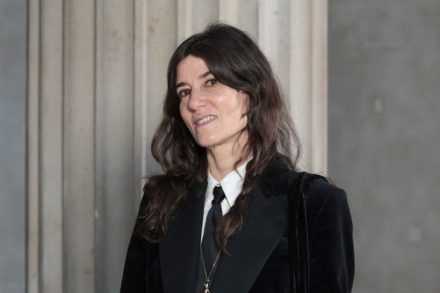
Sometimes the mind needs to take a break. And I can’t think of a better stopping-off place than the soothing, gloriously bonkers discussions on the Fashion Neurosis podcast, hosted by the British fashion designer Bella Freud. Its premise is that Freud, daughter of Lucian and great-granddaughter of Sigmund, encourages guests to recline on her couch and talk over any and every aspect of their relationship to fashion. Her mellifluous, affirming manner is much more soft soap than steel wool, but this is not territory that requires a serious broadcaster, and the concept proves a surprisingly fruitful route into family history, personal stories and high-grade gossip.

Fashion

My Martin Amis FOMO

From our US edition

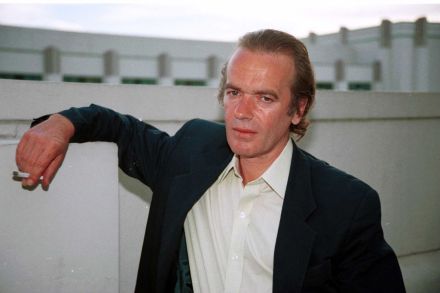
There’s a form of social anxiety that a lot of people suffer from — FOMO, Fear of Missing Out. “Fear” suggests something imaginary, that isn’t really happening. Not so. I don’t fear missing out, because I know I am. Friends are always asking me: are you appearing at the Hay Literary festival? No! Am I speaking at the Idler festival? No! Am I reading extracts from my book at the Cambridge Literary festival? No! “What?!” they exclaim in mock disbelief — and then ask why I’m not appearing at some small, obscure, local village literary fête, somewhere in the rectum of rural England. I’ve gotten used to the seasonal snub from the lit-festival establishment. And there are literary events all over London that I haven’t been invited to as well. OK, I’ll live.

Amis

Joan Didion deserves better 

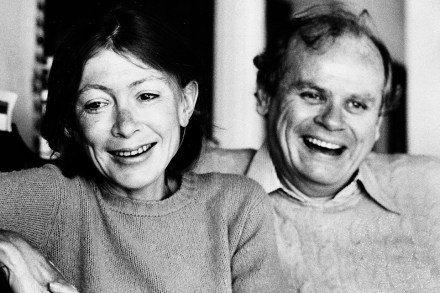
This book is an example of a regrettable new trend – the solipsistic biography. I mean lives of famous people written by unfamous people (usually women) who want to tell you a LOT about themselves. This one is about the writer Joan Didion by an academic called Evelyn McDonnell who never met Didion but believes that they had much in common. Here is her evidence. ‘She was born within one year of my mother; I was born within two years of her daughter. We are both native daughters of California. We lived in New York at the same time, though she was an Upper East Side celebrity and I was a Lower East Side punkette. We both wrote in order to live. We both thought about the sea whenever we felt troubled.’ Soul sisters, right?

Zadie Smith’s latest novel is glittering, grand and powerful

From our US edition

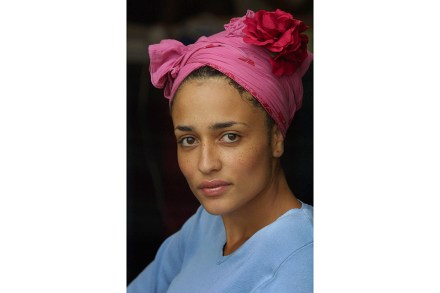
Zadie Smith’s ambitious latest novel, The Fraud, is loosely based on the life of the little-known nineteenth-century novelist William Harrison Ainsworth. He was, at one point, as popular as Charles Dickens, his novel Jack Sheppard even outselling Oliver Twist. But Ainsworth’s fortunes and talents declined, and his forty-odd novels vanished, going out of print soon after his death. Throughout The Fraud, as he sits groaning at his desk, he is an arch reminder not only of the vagaries of literary fame, but the pains of fiction-writing. As his cousin Eliza Touchet observes: “God preserve me from that tragic indulgence, that useless vanity, that blindness!” Ainsworth’s actual writing is redolent of educated middle-class male privilege. (“‘Zounds!

fraud

Hilary Mantel, Zadie Smith and Salman Rushdie are cut down to size

It is very possible that Peter Kemp is the best-read man in Britain. Certainly, as the Sunday Times’s chief literary critic for goodness knows how many years, he has read and opined upon more works of new fiction than most. His is either a dream job or an absolute nightmare, depending on how you feel about the state of the novel. A Sisphyean task? A Herculean labour? Or just a colossal waste of time? All those keen debuts, all that second-rate dross, all those egos demanding attention: Kemp has bravely buckled up, knuckled down and dutifully banged out 800-plus words, week in, week out, for longer than most of us have been able to tell the difference between a roman-fleuve and a roman-à-clef.

Getting in touch with my inner groupie

From our US edition

I like to think that I’m too intelligent, too sophisticated and too cultured to get excited by the presence of a famous person. Let the manipulated masses enjoy the bread and circus of celebrity; we enlightened members of the metropolitan elite are far above that sort of thing! Or so we like to think. Whenever I encounter the famous, something very strange happens to me: I go all groupie. I get excited. I giggle. I inwardly drool. I long to please. I want to be their new best friend. I want to tell all my friends about meeting my famous new friend — who isn’t actually my friend, but never mind. I was reminded of my groupie tendencies the other day when I went to the Idler Festival, Britain’s best arts and literary festival. I usually hate those sorts of events.

famous