Youtube

Why is YouTube so afraid of free speech?

From our UK edition

On Sunday, the hosts of Trigger--nometry, a YouTube show, posted an interview they’d done with Peter Hitchens. They labelled it ‘Lockdown is a catastrophe’, which is an accurate summary of the journalist’s view. Over the next 24 hours, instead of generating tens of thousands of hits, which their interviews normally do, it got very few. Why? The hosts got out their laptops and discovered that when they searched for the video on YouTube or Google, its parent company, it didn’t come up. That wasn’t a technical hitch. On the contrary, it’s a tried-and-tested method that YouTube and Google employ to suppress traffic to material they regard as suspect. It’s a form of censorship known as ‘shadow banning’.

So good and so raw that avoiding it might be the wisest course: Sea Wall reviewed

From our UK edition

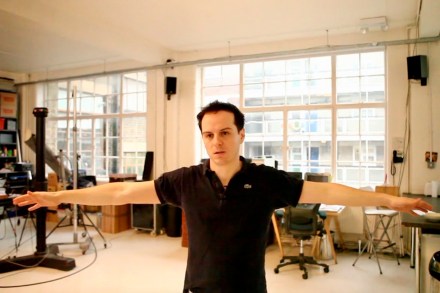
Sea Wall, by Simon Stephens, is a half-hour monologue about grief performed by Andrew Scott. The YouTube clip has been viewed more than 250,000 times. The habitual quirks and irritants of Stephens’s writing are all here: the inept jokes, the laddish swearing, the fascination with 1970s pop, the preference for males over females and the improbable back stories of the characters. The narrator is an Irish cameraman who earns money photographing ‘cushions and digital alarm clocks’ for shopping catalogues. He tells us a bit about his wife and daughter (‘she was a Caesarean’), but he’s far more interested in his father-in-law, Arthur, a scuba-diving maths teacher who retired from the British army with the rank of lieutenant-colonel.

Like a project the BBC might have considered 30 years ago and turned down: The Understudy reviewed

From our UK edition

Hats off to the Lawrence Batley Theatre for producing a brand-new full-length show on-line. Stephen Fry, with avuncular fruitiness, narrates a dramatisation of David Nicholls’s novel The Understudy, published in 2005. It’s a back-stage comedy about a newly written sex romp inspired by the life of Lord Byron.The show, predictably enough, is entitled, Mad, Bad And Dangerous To Know. Here’s an excerpt. Byron is lying athwart his naked Italian mistress when the Muse summons him to draft a sonnet. ‘I must write here,’ he declares, ‘between a pair of pert peaches nestled.’ This doesn’t quite catch the tone of period drama in its present form.

The genius of Martha Graham

From our UK edition

If eight weeks in lockdown have brought out my baser impulses (biscuits by the sleeve, total renunciation of waistbands), it’s also deepened my appetite for culture at its plushest, liveliest heights. It’s not just beaches and brunches I’m craving as spring turns to summer and I round off my second month of working supine on the couch; it’s the sheen of studio lights on the Rothkos at Tate Modern, the whooshing sound when a dancer catapults herself across the Sadler’s Wells stage. Fortunately, watching the Bolshoi’s Swan Lake on Marquee TV last week — the world’s favourite ballet by the world’s foremost company — went some way in filling that void.

Drunk singers, Ravel on film and prime Viennese operetta: the addictive joys of classical YouTube

From our UK edition

The full addictive potential of classical YouTube needs to be experienced to be understood. And let’s be honest, there are only so many lockdown videos the human spirit can take. Which is why, on a sunny spring afternoon, in the prime of life and health, I find myself watching the late John Cage stroking bits of wire with a feather. The haircuts suggest that we’re in the early 1980s, and a Ron Burgundy type is floating across the screen in a little box. ‘It’s been said that listening to John Cage’s music is like chewing sand,’ he explains, unhelpfully. It seems that we’ve also been watching a live performance by the German artist Joseph Beuys. And that we’re now going over to a firework display at the Pompidou Centre.

The best Macbeths to watch online

From our UK edition

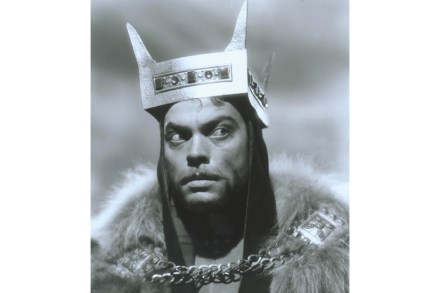
The world’s greatest playwright ought to be dynamite at the movies. But it’s notoriously hard to turn a profit from a Shakespearean adaptation because film-goers want to be entertained, not anointed with the chrism of high art. Macbeth is one of the texts that frequently attracts directors. Justin Kurzel’s 2015 version (Amazon Prime) didn’t triumph at the box office despite two fetching performances from Bamburgh Castle in Northumberland and the snow-wreathed mountains of Skye. The trailer is a marvel. Two exhilarating minutes of virile swordplay, ravishing scenery and dramatic cathedral interiors. The film itself is a cold, muddy slog. Michael Fassbender plays the thane as a gruff Celtic robo-hunk married to a skinny, nun-like beauty, Marion Cotillard.

Too much photocopying but stick with it: The Assistant reviewed

From our UK edition

First, the latest digital film release: The Assistant, starring Julia Garner in a slowly, slowly, catchy, catchy tale that won’t grab you from the off — I kept thinking: is anything actually going to happen? — but you must stick with it, you must. This is a film of quiet, cumulative power, which has much to say about serial sexual predators in the Harvey Weinstein mould, and how they get away with it. Or did. (Am hoping, praying, we can use the past tense now.) Garner plays Jane, who works for a Hollywood movie mogul, and events take place over the course of a single day. She gets into the office early. She flicks on the lights. She cleans down the couch. She gulps a bowl of Froot Loops. She photocopies a script. Something will happen now, surely.

Worth watching for the comments thread alone: NT’s Twelfth Night livestream reviewed

From our UK edition

‘Enjoy world-class theatre online for free,’ announces the National Theatre. Every Thursday at 7 p.m. a play from the archive is livestreamed. I watched Twelfth Night, from 2017, starring Tamsin Greig as a female Malvolio. What a handsome, absorbing and brilliantly staged production this is. Greig’s comically petulant Malvolia won the plaudits, rightly, while the underrated Tim McMullan turned Sir Toby into a wry, wobbly, loveable drunkard, like a rock star enjoying a month on the lash. Having seen the original, I preferred the online experience, not least because of the noisy comments thread beside the screen. ‘How do you get Russian subtitles?’ ‘When’s the interval?’ ‘Why a female Malvolio?’ ‘Watching from Brussels.

Watching dance online is an advantage, not a concession: BalletBoyz – Deluxe reviewed

From our UK edition

Another day in isolation, another bid to find joy in my lone state-sanctioned walk. (Pro tip: stay out longer than is interesting or comfortable to brighten the prospect of another 20-plus hours indoors.) For dance critics, the C-19 crisis and its mass theatre shutdown has triggered some major thumb-twiddling. Like our exercise classes and therapy sessions, it’s time to go digital. Ballet DVDs and cinema broadcasts have been in the mix for a while, but it’s taken the abolition of live performances to spike serious interest in dance streaming.

Absorbing and meticulously researched play about Partition: Drawing the Line reviewed

From our UK edition

Theatres have taken to the internet like never before. Recorded performances are being made available over the web, many for free. Getting Better Slowly is about a dancer, Adam Pownall, who spent two years fighting Guillain-Barré syndrome. This lucid and enjoyable show (recorded at Lincoln Drill Hall) now looks horribly topical. A young artist, paralysed by a mysterious disease, refuses to surrender and eventually reclaims his vigour and his ability to communicate. That could stand for the profession as a whole. Hampstead Theatre offers a slate of three recorded plays. (Wild and Wonderland were reviewed in The Spectator on 30 June 2016 and 12 July 2014 respectively).

Dave Rubin is here to solve ‘95 percent’ of the internet’s problems

The dream of a free internet — if it was ever more substantial than a fantasy — is crumbling. This decade began with the Arab Spring and the belief that technology powered movements for liberty across the globe could triumph over despotism. Instead the decade closes with the growing realization that technology is driving events in unpredictable ways. Confused, people are left feeling less not more in control of their lives. And a sketch is being made — however faintly — for a new form of despotism: Big Tech. Big Tech is unaccountable, opaque and deeply embedded within the lives of billions. Since 2016 it has been dumped on from both the left and the right, and former Big Tech workers.

locals dave rubin

Washington’s war on internet free speech

The United States is apparently angling to outpace its European counterparts when it comes to silly, censorious, and sometimes dangerous internet policies. The latest batch of bad proposals in Congress and the White House would, if enacted, kill social media, search engines, and so much other online life as we know it. While conservative politicians here grumble about ‘hate speech’ and ‘data protection’ laws abroad, the alternatives they keep proposing here are just as speech-squelching and business-burdening. And while Republican party leaders have historically hated US plans like the ‘Fairness Doctrine’ and ‘net neutrality’, they keep pushing their own versions of these for social media.

internet

Ben Shapiro on YouTube: ‘if you approach an unspecified line, you’ll be downgraded or banned’

This week was a disastrous one for those of us who care about free speech, viewpoint diversity, and fighting censorship. To find out why, tune in to the latest episode of Censored in the City, in which Ben Shapiro and I dig into the nefarious ongoings at YouTube. ‘They’ve created this incredibly vague standard, if you approach an unspecified line, then, presumably, you will be downgraded or banned,’ Ben tells me. ‘And not only that, in their new standards they say they are going to upgrade what they call “authoritative sources”. Well who the hell are “authoritative sources”?

ben shapiro youtube

Steven Crowder and the folly of the internet playground

Steven Crowder is a buffoon with a YouTube channel who churns out simplistic, reactionary political takes every day. This might be passably acceptable if he were funny – but he is not. He’s just annoying and obnoxious. Still, annoying and obnoxious people have populated the internet since it first became available to the masses: bitter insults were hurled at the dawn of the online bulletin board.

steven crowder carlos maza

No wonder Ukip failed at the European elections

From our UK edition

How does a party go from topping the European elections in 2014 to scraping just over three per cent of the vote, and losing every single MEP, within five years? Just ask Ukip, whose staggering decline is one of the most interesting subplots from this year’s elections. Some may quibble with the ‘Ukip wipeout’ analysis. They will say that the real Ukip - both its heart and structure - was rolled over to the Brexit party along with its former leader, Nigel Farage. And they’re partly right: in the last few years, all but three of Ukip’s 2014 MEPs quit the party. But the fact remains that Ukip still mounted a full slate of candidates and took these elections seriously. And it failed miserably.

The story behind my naked video

From our UK edition

It was a bright Sunday afternoon and I was harmlessly at my desk, minding my own business, when from the other end of the house I heard the screech of a thousand cats being boiled alive in oil. ‘Why did he do it? WHY??’ a female teenage voice wailed, half plaintive, half accusing, all righteous fury. It was my daughter’s — and evidently I’d been rumbled. So why exactly had the poor girl’s embarrassing father chosen to film a naked video of himself and then post it up on YouTube for the entire world to see? Well the main one, fairly obviously, was as a satirical response to Victoria Bateman, the Cambridge professor who has been protesting against Brexit over the past few weeks by using the novel method of getting her kit off on TV and the internet.

Thank God for the return of the generation gap in pop

In June, a 20-year-old man called Jahseh Onfroy was murdered after leaving a motorcycle dealership in Deerfield Beach, Florida. Onfroy was a rapper, who recorded under the name XXXTentacion, and he had become extraordinarily successful — his two albums had reached No. 2 and No. 1 in the US, despite moderate sales, because of the amount of online plays they had received. The day after he died, my social-media timelines were full of music writers discussing his death, and the tenor — from those with kids, at least — was clear. Post after post noted that XXXTentacion was a nasty piece of work, and few should mourn him, yet the writer’s 13- or 14- or 15-year-old was devastated by his death. XXXTentacion was, it is true, a nasty piece of work.

Teen spirit | 9 August 2018

In June, a 20-year-old man called Jahseh Onfroy was murdered after leaving a motorcycle dealership in Deerfield Beach, Florida. Onfroy was a rapper, who recorded under the name XXXTentacion, and he had become extraordinarily successful — his two albums had reached No. 2 and No. 1 in the US, despite moderate sales, because of the amount of online plays they had received. The day after he died, my social-media timelines were full of music writers discussing his death, and the tenor — from those with kids, at least — was clear. Post after post noted that XXXTentacion was a nasty piece of work, and few should mourn him, yet the writer’s 13- or 14- or 15-year-old was devastated by his death. XXXTentacion was, it is true, a nasty piece of work.

Go slow

From our UK edition

You remember slow TV? Pioneered by the Norwegian Broadcasting Corporation, with its classic Bergensbanen — minutt for minutt (2009), which simply stuck a camera on the front of a train and recorded the seven-hour journey from Bergen to Oslo, slow TV is a nice idea, unless you’re in a hurry, or you have an actual life. The advantage of what you might call Slow YouTube is that it’s pretty damn quick in comparison to the original hardcore Scandi stuff. Slow YouTube — a term I’ve just invented — tends to consist of short documentary-style pans and long shots of everyday things, places and people, a bit like watching your uncle’s old cine-footage of your aunt walking down the street sometime in the 1970s.

Meet your makers

From our UK edition

Older readers will perhaps recall the once popular Sunday evening TV programme Scrapheap Challenge, in which oily, boilersuited blokes competed to build machines out of materials scavenged from a scrapheap. Even older readers will recall The Great Egg Race, presented by Professor Heinz Wolff, in which bejumpered and bewhiskered engineers competed to build machines from materials scavenged from a BBC studio. These days, engineers and inventors call themselves makers, live and work on YouTube, are covered in tattoos and piercings, and the best of them are women. Laura Kampf posts videos about once a week. She makes bicycle sidecars and the sort of quirky furniture that probably seemed like a good idea at the time and goes down well in Cologne.