Youtube

Why are people dying at gender reveal parties?

A New Hampshire man has turned himself into the police after setting off 80 pounds of explosives as part of a 'gender reveal' party. NBC reports that the explosion, which was apparently caused by a legal explosive called Tannerite, led to fears of an earthquake and cracked the foundations of nearby homes. 'Are you kidding me?' said one local, 'I’m all up for silliness and what not, but that was extreme.' Extreme? Yes. Unique? No. 'Gender reveal' parties, for those who are unfamiliar, involve the announcement of whether a couple’s new child is a boy or a girl through the release of blue or pink smoke or other substances. Sounds innocent? Sure. But the elaborate risk-taking that goes into these events has escalated to frightening, fascinating levels.

gender reveal

Big Tech bans people who discuss election fraud. That’s a bad idea

Big Tech really doesn't want people to talk about alleged voter fraud in the 2020 presidential election. I warned that this would happen shortly after the Capitol storming on January 6: 'Because some pro-Trump demonstrators resorted to violence in order to have their concerns heard, politicians will refuse to ever again discuss any voting irregularities. Big Tech companies will likely crack down on anyone who dares talk about it on social media.' The day that article was published, President Donald Trump was permanently banned from Twitter. The reason? The social media company was concerned that letting Trump state that he did not believe in the legitimacy of the election results could incite further violence among his supporters.

Jake Paul, the Great White Nope

It’s easy to hate Jake Paul. No, really, it is easy. It is easier than fixing a bowl of instant soup or making your way home from your next door neighbor’s house. It is easier than beating a three-year-old at golf or the US triumphing in a war with Liechtenstein.The well-known YouTuber is immensely unlikable. His face conveys gormlessness and smugness simultaneously. His voice is off-puttingly nasal yet serenely self-assured. He is so insanely, shamelessly money-hungry that he put out a Christmas song with the refrain ‘buy that merch’.  His videos appeal to an audience largely consisting of young teenagers with thumbnails of women’s backsides and titles like ‘SURPRISING Best Friend with EMILY WILLIS STRIPTEASE.

jake paul

Can you really blame Trump supporters for refusing to accept the election result?

It's been a week and a half since Election Day and the results are still not certified — some votes counts, like in Georgia, are close enough to require a recount, and there are numerous legal challenges put forth by the Trump campaign. Still, because the mainstream media has 'called' the race for Joe Biden, the left has arrogantly told Trump supporters to just concede already. The allegations of voter fraud, fact checkers claim, are unsubstantiated and baseless. Some of them may very well be, but it was a pretty well accepted fact in America (until Donald Trump brought it up, that is) that people cheated in elections. In fact, Biden's newly minted chief of staff, Ron Klain, tweeted in 2014 that 68 percent of people believe elections are rigged 'because they are.

refusing election result

Ten films to help you celebrate Hallowquarantine

October 31 brings Halloween 2020 but after a year like this, the idea of a single day dedicated to unrelenting horror seems almost quaint. Answering the door to masked strangers isn’t the novelty it used to be, distributing candy apples to more than six trick-or-treaters now carries a five-figure fine, and by participating in this cultural appropriation of the Celtic festival of Samhain you run the risk of getting yourself canceled. This season of the witch it is altogether safer to stay indoors, blow out the jack-o-lantern and confine yourself to strictly cinematic scares. To help you celebrate Hallowquarantine, we have compiled a list of the 10 best movies about or set on All Hallows’ Eve. Halloween (1931) https://www.youtube.com/watch?

hallowquarantine

Sensei it again

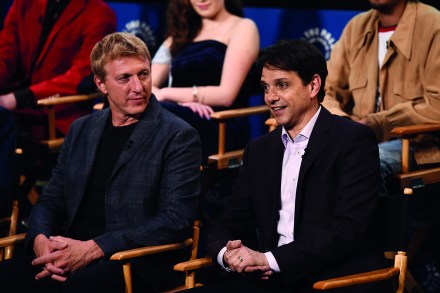
Almost the best thing about Cobra Kai is the response, somewhere between bemused and appalled, it has generated among woke millennials and Gen Z-ers. One reviewer noted with concern that neither of the two featured karate schools is run by someone of Japanese ethnicity. Another squirmed at two middle-aged men’s almost Trump-level inappropriateness, when while discussing the qualities of a mutual old flame they referred to their inamorata’s ‘tightness’. Yes. It’s one of the reasons we Eighties dinosaurs love it so. Cobra Kai is our safe space. It’s our Helm’s Deep of unreconstructed sexism in an otherwise Orcish horde-overrun Middle Earth of gender fluidity, #MeToo and micro-aggressions.

cobra kai

The Facebook ad boycott is a convenient virtue-signal

When the coronavirus pandemic hit, some industry pundits predicted that the ‘techlash’ — the souring of public opinion on huge technology companies like Facebook and Google — would cool off or even disappear entirely. After all, with everyone cooped up at home, surely we’d develop a newfound appreciation for the technologies that became the only way to connect with others?That was short-lived. Following extraordinary social pressure amid this summer’s heated civil unrest, an advertiser boycott of Facebook has taken hold. Under the moniker Stop Hate For Profit and backed by the Anti-Defamation League and NAACP, brands from Starbucks to Unilever to Coca-Cola have bravely pulled ads from Facebook for the month of July.

facebook

Dave Rubin is here to solve ‘95 percent’ of the internet’s problems

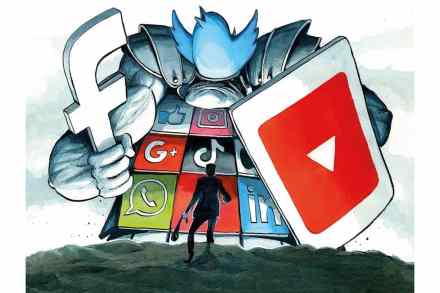
The dream of a free internet — if it was ever more substantial than a fantasy — is crumbling. This decade began with the Arab Spring and the belief that technology powered movements for liberty across the globe could triumph over despotism. Instead the decade closes with the growing realization that technology is driving events in unpredictable ways. Confused, people are left feeling less not more in control of their lives. And a sketch is being made — however faintly — for a new form of despotism: Big Tech. Big Tech is unaccountable, opaque and deeply embedded within the lives of billions. Since 2016 it has been dumped on from both the left and the right, and former Big Tech workers.

locals dave rubin

Washington’s war on internet free speech

The United States is apparently angling to outpace its European counterparts when it comes to silly, censorious, and sometimes dangerous internet policies. The latest batch of bad proposals in Congress and the White House would, if enacted, kill social media, search engines, and so much other online life as we know it. While conservative politicians here grumble about ‘hate speech’ and ‘data protection’ laws abroad, the alternatives they keep proposing here are just as speech-squelching and business-burdening. And while Republican party leaders have historically hated US plans like the ‘Fairness Doctrine’ and ‘net neutrality’, they keep pushing their own versions of these for social media.

internet

Ben Shapiro on YouTube: ‘if you approach an unspecified line, you’ll be downgraded or banned’

This week was a disastrous one for those of us who care about free speech, viewpoint diversity, and fighting censorship. To find out why, tune in to the latest episode of Censored in the City, in which Ben Shapiro and I dig into the nefarious ongoings at YouTube. ‘They’ve created this incredibly vague standard, if you approach an unspecified line, then, presumably, you will be downgraded or banned,’ Ben tells me. ‘And not only that, in their new standards they say they are going to upgrade what they call “authoritative sources”. Well who the hell are “authoritative sources”?

ben shapiro youtube

Steven Crowder and the folly of the internet playground

Steven Crowder is a buffoon with a YouTube channel who churns out simplistic, reactionary political takes every day. This might be passably acceptable if he were funny – but he is not. He’s just annoying and obnoxious. Still, annoying and obnoxious people have populated the internet since it first became available to the masses: bitter insults were hurled at the dawn of the online bulletin board.

steven crowder carlos maza

Thank God for the return of the generation gap in pop

In June, a 20-year-old man called Jahseh Onfroy was murdered after leaving a motorcycle dealership in Deerfield Beach, Florida. Onfroy was a rapper, who recorded under the name XXXTentacion, and he had become extraordinarily successful — his two albums had reached No. 2 and No. 1 in the US, despite moderate sales, because of the amount of online plays they had received. The day after he died, my social-media timelines were full of music writers discussing his death, and the tenor — from those with kids, at least — was clear. Post after post noted that XXXTentacion was a nasty piece of work, and few should mourn him, yet the writer’s 13- or 14- or 15-year-old was devastated by his death. XXXTentacion was, it is true, a nasty piece of work.

The vlogging fantasy that bewitches children

My friend’s ten-year-old daughter has a new hobby. Like many of her school pals, she hopes to become a video blogger — a ‘vlogger’. She has started to record clips of herself for others to watch, share and ‘like’. She showed me a few, then gave me a list of famous vloggers to watch: JoJo Siwa, iJustine, Noodlerella, Zoella. Their names sounded so bizarre. But they are totally familiar to tweenage girls. Like an earnest marketing executive, my friend’s daughter then explained to me that it was all a matter of numbers. If her videos are viewed 40,000 times on YouTube, she can have adverts placed on them; 100,000, and companies would start sending her products to promote. One million and she’d be a bona fide YouTube star.

Kevin Allocca glosses over YouTube’s terrifying power

On 25 April 2005, Jawed Karim sent an email to his friends announcing the launch of a new video site — intended for dating — called youtube.com. Within 18 months, the site was being used to view 100 million videos a day. Last year it had more than a billion users, watching five billion videos every day, with creators uploading 300 hours of video to YouTube every minute. Given this almost incomprehensible scale, it’s fitting that the word Videocracy — the title of YouTube Head of Trends Kevin Allocca’s history of the site — evokes the idea of an authoritarian dystopia. Like any approved account from such a regime, its analysis never strays far from the realms of the vapid or tepid.