Yorkshire

Portrait of an addict: Keshed, by Stu Hennigan, reviewed

From our UK edition

In the tradition of literary lowlifes and lushes as conceived by Charles Bukowski or Jean Rhys, Keshed is a story about an alcoholic, with a distinctive 21st-century, northern English working-class setting. Formally inventive, the ‘now’ sections of the novel are not sentences but strings of words, effective and short: ‘Rancid liquid squirting chin soggy torso peristaltic rush rapid.’ One such section opens the book, setting the uncompromising tone. The protagonist, Sean (‘He was pissed when I met him and he hasn’t changed’), a bright, charismatic lad from an unnamed small Yorkshire town, has been to university in Manchester where he drank heavily. He then moved back home, and we meet him working as a plasterer, living to get smashed.

A revival of Alan Bennett’s early work is long overdue

From our UK edition

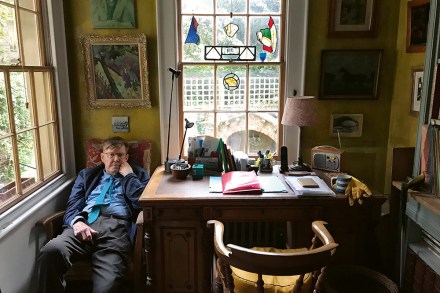
It is a curious literary form, the published diary. A surprising number of the classic diarists did write for eventual, usually posthumous, publication – Chips Channon under a 60-year embargo, A.C. Benson, Samuel Butler, in his wonderful notebooks, and surely the possibility was in the minds of Samuel Pepys and the Duc de Saint-Simon. More recently, great diaries have been published within the author’s lifetime. James Lees-Milne’s first instalment came out 30 years after the period it described. Alan Clark’s initial offering, covering 1983-92, appeared in 1993. Tony Benn’s hilariously tedious volumes emerged on a rolling programme which slowly caught up with the events they described.

A crisp and refreshing account of the apple

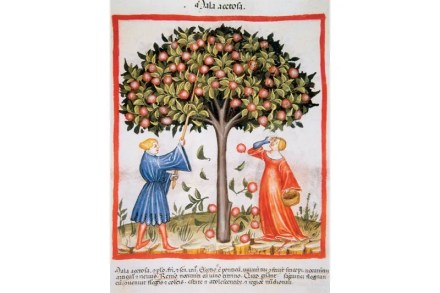
In Food for Life, Tim Spector’s book on the science of eating, the author gives the chemical makeup of a mystery food, listing more than 30 scary-sounding E numbers, sugars, acids and chemicals, before revealing that it is an… apple. Sally Coulthard’s book, The Apple, shows that it’s the apple’s complexity as well as its familiarity, that makes it the ideal punchline for Spector, and, for Coulthard, a perfect vehicle to carry the history of how we grow, trade, cook and eat together and take responsibility for each other and the environment (or not).

apple

This Muslim playwright believes Yorkshire is headed for civil war

From our UK edition

Expendable, at the Royal Court, is an urgent bulletin from the front line of the grooming gang scandal in the north of England. The setting is a kitchen in Yorkshire where Zara is trying to keep her family together after her son, Raheel, was outed as a rape suspect by a national newspaper. White thugs dump parcels of excrement on their porch and Zara cowers under the kitchen table, too scared to answer the door. The racists have mounted a mass demonstration, supported by the cops, which causes local bus services to be cancelled. Every Muslim in town is terrified of a white vigilante gang who recently targeted a blameless Yemeni pensioner and kicked him to death. It gets worse.

Fear and gloaming at Whitby Goth Weekend

From our UK edition

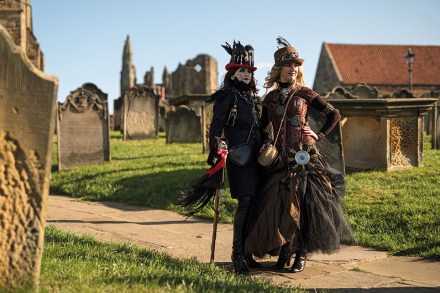
Every April and every Halloween weekend, Whitby in Yorkshire is chock-full of goths. As I seem to be The Spectator’s adopted goth, I was asked if I might like to write about Whitby Goth Weekend (WGW). Goth is a fashion that emphasises darkness and death: Edgar Allan Poe and Alice Cooper are the best examples. But the only thing to fear from WGW is the horrific train journey. It took six hours to go from King’s Cross to Whitby. Whoever called the TransPennine Express an express needs to explain themselves. When I finally got to Whitby, I was met by thousands of people in costumes. Even the dogs were taking part. Some were wearing wings covered in silver cobwebs, others had orange witches’ hats. One was dressed as a bat.

Our flood defences aren’t fit for the climate we have now

From our UK edition

This week’s political fuss over whether the floods in Yorkshire constitute a ‘national emergency’ misses the point. It is too easy to declare an emergency for political purposes, to give the impression that the government is taking an issue seriously. It’s quite obvious that the scenes we have seen this week represent an emergency — the question is whether, once the helicopter visits and photo opportunities have ceased, all is forgotten and the political world moves on to the next emergency. What has happened in Yorkshire over the past week is a symptom of chronic failure to manage the threat of flooding. We keep suffering these events. In 2015, it was Cumbria; a year earlier it was Somerset.

The bald truth about Patrick Stewart

From our UK edition

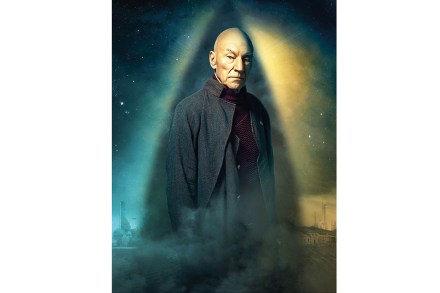
When you think that David Niven, James Mason, Ronnie Barker, Arthur Lowe and Powell and Pressburger among many others failed to receive state honours, you’ll concede that a knighthood was wasted on Patrick Stewart, even if for 12 years he was chancellor of Huddersfield University. I mean no disparagement by this. I’m happy for him. But why not Sir Timothy Spall or Sir Timothy West? Stewart, whose grandmother was Stan Laurel’s babysitter, is a middle-ranking mime with a gurgling bass-baritone. He is chiefly famous for the X-Men franchise and for playing Captain Jean-Luc Picard in 178 episodes of Star Trek: The Next Generation, plus the numerous feature film spin-offs in which he commanded an interplanetary spacecraft.

Who needed who most? The complex bond between Vera Brittain and Winifred Holtby

From our UK edition

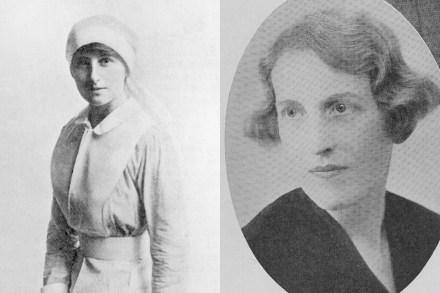
These letters between Vera Brittain and Winifred Holtby cover 15 years of a remarkable friendship that began at Somerville College, Oxford in 1919 and ended only with Holtby’s premature death from kidney failure in 1935. Brittain went up to Oxford in 1914, but left to serve as a nurse in the first world war. She returned freighted with tragic experience, having lost both her lover and her brother and tended the wounds of horribly injured soldiers close to the front. She disconcerted younger undergraduates with her fiercely competitive and forthright views combined with fragile looks and a general air of suppressed trauma.

All Creatures Great and Small: how to explore the Yorkshire Dales

From our UK edition

James Herriot's story about a country vet, with scene-stealing backdrops and a coterie of country characters first instilled the Yorkshire Dales into the popular imagination back in 1972. The beauty of Yorkshire wasn't lost on Herriot, whose real name was Alf Wright: 'At times it seemed unfair that I should be paid for my work,' he writes in All Creatures Great and Small, 'for driving out in the early morning with the fields glittering under the first pale sunshine and the wisps of mist still hanging on the high tops.' And it seems millions of others are now discovering the joys of this landscape too.

On the cowboy’s trail: Powder Smoke, by Andrew Martin, reviewed

From our UK edition

Detective Inspector Jim Stringer is back. This is a York novel, or rather a Yorkshire crime novel. The LNER railway policeman investigates a supposed double murder, tracing a young fairground sharpshooter, Kid Durrant, through the Yorkshire countryside. The action takes place over five days in early December 1925, but is interspersed with flashbacks to the previous summer. At the York Gala, Stringer sees Durrant perform his fairground act, quick on the draw and deadly accurate with his pistol and rifle-shooting. His entertainment persona is a Wild West cowboy, presented with appropriate Western colloquialisms, spoken with an American accent acquired by way of Sheffield. The gala is observed by a rare female balloonist, Mary Ainsworth, who hovers bizarrely above the crowd.

Northern noir: The Mating Habits of Stags, by Ray Robinson, reviewed

From our UK edition

It is winter in north Yorkshire. On the brink of New Year, Jake, a laconic, isolated former farmhand in his seventies, stands alone on the moors with no idea where to go or what to do. Traumatised by the death of his wife and consumed by thoughts of a child he knows cannot be his, he is a beleaguered man. He is also in flight from the law, following the murder of an elderly resident in a local care home. With nowhere to turn, he falls back on an old friend, Sheila, for sanctuary and solace.

Inside the unassuming house where the Brontës’ creativity thrived

From our UK edition

‘Do you think, because I am poor, obscure, plain and little, I am soulless and heartless?’ Jane Eyre asks Mr Rochester in Charlotte Brontë’s most famous novel. What is true of Brontë’s heroine is equally true of her Yorkshire home: plain in every sense of the word and yet perennially mysterious. The muted colour palette of the house reflect the rain-soaked moors surrounding it in a pleasing way. Tucked up a cobbled lane behind Haworth’s church, you would easily pass by without stopping to notice it, were you not aware of its former inhabitants. Much like Jane, Charlotte Brontë believed herself to be physically unremarkable. Even after the success of Jane Eyre, she struggled to make a strong impression in social situations.

The wonder of Whitby

From our UK edition

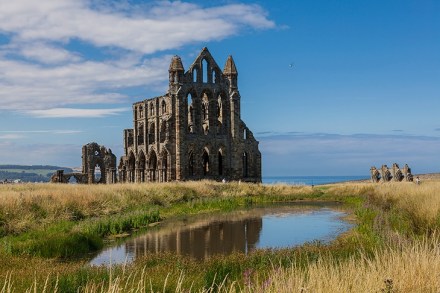
The 199 steps up to the ruins of Whitby Abbey are a pilgrimage; they always have been. And any good pilgrimage takes effort. Count Dracula (also acquainted with the north Yorkshire town) cheated — he climbed the steps in the guise of a black hound. These days, with its new £1.6 million museum and visitor centre, our vampire friend would find a ground-floor café and gift shop. Knowing English Heritage, there is probably a bowl of water for dogs, which would have kept the Count happy. Whitby is a surprise, with a history that puts it at the heart of Britain’s spiritual and literary life. It’s also a vibrant fishing port, somewhere you can pick up a Whitby smoky — smoked herrings — made in a backstreet smokehouse.

Hebden Bridge

From our UK edition

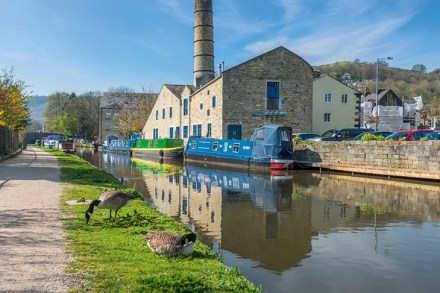
Bernard Ingham once told a story about a reporter from the Financial Times who went to cover an election in Ingham’s hometown of Hebden Bridge. The reporter went into a café and ordered a cappuccino. ‘Nay lad,’ said the waitress. ‘You’ll have to go to Leeds for that.’ Ingham told that story to illustrate the no-nonsense attitudes of the rugged town he grew up in — attitudes that shaped the man who became Margaret Thatcher’s muscular press secretary. So it’s wonderfully ironic that Hebden Bridge is now full of fair trade craft shops and vegan cafés. Nowadays you’ll have no trouble ordering a cappuccino — so long as you like it made from ethically sourced coffee beans.

The turf | 31 August 2017

From our UK edition

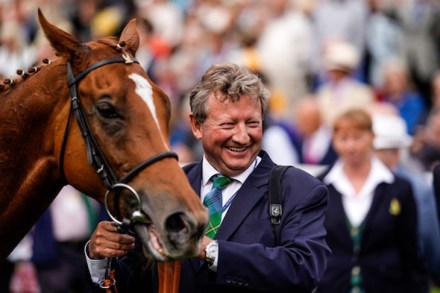
I guess his mother may have called him Patrick, or even, when he was in trouble, ‘Patrick Joseph’, but in the racing world, like the great McCoy, the Yorkshire-based jockey P.J. McDonald is known simply by his initials. It is proving to be a very good year for ‘P.J.’ and those initials are becoming steadily more familiar to southern as well as northern racegoers. He won the National Stakes at Sandown and the Molecomb Stakes at Glorious Goodwood on Karl Burke’s Havana Grey, and as I write he is firmly ensconced in the top ten riders’ table with nearly 80 winners. ‘I’d love to get the hundred up this season,’ he says, and there must be every chance he will.

Hepworth Wakefield’s latest show is grossly irresponsible – the museum doesn’t deserve any sort of prize

From our UK edition

Last week the exhibition Painting India by the late Howard Hodgkin opened at the Hepworth Wakefield. Hodgkin started collecting Indian miniatures as a schoolboy at Eton and first visited the subcontinent in 1964, travelling with Robert Skelton, the then assistant keeper of the Indian collection at the V&A. Hodgkin would return there many times during his life. He would later say to David Sylvester 'I think my main reason for going back to India is because it is somewhere else.' The exhibition at the Hepworth features over 35 works by Hodgkin which take their cue from his visits. The promotional text on the museum’s website notes that the exhibition 'takes place as part of the UK-India Year of Culture', a year long initiative that features exhibitions and events throughout the UK.

Thoroughly bewitching

From our UK edition

Angela Carter was a seminal, a watershed novelist: perhaps one of the last generation of novelists to change both the art she practised and the world. Reading this splendid biography, it is hard to avoid the false conclusion that she always knew exactly what she was doing. Her life, in its swerves and unexpected corners, always turns out to be contributing to her work; how clever of her, one starts to think, to get a job on a local news-paper, to go to Japan, to have an array of dotty, oppressive or plain witchy aunts, mother and grandmother…. Of course it was not like that. Carter’s life seems rich and inevitable in the retelling because she made use of almost everything. There was not much that she wouldn’t look at with interest.

Another glorious year of County Championship cricket; another glorious failure for Somerset

From our UK edition

Nearly fifty years ago, CR Poole published a short work entitled 'The Customs, Superstitions, and Legends of the County of Somerset'. Inexplicably, he omitted the foremost of these customs: Somerset will never, ever, win the County Championship. For a while this week, I and many others dared to dream this year might be different. This could be the week, the day, the moment, history might be made. Somerset have been tilting for the championship since 1891 and only rarely been in with a chance of glory on the final day of the season. More often, as a dozen wooden spoon finishes attests, the situation has been hopeless but never serious. Today was serious. Today there was a chance. Somerset had done their part, crushing Nottinghamshire in handsome style yesterday.

Tragedy trumped by porn

From our UK edition

Big fuss about Cleansed at the Dorfman. Talk of nauseous punters rushing for the gangways may have perversely delighted the show’s creators but I’m firmly with the exiteers. This is barely a play and more a thin, vicious pantomime with an Isis-video aesthetic. The minuscule plot follows Grace (Michelle Terry) as she visits a prison hospital to receive news of a tortured relative. She’s immediately roped in as a victim and we’re treated to a sequence of gougings, knifings, electrocutions, rectal penetrations and tongue extractions which are bizarrely interspersed with scenes of lustful romance. Alex Eales’s design stands out.

Radio is flowering because it’s so much more potent than TV

From our UK edition

Who would have thought in this visually obsessed age of YouTube, selfies and Instagram that radio, pure audio, no images attached, nothing to hold on to but a voice, a tune, a blast of birdsong, could not only survive the arrival of the new image-making and digital technologies but experience an extraordinary flowering of talent and expression. Thousands of radio stations are popping up right across the globe, ready for you to tap into via your smartphone or tablet, taking you straight from SW9 or NE69 to Chicago, Cape Town, Lviv or Marrakech. The quality of the sound produced by these stations is less important than an ability to draw in the listener, to tell a story, create a narrative, to use audio and nothing else to paint images in the mind.