Yorkshire

Denis Healey was one of the most entertaining lunch guests I’ve ever had

From our UK edition

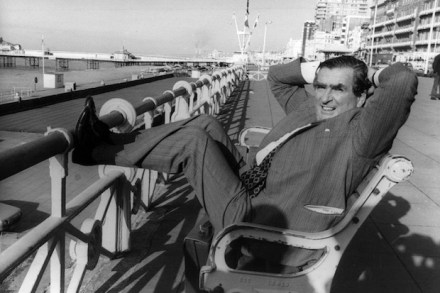
Denis Healey and my father Deryk Vander Weyer — a big cheese at Barclays and spokesman for the high-street banks during Healey’s chancellorship — had a lot in common. Both were clever, cultured, iconoclastic products of good Yorkshire grammar schools; both wartime majors and post-war socialists (my father finally turned right when he began to appreciate the merits of Margaret Thatcher); both formidable in argument. ‘Now then, young Deryk,’ the then chancellor used to say, only half joking, ‘You’re the man to run the state bank for us after you’re all nationalised.’ Thirty years later, the mellower Healey of old age came north to Helmsley to give a talk about his photography.

Diary – 6 August 2015

From our UK edition

My Cambodian daughter and her husband have just got married again. Wedding One was a Buddhist affair in our drawing room, complete with monks, temple dancer, gold umbrellas, brass gongs, three changes of costume and a lot of delicious Cambodian food. That was family only, so this time she had the works: the full meringue, 200 guests, village church (she sees no conflict between Buddhism and Christianity), marquee, fireworks. Time was when wedding guests were the parents’ chums and the bride and groom went off as soon as the cake was cut and the bouquet thrown. Now the parents’ friends don’t get a look in. Not on day two either, when the couple’s friends return for the hangover party. So on day three we had local oldies’ day.

Contagion of a different kind as Greece wriggles off the hook

From our UK edition

The clear winner in the Greek crisis is the author of The Little Book of Negotiating Clichés, whose royalties must have been pouring in as the clock ticked towards midnight while European leaders took positive steps back from the brink and found themselves speaking the same language, perhaps because they were reading from the same page. But assuming this predictable dance results in terms that Prime Minister Tsipras can persuade his comrades to accept before the IMF’s default deadline and the moment when the Greek banking system can no longer seek life-support from the European Central Bank — which is all still quite a big assumption — who will be the loser?

Is suicide bombing now a Yorkshire tradition?

From our UK edition

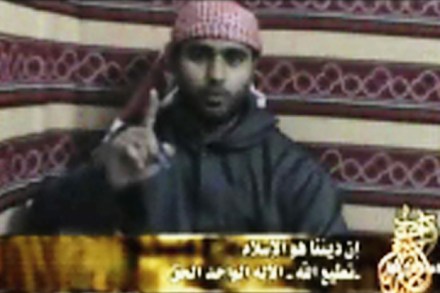
Where would you rather live, Dewsbury or Bradford? I ask because it seems that there are probably some good property deals to be had in this particular corner of West Yorkshire right now, as a consequence of half the population decamping to Syria in order to blow themselves up. I mean, property was pretty cheap already — in Savile Town, Dewsbury, right in the heart of the Muslim ghetto, you can buy a nice grey stone cottage for not much more than fifty grand. Two beds, back yard, only a stone’s throw from the local sharia court and that vast mosque run by those jovial extremists Tablighi Jamaat. But it’ll be even cheaper now, I would guess.

Which behaved worse: callous Thomas Cook or cynical Barclays?

From our UK edition

Which is worse, morally and reputationally — to be Thomas Cook, shamed by its refusal to show proper human concern, for fear of being taken to admit responsibility, over the death of two children by carbon monoxide poisoning from a faulty boiler while on holiday in Corfu; or to be Barclays, fined almost $2.4 billion (heading a list of banks fined more than $9 billion between them for similar offences) for conspiring to manipulate the foreign exchange market over a five-year period? Ethicists could agonise over that one for weeks.

How Cameron’s jobs miracle ate his immigration target

From our UK edition

The embarrassing truth is that David Cameron did not think carefully about this pledge to take net immigration into the 'tens of thousands'. The pledge originated in a Thick-of-It style farce: it was an aspiration mentioned by Damian Green, then immigration spokesman, that caught media attention. The Tories didn’t want to make a fuss by disowning it, so this pledge ended up becoming party policy and then government policy. Absurdly so: a country can only control who comes in, not who goes out. So immigration, not ‘net immigration’, should have been the target. And even then, it should have been immigration from outside the EU – which Theresa May has done a reasonable job controlling. But the not-so-embarrassing truth is that this is a problem of success.

Could a Tory peer convince the USA to stomach imported haggis?

From our UK edition

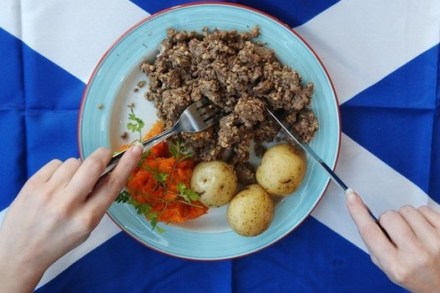
Tomorrow, parliament will debate a topic of immense significance. Steerpike hears that Tory peer Lord McColl is planning on championing a great repressed minority, in a land that claims to be free. Not so much a political hot potato, rather a hot sheep stomach stuffed with the animal’s heart, liver and lungs. Since 1971 haggis has been banned in the States, denying the 24 million Americans who claim to be of Scottish descent (with varying degrees of credibility), from celebrating Burns Night properly. Behind the scenes there has been a long lobbying campaign to have the ban overturned, aimed at Defra and the US Embassy, and spearheaded by Ranald Macdonald, owner of Boisdale, whose four restaurants alone serve 4.5 tonnes of the offal stuff every year.

The Spectator at war: Coastal retreats

From our UK edition

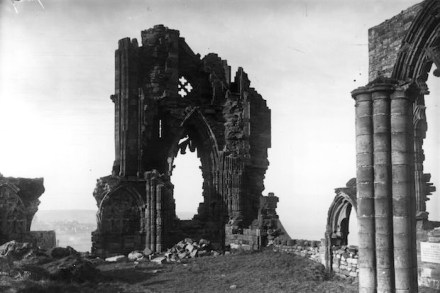
From News of the Week, The Spectator, 19 December 1914: A SMALL squadron of German cruisers made an attack on Hartlepool, Whitby, and Scarborough on Wednesday morning. It seems that the squadron consisted of at least three battle cruisers and two armoured cruisers. Hartlepool and Scarborough were shelled simultaneously for about half an hour shortly after eight o'clock. The bombardment of Whitby began at nine o'clock, and it is possible that one or more of the ships which took part in it had come from Scarborough, which is only fifteen miles distant. As soon as the presence of the German ships was reported a British patrolling squadron tried to cut them off. They then retired at full speed and succeeded in escaping in the mist.

BBC1’s Remember Me: the curious case of the killer Yorkshire taps

From our UK edition

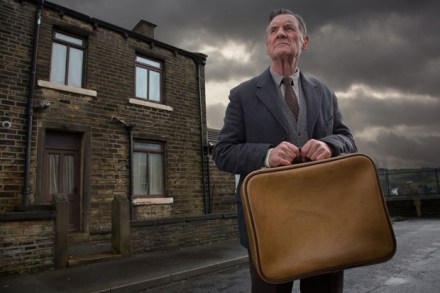
BBC1’s authentically spooky three-part ghost story Remember Me hasn’t yet revealed what’s really going on in that gloomy Yorkshire town. Nonetheless, the second episode did clear up one mystery. We now know how Michael Palin managed to find room in his schedule for what the advance publicity described as his first leading dramatic TV role since 1991’s G.B.H. — by leaving most of the work to the other actors. His name may have appeared first in Sunday’s opening credits, but the man himself didn’t show up until the 54th minute of 58.

Wine merchants might just be the happiest people in the world

From our UK edition

A delightful girl came to see me this morning. She is helping with the research for a biography of David Cameron. Someone had told her that he was not comfortable in his own skin. There was only one reply to that: balls. I have never known anyone so much at ease with himself. That discussion made me consider the concept of bien dans sa peau. There was Cardus’s marvellous description of Emmott Robinson: ‘It was as if God had taken a piece of strong Yorkshire clay, moulded it into human form, breathed life into it and said: “Thy name is Emmott Robinson and tha shall open t’ bowling from Pavilion End’’.’ That was clearly a happy man, as long as Yorkshire were winning.

Geoffrey Boycott’s new book would be of more use to English cricketers than a regiment of shrinks

From our UK edition

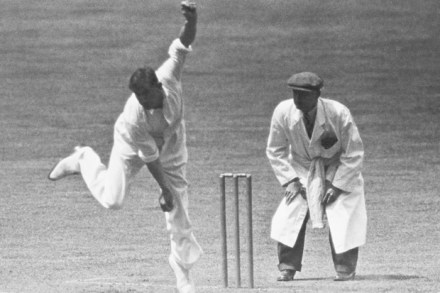
After 13 barren years Yorkshire is back at the top of county cricket, where Geoffrey Boycott believes it has a place almost of right. We took the County Championship this year, beating Nottinghamshire at Trent Bridge by an innings and 152 runs. Ryan Sidebottom finished off the home side to post a splendid match performance of 9-65. He doesn’t get a mention in this book, though his father Arnie does. In a part of the world where cricket is almost a religion, this is seen as a restoration of the natural order of things. It used to be said that when the county was low in the rankings, men read the Yorkshire Post upside down out of shame. Boycott played for Yorkshire for 24 years from 1962, and captained the side from 1971 to 1978.

The man who brought Cubism to New York

From our UK edition

The American Jewish artist Max Weber (1881–1961) was born in Belostok in Russia (now Bialystok in Poland), and although he visited this country twice (he came to London in 1906 and 1908), it was the experience of continental Europe — and particularly Paris — that was crucial for his development. The title of this exhibition is thus rather misleading: Weber never lived in England, and his ‘presence’ here is based upon a collection of his work made by his friend Alvin Langdon Coburn. Coburn (1882–1966), a boldly experimental photographer attached to the Vorticist group, was another American, but one who opted to settle in England in 1912.

Ryedale Festival: a beacon of survival without subsidy

From our UK edition

There are festivals of everything, everywhere. So why get excited about the Ryedale Festival (11–27 July) apart from the fact that it happens on my Yorkshire home ground — and I used to be its chairman? Every summer music festival proclaims the richness and variety of its menu. Ryedale, under the artistic directorship of Christopher Glynn, competes with the best, from its opening Monteverdi Vespers in Ampleforth Abbey to its Royal Northern Sinfonia finale at Hovingham Hall. But what’s really special about this one is the opportunity to pass an extended fortnight tootling across what I truly believe is England’s loveliest landscape, picnicking en route.

A small town in Yorkshire turns racist

From our UK edition

A small Yorkshire town has been hugely enriched this year by the arrival of 500 Roma people. The village of Hexthorpe was once boringly, stultifyingly, monocultural - and you would think that locals might have welcomed this influx of vibrant diversity. Not a bit of it – they called a public meeting and complained long and loud in a manner which, frankly, can only be called racist. They warned, too, that there would be violence in the streets. Is it too much to hope that one day these uneducated and bigoted Yorkshire folk will understand that claiming benefits, fly-tipping, littering the streets, threatening people and playing loud music all night – these were the things of which they complained – are simply expressions of cultural diversity, to be warmly embraced?

Carpet-bagging MP confuses Yorkshire and Durham

From our UK edition

Helen Goodman, the Labour MP for Bishop Auckland in Durham, was born in Nottinghamshire and brought up in Derbyshire, so you would have thought that she might take extra care to brush up on her local knowledge of Durham to avoid accusations of ‘carpet-bagging’. The Northern Echo gleefully reports: ‘The village of Ingleton is so famous for its beautiful waterfalls and deep caves that MP Helen Goodman waxed lyrical about them as she opened a County Durham fair. Unfortunately for the Bishop Auckland MP she was talking about Ingleton, in North Yorkshire – which lies 70 miles away.’ The reaction from the local population has been blistering. Take Durham resident Tony Todd, who claims: ‘I think she is a disgrace and she has made a lasting impression on me.

One Yorkshireman’s commendable bid for freedom

From our UK edition

Richard Milburn, a burglar, broke out of Kirkham Prison near Preston because he was sick to the back teeth of the Scousers in the place. And the Mancs. And the Scallies and the La’s (not my apostrophe; I think it’s a local peculiarity). Richard is a Yorkshireman, even if his surname suggests a still better provenance a hundred or so miles north east of there. But given what he was up against Yorkshire will do just fine. This blog has not always been understanding towards the complaints and aspirations of our criminal underclass. But I think I will make an exception for Richard. The Scousers with their hilarious ready wit, the Mancs skagged out of their brainboxes – I think he had a point.

Martin Vander Weyer: The Reverend is just a funny sideshow — here’s who to blame for the Co-op mess

From our UK edition

The naughty Reverend Flowers will be a comic footnote in the history of the financial crisis — but no more than that. In terms of making ministry relevant to modern congregations, you’ve got to take your hat off to a man of the cloth who knows his ‘Charlie’ from his ‘ket’ (for the uninitiated that’s a horse tranquilliser) and likes to unwind after a tough select committee hearing with a ‘two-day, drug-fuelled gay orgy’. But it must be obvious that neither the FSA nor his own colleagues thought him anything other than a figurehead when he emerged through the Co-operative hierarchy to become a director of the Co-op Bank in 2009, and its chairman a year later.

Spectator Play: The highs and the lows of what’s going on in arts this week | 20 September 2013

From our UK edition

Yorkshire, says William Cook, is the sculpture capital of Britain. It was the birthplace of ‘Britain’s greatest sculptors, Barbara Hepworth and Henry Moore’ – but is this just coincidence, or ‘is there something about Yorkshire that makes great sculpture happen here?’ In this week’s lead Arts feature, he visits the ‘stunning, 500 acre’ Yorkshire Sculpture Park, ‘adorned with works by every sculptor you can think of’, which, on a sunny day, is ‘a great artwork in its own right’. It’s one thing to produce a biopic. It’s another to produce a hagiography.

How do you define a ‘northerner’?

From our UK edition

Obviously, now that every high street in England looks identical, and everyone under 30 uses exactly the same Australian rising inflection in speech, books of this sort are based on a false and wishful premise. But let us enter into Paul Morley’s game and ask the question he has asked again. What is ‘the north’ — or ‘the North’ — anyway? Obviously, as a geographical entity, we know (roughly) what we are talking about; we can argue about Derbyshire, but between Yorkshire and Scotland no one is going to dispute what the north is. Culturally, we may think we know what we are talking about, but all attempts to pin this down founder on the rocks of narrowness and outdated stereotype.