Wuhan

Don’t let the media get away with U-turning on the lab leak theory

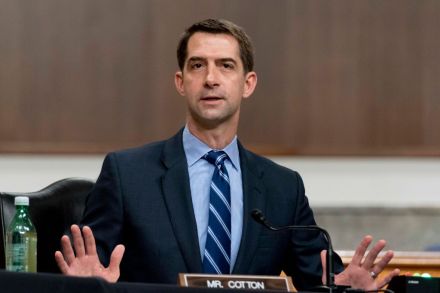
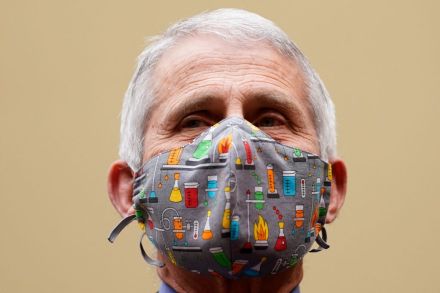
The theory that COVID-19 originated in a Chinese laboratory has completed its year-long trudge — from fringe nutjob idea to mainstream and expert-approved opinion. Leading scientists and epidemiologists such as none other than Dr Anthony Fauci were so quick to dismiss the ‘lab talk’. It was first portrayed as a hare-brained wild and tacitly racist conspiracy theory driven by paranoid Republican senators and fever-dream right-wing media. Now it is seen as not only an acceptable theory worth more study, but one that has broken through into the mainstream. This has happened in a matter of days. Where does Sen. Tom Cotton go for his apology?
lab

Fauci must answer for his role in Wuhan’s COVID lab

We still don’t know the origins of COVID-19, a full year and a half out from the start of the pandemic. The Chinese government initially claimed that the virus was spread through a wet market in the Wuhan province or that it perhaps came to China from parts of Europe in frozen food trucks. Almost immediately, any inquiries into how the outbreak started beyond the CCP’s original story were brushed aside and dubbed conspiracy theories by the US’s corporate media. Quite why is a question that should trouble any independent-minded person. When Sen.

anthony fauci health

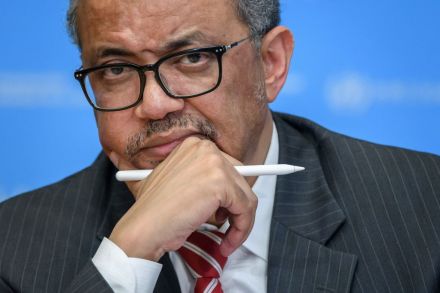
WHO knows? We still can’t be sure of Covid’s origins

From our UK edition

Could Covid-19 have originated from a Chinese lab accident? When the virus was first identified, many pointed out that it was close to the Wuhan Institute of Virology. It sounded like a conspiracy theory. But it’s all too plausible. And there are questions that the long-awaited report by the World Health Organisation leaves unanswered. Only after the pandemic started did Professor Shi Zhengli, director of the Center for Emerging Infectious Diseases at the Wuhan Institute of Virology, notice that a close viral relative to Covid-19 had been found in a mineshaft years before. There was an apparent pneumonia outbreak nine years ago at a copper mine in Mojiang, around 1,000 miles from Wuhan, in an area where Zhengli’s team regularly hunted for new viruses.

Nobody believes China

The World Health Organization now says the virus ‘most likely came from animals.' But everybody knows that the WHO is heavily influenced by China, and China is not a reliable source. Everybody, that is, except large and important sections of the US media. Before the WHO’s latest report, Feng Zijian, the deputy director of China’s Center for Disease Control and Prevention, claimed the virus spread after a bat infected a human — or the virus initially went from bat to another animal or mammal species, which then jumped to humans or that shipments of frozen food from Europe or even the United States spread the virus throughout the province of Wuhan. It’s always the West’s fault, the way Beijing tells it.

china

What if the virus that causes COVID was man-made?

The idea that SARS-CoV-2 — the virus which causes COVID-19 — could have man-made origins has been rejected by many scientists, dismissed by some as nothing more than a conspiracy theory. A different view, however, has been put forward by Rossana Segreto of the University of Innsbruck in association with Yuri Deigin of Canadian genetics company Youthereum Genetics. In a paper published on Wiley Online, they have again raised the possibility that SARS-CoV-2 could indeed be a man-made virus, and that its passage into the human population could be the result of a laboratory accident. 'The artificial creation of SARS-CoV-2 is not a baseless conspiracy theory that is to be condemned,' they write.

man-made

The China election

Bill Clinton, in a speech heralding China’s entry into the World Trade Organization in 2000, remarked that ‘by joining the WTO, China is not simply agreeing to import more of our products. It is agreeing to import one of democracy’s most cherished values, economic freedom. The more China liberalizes its economy, the more fully it will liberate the potential of its people — their initiative, their imagination, their remarkable spirit of enterprise. And when individuals have the power, not just to dream but to realize their dreams, they will demand a greater say.’It is by now glaringly obvious that this vision didn’t come to pass. For far too long, ‘End of History’ hubris dominated western engagement with China, and hubris led to nemesis.

china

Has China really beaten Covid?

From our UK edition

It has to be seen to be believed: a pool party attended by thousands, with the young bodies packed so tightly that you could barely see the water. There was a DJ, neon lights and outlandish acrobatics from performers on water jetpacks. The scenes, captured on video and sent around the world, were all the more extraordinary because the party was in Wuhan. It wasn’t long ago that the same people were locked down in their millions. They were not even allowed to go outside for exercise. The only people you would see on the streets were the kuaidi xiaoge (‘delivery bros’), gig economy workers who dropped off groceries, medicines and everything in between.

Wuhdunnit? We have only suspicions, not proof

We don’t yet know the full story of the coronavirus outbreak in China. Even so, it already has a tragic hero: Dr Li Wenliang. His name is known around the world now, but the details of what happened to him are telling. On December 30 last year, Li warned fellow medics on a WeChat group that seven patients had been quarantined at his hospital in Wuhan. They had some kind of coronavirus. A few days later, after screenshots of his messages were posted to the wider internet, he was summoned by the Wuhan Public Security Bureau. The secret police presented him with a typed confession stating he had lied. He signed it. He had to. The police document was sententious but chilling: ‘Your behavior severely disrupted social order... We advise you to calm down and reflect carefully.

ma jian wuhdunnit wuhan

Xi’s useful idiots against free speech

On December 30, Ai Fen, director of the emergency department at Wuhan Central Hospital, got the lab results back about one of her patients who had a flulike illness. The words she read on the report made her blood run cold: ‘Sars coronavirus’. She circled the word ‘Sars’, took a photo and emailed it to a doctor at a neighboring hospital. Within hours, the photo had been sent to dozens of people in the Wuhan medical community. One of them sent a series of messages to a private group on WeChat, advising his colleagues to take precautions, and someone took screenshots of those messages and shared them more widely.

useful idiots

COVID-19: the bluffer’s guide

COVID-19 may have prevented us from going to bars and talking nonsense, but there’s nothing to stop us drinking at home and talking nonsense on Zoom. Problem is, COVID information is multiplying faster than a virus on a vagrant’s tongue. Here’s 11 tips for bluffing your way through the greatest challenge in our lifetimes: sounding like you know what’s going on and what to do next. 1) ‘I think I had it in December’‘What do they know of COVID who only COVID know?’ Rudyard Kipling might have asked if he’d licked a pole on the New York subway and spent a few days in bed. Remember that bug you had last December, January or February and thought was food poisoning or a head cold?

covid

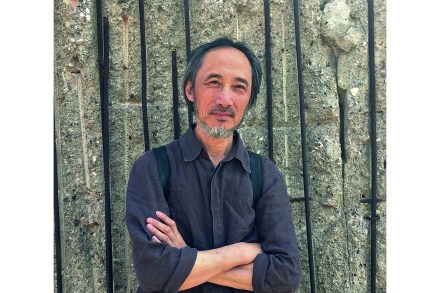
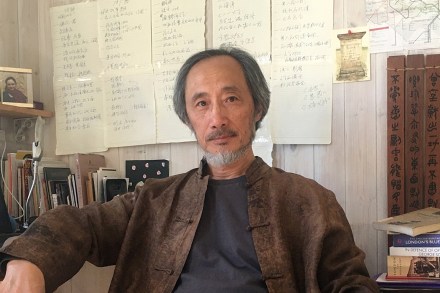
Ma Jian: China’s regime is ‘stronger than ever’

Should we blame China for the spread of coronavirus? And how should the West respond if the communist regime did cause the pandemic by lying about the virus as it emerged? I spoke about these questions to the dissident author Ma Jian, who has been described — by another dissident — as ‘one of the most important and courageous voices in Chinese literature’. His novels have been called — by a critic — ‘a powerful corrective to the self-interested Western view of China’. Ma believes that the economic miracle in China that has given us cheap goods in the West is also bribing the Chinese to forget their past and infantilizing them in their relationship with their rulers.

ma jian
taiwan

President Trump’s support for Taiwan is welcome

Over the coming weeks, a battle between Washington and Beijing over the inclusion of Taiwan as an observer at the World Health Organization will rage, reflecting the struggle between the People’s Republic of China and the United States over control over international institutions. Yet it also reveals the reality of the new cold war between the two countries, and the shift in focus of attention to ground-level tactics at the expense of grand strategies. Long forgotten in the shadow of China’s rise and the intensification of both contact and competition between the PRC and the United States has been the island nation of Taiwan.

government

How government can learn from disasters

Soon enough, Congress will hold hearings to investigate the federal response to the Wuhan virus pandemic. It is almost a guarantee those efforts will find failures, as no government is ever really prepared for 100-year catastrophic events. We’d like to think our government can handle anything, but, as countless Inspector General reports show, the federal government routinely fails to do the ordinary work of government. Expecting flawless execution with the extraordinary is delusional. I should know because 15 years ago I served as a senior-level official at the US Department of Homeland Security. My various roles exposed me to several events that contained valuable lessons I see playing out yet again in America’s response to the Wuhan pandemic.

Are we now in a Fourth Turning Crisis?

Back in 1997, William Strauss and Neil Howe released The Fourth Turning: An American Prophecy that articulated a roughly 80-year generational cycle of history based on ‘four turnings’ dating back to the Wars of the Roses starting in 1459, climaxing in 1485. That initial crisis was followed by the Armada Crisis from 1569 to 1588, the Glorious Revolution from 1675 to 1689, the American Revolution from 1773 to 1781, the Civil War from 1860 to 1863, and the Great Depression and World War Two from 1929 to 1944. Fourth Turnings always climax with an existential crisis that either destroys the country or results in its renewal.Based on the 1944 climax, Strauss and Howe predicted the next Fourth Turning would occur sometime around 2005 when a ‘spark will ignite a new mood...

fourth turning

Half of Americans want their state to sue China for coronavirus damages

Public opinion is rapidly turning against China as intelligence agencies have exposed the full extent of the communist state’s coverup of the novel coronavirus outbreak. US intelligence has determined that China has underreported total cases and deaths, and dragged its feet in telling the rest of the world about the seriousness of the virus. A Trump administration official told The Spectator earlier this month that the US response was delayed by at least a month due to China’s lack of transparency. Americans are angry at China’s deception: a majority of them polled at the end of March and in early April said they agree with President Trump referring to COVID-19 as the ‘Chinese virus’.

wuhan sue china

Forget China: people are mad at Lululemon instead

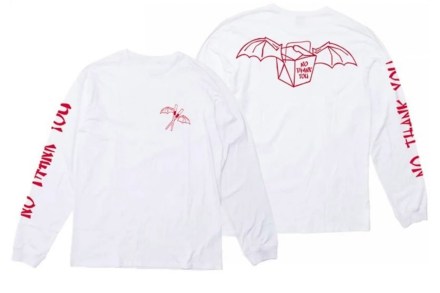
Racism was conquered today in Canada. After Vancouver-based Lululemon art director Trevor Fleming linked to a t-shirt design by California artist Jess Sluder, called ‘bat fried rice’, brave internet warriors took action, accusing the company responsible for turning yoga pants into streetwear of ‘insulting China’. The long-sleeved t-shirt showed an image of a pair of chopsticks with bat wings on the front and a Chinese takeout box with bat wings on the back, with the words, ‘No thank you’. On his website, Sluder was offering the shirt for $60, adding, ‘Where did COVID-19 come from? Nothing is certain, but we know a bat was involved. This quarantine offers a friendly reminder to avoid foods containing this nocturnal beast.

wuhan lululemon
overreaction lockdown ccp virus

There are lies, damned lies and epidemiological models

I think it was Sir Charles Dilke who warned against ‘lies, damned lies, and statistics’. I live in a small, fairly isolated neighborhood of about 100 houses on the Connecticut side of Long Island Sound. Most of my neighbors seem to be trying out for the part of Prince Prospero in The Masque of the Red Death. Our neighborhood association issues frequent, increasingly shrill bulletins. Most appeal to the authority of the CDC, warning us and our children to stay at home, wear a mask and, should we dare to venture out, to keep at least six feet apart from one another. We are forbidden from congregating in public spaces. We are discouraged from socializing with friends inside.

Sovereignty rules

Washington, DC At the end of March, about two weeks into the coronavirus emergency, I looked out my window onto the street below and saw something that made me uneasy about the future of the country. There was a commotion down there. Two white teenagers were standing in the street with their hands up. A man — who looked and sounded like an East African immigrant — had stopped his car in the middle of the road and sprung out. I squinted to see what it was he was holding in front of him that made the kids look so alarmed. It was a pizza. The kids had ordered it. The car was marked with a Domino’s insignia. ‘Whoa, whoa, man!’ said one of the kids. ‘Take it easy!’ He was grotesquely corpulent.

sovereignty

This Easter, we should moderate our complacency

For Christians, Easter commemorates the most important event in history. The importance of the event is not always obvious, for Easter — like Christmas — has been festooned with a garland of secular preoccupations. At Christmas, it’s the gifts and the gaudy, the saccharine and the sentimentality. The kernel of the event, part pagan, part Christian, is often little more that a quiet seed in the cacophony of a holiday from which the 'holy' has been carefully extracted. Still, if you stop moving, you can descry the adumbrations of a ceremony acknowledging the engulfing darkness of the winter solstice and promise of light to come. Easter has been decorated with ribbons and chocolates and strawberries.

easter

French Hill: Congress should conduct ‘full oversight’ of WHO funding

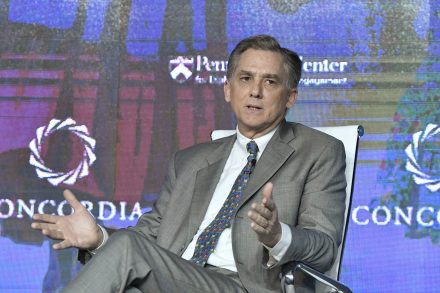
Rep. French Hill is on board with President Trump's threat to withhold funding from the World Health Organization because of its collusion with China's initial coverup of the seriousness of the novel coronavirus. 'I support the president's indication,' the Arkansas congressman told The Spectator during a Thursday phone interview. 'I think it sends a message to the world that these global, multinational, multilateral organizations tend to be inadequately accountable to those who fund them.' 'I would urge our committees of jurisdiction in the House and Senate to conduct a full oversight on America's contribution to the WHO and what the World Health Organization did or did not do vis-a-vis this particular pandemic crisis,' Hill asserted.

Rep. French Hill who