Writing

Does knotted string constitute ‘writing’?

From our UK edition

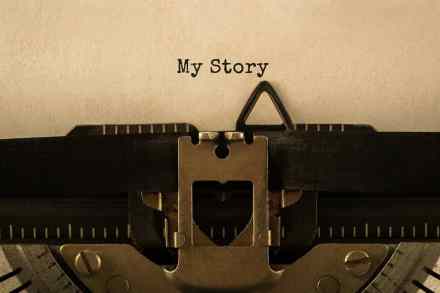
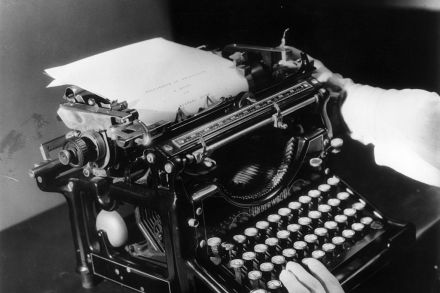
What particularly excites Silvia Ferrara, the author of The Greatest Invention, is not language per se but writing – that is, the specific tool created for recording and conveying language visually. Sound made visible, tangible. The impulse to communicate might be innate, but writing is cultural, and in no way inevitable. It’s a bit of tech, which needed to be developed, and which needs to be learned. Writing has many obvious benefits – allowing communication to survive across time, thus enabling cultural traditions and posterity – unlike purely synchronous conversation, face-to-face, stuck in the present. Yet as a species (and a species with memory, specifically) we could live perfectly well without it, as indeed we did.

What Putin has in common with Hitler

From our UK edition

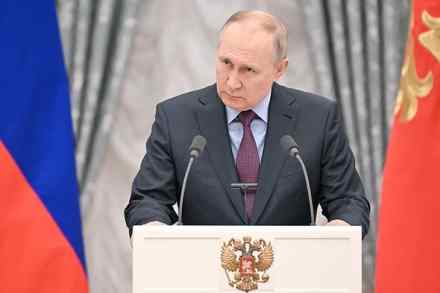
We are always cautioned against comparing a modern political event with those that led up to the second world war. One can see the risk of hyperbole and slander. But as Vladimir ‘Inky Poops’ Putin re-invades Ukraine, he will be making such comparisons himself. His long and bitter address on Monday showed his taste, common in tyrants, for historical disquisitions designed to turn grievance into aggression. He lambasted the foolishness of the Soviet leadership in the 1920s and 1930s which had laid ‘a mine to destroy state immunity to the disease of nationalism’.

The delicate business of writing poetry

From our UK edition

Living, as Clive James put it, under a life sentence, and having refused chemotherapy, I find I respond to the time issue in contradictory ways. On the one hand, I read avidly, almost as if I’ll be tested at some later date. I am morbidly well-informed on current affairs, the status of the old white male and the situation in Ukraine. I crawl through Lucretius and Horace in search of wisdom. On the other hand, I avoid my favourite filmic masterworks (Chinatown, On the Waterfront, The Remains of the Day, Saturday Night and Sunday Morning) in favour of Secret Army, The Edgar Wallace Mystery Theatre and any 1950s thriller that features frequent chases to some Tudoresque Surrey cottage. In other words, everything that is unreal, out of reach, leaving no trace and comfortably mediocre.

Howard Jacobson superbly captures the terrible cost of becoming a writer

From our UK edition

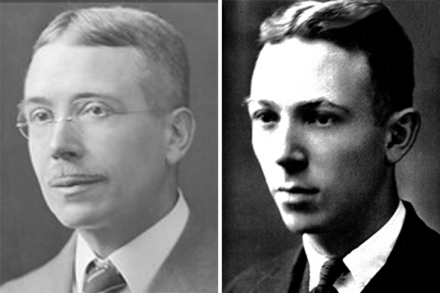
Howard Jacobson, who turns 80 this year, published his first novel aged 40. Since then he has produced roughly a book every two years, including The Finkler Question, which won the Man Booker in 2010. Given that he was put on Earth to write, why the wait? This is the subject of Mother’s Boy, a tale of self-persecution in the form of a monologue which includes interjections from the ghosts of his parents and one chapter, recording a period in his twenties that he drifted through in a dream state, printed in a font resembling handwriting. ‘How’s the novel coming along?’ his father would routinely ask after Jacobson graduated from Cambridge with a ‘poor degree’ in English. He was taught by F.R.

Succeeding at failing

My London agent calls to break the news gently. “Your book is dead. I can’t sell it. Sorry. But you do have the most fabulous collection of rejections from publishers I’ve ever read.” “Really? Can you get me a book deal for a book of my book rejections? Failure is a hot topic now.” “You’re funny...” “Thanks.” “...but not commercial. Still, there is some good news.” “Really?” “I’ve sold your ex-wife’s new book for a huge advance!” My ex-wife and I have the same agent so I’m well practiced in the art of the fake congratulation. It’s what we men do, our equivalent of the fake orgasm. “That’s such wonderful news!” Two weeks later, more failure.

failure

P.J. O’Rourke’s death marks the end of a great satirical era

From our UK edition

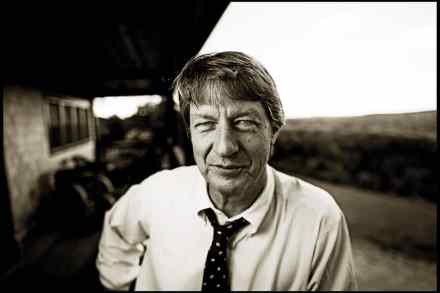
There was something old school about P.J. O’Rourke, who died on Tuesday, something that felt like a leftover echo of the American Revolution. Visiting him in his ancient, low-ceilinged, clapboard farm-house in Sharon, New Hampshire, one half-expected Paul Revere to burst breathlessly into the kitchen warning that the British were coming. Though he was by birth an Ohio boy, New England felt like the tweedy satirist’s natural environment — a pioneer sensibility that combined American impatience with the Old World with a nostalgic yearning for the oak-panelled values and certainties of yesteryear.

The hypocrisy of actors

From our UK edition

I’ve been keeping a journal for nearly 60 years. There are piles of the damn things in archives and covered with shoeboxes on high closet shelves. I’ve never looked back at one word in them. Being a vain sinner, I’ve entertained the fantasy that others would but, as it seems I’m not going to be remembered as a national treasure, I must conclude the journals have served their purpose. This was to get me to write things down. The physical act of transcription forced me to place half-formed thoughts upon the paper, making them concrete; a delusion, or obsession became a fact, and, as such, could be addressed as independent of my mental processes — that is, as other than the vapourings of a madman. Nancy Mitford loved diaries.

Writing and the conservative impulse

Radicals often think of writing primarily as an act of provocation — a bullet in the chest of the bourgeoisie. No doubt, writing can provoke, and one doesn’t need to be a radical to know this, as any reader of Tom Wolfe will tell you. But to provoke in writing, particularly literary writing, is at once to provoke and to conserve a provocation. To write is a tacit acknowledgment that something is worth keeping. Otherwise, one could simply shout. What else does writing conserve? All sorts of things, of course, but in literature, it conserves feelings, perceptions, the lives and actions of people or a way of life. It conserves ideas that one hopes won’t be burned to a crisp on the streets of Avignon.

The surreal joy of putting words in an actor’s mouth

From our UK edition

More than 200 non-US residents stood in the queue ahead of me. A grand total of four Homeland Security officers were on duty in the glass booths. I texted my ride to expect me in Arrivals in an hour, at best, and tried to compose the opener for my Spectator diary. I didn’t get far: after an early start in Cork, my long-haul flight from Heathrow to San Francisco and watching Christopher Nolan’s Tenet, my brain was scrambled eggs. Nearby, an elderly traveller fainted. The well-rehearsed response by the tired-looking staff suggested this is a daily, if not an hourly, occurrence. I read a few chapters of Donal Ryan’s novel All We Shall Know. Public book-reading is becoming a very niche activity.

Stacking up

"It feels almost like there is money in writing again.” So the historian and New York Times bestselling author Dan Jones tells me. Is he referring to increased book sales, or lucrative adaptation deals? Not this time. Instead, he’s discussing Substack, which launched in 2017. It has now become the platform of choice for writers to develop their careers on their own terms, without having to give substantial percentages away to agents, publishers and lawyers. For years, authors have felt that they have been little more than galley slaves, flogging themselves and their wares for the profit of multinational corporations. Now, finally, they have been given an opportunity to take back control of their own careers and destinies. The format is a simple one.

substack

The moment I fell in love with music

From our UK edition

I’ve lived in Chelsea for the past 35 years. Since 2002, I’ve photographed everything I find interesting here — churches, streets, door knockers and pub signs, plus two old Chelsea pensioners chatting on a bench with their medal ribbons and rank pinned to their scarlet coats. I’ve recently finished my project and added these 1,800 photographs to the historical research I’ve done about Chelsea, which is now sitting safely on my bookshelf. My love of photography comes from my Uncle Jack. When he returned home at the war’s end, he had a Leica camera, which he got by trading his cigarette rations with an Italian civilian. He gave me his old Brownie box camera.

Why is Microsoft offended by ‘Mrs Thatcher’?

From our UK edition

The interregnum between incumbents is a well-known and often elongated process in the Church of England. I have recently witnessed this one because my wife is churchwarden of one of the three churches (we Catholics operate under a different system) in the benefice. Interregnums are arduous for all church volunteers and tend to erode parish life. It is remarkable how much there is for churchwardens to do. Dioceses tend to demand and obstruct rather than ease and encourage. Luckily, we are blessed with an excellent archdeacon who cherishes parish life and has declared there will be no more closures of churches in the district; but the bureaucratic flow of dos and don’ts (mainly don’ts) is considerable.

Down with Strunk and White

E.B. White was the author of two delightful children’s books, Charlotte’s Web and Stuart Little, perhaps three if you count the lesser known The Trumpet of the Swan. White also wrote a great many not-so-memorable but often anthologized New Yorker and Harper’s essays. But he is best known to generations of American students as the co-author of Strunk and White’s The Elements of Style. The man whose name comes first on that pamphlet-sized compendium of do’s and don’ts, is William Strunk Jr., a Cornell English professor for forty-six years who would have sunk forever in death’s dateless night were it not for White’s sentimental resurrection of him in the pamphlet’s six-page introduction.

strunk white

How we rediscovered the charms of haiku

From our UK edition

One of the more encouraging developments of the past year and a half has been the number of us who, instead of turning to drink, have been turning to haiku. Haiku hashtags have been popping up on social media since the start of the pandemic. It turns out that 17 syllables in that classic five-seven-five formation are just what we need when we’re trying to express how we feel about these unsettling times. Facebook, Twitter, Instagram and the rest have proved to be the perfect medium for this short-form poetry. Of course, the quality is mixed. Some of the hashtags attract efforts that are less ‘narrow road to deep north’ than ‘quick jab to left arm’. But the same could be said of any open-entry poetry competition.

Fight club: when book groups turn nasty

From our UK edition

‘Small friendly village book club is looking for three or four new members.’ I was infuriated to read this in our village newsletter, an alternative to the parish magazine. I had just been ‘cancelled’ by this ‘friendly’ club from featuring at one of their evenings. A text, sent by a hitherto pleasant woman who’d liked my last book, explained: ‘There are many hurt feelings in the village. We in the book group believe that your email, put on the parish council notice board, was hurtful and upsetting. So the feeling is that at the moment it would be better to postpone your visit.’ ‘Hurt’ seems to be a current buzzword for those who don’t share others’ views.

Why I became a writer

From our UK edition

Whenever I give talks to children about my books they always ask who inspired me to be a writer. I don’t really think anyone did. I was playing complicated imaginary games inside my head before I could read, and as soon as I could write I filled many Woolworths notebooks with my wobbly printing. But if pressed, I say that E. Nesbit might well have been an inspiration. I loved her books as a child and treasured a biography about her when I was struggling to earn my living as a writer. It was a relief to know that she too had to resort to writing little magazine stories while nursing a crying baby at the start of her career. I admired her short hair, her Liberty dresses and her many silver bangles too, and her habit of having buns for tea every time she sold a story.

The life of an ambassador’s wife

From our UK edition

‘One day,’ she writes, ‘we had the Minister for Northern Ireland for the night. He arrived wearing a kilt, which must have made the evening memorable for our German guests.’ Writing here (I should explain) is the widow of Sir Julian Bullard, then ambassador in Bonn, the West German capital. ‘Harry [the butler] beckoned to me and whispered “Come and see his bed”… so I followed Harry upstairs. The bed was neatly turned down. Tucked in, with only their heads showing, was a line of stuffed animals.’ The pair are surprised by the minister himself, nipping back to fetch papers. ‘He introduced each animal to me in turn. “Never travel without them. Couldn’t sleep if I did.

Why I gave up writing fiction

From our UK edition

When, three years ago, I announced my retirement from writing fiction, the only thing that surprised me was the surprise it generated. I had long come to the somewhat un-arty view that writing was a job like any other (well, almost) and that nudging 80 was a good time to step back and consider a senescence involving only serious decisions like which claret to choose. No need to rabbit on and on. Apart from the lengthening shadows, there was a very practical reason. The stuff I used to write involved the unlovely side of life with some unlovely places and people. The search for authenticity required travel to find and observe them. I never felt I could trust online research to get it right. I had to go and see for myself.

Why do my American friends keep asking me to marry them?

From our UK edition

My diary has been filled with dental appointments, reflecting a truism that American dentists pray for British teeth. The tally in this past month is one root canal, three extractions and two bone grafts, which more or less equals the cost of putting one dentist’s child through a year of college. The epic began almost a year ago with a mild toothache, which my usually excellent dentist in Charleston, South Carolina, insisted needed the attention of a specialist. I rejected her advice with the confident assurance that I was getting old, the pain was mild, and it was a race between the tooth and death, a race that death would win. The tooth won. Are British teeth among the worst in the world?

Letters: The beauty of brick

From our UK edition

The Union in peril Sir: Fraser Nelson (‘The great pretender’, 15 May) writes that it has never been easier to make a bold positive case for the Union. He suggests the UK government starts to fight. Perhaps the starting point could be the benefits which flowed from 1707 — joint citizenship, a currency union, a customs union and wealth transfer — both individual and national (the Barnett dividend speaks for itself). Without the Union these would not have happened. Without the Union there is no guarantee any of these will continue. It is not Project Fear to point that out.