Writers

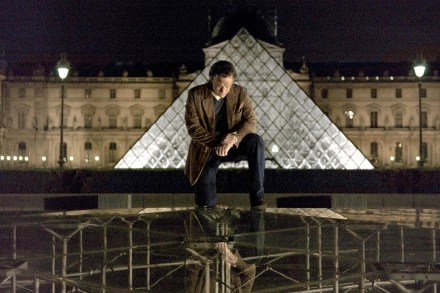
Is Dan Brown finished?

In a moment of modesty that he’s never quite been allowed to forget, Stephen King once declared himself “the literary equivalent of a Big Mac and fries.” This is self-deprecation taken too far. As the author of more than 60 books in a career that has spanned more than half a century, King’s writings have roamed over numerous genres: horror, most famously, but also mystery, suspense, science fiction, fantasy and a surprisingly dour brand of social realism. All are delivered in his trademark muscular prose, dappled with moments of stylistic brilliance. The real purveyor of literary junk food is surely Dan Brown, whose works of fiction mirror far more accurately the salt-rich, nutrition-free offerings of the hamburger giant than anything King has ever produced. If Mr.

Brown

Why Jane Austen is still the queen of romance

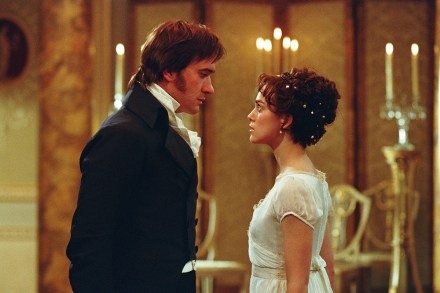
Jane Austen was born in Hampshire on December 16, 1775, the seventh child of a poor country rector. Despite being red-cheeked and a good dancer, she never married. And despite the handful of novels she wrote under the byline “A Lady,” she was always considered by her family less promising than her older sister. She died of a painful illness at 41. Her books found a readership that included the Prince Regent, but she had some prominent detractors. Charlotte Brontë scorned them: “I should hardly like to live with her ladies and gentlemen in their elegant but confined houses.” Where were the windswept moors, the big feelings? In the next century, D.H. Lawrence dismissed Austen as “mean” and “snobbish.

Austen

Mark Twain’s finest invention was himself

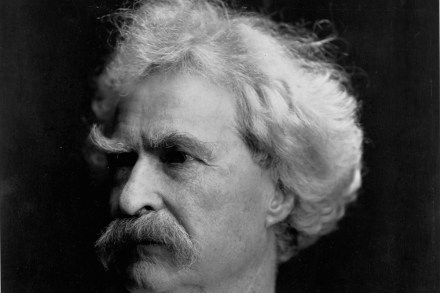
To speak of Mark Twain is to speak of the American psyche laid bare: forever restless, with an insatiable appetite for reinvention and biting commentary. Twain was not just a novelist or humorist: he was, in many respects, the nation’s most accurate mirror. He wrote the truth and then laughed at it. He carved his stories out of riverbanks and war zones, courtrooms and campfires. In his storytelling, Twain blurred the lines between truth and falsehoods, rage and laughter, freedom and fate. He gave us some of the greatest figures in American fiction. But Twain (1835-1910) was a creation more vivid, more volatile and more enduring than any character he put on the page. The “father of American literature,” as William Faulkner called him, didn’t hide behind his fiction.

Twain
Lewis

The enduring brilliance of C.S. Lewis

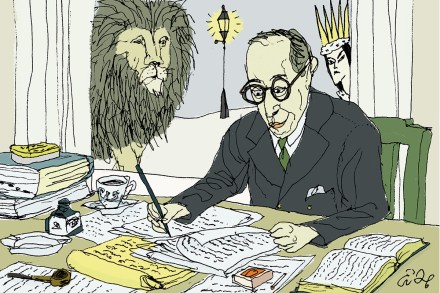
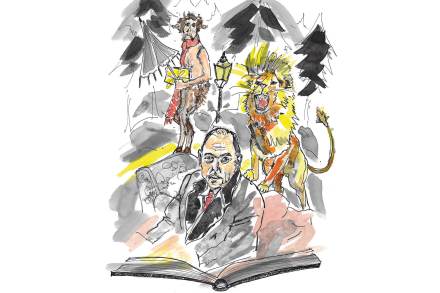
Unexpectedly, the Oxford literature professor Clive Staples Lewis – better known as C.S. Lewis – is having something of a moment, more than six decades after his death. Director Greta Gerwig, of Barbie fame, has embarked upon the ambitious project of filming all seven of his Chronicles of Narnia books for Netflix, starting with The Magician’s Nephew. She has assembled a starry ensemble that will include Daniel Craig, Carey Mulligan, the excellent Emma Mackey as the White Witch and, for the voice of the divine lion Aslan, none other than Meryl Streep. There are rumors that Lewis’s ever-popular satirical epistolary novel The Screwtape Letters is to be turned into an animated film.

David Lodge, the master of Anglo-American campus humor

"Literature is mostly about having sex and not about having children.” So said the British novelist, occasional screenwriter and literary critic David Lodge, who died at the beginning of 2025 at the age of eighty-nine. Lodge, who had suffered from encroaching deafness for several decades, had not, in truth, been a major literary figure for a considerable period before his death. This retreat into obscurity had not been helped by a trio of memoirs, beginning with 2015’s Quite a Good Time To Be Born, which perplexed critics — including this one — with their dour, downbeat and decidedly un-humorous tone. Few would have known, from reading them, that their author had once been regarded as one of the late twentieth century’s most accomplished comic novelists.

Lodge

Are we still doing phrasing?

Grandma McMorris seldom curses, so when she said, “never let a son of a bitch know he’s a son of a bitch,” I knew she was quoting her father, Pop Pop. My grandfather oozed apothegms, nuggets of wisdom that are now only found on refrigerator magnets, motivational posters and throw pillows: the Silent Generation’s forerunner to the meme. Mom was giving me work advice. It’s only been two months, but I no longer remember who the son of a bitch that I called a son of a bitch was, let alone why I called him that. The particulars vanished as soon as my mother spoke, the work crisis overtaken by a personal one. It was a barbecue, probably. Or perhaps a s’mores night at the firepit. A birthday party for one of her sisters? “Dad, when can I have a cigarette?

words

How Norman Mailer changed the face of biography

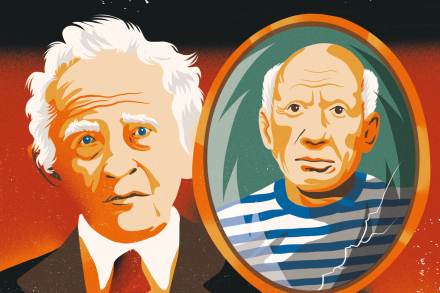
Many labels leap to mind in association with the prolific and controversial Norman Mailer, who died in 2007, but “biographer” is not typically one of them. He was not considered a serious practitioner of the genre in the same sense as Edmund Morris, Ron Chernow or his friend Doris Kearns Goodwin. And yet, as his own official biographer J. Michael Lennon asserts to me, “Mailer became a major biographer in the last half of his career.” Thirty years ago, two intriguing books by Mailer appeared just a few months apart: Oswald’s Tale: An American Mystery and Portrait of Picasso as a Young Man.

Mailer

The thrill of being recognized

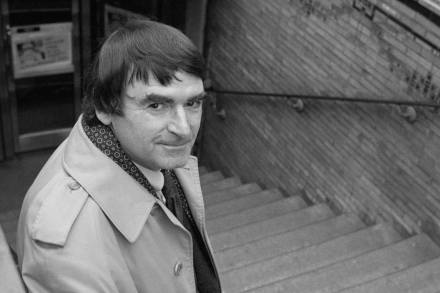
I had just left Tate Britain and was heading toward the Pimlico underground station when I noticed an attractive woman coming toward me. I smiled at her and she smiled at me. And then she stopped and said, “Are you Cosmo Landesman?” There are writers and journalists who get public recognition like this all the time. Alas, I’m not one. But I was married to one of them, and it’s a real drag having a famous partner. You have to stand there at the supermarket checkout line with a big fake smile on your face as your loved one laps up all the love from some adoring fan. Imagine how poor John Gregory Dunne must have felt being married to the very recognizable Joan Didion. Having a famous writer friend is also a bummer. Socially, you will always be in their shadow.

writers

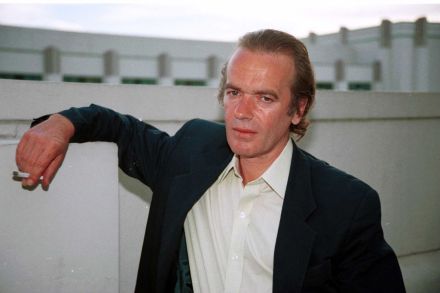
My Martin Amis FOMO

There’s a form of social anxiety that a lot of people suffer from — FOMO, Fear of Missing Out. “Fear” suggests something imaginary, that isn’t really happening. Not so. I don’t fear missing out, because I know I am. Friends are always asking me: are you appearing at the Hay Literary festival? No! Am I speaking at the Idler festival? No! Am I reading extracts from my book at the Cambridge Literary festival? No! “What?!” they exclaim in mock disbelief — and then ask why I’m not appearing at some small, obscure, local village literary fête, somewhere in the rectum of rural England. I’ve gotten used to the seasonal snub from the lit-festival establishment. And there are literary events all over London that I haven’t been invited to as well. OK, I’ll live.

Amis
new york

Why New York is a city built on the written word

When I visited New York for the first time in a decade recently, one of its most famous living writers, Paul Auster, died on the day I arrived. This was not, I hope, anything to do with my presence in the city he spent decades memorializing; he had been suffering from terminal cancer for a considerable time. Yet as I sat at my desk at the first hotel I was visiting, the Frederick in Tribeca — a comfortable and well-located spot, let down slightly by its surly and unhelpful staff, but redeemed by stylish touches like a tiled map of nineteenth-century Manhattan built into the well-appointed shower — and started to write a tribute to Auster for our website, it made me wonder what, exactly, I was trying to find out about literary New York. Was I exploring its distinguished past?

Suburbia’s irredeemable reputation in the American canon

"My God, the suburbs!” John Cheever, the short-story writer who has rejoiced in the nickname “the American Chekhov,” had what can only be described as ambivalent feelings about the twentieth-century housing developments that grew up on the outskirts of major cities. He said of them that “they encircled the city’s boundaries like enemy territory and we thought of them as a loss of privacy, a cesspool of conformity, and a life of indescribable dreariness in some split-level village where the place name appeared in the New York Times only when some bored housewife blew off her head with a shotgun.” Cheever was not wholly consistent himself.

suburbia

The frustrating rise of celebrities ‘writing’ children’s books

When you are next visiting a bookstore, and find your way to the children’s section, you might be forgiven for thinking that there is no longer such a thing as a children’s author. Instead, you will be ambushed by piles of books blazoned with the names of actors, singers, comedians, DJs and people who generously exhibit themselves on social media. “Writing” a children’s book has become another string to the celebrity bow. Imagine the scene. You’ve married a prince, and opened a shop that sells vaginal eggs. What more is there to do? A-ha, thinks the celebrity, perhaps while she is sitting on a bench. All those untutored minds, eager for moi! My personal brand will bring them such joy, such self-worth! They will all feel seen!

chidren's

In praise of George Gissing, the born exile

George Gissing died just over 120 years ago, marooned in the French Atlantic resort of Saint-Jean-Pied-de-Port and in circumstances that might have been plundered wholesale from one of his notoriously ground-down novels. H.G. Wells, present at the scene, was so affected by his friend’s deathbed ravings that he transferred them word for word into the mouth of Uncle Ponderevo as he lies dying in Tono-Bungay (1909). There are Orwellian shadings: like Gissing, Orwell died at forty-six of lung disease, and was profoundly influenced by his Victorian forebear. It was Anthony Powell who remarked of Orwell’s third novel, Keep the Aspidistra Flying (1936) that “the Gissing had to stop.

gissing

Remembering John Gardner

"Art begins in a wound, an imperfection,” said the late novelist John Gardner, one of the last American writers to grow up on a farm, “and is an attempt to either learn to live with the wound or to heal it.” Gardner’s wound was more gaping than most: on April 4, 1945, the eleven-year-old was driving a tractor hauling a two-ton roller called a cultipacker. His six-year-old brother Gilbert fell from the tractor’s hitch. John turned around just in time to see his brother’s skull crushed under the huge implement. (Marge Cervone, a Gardner family friend, told me that “Gilbert was the kind of kid who would never hold on.”) “He was not to blame,” said John’s mother. “Nobody could have stopped that thing happening.

gardner

Meeting Margaret Cavendish

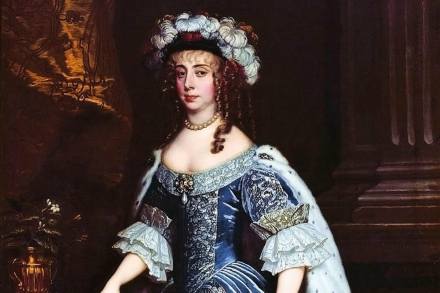
In the spring and summer of 1667, London began to see some odd goings-on. Seven years after the restoration of King Charles II to the throne — after England’s republican experiment under Oliver Cromwell ended in 1660 — and one year after the Great Fire had laid waste to the city, things were rather tense: the second Anglo-Dutch war was under way and, by the end of June, there would even be the fear of a Dutch invasion making its way up the Thames. But oddly, it wasn’t wars, invasion threats or geopolitical goings-on that caused the great and the good of London society to exchange frantic missives. At the beginning of April, a young man-about town wrote a rollickingly bizarre letter to his father.

America’s professor: the afterlife of C.S. Lewis

In the summer of 1955, an unusual meeting took place. Billy Graham visited the writer and academic C.S. Lewis in Lewis’s rooms at Magdalene College, Cambridge. It was unusual because leading British academics typically avoided Southern Baptist revivalists. But rather than encountering a fussy, prim don, Graham found a kind, intelligent scholar who was very happy to spend the afternoon with him. Later, Graham admitted he was intimidated by Lewis, but the English professor quickly dispelled any anxiety, probably by offering Graham a cup of tea. Graham’s impact on American religious culture, for good or ill, is unquestioned, but it is difficult to imagine what that same culture would look like without the works of C.S. Lewis.

lewis
gravesites

The cemeteries of New York State

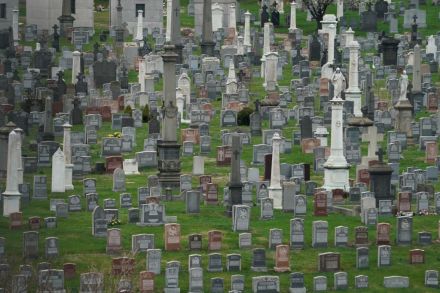
Prose may be deathless, but authors are not — and some of us honor those who compose with visits to where they decompose. I’m afraid that I am one such pilgrim: heck, my wife left her bridal bouquet at the grave of Jack Kerouac in Edson Cemetery in Lowell, Massachusetts. The epitaph for “Ti Jean” is “He Honored Life”; so, paradoxically, do those who make sepulchral sorties. The noted poet Steve Huff knows his way around a necropolis, and he brings us along for the ride in his new book, Resting Among Us: Authors’ Gravesites in Upstate New York from Syracuse University Press. Huff wants “to help raise Upstate New Yorkers’ awareness of our literary heritage.” New York schools have failed miserably at this task.

Taking a trip to Russoville

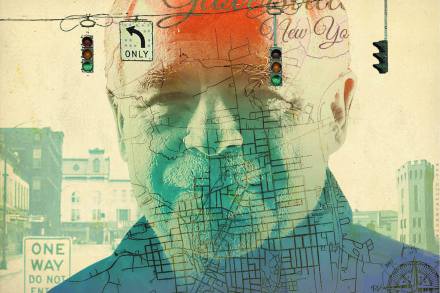
In Elsewhere, a coruscating memoir published in 2012, Richard Russo described his formative years as “an American childhood, as lived in the late Fifties, by a lower-middle class that barely seems to exist any more.” The setting for this slice of lost Eisenhower-era Americana was Gloversville in upstate New York, an East Coast leather town where the money had long since moved out and taken the locale’s animating spirit with it, to the point where the eighteen-year-old high-school graduate reckoned that “you could have strafed Main Street with an automatic weapon without endangering a soul.” The “Main Street” reference carries its own freight of associative cargo.

russo

Why is George Orwell so difficult to pin down?

Outside Broadcasting House, the BBC’s main center in London, is an imposing, eight-foot-high statue of a man. He leans over slightly, as if to accost passersby, and holds a cigarette. A sign behind him declares, “If liberty means anything at all, it means the right to tell people what they do not want to hear.” The man is the author and critic George Orwell and the statue was intended as a permanent commemoration of his writings and values, as well as his short-lived stint at the BBC during World War Two.

orwell

Literary festivals are no fun

This is the season when literary festivals start to happen all over the UK. From the highlands of Scotland to the South London lowlands of Deptford, there are book festivals for every taste and tribe. Festivals devoted to crime fiction, women writers, LGBTQ writers and young novelists. Even old Marxists are having their own summer festival. I’m thinking of starting a literary festival for neglected and bitter writers like me who don’t get invited to literary festivals. I ask myself: why should I care? But I do. I spend long nights of self-torment scrolling through the lists of people appearing at various festivals and shouting at my laptop screen: who the fuck is he? What has she written? Why is Bono there and not me? For heaven’s sake, who invited Minnie Driver?!