World war two

Pigeons are the solution to the statue controversy

Will nobody think of the pigeons? That thought has repeatedly occurred to me, as beloved roosts for generations of urban pigeons have been toppled in one city after another on both sides of the Atlantic by the radical left, in the greatest eruption of iconoclasm since the era when Theodora graced the burlesque stage in Constantinople. Tearing down Confederate war memorials, it turns out, is a gateway drug to toppling statues of Catholic saints, Civil War abolitionists and Abraham Lincoln himself. Gradually, it has dawned on a horrified, watching world: they don’t hate Confederates. They hate statues! All statues!Now, thanks to the actions of a lawless few, countless pigeons in cities in America and Europe have been rendered homeless.

pigeons

Articles of War

Universal genius is a law unto itself, but the personalities presented in Signatures at least deserve to be remembered by generations yet unborn. Ernst JüngerJournals, 1951 Researching for my book Paris in the Third Reich, I was just in time to catch some German officials or soldiers who had played a part in the occupation. Understandably, they tried to put themselves in the best possible light. Ernst Jünger was different. A staff officer, exceptionally intelligent and exceptionally observant, he kept a day-by-day record of his life in Paris. Much more than a timely self-portrait, these diaries fix for posterity the historic moment when the long-drawn contest for power in continental Europe appeared to have ended conclusively in German victory and French defeat.

war

Ghost riders in the sky

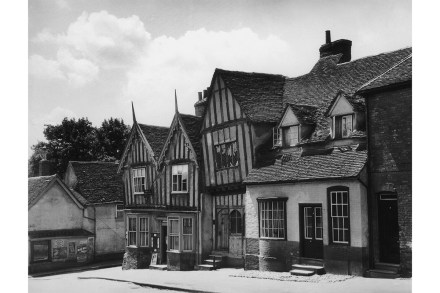
Christmas Eve 1944, and the airfield near the tiny Suffolk village of Lavenham shook with the noise of bombers from the 487th Bomb Group, part of the 8th US Army Air Force. The commanding officer, leading more than 2,000 aircraft from various airfields, was brigadier general Frederick Walker Castle, and today was to be his 30th and final mission. Over Allied-held territory in Belgium, Castle’s B-17 Flying Fortress developed engine trouble. Dropping back from the bomber stream so as not to slow it down, he refused to jettison his bomb load on the Allied troops below. He was a sitting duck. After repeated fighter attacks, his plane on fire and in a tailspin, Castle ordered his crewmen to bail out.

lavenham
covid

Does COVID-19 mean socialism or social collapse?

Inequality is the price we pay for civilization. Property rights, inheritance customs and unequal gains from technological innovation have long divided us into haves and have-nots. Because stability favors such disparities, it usually took powerful shocks to flatten them. The collapse of states wiped out elites. The World Wars slashed returns on capital and imposed heavy-handed regulation and confiscatory taxation. Communist regimes equalized by force and fiat.The greatest plagues also turned into levelers, by killing so many that labor became dear and land cheap. For a while, the rich became less rich and the poor less poor: Europe after the Black Death is the best-known example.

How government should respond

Misdiagnosis can be fatal in a pandemic. Treating the economic effects of the global COVID-19 epidemic as a conventional recession means prescribing the wrong medicine and harming the patient. This is a supply-side recession, not a demand-side recession. The shortfall includes intensive care beds, ventilators, protective gear for healthcare workers, and other medical supplies. Thanks to these shortages, as well as insufficient trained medical personnel, hospitals may soon be overwhelmed everywhere by the demands for treatment of coronavirus victims. To slow the spread of the virus while augmenting existing medical supplies and personnel, governments are promoting social distancing and sheltering in place, both euphemisms for quarantine.

health finance

A chance encounter with a butterfly-catching Nazi

In the winter of 1943, Eric Newby, captured in 1942 on a commando raid on Sicily, escaped from an Italian prisoner of war camp. Love and War in the Apennines, his memoir of life on the run among the peasant farmers of the Apennine Mountains, is that rarest of combinations, a military classic and a love story. Patrick French’s tribute to Newby’s memoir can be read here. In this excerpt, Newby describes an unlikely encounter in a mountain pasture. As I climbed, the trees began to thin out and at last I came to a place where there was nothing but juniper growing.

butterfly naxi apennines

Love and War in the Apennines

An escaped British prisoner-of-war is sleeping in a grassy hollow by the edge of a cliff. He wakes to find a German soldier standing over him, wearing summer battledress, a pistol at his hip. Realizing he has been caught, he says his name and adds, ‘I’m a lieutenant in the infantry, or rather I was until I was put in the bag.’In the bag – captured. It is one of the many phrases of the time that add to the resonance of Love and War in the Apennines (1971), a vivid memoir of Eric Newby’s capture, escape and recapture in Italy’s mountainous terrain during the later years of World War Two. The man standing over him will not, though, take him away.

apennines

The hunt for the Führer

I cannot now remember when I first read Hugh Trevor-Roper’s The Last Days of Hitler (1947). My memory is confused by the fact that I knew the author in old age and was to become his biographer; Trevor-Roper himself told me about the extraordinary circumstances in which he had come to write the book. In September 1945 he had been awaiting discharge from the army so that he could resume his pre-war role as an Oxford don, when he was asked to undertake an urgent investigation into the fate of the Führer. This was then a mystery. In January, as the Allied armies invaded Germany, Hitler had retreated to an underground bunker below the Reich Chancellery in Berlin, to escape Allied bombing; his last months would be spent in these eighteen small and windowless rooms.

hunt führer

How much did Churchill owe to Shakespeare?

Did Shakespeare win the war? He was certainly Churchill’s greatest literary ally in 1940 when he sent the English language into battle. In fact it comes as a surprise to realize — at a fascinating exhibition in Washington D.C.’s magnificent Folger library  — just how much Churchill saw England and its history through the eyes of Shakespeare. For a period in 1940 he became the lion-hearted Henry V — albeit Henry V with a cigar and dressed in a velvet onesie. Shakespeare and the theatre runs through Churchill’s life. He bought a Webb’s toy cut-out theatre as a little boy. He studied hard for (but twice just missed getting) the Shakespeare Prize at Harrow.

winston churchill