World health organization

The US has left the World Health Organization. What next?

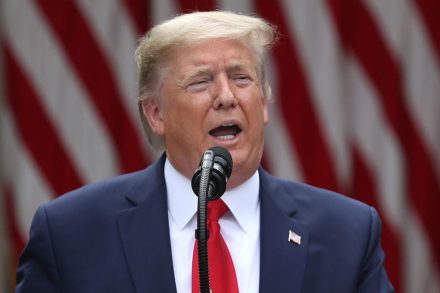
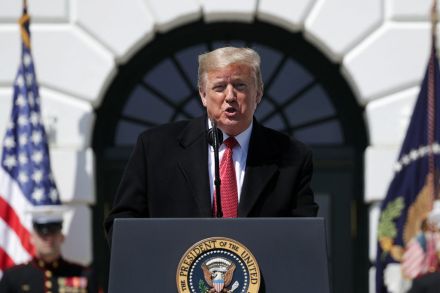
At this year’s World Economic Forum America’s friends and enemies heard about what some are calling a new world order. In Davos, President Trump advanced his own version of Realpolitik. America has its particular interests and he doesn’t mind being fully transparent about them and the actions they portend.   He plainly said that NATO is not forever. His Board of Peace is described as a possible prototype that will displace the UN. Trump has no regard for Biden’s devotion to the “rules based world order” when it really means the US has to pay for everyone else to honor the rules.   This is the reason that while the good and great were chatting it up in Davos the US finalized its withdrawal from the World Health Organization.
world health organization

What Trump’s executive orders will do

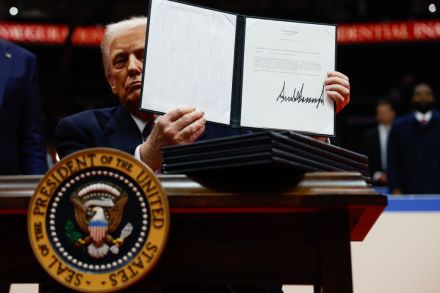
The newly sworn-in President Trump had a busy inaugural day. Between swearing into office and waving a saber around while dancing to “YMCA” at an inaugural ball, he also signed several executive orders and proclamations. After signing his cabinet and other nominations, President Trump’s first order of business was to proclaim that all flags should be flown at full staff for this and all future inauguration days. Following the inaugural parade, President Trump signed a bevy of additional executive documents as thousands of his supporters cheered.

Covid restrictions are returning with a vengeance

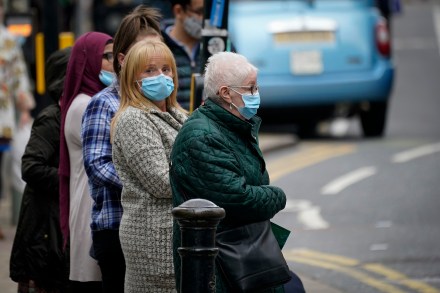
Friends from my hometown are often shocked when they come visit me in the DC area and find that many Americans are still adhering to long-expired Covid restrictions. Thankfully I recently moved to the suburbs, but whenever I travel into the city — or even Arlington or Alexandria — for work, it’s not uncommon to see people driving alone in their cars with a mask over their face. People here still wear N95s into the grocery store, “socially distance” and otherwise behave like paranoid hypochondriacs.  We are now more than three years out from the start of the Covid-19 pandemic.

Scientists: WHO wrong to dismiss theory that COVID came from lab

If the World Health Organization was hoping that its report earlier this year into the origins of COVID-19 would be the last word on the matter, it is going to be sorely disappointed. A group of 18 immunologists, biologists and other scientists have written to Science, the journal of the American Association for the Advancement of Science, to make it clear that they reject WHO’s conclusion that it is ‘extremely unlikely’ that SARS-CoV-2, the virus which causes COVID-19, entered the human population through a laboratory accident. The report, published on February 28, pretty well rejected the theory that SARS-CoV-2 could have originated as a virus held, even invented, at the Wuhan Institute of Virology, from which it escaped.

wuhan institute of virology lab theory

What should we make of the WHO Covid report?

From our UK edition

Should we believe the conclusions of the World Health Organization (WHO) report into the origins of the SARS-CoV-2 virus which, as expected, dismissed the possibility of a laboratory accident while giving credence to the theory that the virus was imported via frozen foods? The first thing to note is that the report does not even claim to be independent — it is billed as a 'joint WHO-China study'. It deserves to be read as such: as the product of an undemocratic government that has every incentive to deflect any responsibility for a pandemic that has, to date, been blamed for 2.7 million deaths globally.

Nobody believes China

The World Health Organization now says the virus ‘most likely came from animals.' But everybody knows that the WHO is heavily influenced by China, and China is not a reliable source. Everybody, that is, except large and important sections of the US media. Before the WHO’s latest report, Feng Zijian, the deputy director of China’s Center for Disease Control and Prevention, claimed the virus spread after a bat infected a human — or the virus initially went from bat to another animal or mammal species, which then jumped to humans or that shipments of frozen food from Europe or even the United States spread the virus throughout the province of Wuhan. It’s always the West’s fault, the way Beijing tells it.

china

Rejoining the WHO will be Joe Biden’s first mistake as president

In emails obtained by the Associated Press, the World Health Organization reveals it has recorded 65 cases of coronavirus among staff at its headquarters in Geneva. The WHO had previously and publicly denied any such outbreaks, just two weeks ago. This follows a pattern. The WHO has been been duping the public quite consistently in the past nine months. It has covered up for China on the sources of COVID-19. It has worked with China to limit public information as to when the virus spread to Europe. It has repeated China’s talking points, even rehashing the CCP’s disastrous claim back in February that the novel coronavirus could not be transmitted by humans.

WHO

How deadly is Covid-19?

From our UK edition

What percentage of people who are infected with Covid-19 will go on to die of the disease? The dramatic response to the pandemic on the part of almost all governments around the world has been based on the idea that Covid-19 is a far more lethal disease than seasonal flu, which is often quoted as having an infection fatality rate (IFR) of 0.1 per cent. The World Health Organisation (WHO) is often quoted as claiming that Covid-19 has an IFR of 3.2 per cent — a claim that goes back to a press conference in early March when it, in fact, said that the case fatality rate (CFR) at that stage was 3.2 per cent.  The CFR is the division of known deaths by known cases — the denominator omitting the many cases that have not been confirmed by diagnosis.

Scott Atlas blasts critics of Trump’s comeback rally

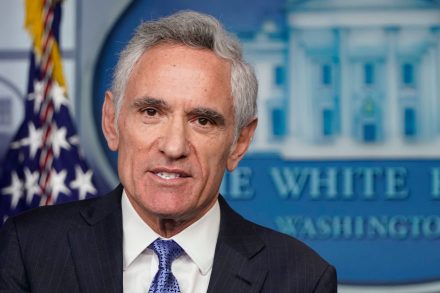
Dr Scott Atlas, a member of the White House coronavirus task force, is slamming critics who deemed President Trump's comeback rally in Florida unsafe, alleging that they have an 'agenda' separate from health concerns. Atlas, who is also a senior fellow at the Hoover Institution, told The Spectator in an interview Tuesday that the President met the standard of care necessary to be cleared for public events. According to the Center for Disease Control, individuals who have COVID-19 may be around others if it has been 10 days since their symptoms first appeared and if they have gone 24 hours with no fever without the use of fever-reducing medication.

scott atlas

The incredible vanishing World Health Organization

The lockdown is dead...long live the lockdown?In an interview last Thursday on Spectator TV, WHO special envoy David Nabarro warned seven months too late that the ubiquitous global response to the coronavirus pandemic might be a bit of an oopsie-daisy: https://twitter.com/spectator/status/1314573157827858434 ‘We in the World Health Organization do not advocate lockdowns as the primary means of control of this virus,' Nabarro said. ‘Lockdowns just have one consequence that you must never ever belittle, and that is making poor people an awful lot poorer... It seems that we may well have a doubling of world poverty by next year. We may well have at least a doubling of child malnutrition.’Now, there was nothing astonishing about Dr Nabarro’s claims.

lockdown world health organization

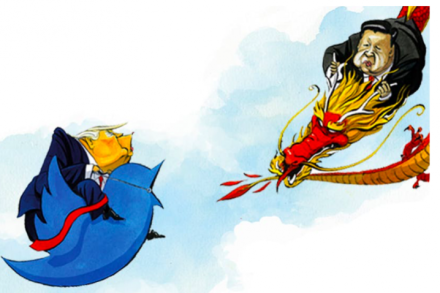
Trump severs ties with World Health Organization

President Trump is cutting all US funding to the World Health Organization as of Friday afternoon.‘China has total control over the World Health Organization despite paying only $40 million per year, compared to what the United States has been paying, which is approximately $450 million per year’, said the President.Trump cited the WHO’s failure to enact recommended reforms and said that the funding will be redirected toward other public health initiatives.The announcement comes after months of skepticism about the WHO’s handling of the coronavirus pandemic. In early April, the Trump administration froze funding to the WHO due to their mismanagement of the coronavirus crisis.

who world health organization

Xi’s useful idiots against free speech

On December 30, Ai Fen, director of the emergency department at Wuhan Central Hospital, got the lab results back about one of her patients who had a flulike illness. The words she read on the report made her blood run cold: ‘Sars coronavirus’. She circled the word ‘Sars’, took a photo and emailed it to a doctor at a neighboring hospital. Within hours, the photo had been sent to dozens of people in the Wuhan medical community. One of them sent a series of messages to a private group on WeChat, advising his colleagues to take precautions, and someone took screenshots of those messages and shared them more widely.

useful idiots

A new balance

It is already commonplace to say that coronavirus has brought the age of globalization to a shuddering halt. How silly it suddenly seems for production to be held up at a factory in Ohio for want of a 50-cent part normally imported from China. Months after the first COVID-19 deaths in America, we are still waiting for urgently needed Chinese medical supplies. Americans are going without pork or beef, but Chinese-owned US meat processing plants are exporting carcasses to China. Something seems to have gone wrong with almost everything. The global supply chain has us in domestic and strategic knots. As a result, the idea of national self-sufficiency, which had already been growing since the financial crisis of 2008, is suddenly in high fashion.

globalization

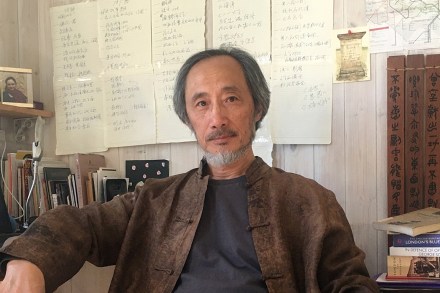
Ma Jian: China’s regime is ‘stronger than ever’

Should we blame China for the spread of coronavirus? And how should the West respond if the communist regime did cause the pandemic by lying about the virus as it emerged? I spoke about these questions to the dissident author Ma Jian, who has been described — by another dissident — as ‘one of the most important and courageous voices in Chinese literature’. His novels have been called — by a critic — ‘a powerful corrective to the self-interested Western view of China’. Ma believes that the economic miracle in China that has given us cheap goods in the West is also bribing the Chinese to forget their past and infantilizing them in their relationship with their rulers.

ma jian
taiwan

President Trump’s support for Taiwan is welcome

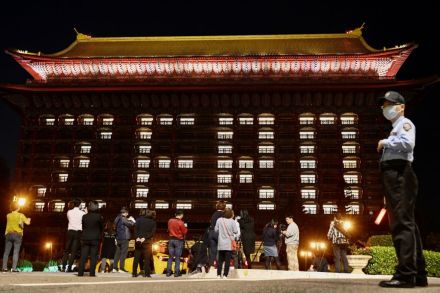
Over the coming weeks, a battle between Washington and Beijing over the inclusion of Taiwan as an observer at the World Health Organization will rage, reflecting the struggle between the People’s Republic of China and the United States over control over international institutions. Yet it also reveals the reality of the new cold war between the two countries, and the shift in focus of attention to ground-level tactics at the expense of grand strategies. Long forgotten in the shadow of China’s rise and the intensification of both contact and competition between the PRC and the United States has been the island nation of Taiwan.

WHO ate all the pangolins?

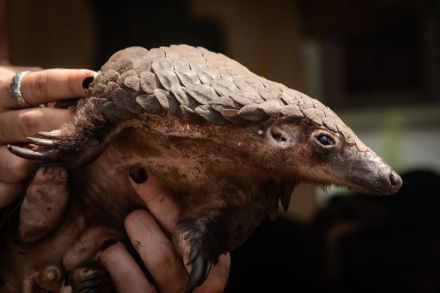
Got a cough, cold, rheumatic fever? According to the World Health Organization what you might really need is a good dose of pangolin scales. This is the surprising advice coming from a UN agency which has been accused of cozying up too closely with China and which in a little noticed development last year, decided to officially endorse Traditional Chinese Medicines (TCMs). In mid-2019, the WHO ratified the grandly titled 11th International Statistical Classification of Diseases and Related Health Problems (ICD-11). When it comes into force from January 2022, for the first time TCMs will be regarded as having met ‘the diagnostic classification standard for all clinical and research purposes’.

pangolins WHO

Beijing’s biotech bullies

Kill a chicken to scare the monkeys, the Chinese say. In this case, Australia is the chook, the butchers in Beijing are holding a knife at the nation’s throat and around the world, monkeys — or at least the highest form of primates, the naked ape — look on in horror. China’s threat that its consumers, students and tourists will boycott Australian beef, wine, universities and resorts if federal politicians persist in an independent inquiry into the origins of SARS-Cov-2 has at least had one positive outcome — it has made the inquiry unnecessary.

beijing australian

Hancock struggles to answer questions on testing and quarantine

From our UK edition

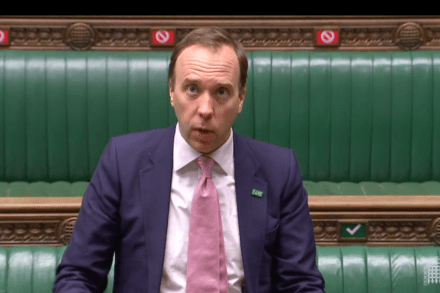
Matt Hancock has the air of a student who, having boasted about how great their final dissertation will be, has just realised that they have days to research and write the whole thing. When asked if he is going to meet his target of 100,000 daily tests for coronavirus by the end of the month, the Health Secretary continues to insist that he will, while struggling to explain how.  He gave a statement in the new hybrid Commons this afternoon in which he was repeatedly questioned both by MPs who were in the Chamber and those on video link about what was going wrong with the testing target. He struggled to give any answer beyond that the government was steadily increasing capacity and that the UK was one of the first countries in the world to develop a test.

Why is the New York Times shilling for the World Health Organization?

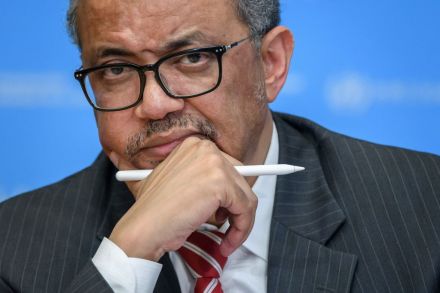
Donald Trump announced this week he intends to halt funding for the World Health Organization over the group's suspicious relationship with China. Doubtless you'll be shocked to hear that the establishment media quickly fell in line to defend one of its favorite globalist institutions, regardless of its actual effectiveness. The New York Times, fresh off picking apart the woman who has accused Joe Biden of sexual assault, scraped together an article defending the WHO's response to the coronavirus outbreak in a stunning display of  revisionist history. 'The World Health Organization, always cautious, acted more forcefully and faster than many national governments', declared the Times's standfirst, which prompted Cockburn to spit out his double-roast espresso.

new york times WHO Chief Tedros Adhanom Ghebreyesus

Trump walks the recovery tightrope

President Trump’s decision to set the United States back on the path to work will be decried as mere politics, but it is the right decision. It is the task of politicians to consider the general welfare. This consideration sets the current emergency against the coming one, the need to reduce deaths from COVID-19 against the need to forestall the human cost of an economy in open-ended limbo. The data on COVID-19 remains insufficient and will probably remain so. The economic prognosis is, however, clearer, and we have the data too.The IMF is warning that a prolonged shutdown will lead to a Thirties’-style Depression.

recovery