Winston churchill

The rhetorical power of ‘never’, from Ian Paisley to King Lear

From our UK edition

He won’t be remembered as Lord Bannside, but Ian Paisley will be remembered for shouting: ‘Never, never, never, never.’ The fourth never was hardly a shout, by his standards, but merged into the roar of the crowd. Never is a useful word for rhetoric. In our mind’s ear we remember how Churchill stressed the word and paused as he said: ‘Never in the field of human conflict.’ That auditory memory is something of an illusion, for Churchill made his great speech about the ‘Few’ in the Commons, in 1940, and proceedings were not recorded in sound. What we have heard is the version he delivered again for a recording in 1951. If Paisley managed four nevers, Lear outdid him in that moving line: ‘O, thou wilt come no more.
The lost Victorian who sculpted Churchill

From our UK edition

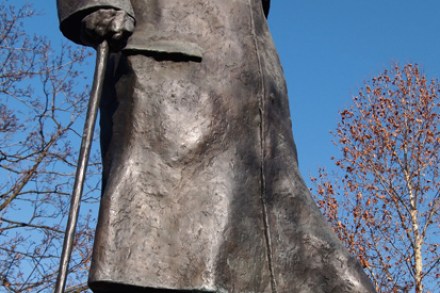
Ivor Roberts-Jones was in many ways the right artist at the wrong time. Had the sculptor been born a few decades earlier and worked in the Victorian age, when statues of the builders and defenders of empire were erected proudly and prolifically across the land, he’d surely have received no end of garlands. As it is, Roberts-Jones (1913–96) found himself constantly battling against artistic fashions and today is barely even talked about. Born in the Welsh border town of Oswestry, he moved to London to study at the Royal Academy Schools and Goldsmiths College (the latter’s fame as a breeding ground for conceptual excess still a long way into the future).

‘Papa told us everything’: Winston Churchill and the remarkable Mary Soames

From our UK edition

By any standards Mary Soames was one of the most remarkable women of her era: close confidante (possibly the closest) to Winston Churchill throughout the second world war, dedicated political wife, one of the most outstanding British ambassadresses sent to Paris, successful (against all reckoning) chairman of the National Theatre, and — later in life — a prize-winning author. She was also one of only three non-royal Ladies of the Garter in recent British history, and a Spectator contributor to boot. All this went hand in hand with a reluctance to talk about herself, and — except on rare occasions — about the war, and the father whom she adored and was especially close to.

Why –y? The evolution of a suffix

From our UK edition

Hitler was ‘dark, shouty, moustachioed’ in Churchill’s eyes, or rather, that was Jonathan Rose’s view of how Churchill saw Hitler, according to Sam Leith, writing in the books pages on 19 April. Shouty is not a word Churchill would have used in exactly this sense, for which no example is recorded by the Oxford English Dictionary before 2001. It falls in the category of –y suffixes that connote condemnation, ridicule, or contempt, like catty, churchy or beery. There are plenty of entries for a rather different sense, ‘like a shout’, as Henry Coward noted in his Choral Technique and Interpretation (1914) of untrained voices that may be ‘shouty, throaty, cavernous, hooty, scoopy, and nondescript’.

The poet who welcomed war

From our UK edition

Today, 23 April, the world celebrates the 450th anniversary of William Shakespeare's presumed birth (and marks with less joy the date of the Bard's death in 1616). That double date obscures another: the 99th anniversary of the death of a less celebrated Warwickshire-born literary lad, the poet Rupert Brooke. Brooke, like many of his friends and contemporaries, died in the First World War. But unlike most of them, he perished not in action, but as a result of septicaemia from an infected insect bite to his upper lip. En route to the bloody beaches of Gallipoli, he fell ill in Egypt, died on a French hospital ship moored off the Greek island of Skyros, and - fittingly for a classically educated poet - lies buried in an isolated olive grove overlooking the wine-dark waters of the Aegean.

Churchill was as mad as a badger. We should all be thankful

From our UK edition

Land sakes! Another book about Winston Churchill? Really? Give us a break, the average reader may think. Actually though, as title and subtitle suggest, this isn’t just another biographical study. It’s at once odder and more conventional than that. More conventional because, in some ways, it is just another biographical study. Odder because — instead of being a straightforward discussion of Churchill’s literary work — it sees literature as the key to his biography. More than that, its author seems to think he has hit on a ‘new methodology’ in which ‘we can write political history as literary history’. Well, perhaps.

Lessons from Tina Brown on the art of failing upwards

From our UK edition

Shortly after I started working at Vanity Fair in the mid-1990s, I suggested to my boss Graydon Carter that I write an article about the number of New York society types who were bankrupt. Not morally bankrupt, but up to their eyeballs in debt. ‘Let’s get a team of researchers to go through the financials of everyone on the guest list of the annual costume ball at the Met,’ I suggested. ‘We could publish a list, like the Forbes 400, but the exact opposite: America’s most indebted billionaires.’ Graydon didn’t go for it, and not just because he was worried about its impact on his social life. ‘Like who?’ he said. I rattled off a list of names, but he pooh-poohed every one. ‘This is just wishful thinking, Toby,’ he said.

A spectacular faller in the Benghazi stakes

From our UK edition

What an unedifying affair the war in the North African desert was, at least until November 1942 and the victory at El Alamein. As the author of this brisk study of one of its more admired practitioners writes: In no particular order, the following were casualties [i.e. sacked]: Wavell, Cunningham, Auchinleck, Norrie, Ritchie, Lumsden, Gatehouse, Rees, Godwin-Austen, Beresford-Pierse, Dorman-Smith, Corbett, Hobart, O’Creagh, Ramsden and Messervy. There might well have been a separate desk in the military secretary’s department in London dealing with officers who had taken a fall in what was laconically referred to as the Benghazi Stakes. And it had all begun so well.

The enlightened king of Iraq

From our UK edition

‘King of Iraq’ has an odd ring even to those who know that Iraq was called Mesopotamia and was part of the Ottoman empire before falling into and out of the clutches of the British. Many people, including Iraqis, seem unaware that it was a monarchy until 1958. Some 45 years after its overthrow, members of Iraqi families that flourished in those royal days launched ambitious plans to restore the monarchy after Saddam Hussein’s demise. One of them was Ali A. Allawi, the author of this first major biography of Iraq’s founding father, King Faisal (r. 1921–1933).

The Spectator’s Notes: Quangos – a world of perfect hypocrisy

From our UK edition

The accusation that the Tories have been installing their people in public appointments should evoke only a hollow laugh. They have been comatose on the subject. One of the greatest skills of New Labour was putting its allies in positions of control across the public sector. A great many are still there, and yet the Tories wonder why their efforts at reform are frustrated. Maggie Atkinson, for example, was imposed by Ed Balls, when in office, as Children’s Commissioner, against the recommendation of the relevant selection committee. She lingers on in her useless post. Lord Smith, the former Labour cabinet minister who has been flooding the Somerset levels, is still at the Environment Agency.

James Delingpole: Is the fight against environmentalism the new Cold War?

From our UK edition

Gosh it isn’t half irksome when someone who went to the same school as you but is considerably younger than you ends up doing dramatically better than you. But hats off to Dominic Sandbrook: his new series Cold War Britain (BBC2, Tuesday) is an absolute delight. Sandbrook has that rare gift of making things you thought you knew pretty well already seem startling and fresh. Take Churchill’s Fulton, Missouri speech. ‘Ah,’ I said expertly to the Fawn, a good five minutes before the programme reproduced the famous recording, ‘From Stettin in the Baltic...’ But what Sandbrook does is both put it in context and give it a human dimension that brings the whole business alive.

What caused the first world war?

From our UK edition

The centenary of August 1914 is still almost a year away, but the tsunami of first-world-war books has already begun. The government tells us that 1914 must be commemorated, not celebrated, and ministers worry about British triumphalism upsetting the Germans. But the debate about Germany’s responsibility for the outbreak of war in 1914 won’t go away. Historians are divided into those who blame Germany — John Rohl, Max Hastings — and those who point the finger at someone else, such as Serbia (Christopher Clarke) or Russia (Sean McMeekin) or even Britain (Niall Ferguson). The blame game is of course conceptually flawed. The international system in 1914 was seriously dysfunctional. The alternative to searching for scapegoats is to examine the system.

Hitler’s missed opportunity: failing to smash the rock of Gibraltar

From our UK edition

It may be that only geological erosion, expected to occur sometime over the next ten million years, will finally remove Gibraltar as a source of friction between Britain and Spain. In the meantime, with a poll showing that nearly two thirds of Spaniards support their government’s current tough line on the territory, David Cameron has again reassured the Rock’s chief minister Fabian Picardo that Britain will always stand up for Gibraltar and safeguard the interests of its people. But while the tension is real and enduring, there is no suggestion on either side that the situation might be resolved by force. Seventy-three years ago, in the autumn of 1940, the mood was very different. The threat to British sovereignty was real and imminent.

Winston Churchill was a very human leader, says Churchill and Empire author Lawrence James

From our UK edition

More books have been written about Winston Churchill than perhaps any other figure in British history. Do we really need another volume added to the existing library? In Churchill and Empire, the historian Lawrence James makes a strong case for justifying another book for Churchillian bibliophiles. The narrative begins by looking back at Churchill’s career as a young army officer in the late nineteenth century, where he served in conflicts in India, South Africa and Sudan. It ends with Churchill’s slightly deluded view of Britain’s place in global politics as the Second World War is ending: when the British Empire is disintegrating and America is the most dominant superpower on the planet.

The week in books | 19 July 2013

From our UK edition

The best way to weather the heat wave is to head for the shade with a copy of the new issue of the Spectator, in which you will you find some diverting book reviews to while away an hour or two. Here is a selection: Philip Hensher treads carefully around Winston Churchill’s imperialism, the subject of Lawrence James’ Churchill and Empire: Portrait of an Imperialist. Hensher writes: ‘It is important for historians to make an effort to understand individuals by the standards of their own day, and not ours. There is a dismal school that finds it rewarding to debate whether Napoleon was homophobic or not, but for the most part we have to try to understand where a figure’s standards of judgment and thought stood in relation to the spectrum of opinion of his own day.

Jane Austen and Winston Churchill are practically the only credible banknote candidates

From our UK edition

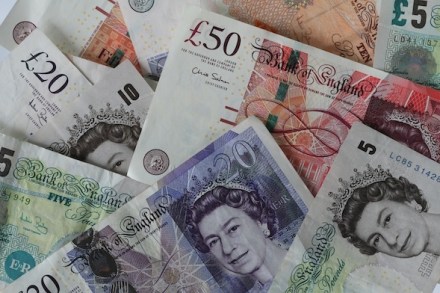
Silly season is here. A minor row has broken out over which long-dead figures should appear on the reverse side of Bank of England notes. I can’t be bothered to relate the details because you’ve all got better things to do like water the garden, fix lunch or watch Loose Women. Basically, Sir Mervyn King’s got it in the neck from the Continuity Bien Pensants by seeming to back Winston Churchill and Jane Austen for this dubious accolade. So far, so ludicrous. But there’s one more point worth making. The criteria for this banknote business are that the subject must be enduringly famous and recognisable. This does rather limit the field, particularly where ‘politically correct’ candidates are concerned.

Boris Johnson to write book about Sir Winston Churchill

From our UK edition

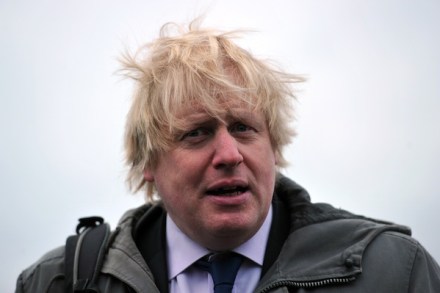
Boris is to write a book about Winston Churchill. As Boris puts it in a cantering press release: ‘The point of the ‘‘Churchill Factor’’ is that one man can make all the difference.’ The point of the ‘Boris Factor’ is that only one man has the spunk to invite comparison between himself and Churchill. David Cameron is, evidently, self-assured; but he would not take such a risk. Confidence is Boris’ gift; over-confidence his enemy. BoJo and Sir Winston are, to an extent, kindred spirits: witty and determined, and chancers both.

The Young Titan, by Michael Shelden; Churchill’s First War, by Con Coughlin – review

From our UK edition

One evening in 1906, shortly after the election that brought Campbell-Bannerman’s Liberals into power, an understandably nervous Eddie Marsh, a middle-ranking civil servant in the Colonial Office, paid a social call on the Dowager Countess of Lytton.  The previous day Marsh had gone through a tricky first meeting with the new number two in the department, and it had been a surprise to him on going into the office that morning to hear that he was wanted as his private secretary.  ‘Desperate, Marsh begged the dowager countess for guidance,’ writes Michael Shelden in his Young Titan: She had known Winston and Jennie for many years... She had also been acquainted with Lord Randolph.

In defence of Special Brew

From our UK edition

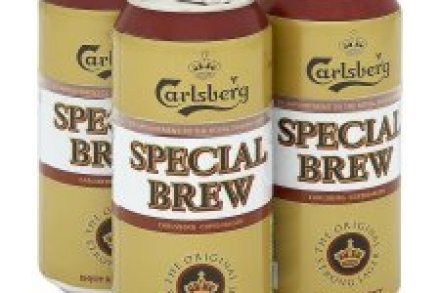
The Prime Minister today introduces plans for minimum pricing on alcohol. In this week's Spectator, Leo McKinstry mounts a defence of Special Brew, the tipple of Kingsley Amis and Churchill. I have a confession to make: I am writing this article under the influence. As I tap away at my laptop, a can of lovely Carlsberg Special Brew sits on the table beside me, acting on my brain as oil acts on a car engine: lubricating the moving parts. Ever since I found that it could help to speed up my word output, strong Danish beer has been essential to my writing career, so it’s a great shock to discover that the government has Special Brew in its sights. Carlsberg Special is perhaps the most notorious of the super-strength lagers on sale in Britain today.

Cutting the arts and decimating culture

From our UK edition

Rationing Mammon emaciates the Muses. Plato knew it, and so does Polly Toynbee: it’s just simple cause and effect. And government cuts tend to be cyclical: seven fat years of abundance are invariably followed by lean years of famine. Unlike health and overseas development, the arts seem to have no divine right of exemption from the fiscal straitjacket presently being strapped around other departments of state: it is undeniably politically easier to cut Northern Ballet than hospital beds or malaria nets. But the suggestion that a reduction of £150 million amounts to little more than a slight nip‘n’tuck in a very fleshy sector is a little misleading.