Wine

Saintly succor

Since you’ll likely be reading this with what Wallace Stevens called “a mind of winter” (needful “to regard the frost and the boughs of the pine trees crusted with snow;... to behold the junipers shagged with ice, the spruces rough in the distant glitter of the January sun”), I thought I would provide something warming to conjure with. I am eventually going to get to one of the world’s most spectacular wines, Château Cheval Blanc, a premier grand crus classé from St. Emilion, but first let’s indulge in a bit of lore. A friend introduced me to Michael Foley’s Drinking with the Saints: The Sinner’s Guide to a Holy Happy Hour (Regnery), a Catholic-heavy but light-hearted topper’s fasti.

Émilion

A Christmas gift guide for foodies

I’m hungry, so I know it has begun. December. The month when the kitchen transforms into a battleground, no soldier safe from its vigilant sniper’s gaze. Seemingly innocuous snacking is off-limits: one must assume that everything edible — everything — has been squirreled away for festive drop-ins, cocktail parties and The Big Day. “Wait! Don’t open that. It’s the Christmas wine.” “Hey. Don’t even think about it. That’s a gift for Auntie Jo.” “Put those back! They’re the Christmas Eve cashews.” We must struggle with bizarre concepts like “having a banana” or “waiting until dinner.” Or, do as I do. Continue in vain, scribbling an IOU list that grows as long as my belly grows round. I’ll buy it back tomorrow. Of course I will.

christmas gift guide foodies

The Chablis complex

Chablis has the paradoxical distinction of being at once one of the most famous and least well known of French wines. Hugh Johnson opined that it is “one of the world’s most under-estimated treasures.” I agree. We say that Chablis is Burgundy, but, situated on the Serein River some 100 miles southeast of Paris, Chablis is nearly 100 miles north of Beaune. Perhaps we can say that it is the Hadrian’s Wall of Burgundy. Hadrian’s bit of Britain was part of the Roman Empire, but no one would confuse it with Rome. The climate in Chablis is markedly different from and less forgiving than that of the Côte-d’Or: chillier and windier. Think of Auden’s poem, “Roman Wall Blues”: “The rain comes pattering out of the sky, / I’m a Wall soldier, I don’t know why.

chablis

Does Taylor Swift have a drinking problem?

Being an eclectic chap, Cockburn has sampled his fair share of music. And he’s not ashamed to admit, contrary to Al Michaels’s suggestion that Taylor Swift only appeals to teenage girls, that he considers himself a “Swiftie” — not least of all because Swift makes repeated reference to one of his favorite activities: drinking alcohol. Swift just released her new album, Midnights, along with an official music video to accompany her catchy and oh-so-clever song, Anti-Hero. The video tells you all you need to know about Swift’s preferred method for dealing with her problems. Though she never mentions booze by name, she appears in the video taking shots and desperately shaking the last drop from a bottle of wine directly into her mouth.

taylor swift

Fetterman blasts Dr. Oz for drinking wine at a football tailgate

John Fetterman has prompted a fierce debate in the hotly contested race for Pennsylvania’s US Senate seat (the Cook Political Report just moved the race from “leans Democrat” to “toss-up”) by attacking his opponent, Dr. Mehmet Oz, for drinking wine at a Penn State football tailgate: https://twitter.com/JohnFetterman/status/1577304936345387009 Pennsylvania natives quickly came to Oz’s defense. The American Thinker compiled a list of spot-on responses, including one “Pennsylvania regular” who said she would totally drink wine because “Beer makes me have to pee.” Others pointed to the fact that Pennsylvanians are, in fact, normal people, and drink wine like those from other states. They even have wineries in Pennsylvania — 400 of them!

football

In praise of liquor stores

Pennsylvania’s liquor laws are... vintage. But not in a single-malt Scotch kind of way that means they improve with age. The state legislature did move the needle to the right side of draconian in 2016, but the Philadelphia Inquirer’s 1983 assessment of “Pennsylvania’s backwardness” being “a hangover from the administration of Republican governor Gifford Pinchot, who was elected on a ‘dry’ platform in 1930,” remains accurate. The Inquirer reported that after Prohibition was abolished in 1933, Pinchot led a special session to establish the Pennsylvania Liquor Control Board and “state stores” to make the purchase of alcoholic beverages “as inconvenient and expensive as possible.

liquor
Beaujolais

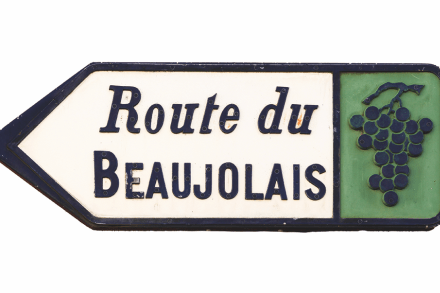
The bucolic Beaujolais

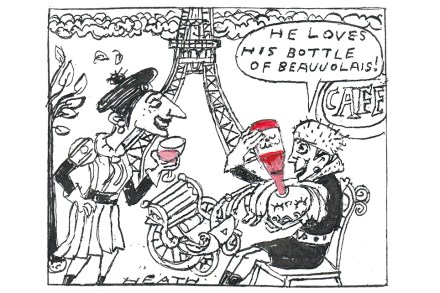
To every thing, saith the Sage of Ecclesiastes (and Pete Seeger), there is a season. There is a time for white tie and tails, footwear by Lobb, and the impeccably tailored business suit or long satin frock with appurtenances from Tiffany. There is also a time for lounging about in loose-fitting cotton trousers and boat shoes. You have on your artfully battered panama hat and sunglasses, and that book you are reading, while full of pictures and conversations, as Alice would have demanded, boasts charm, not charts or spreadsheets. Its story will not be on the test. It’s the same with wine. There is a time for the exquisite Montrachet or Cheval Blanc, the Bollinger RD, Krug, or Dom Pérignon.

Tolosa Winery: my latest discovery

Writing about and — the necessary preliminary — drinking wine is a voyage of discovery. I won’t say that any new vineyard has made me feel quite like “stout Cortez” who, according to Keats, “star’d at the Pacific — and all his men/ Look’d at each other with a wild surmise—/ Silent, upon a peak in Darien.” But wine is in a deep sense about more than the fermented juice of the grape. It is about place — terroir, of course, but also place in a larger sense: place as habitation, place as community, which means place as the stage whereon manners, romance, technique and custom perform for the gods of pleasure. It is also about history and personality and their distillate: money, which ushers in snobbery and its accoutrements.

tolosa

Bargain Brazilian wines

Some people think that wine is a serious business. I am often tempted to think that myself, but then I remember an amusing cartoon by James Thurber called “The Wine Snobs.” It shows four people sitting around the dinner table, each holding up a glass of wine. There is an air of resigned dubiousness emanating from the table as whole. But the W.S. himself sports a big smile and says enthusiastically “It’s a naive domestic Burgundy without any breeding, but I think you’ll be amused by its presumption.” Been there, done that. We’ve tasted some pretty fancy wines together in this column, and I hope there will be plenty more to come. At the end of the day, though, wine for most of us is chiefly about pleasure and camaraderie, not connoisseurship.

brazilian

Tastes of paradise

What’s in a name? Sometimes, quite a lot, especially when seen through the benign lens of sentiment. By the time you read this, April, which is not the “cruellest month,” will be upon us and the morning mercury will be edging upward, coaxing forth the crocuses and daffodils. But in the last several days, dawn has come to where I live in Connecticut accompanied by temperatures in the teens and twenties. March has entered clad in its traditional lion’s mane. I feel especially grateful, therefore, that duty called me and a handful of colleagues to Palm Beach, just as February gave way to March, on behalf of the New Criterion, the magazine I edit, and Encounter Books, the other phalanx in my campaign for world conquest.

palm beach wine champagne

The heady reds of Avignon

To you and me, “Châteauneuf-du-Pape” means the bold, dark, spicy red wine from the Rhône region of southeastern France, a bit north of the town of Avignon, with bottles usually featuring a glass-embossed representation of the keys of St. Peter. If you were Jacques Duèze, known to history as Pope John XXII, second and longest reigning (1316-34) of the Avignon popes, Châteauneuf-du-Pape meant first of all that “new castle of the pope” he built on the hill overlooking the town. After the popes left, it fell into desuetude and was raided for stone by local builders. During the Revolution, all the buildings except the great tower or donjon were sold off. During World War Two, the Germans attempted to dynamite the structure but succeeded in destroying only the northern half.

Châteauneuf-du-Pape
kent

The vineyards of Kent

Driving home through Kent the other day, I was struck by how much the topography has changed. When I was growing up there in the 1970s, first in Rolvenden and then in Hawkhurst, there were hop gardens. Today there are vineyards. I’m not sure Alfred Jingle would recognize the county about which he stated in Pickwick Papers: “Kent, sir — everybody knows Kent — apples, cherries, hops and women.” The apple and cherry orchards are not nearly as numerous as they were in either his day or mine, and the hop gardens have largely, although not entirely, disappeared. As for the women, I can’t vouch for their numbers, but I’m delighted to report they remain very easy on the eye. I loved picking hops.

Delicious wines from the Omicron Open

Some people think that it is the job of a wine critic to discover great bargains in the world of bottles and impart the news in hushed but excited tones to the madding crowds. Maybe that’s part of the remit. I incline, however, to this piece of wisdom from George Saintsbury, prosodist to the stars and incomparable, if quirky, cicerone to the fructum vitis et operis manuum hominum, which is to say: wine. “There is no money,” Saintsbury wrote, of the expenditure of which I am less ashamed, or which has given me better value in return, than the price of the liquids chronicled in Notes on a Cellar-Book. When they were good they pleased my senses, cheered my spirits, improved my moral and intellectual powers, besides enabling me to confer the same benefits on other people.

wine

Travels with Herodotus

I am part of an informal reading group with a few friends and colleagues. At the moment, we are reading Herodotus’s Histories (or “Inquiries,” as he might have said had he been writing in English). It’s lots of fun, in part because it is also an excuse to conduct a little wine appreciation class, but also because that old denizen of Halicarnassus — Herodotus lived from around 484 to 425 bc — was possessed of such high-octane and companionable curiosity about the world: what happened when and to whom and with what result. He wanted to know; moreover, he wanted you to know. Herodotus is most famously a major source of our knowledge of the Persian Wars and such signal moments as the Battle of Marathon (490 bc), Thermopylae (480) and Salamis (also 480).

Herodotus

The finest festive fizz

A dinner party without good conversation is like flat Champagne: pretty pointless. It’s like that not-so-funny joke about the inscription on an atheist’s tombstone: “All dressed up and nowhere to go.” Of course at a miserable dinner party you and your glad-rags have reached a destination of sorts, but (as for the late atheists) it’s not the one you were expecting. How to avoid such an infernal disappointment? Jean-Paul Sartre famously felt that hell was other people; all I can say is, that’s no attitude to bring to the table.

champagne
chambertin

Silky, sumptuous wines for Christmas dinner

I have had occasion to mention George Saintsbury’s classic, if quirky, Notes on a Wine-Cellar (1920) in this column before. Back then, it was to sample and swish about the mouth Saintsbury’s fondness — which I took to be a broader public fondness — for fortified wines like port, sherry, and Madeira. I suspect that most of my readers, except when listening to Flanders and Swann, rarely give Madeira a second thought. And although afternoons were made for sherry, they were made for other things too. As for vintage port, we are wheeling into the season — Thanksgiving through New Year’s — when it comes into its own and gladdens the hearts of many. I am certainly counting on it to gladden the hearts of the serious thinkers chez Kimball at Thanksgiving and Christmas this year.

Two modest but delightful wines

According to Tennyson, ‘in the spring, a young man’s fancy lightly turns to thoughts of love’. Be that as it trochee, in the autumn a man of any legal age abandons rosé and moves on to Cabernet. If he is broadminded, he also makes a spot in his heart for Chablis, which I’ll come to in a moment. First, some anthropological, or perhaps I mean ethological, news. A friend recently passed along a slender but improving book called Wine: the Source of Civilization. Written by John J. Mahoney, a ‘certified wine educator’, it is full of edifying revelations. Right at the beginning, we have this bulletin: ‘Man did not settle from nomadic travels to build cities and civilization, and then develop wine.

wines

Condiments and conservatives

Years ago, an entrepreneurial friend had the idea of marketing ketchup with a catch, a jaunty political declaration. I say ‘many years ago’, and to give you a sense of just how ancient this ancient history is, contemplate that the ketchup was called ‘W’ and the ‘W’ stood for the personage that the followers of William Jefferson Clinton mean to disparage when they removed that letter from the computer keyboards in White House and other government offices just before the W in question — George W. Bush — took office.

people

Thoughts on dearly departed vintages

Some people, out at a nice restaurant, are shy about sending a bottle of wine back when there is something wrong with it. They shouldn’t be. Wine, as the vintners like to tell you when everything is going as it should, is a living thing. Like all living things, it is subject to a variety of unfortunate vicissitudes. We’ve probably all encountered ‘corked’ wine at one point or another — that taint caused by a smidgen of 2,4,6-trichloroanisole (TCA) or 2,4,6-tribromoanisole (TBA), which can be transferred from or through a cork. But wine is susceptible to other liabilities as well. One is the same liability that, sooner or later, affects us all: age.

wines

A taste of heresy

The weight of history — a seemingly infinite vista of incident — hangs heavy in the Languedoc in the South of France. The region (also called Occitania) is the place where people said ‘oc’ rather than ‘oui’ for ‘yes’ — langue d’oc instead of langue d’oïl. Gauls, Romans, Visigoths, Franks, Moors, Cathars: one by one they came, they pillaged or prayed, slaughtered or were slaughtered. A plaque in the Carcassonne cathedral reminds us that only yesterday St Dominic (1170-1221) preached there during Lent. A lot of nasty things have happened in Languedoc over the centuries. Perhaps that is one reason the people are so cheerful now. The area is also the biggest wine-producing region in France, which also contributes to the quota of cheerfulness.

languedoc