Wine

My new discoveries from South Africa

When I heard that Minnesota Representative Ilhan Omar had gotten into the wine biz, I thought “Hot dog! If she is as good at wine as she is at investing, this should be spectacular.” I mean, talk about creatio ex nihilo. Just a few years ago, Omar had a net worth of about $1,000. Now she is said to be worth some $30 million. Perhaps only Nancy Pelosi, the world’s most successful investor, is better at conjuring something out of nothing. In 2022, eStCru, the winery Omar’s husband had invested in, was touted as a “hot brand” by Wine Business Monthly. There was chardonnay from the Willamette Valley, cabernet from Mendocino and more.

Gripping: Amazon Prime’s The Tank reviewed

From our UK edition

I don’t know how it got past the increasingly powerful ‘All Germans were evil Nazis’ censors but Amazon has released a sympathetic portrait of a Tiger crew on the Eastern Front, translated, clunkily, as The Tank. It has been criticised in some quarters for its weird twist at the end, which the genre-literate will see coming a mile off. But don’t be put off by its structural and narrative shortcomings. This is still a very watchable, gripping and sometimes moving portrait of men at war, and likely the most realistic ever depiction of a second world war tank crew. It’s far superior to the ludicrous Fury, where Brad Pitt plays an implausibly elderly tank commander, and where a single Sherman successfully takes on virtually an entire SS Panzer Grenadier regiment.

Japan, the land of the rising wine industry

From our UK edition

Travel to Hokkaido, Japan’s northernmost island, and I imagine one of the last things you’d expect to find is a Frenchman making wine. But tucked away in Hakodate, Etienne de Montille, a ninth-generation winemaker from the 300-year-old Domaine de Montille in Burgundy’s Côte de Beaune, is challenging preconceptions about Japanese wine. The de Montille family has been synonymous with Burgundy for centuries, but Etienne decided in 2016 to try something different, setting up vineyards in both Hokkaido and Santa Barbara, California.  ‘I was touched by what I saw,’ Etienne told the Japan Times last year.

The quest for the perfect January red wine

From our UK edition

There are different ways to approach the tyranny of Dry January. One is to drink in secret. Another is to indulge only on feast days. Personally I have always refused to make January a miserable and puritan month, which means finding excellent red wine to transition from Christmas exuberance to the long, drawn-out evenings of the new year. And so the quest to find the perfect January red begins. It should not be too expensive, but nor should it be a false economy. After the excesses of December, value is key. Readers are forgiven for pursuing a bargain in the January sales – we have all done it. But the truth is many discounted offerings represent exactly the kind of wines one should not be drinking. They are the rejects, the failures, the lesser vintages.

The proof is in the glass

Here we are at the beginning of a new year. Since I don’t have any childcare “learing centers” to offer my readers, I thought, the weather being frigid here in the northeast, I would reach out with the warmth of – no, not “collectivism,” to which I am allergic – but of some recent discoveries in the world of wine. Much cheaper, believe me, and much more palatable. It is only fairly recently that the Santa Cruz Mountains have come into their own as a California wine-producing region. I was deeply impressed by the 2021 Estate chardonnay from Rhys Vineyards. Sourced from three spots in the mountains, with elevations ranging from about 700 to 1,400 feet on a variety of soil types, this chardonnay is exceptionally well-structured.

There’s nothing to fear from Madeira

From our UK edition

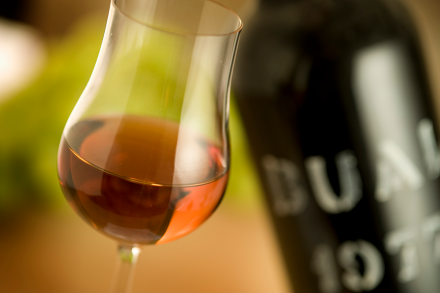
Perhaps because of the Flanders and Swann song in which a louche older gentleman tries to lure a younger lady to bed with Madeira wine, the drink has unfairly acquired a fusty image. While port and sherry have experienced a resurgence, Madeira remains underappreciated despite the fact it stands as a proud monument to the grand old Anglo-Portuguese alliance. One man, Jamie Allsopp, is intent on fighting a noble battle to promote the virtues of Madeira. And so to the Blue Stoops, Allsopp Brewery’s newish pub on Kensington Church Street, for their second annual Game and Madeira Dinner, named after the site in Burton-on-Trent where Jamie’s ancestors first brewed Allsopp’s Ale in 1730.

Dessert wine isn’t just for pudding

From our UK edition

At the end of the 1970s, when I had my first taste of wine, the choice was limited. It was either cloyingly sweet German Liebfraumilch, or something from the Don Cortez or Hirondelle types, both of which were sour and brash. That, younger readers, was how bad things were, and why many of us during that time stuck to lager and lime. When Le Piat D’Or came on the market, it was, frankly, a relief. But things have changed, including my palate. Sweet or semi-sweet wines can be delicious, and bear no resemblance to the cheap German variety of my youth. Many moons ago, invited to my first posh dinner party, I was bowled over when served a lightly sweet Riesling with a fruit crumble. Riesling is a key component in Liebfraumilch, but not all Liebfraumilch is Riesling.

One of the joys of wine is the people who make it

From our UK edition

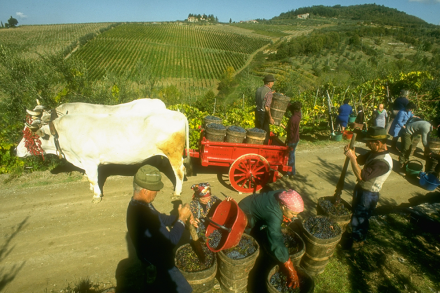
Towards the end of the war, a young Guards officer met some Italian aristocrats. They had much in common. Robert Cecil was the heir to a marquessate. The Principe di Venosa’s daughter was married to an Italian marchese. Lifelong friendships have ensued down the recent generations. Nevertheless, the English family would be the first to concede that when it comes to generations, the Italians are a couple of centuries ahead. In 1385, Giovanni di Piero joined the Florentine winemakers’ guild. The easy movement between the Florentine bourgeoisie and the aristocracy helps to explain that great city’s long success: the Medici are the obvious example, as are the Antinori, who have been making wine for 26 generations, and are still gaining momentum.

With Tom Gilbey

From our UK edition

31 min listen

Tom Gilbey, the internet’s most charismatic wine expert, sits down with Olivia Potts for Table Talk. Tom is a winemaker, merchant, educator – and also an author. His new book, Thirsty, is part-memoir, part guide to his life through wine in 100 bottles, and is available now.  On the podcast, Tom discusses his family’s love for winemaking that stretches back to the nineteenth century, and how he became captivated by the trade thanks to Beaujolais and a pike’s head. He explains how a glass of pinot gris in an ice bath propelled him to social media fame – where he’s known for taking a fun approach to wine tasting. Tom also reveals the best way to pair drinks with dishes and the unconventional way he’ll be cooking his turkey this Christmas.

A Frenchman who does not drink wine is a disgrace

From our UK edition

The world is in an even greater mess than was apparent. I am not referring to Ukraine, Gaza, Sudan or other swamps of mayhem and misery, although they are bad enough. No: the new crisis is in France, and it has two malign and reinforcing aspects. First, large numbers of the younger French have given up drinking wine. It is not clear what they are substituting: Coca-Cola, perhaps. If so, God help us (and them). A Frenchman who does not drink wine is a disgrace to his history and heritage. After the liberation in 1944, and in order to punish collaborators, the new French government created a crime: indignité nationale. As it is presumably still on the statute book, it could surely be used to bring condemnation on those who collaborate with teetotalism, or Coke.

Cheers to corkscrews!

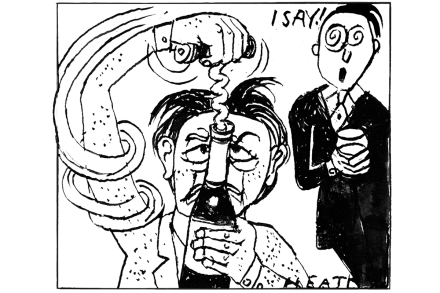
For the first 50 years of the corked bottle, there was no easy way to get into it. The combination of cork and a strong glass bottle came together around 1630, but the first mention of a device to open the bloody thing wasn’t until 1681. Cavalier get-togethers must have resembled the teenage parties I attended, with everyone desperately trying to open bottles using keys, pens, knives etc. Or using that technique where you bang the bottle against a wall with the heel of a shoe. Halcyon days. More likely the Cavaliers would have just taken the top off cleanly with a swift blow from a saber. Early devices for extracting corks were called “bottle screws.” According to wine writer Hugh Johnson, the word “corkscrew” was first used in 1720.

corkscrews

Wine to toast the fallen

From our UK edition

Solemn, moving, serious: British. As silence fell and the wreaths were lain, even teenagers joined in the mood of reverence. Suddenly it did not matter what the gossip columns were saying about Andrew Mountbatten Windsor, or what latest mischief might arise from the Duchess of Sussex. The great ship of state and of history sailed on serenely. The sacrifices of a previous generation were saluted. They had paid the price for their Britishness. We, their successors, unworthy as we might feel, could at least salute them, especially as good bottles were about to be opened, to toast the fallen. Yet there was a problem far more important than princely indiscretions. We British won the war. Since then, we have defended the peace. Hard fighting is a tough business.

Why bother banning US booze in Canada?

You know what they say about America: beautiful for spacious skies, for amber waves of grain and purple mountain majesties above the fruited plain. But its fruited plains – specifically its vineyards – and amber waves of grain aren’t doing her neighbor to the north much good at the moment – at least not in the beverage department. In the Loyalist province of Ontario, just as in la belle province of Québec, no California wines have graced the store shelves for more than half a year. American tipple is out. As far as eastern Canada is concerned, the minions of Francis Ford Coppola crush grapes in vain, all is quiet along the Yakima and it matters not whether pinot noir still reigns supreme in the Willamette Valley. Ask not for whom the Napa flows; it’s not for thee.

alcohol
egly-ouriet

What doesn’t kill Egly-Ouriet makes it stronger

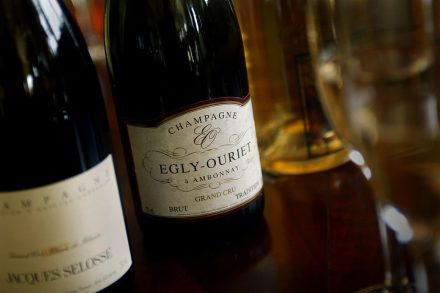
In recent columns, we have visited some lesser known spots in Burgundy – Saint-Romain, Maranges, Ladoix – where the wines are good and the prices reassuring.  This time, I’d like to travel to Champagne to introduce you to one of my most exciting recent discoveries, the wines of Egly-Ouriet. You know about Dom Pérignon, Krug, Bollinger and Taittinger. They can be very good. Egly-Ouriet is something else. Remember that Champagne occupies the northernmost precinct of French wine production. The northeastern bit of the area borders Belgium. It’s chilly up there, and damp. Nietzsche famously declared that, “What doesn’t kill me makes me stronger.” That may not be true of people. I am pretty sure it is not. But the observation has a certain application to wine.

A sip of Israeli history

From our UK edition

We were drinking Israeli wine as the talk ranged from frivolity to seriousness: from Donald Trump to the tragic paradoxes of the human condition. Some would claim we were discussing the same topic, yet this may not be the time to disrespect the US President. I once described Ariel Sharon as a bulldozer with a Ferrari engine. It was one of the many tragedies to have afflicted Israel/Palestine that just when he had decided to bulldoze for peace, he should have been stricken with a massive stroke. One reason I love being in Israel is that one is never more than 50 yards from an argument Now a new and mighty piece of earth-moving equipment is dominating the landscape.

Revisiting the Devin Nunes winery

Anyone who writes about wine for a while finds himself coming back to old friends as the years go by. This wine here was actually fuller and more sumptuous in that vintage five years ago, while that wine over there really came into its own in the most recently released vintage. Just as with people, some wines with early promise somehow go astray and never amount to much, while others that were disorganized and introverted when young suddenly blossom and turn outward as they age, the magic sunflowers of viticulture. Most writers about wine will have similar stories. It’s a bit rarer for most of us, however, to get in on the ground floor and stand by while a new vineyard, fawn-like, is born, manages to stand up on its own and then goes trotting off.

Nunes

Drink early, drink often

From our UK edition

As readers will be aware, and without sounding too immodest, this column is absolutely committed to diversity. In an earlier era, that might have seemed unnecessary. A British oenophile did not need to search out bottles from great distances. He could merely take his pleasure from the first growths of Bordeaux and the grands crus of Burgundy, with perhaps a little dalliance on the Rhine or the Rhône. Nor was this only a British modus operandi. I covered the French election of 1981 from Burgundy (there were good political reasons for doing so, as well as other ones). The Burgundians knew that wine was made on the banks of the Gironde, but when I assured them the best of it was excellent, there was polite scepticism.

The glory of the Goring

From our UK edition

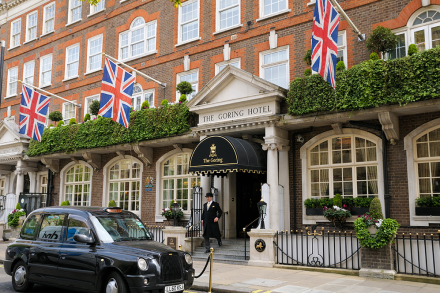
Last weekend, I was in England: among two very diverse aspects of the nation. In recent months, every Saturday, central London has been plagued by demonstrations. I suppose that there must be a right to protest. But what about the right to mosey around Westminster and Whitehall without blocked roads and with any hope of peace and quiet? Last Saturday saw the largest manifestation of all: less of a protest than an English uprising – a flag-waving two-fingered revolt against the liberal intelligentsia. I kept well clear, having no wish to be caught up or kettled, and later there were attacks on the police. This should lead to jail sentences. Two conclusions could be drawn.

Sebastian Faulks looks back on youth and lost idealism

From our UK edition

I must say, calling a book Fires Which Burned Brightly promises much. At best, from the jaded reviewer’s point of view, an autobiography of delusional self-aggrandisement; at worst, a wild mismatch between the, well, incendiary language of the title and the potentially humdrum contents. It might have been dreamed up by a master satirist intending to inflict maximum damage to the reputation of that noted gentleman of letters, Sebastian Faulks. I once invented a novelist named Julian Sensitive, whose only claim to fame was an autobiographical novel called, after T.S. Eliot’s Prufrock, ‘My Trousers Rolled’. That was a crude joke compared with the hilarity inspired byFaulks’s title.

The best bargain burgundies

Apropos the subject of this column, videlicet, wine, a friend told me an arresting story about the once-famous British theater critic and playwright Kenneth Tynan (1927-1980). Sometime in the 1960s, when the prickly Gamal Abdel Nasser ruled Egypt, Tynan went sailing on the Nile. One night, he came ashore to enjoy dinner at the Luxor Hotel. The wine list was impressive. He ordered a famous bottle that cost practically nothing. The head waiter swept over to tell him, so sorry, they’d drunk the wine out. Tynan manfully looked again at the list and asked for the second best bottle. Alas, the waiter replied, that wine, too, had been exhausted. “Well, what do you recommend?” Tynan asked. To which the answer was: “We have no wine of any kind.” That hasn’t happened to me yet.

Burgundy