Wine

Advent is the season for revelling in fine wine

From our UK edition

Crime. Fear not: none of us was planning to break the law, with the possible exception of hate speech. Where that is concerned, how would one start? But we were more concerned with crime and literature, and a fascinating perennial question. What is the distinction between crime fiction and novels? In the 1990s, I introduced one of the loveliest girls of the age to the delights of proper wine Crime and Punishment: no problem. So what about The Moonstone? There are very many supposed novels which I would rather read. Moving nearer our own day, we have Dorothy Sayers or P.D. James. More recently, Reginald Hill, Susan Hill and Ian Rankin. Victorian ladies were not supposed to read novels before lunchtime.
The secrets of Super Tuscans

I suspect that most readers, asked to name the most important red-wine grapes of Italy, would focus mainly on Nebbiolo, Barbera and Sangiovese, the most widely planted grape in Italy. Lovers of Sicily might also mention Nerello Mascalese and Nero D’Avola. What if I told you that some of the most spectacular wines in Italy were made from the Cabernets (Sauvignon and Franc) and Merlot? Have I gotten lost in the Médoc? No, I am in Tuscany, ancient home of the Etruscans, northwest of Rome. To be specific, I am in Bolgheri, a few miles from the Ligurian coast. On a clear day, if you cast your eyes south, you might just see Napoleon padding around the island of Elba plotting his escape. Everyone has heard of “Super Tuscans.” Not everyone knows the story of their origin.

Tuscans

Chilean wine is hard to beat

From our UK edition

We were assembled to taste Chilean wines assisted by magnificent Scottish food, courtesy of the Scottish embassy in London, otherwise known as Boisdale. But there was a problem of etiquette. As we were dealing with Chilean matters, I thought that we should propose a toast to a great Chilean and a staunch ally of this country, General Pinochet, who saved his own nation from becoming another Cuba or a mess like the current Venezuela. The left will never forgive Pinochet or Kissinger for frustrating Marxist ruin My neighbour expressed doubt. Surely the general committed atrocities? I conceded that the overthrow of Allende was not bloodless.

Can Beaujolais take on Burgundy?

From our UK edition

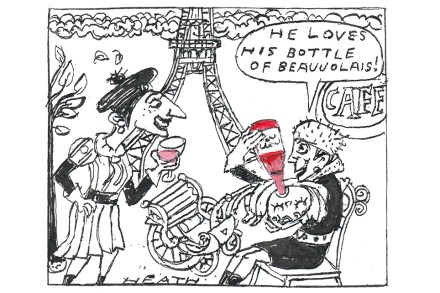
You could say the British were to blame. The dramatic rise and subsequent fall of Beaujolais has its roots in the early 1970s, when Sunday Times wine correspondent Allan Hall laid down a challenge for his readers. The first to go to Beaujolais, in eastern France, and bring him back a bottle of that year’s just-pressed wine (known as Beaujolais nouveau) would win a bottle of champagne.  Readers rose to the challenge, enlisting cars, trucks, private jets and even parachutes and an elephant as they rushed to be first. The Beaujolais Run became an annual institution, and local vignerons frantically planted new vines to meet demand.

The thrill of the Beaujolais Run

From our UK edition

‘Le Beaujolais nouveau est arrivé!’ If that phrase means anything to you, you’re likely of a vintage that remembers pre-Clarkson Top Gear. Growing up in the 1980s, you couldn’t miss adverts for the Beaujolais Run – an annual race to be the first to bring the new wine back to England. People would rush over to Burgundy in their Aston Martins and Jaguars, fill up with Beaujolais and roar back home. The idea for a race across France was cooked up by Clement Freud and wine merchant Joseph Berkmann in 1970. It really took off in 1974 when the Sunday Times offered a prize to the first person to bring a case of wine back to the newspaper’s offices following its release at midnight on the third Thursday in November.

How Maggie took her whisky

From our UK edition

The whirligig of time brings in his… astonishments. Who would have thought it? Even a couple of decades ago, the notion that the Tory party could be led by a black woman would have seemed incredible. I remember 1975, and the doubts that were expressed about Margaret Thatcher: much louder than any adverse comment about Kemi Badenoch now. There seemed to be a widespread belief that the country was simply not ready for a female PM. When she was PM, she had to be dissuaded from serving English wine in No. 10 I recall a lunch with Barbara Castle not long after the 1979 election. A former street-fighting termagant, she seemed to have eased into post-partisan serenity. When I confessed that I was a Tory, she merely responded with a tut-tutting smile, as if I was an errant grandson.

From public bar to cocktail bar: books for the discerning drinker

From our UK edition

One of the joys of getting older is the appreciation of the solitary pint. But what to do as you sip your hard-earned beer? Usually after a suitable period of contemplation I’ll start fiddling with my phone. Not Adrian Tierney-Jones; he writes books, and his latest, A Pub for All Seasons (Headline, £20), is a poetic meditation on the public house, its history and place in our culture with some memoir deftly thrown in. Most of all it’s an appreciation of what makes a pub great: the layers accumulated by decades – centuries, sometimes – of human interaction. ‘The perfect pub,’ he writes, ‘is a kind of metaphysical palimpsest which we should try to imagine as a constantly evolving space.

The finest Rhône I have ever tasted

From our UK edition

The medics would have one believe that alcohol is a depressant. That may be their conclusion drawn from test tubes in laboratories. Fortunately, however, it bears little relation to real life, which is just as well. The world has rarely been in greater need of antidepressants, in every form. One tries to tease American friends out of their gloom, reproaching them for taking their independence too early. Last time I attempted that, it did not work. ‘If Washington and Jefferson had foreseen Trump vs Harris, they would have asked George III for forgiveness.’ The 2014 Hommage à Jacques Perrin was just about the finest Rhône I have ever tasted In the rest of the world, there is a charming paradox.

There’s more to Bordeaux than fine wine

In the seminal Casablanca, there is a classic moment when the Humphrey Bogart character is asked how he ended up there. Bogie, doing laconic and world-weary as only he could, replies, “My health. I came to Casablanca for the waters.” When Claude Rains’s iconic Captain Renault purrs, “Waters? What waters? We’re in the desert!” Bogart’s response is simple. “I was misinformed.” This exchange occurred to me when I recently visited Bordeaux, a city with awe-inspiringly beautiful architecture, some of France’s most stylish places to shop and eat, situated teasingly close to the beaches of the Atlantic coast. Yet if you attempted to tell anyone that you’d come to Bordeaux for history, couture or coastline, you’d get the Bordeaux version of “What waters?

Bordeaux
vineyards

The objectively, subjectively, best vineyards in the world

The October 15 issue of the Wine Spectator carries two intriguing features. The first is a series of reports, with lavish photographs, on “The World’s Greatest Vineyards.” This list of ten superstars is followed by a cast of twenty supporting actors, wineries the editors regard as “world class” but relegate to slightly lower rungs on the scale of vinous celebrity. You might think that any such listing would be powerfully subjective. Isn’t one’s taste in wine a classic instance of de gustibus non disputandum est? Well, yes and no. You don’t have to be Immanuel Kant to appreciate that in judging wine there are some objective, or objective-like, features, as well as wholly subjective ones.

Alan Clark’s wines were as remarkable as he was

From our UK edition

Où sont les bouteilles d’antan? For that matter, où sont les amis with whom one consumed them? These autumnally melancholic musings arose because a young friend asked me about Alan Clark. He had been reading the Diaries. Were they truthful? Was Alan really such a remarkable character? The answer was simple. An emphatic yes, on both counts. I suspect that I speak for most of his muckers when I declare that I have never met anyone who was more fun. The 1967 Yquem tasted like a Greek temple melted down in honey. Alan served it as a house wine If Alan was of the company, the conversation might well have a whiff of sulphur. But one could rely on spice and scintillation. Alan’s very walk presaged mischief.

Nick Elliott and a life worth drinking to

From our UK edition

The English language has immense resources, but the odd weakness. What, for instance, is the translation for ‘Auld lang syne’? We were discussing that profound topic while telling stories about absent friends, recalling the occasional bottle and thinking about Britain. Nick Elliott’s response to grim news was to open a bottle of Mouton Rothschild ’82 A fascinating fellow called Tim Spicer, who commanded a battalion of the Scots Guards, has written a book about an even more remarkable chap called Biffy Dunderdale. Biffy was the sort of man who helped to win our nation’s wars, including the (first) Cold War. In these pages a couple of weeks ago, Charles Moore brought a colleague of Biffy’s to memory.

Portuguese wines are back

Regular readers will recall my fondness for Lord Falkland’s observation that “when it is not necessary to change, it is necessary not to change.” That crisp declaration is not only elegantly framed but (in my view) true. In this it differs, it saddens me to acknowledge, from the Duke of Cambridge’s even more robust confidence that he was “opposed to all change, at any time, for whatever reason.” I am not sure whether that mot was a testimony to the duke’s utopian inclinations or merely his stubbornness. But it is sharply at odds with the realities, if not, perhaps, with the governing temperament, of most of its main actors in the world of wine.

Portuguese

The wonder of wine from the Mosel

From our UK edition

Conservatives used to be good at inspiring a mass membership, underpinned by organisations. Before the first world war, the Primrose League had a million members. Shortly after the second war, the party’s membership, including the Young Conservatives, reached three million. This is partly explained by the social mores of the day. The range of available leisure activities was much smaller, there was no television, and parents were happy for their daughters to join the YCs, the assumption being that the girl would meet a nice type of young man. It is easy to understand why German oenophiles insist Riesling is the greatest grape of all All that is redolent of a vanished age. But this has consequences. Traditionally, local associations, including YCs, were the party’s foot soldiers.

The treasures of sherry

From our UK edition

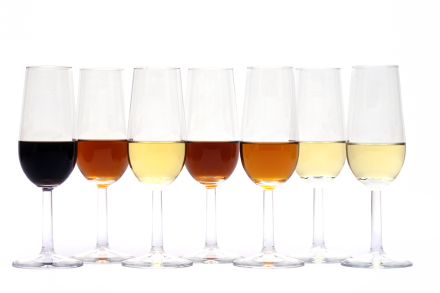
We were talking Spain and drinking Spanish. The UK and Spain are very different societies, but we did find points of comparison. As a very broad generalisation, Spaniards can be divided into three political groupings. There is a Europhile elite who take their political identity from a projected European future, and almost none from their nation’s past. To them, Spanish history is largely a record of backwardness, poverty, oppression and conflict. The EU is a means of ensuring that this past can be left in the past. British wine-lovers should not talk too loudly about the treasures of sherry The two much larger groups cannot forget the past, and especially the civil war.

Cycling and sleeping in wine country

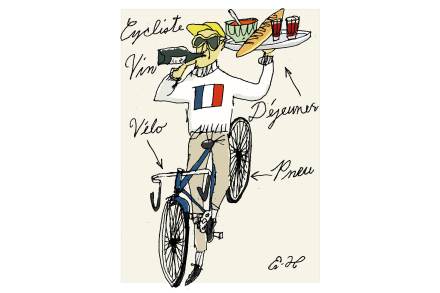
Tom Kevill-Davies and I are sitting on the deck of the Hungry Cyclist Lodge chatting about food and adventures. This enchanting forty-six-year-old man, a cyclist and a chef, arrived in the village of Auxey-Duresses in Burgundy eleven years ago, where he found an abandoned mill that was ripe for renovation. He met Aude, a local teacher, and they have two toddlers. Perhaps Tom is better known (but only slightly) for his captivating bestseller The Hungry Cyclist which he wrote in 2009. The book recounts his two-year-long trip by bike from New York to the beaches of Brazil. The Lodge is neither a B&B nor a gîte. Tom thinks of it as more like an auberge, “a home away from home,” he says.

cycling
Balaton

Natural wine and tacos on the Hungarian Riviera

In the summer of 2020, as impatience with quarantine and the urge to get out of town gradually displaced fears of Covid, a joke circulated on Hungarian social media about Lake Balaton, a favorite destination for domestic holidaygoers. The post-quarantine stampede had driven up prices at the lake to such an extent, the joke went, that penny-pinching travelers should consider less expensive destinations, such as Monaco or the French Riviera. Until recently, Balaton had always been the inexpensive Hungarian alternative to pricier (and, during the Cold War, politically restricted) foreign getaways.

greek wine

The rebirth of Greek wine

One of the great stories in the world of wine over the last half century is the rebirth of Greek wine. I say “rebirth” because wine has been an inextricable part of the story of Greece from time immemorial. What would Plato’s Symposium — literally “drinking party” — be without wine? And the story of Greek wine goes back much further than that. According to experts, wine grapes have been cultivated in Greece from about 6000 BC. Anyone who has read Homer recalls his frequent deployment of the epithet “οἶνοψ πόντος.” That is usually translated as “wine-dark sea,” though it literally means “wine-faced” or “wine-eyed” (οἶνος + ὄψις) sea. What color do you suppose “wine-dark” is?

Outdoor wines for the summer

There are some cramped, unimaginative people who — I have been told — maintain that writing about wine is a bootless enterprise. Even more extraordinary, I have heard it rumored that there exist unfortunate sods who believe that it is a waste of time to gather with friends over food and wine while discussing the events of the day, the state of the republic, the repair of one’s soul. Fortunately, neither you nor I are acquainted with any such freaks, otherwise you wouldn’t be reading this column and I would not be sitting down to write it. At the end of his brief, tantalizing book The Educated Imagination, Northrop Frye, the great Canadian literary critic (do you sense a passing adumbration of contradiction there?

wines

Letters: the courts are not trying to subvert parliament

From our UK edition

Judge not Sir: The claim by Ross Clark (‘Keir’s law’, 22 June) that the left can achieve what it wants by relying, in part, on ‘judicial activism’ is uninformed and misleading. I can assure Mr Clark and those who might share his sentiments that the courts are, in general, at pains to respect the separation of powers and the will of parliament. A cursory consideration of recent decisions from the Supreme Court would have revealed this.