Wine

I think I’ve found the perfect TV series

From our UK edition

Drops of God is one of those gems of purest ray serene that cable TV prefers to keep hidden in its deep unfathomed caves because it thinks you want something more lowbrow. Try finding it by accident: you won’t. When I looked for it on Apple – which doesn’t have all that many shows – I had laboriously to type in its name. It wasn’t offered to me in the recommendations. If I hadn’t been tipped off by my friends Candy and Diarmuid, I would never have seen it. I had been lamenting, as I often do, the dearth of stuff to watch on TV that doesn’t put you through the emotional wringer.

Should you bother decanting wine?

From our UK edition

We were almost having a symposium and I was invited to define Toryism in one sentence. I replied that one book would be easier: the late Roger Scruton’s On Hunting, which ought to be subtitled: ‘From Horse-Shit to Heaven: the Search for Love, Order and God.’ ‘But what if you leave out God, and therefore heaven?’ said one fellow: ‘What would be left?’ ‘What indeed. Many learned Tories – Dr Johnson, Salisbury and Quintin Hogg being obvious examples – would have given a simple answer: nothing.’ Those of us who have to do without God and yet avoid the abyss of nothingness can only fall back on eupeptic pessimism. Edward Fitzgerald’s Omar points the way: ‘A jug of wine and thou.

The fine wines of Meursault

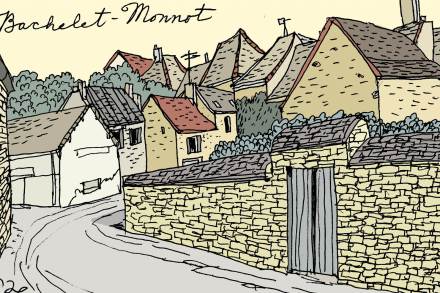
In November, I was privileged to attend the 91st Paulée de Meursault. There are three coveted invitations at that time of year in this part of Burgundy: the world-famous wine auction held in Beaune and the luncheons called la Paulée de Beaune and la Paulée de Meursault. La Paulée de Meursault celebrates the fine wines grown in this small village. It is home to eighty wine-growing families and the area is known for its charm and terroir, that unique blend of soil and climate that has been producing exceptional white and red grapes for centuries. I had heard from our family about this festive celebration ever since our daughter and son-in-law moved to France fifteen years ago to work in wine.

Meursault
wine

Wine highlights from Inauguration Day

I write a few days after the Big Event in Washington, DC on January 20, 2025. For us deplorables, it was a celebratory occasion. I am told that non-deplorables entertained different feelings that day. Since they had been used to having the run of our capital city, I can understand their sentiments. But, perhaps by some process of selfselection, very few non-deplorables were in evidence at the haunts I visited during my stay. Every hotel, restaurant and event space I stopped off at was full of red caps — yes, those red caps — and the mood was almost giddy with anticipation and glee. It brought to mind a passage from one of my favorite Psalms, number 23: Thou preparest a table before me in the presence of mine enemies:thou anointest my head with oil; my cup runneth over.

The best winter wines

Winter is a natural moment for a little recherche du temps perdu. For my band of serious thinkers, the usual aides-mémoire are not petites madeleines dipped in tea but some of the various wines the holidays afforded us. Wordsworth said that poetry “takes its origin from emotion recollected in tranquility.” The jury is still out on the accuracy of that neatly phrased observation. But regardless of its pertinence to the art of poetry, its pertinence to the art of wine appreciation can hardly be gainsaid. With that in mind, I offer, as a minor public service, a brief recollection of some of the wines that a beneficent providence vouchsafed us as the winter solstice came and went and the house was redolent of evergreen and wood fires.

winter

The Reagan effect on wine lists

From our UK edition

Let us indulge in a slight paraphrase. What rough beast slouches towards the White House to be reborn? The inauguration ceremonies remind us that many Americans still hanker after monarchical splendour. Even as contentious a figure as Donald Trump is accorded the dignities appropriate to a head of state. The same of course is true of M. Macron, who carries them off better. The dignified portion of the constitution, or the efficient one? It could easily be argued that President Trump is better in the latter role. In his early phase, President Macron wanted us to see him as a Napoleonic figure. Indeed. Napoleon le Petit. If a bottle was old enough to drink, restaurants might even apologise and offer a discount When the Trumpians hit town four years ago, comparisons were drawn.

Kemi should prepare for a political pounding

From our UK edition

It is extraordinary to remember. When I was a small boy in Scotland, Christmas Day was not a holiday. My father almost closed his office, but someone was on duty. The main festivity was Hogmanay: not a holiday in England. Now the whole country closes down for a fortnight. A friend who is a serious industrialist says that far from afflicting productivity, this is a good thing. After two weeks, apart from those who have gone in search of sun or skiing, most people are fed up with family life. Even the brats cannot wait to get back to school. So his employees return to work with renewed vigour. We started with oysters, followed by sashimi, then turbot, and for pud a chocolate mousse Despite that, I have never known a year more overshadowed with apprehension and gloom.

The master Kyè

Last month we took a quick trip to Tuscany. Among the wines we sampled was Sassicaia, the fabled Cabernet blend from Bolgheri on the Tuscan coast. I said that the wine was an “instant sensation,” but an alert reader pointed out that it was only when it was sold commercially, in the late 1960s, that it took the wine world by storm. Before that, it was the private province of its creator, the marchese Mario Incisa della Rocchetta, who began experimenting with Bordeaux grapes in the 1940s. I also said that Tignanello was another superlative Super Tuscan from “the region.” But that same alert reader noted that while the region was Tuscany, Tignanello comes not from Bolgheri but from Chianti, several miles to the East.

Kyè

My bottles of the year

From our UK edition

This has been the most fascinating political year I can remember. I have even found myself dreaming about politics – and neither the excitements nor the perils are likely to end any time soon. So it might seem self-indulgent to tear one’s attention away from grog. But we all need distraction, even in the spirit of gaudeamus igitur. Looking back over the year’s drinking, I also decided to summon interesting bottles for a meander through pleasant memories. My friend keeps his politics in the closet for he is a Californian who voted for Trump. He should be put in charge of the White House cellar As he has before, a Californian friend came up not just trumps but with the ace of trumps.

Could I limit myself to 100 bottles of wine in a year?

From our UK edition

Back in January, I wrote about my new year’s resolution to cut down on my drinking. The thought of total abstinence was too bleak, so my plan was to limit myself to 100 bottles of wine in 2024. Not quite the NHS’s recommended limit of 14 units of alcohol a week – roughly one-and-a-half bottles – but not a million miles away. I envisaged taking Mondays, Tuesdays and Wednesdays off and then confining myself to half a bottle a day for the remainder of the week. Although I also intended to do Dry January, thereby building up an eight-bottle credit. So 100 bottles in 11 months was my aim. Surely that was achievable?

Advent is the season for revelling in fine wine

From our UK edition

Crime. Fear not: none of us was planning to break the law, with the possible exception of hate speech. Where that is concerned, how would one start? But we were more concerned with crime and literature, and a fascinating perennial question. What is the distinction between crime fiction and novels? In the 1990s, I introduced one of the loveliest girls of the age to the delights of proper wine Crime and Punishment: no problem. So what about The Moonstone? There are very many supposed novels which I would rather read. Moving nearer our own day, we have Dorothy Sayers or P.D. James. More recently, Reginald Hill, Susan Hill and Ian Rankin. Victorian ladies were not supposed to read novels before lunchtime.

The secrets of Super Tuscans

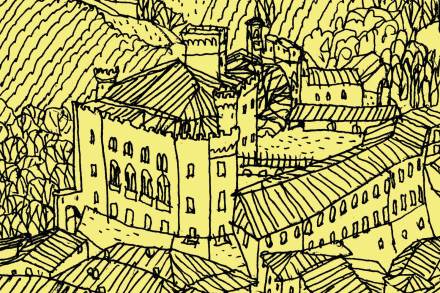
I suspect that most readers, asked to name the most important red-wine grapes of Italy, would focus mainly on Nebbiolo, Barbera and Sangiovese, the most widely planted grape in Italy. Lovers of Sicily might also mention Nerello Mascalese and Nero D’Avola. What if I told you that some of the most spectacular wines in Italy were made from the Cabernets (Sauvignon and Franc) and Merlot? Have I gotten lost in the Médoc? No, I am in Tuscany, ancient home of the Etruscans, northwest of Rome. To be specific, I am in Bolgheri, a few miles from the Ligurian coast. On a clear day, if you cast your eyes south, you might just see Napoleon padding around the island of Elba plotting his escape. Everyone has heard of “Super Tuscans.” Not everyone knows the story of their origin.

Tuscans

Chilean wine is hard to beat

From our UK edition

We were assembled to taste Chilean wines assisted by magnificent Scottish food, courtesy of the Scottish embassy in London, otherwise known as Boisdale. But there was a problem of etiquette. As we were dealing with Chilean matters, I thought that we should propose a toast to a great Chilean and a staunch ally of this country, General Pinochet, who saved his own nation from becoming another Cuba or a mess like the current Venezuela. The left will never forgive Pinochet or Kissinger for frustrating Marxist ruin My neighbour expressed doubt. Surely the general committed atrocities? I conceded that the overthrow of Allende was not bloodless.

Can Beaujolais take on Burgundy?

From our UK edition

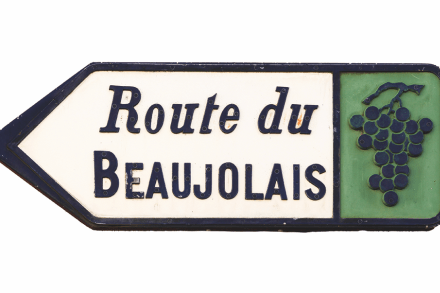
You could say the British were to blame. The dramatic rise and subsequent fall of Beaujolais has its roots in the early 1970s, when Sunday Times wine correspondent Allan Hall laid down a challenge for his readers. The first to go to Beaujolais, in eastern France, and bring him back a bottle of that year’s just-pressed wine (known as Beaujolais nouveau) would win a bottle of champagne.  Readers rose to the challenge, enlisting cars, trucks, private jets and even parachutes and an elephant as they rushed to be first. The Beaujolais Run became an annual institution, and local vignerons frantically planted new vines to meet demand.

The thrill of the Beaujolais Run

From our UK edition

‘Le Beaujolais nouveau est arrivé!’ If that phrase means anything to you, you’re likely of a vintage that remembers pre-Clarkson Top Gear. Growing up in the 1980s, you couldn’t miss adverts for the Beaujolais Run – an annual race to be the first to bring the new wine back to England. People would rush over to Burgundy in their Aston Martins and Jaguars, fill up with Beaujolais and roar back home. The idea for a race across France was cooked up by Clement Freud and wine merchant Joseph Berkmann in 1970. It really took off in 1974 when the Sunday Times offered a prize to the first person to bring a case of wine back to the newspaper’s offices following its release at midnight on the third Thursday in November.

How Maggie took her whisky

From our UK edition

The whirligig of time brings in his… astonishments. Who would have thought it? Even a couple of decades ago, the notion that the Tory party could be led by a black woman would have seemed incredible. I remember 1975, and the doubts that were expressed about Margaret Thatcher: much louder than any adverse comment about Kemi Badenoch now. There seemed to be a widespread belief that the country was simply not ready for a female PM. When she was PM, she had to be dissuaded from serving English wine in No. 10 I recall a lunch with Barbara Castle not long after the 1979 election. A former street-fighting termagant, she seemed to have eased into post-partisan serenity. When I confessed that I was a Tory, she merely responded with a tut-tutting smile, as if I was an errant grandson.

From public bar to cocktail bar: books for the discerning drinker

From our UK edition

One of the joys of getting older is the appreciation of the solitary pint. But what to do as you sip your hard-earned beer? Usually after a suitable period of contemplation I’ll start fiddling with my phone. Not Adrian Tierney-Jones; he writes books, and his latest, A Pub for All Seasons (Headline, £20), is a poetic meditation on the public house, its history and place in our culture with some memoir deftly thrown in. Most of all it’s an appreciation of what makes a pub great: the layers accumulated by decades – centuries, sometimes – of human interaction. ‘The perfect pub,’ he writes, ‘is a kind of metaphysical palimpsest which we should try to imagine as a constantly evolving space.

The finest Rhône I have ever tasted

From our UK edition

The medics would have one believe that alcohol is a depressant. That may be their conclusion drawn from test tubes in laboratories. Fortunately, however, it bears little relation to real life, which is just as well. The world has rarely been in greater need of antidepressants, in every form. One tries to tease American friends out of their gloom, reproaching them for taking their independence too early. Last time I attempted that, it did not work. ‘If Washington and Jefferson had foreseen Trump vs Harris, they would have asked George III for forgiveness.’ The 2014 Hommage à Jacques Perrin was just about the finest Rhône I have ever tasted In the rest of the world, there is a charming paradox.

There’s more to Bordeaux than fine wine

In the seminal Casablanca, there is a classic moment when the Humphrey Bogart character is asked how he ended up there. Bogie, doing laconic and world-weary as only he could, replies, “My health. I came to Casablanca for the waters.” When Claude Rains’s iconic Captain Renault purrs, “Waters? What waters? We’re in the desert!” Bogart’s response is simple. “I was misinformed.” This exchange occurred to me when I recently visited Bordeaux, a city with awe-inspiringly beautiful architecture, some of France’s most stylish places to shop and eat, situated teasingly close to the beaches of the Atlantic coast. Yet if you attempted to tell anyone that you’d come to Bordeaux for history, couture or coastline, you’d get the Bordeaux version of “What waters?

Bordeaux
vineyards

The objectively, subjectively, best vineyards in the world

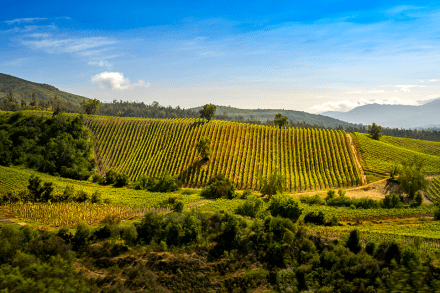
The October 15 issue of the Wine Spectator carries two intriguing features. The first is a series of reports, with lavish photographs, on “The World’s Greatest Vineyards.” This list of ten superstars is followed by a cast of twenty supporting actors, wineries the editors regard as “world class” but relegate to slightly lower rungs on the scale of vinous celebrity. You might think that any such listing would be powerfully subjective. Isn’t one’s taste in wine a classic instance of de gustibus non disputandum est? Well, yes and no. You don’t have to be Immanuel Kant to appreciate that in judging wine there are some objective, or objective-like, features, as well as wholly subjective ones.